
When I planted my first elderberry bush, I thought growing them would be simple.
Dig a hole.
Water it occasionally.
Wait for berries.
It turns out elderberries are forgiving plants, but they’re also capable of producing far more than most people realize if they’re given the right conditions.
Over the years I’ve learned that growing large, healthy elderberry bushes isn’t about one secret fertilizer or one magic trick.
It’s about understanding how each piece fits together.
Sunlight.
Water.
Spacing.
Pruning.
Pollination.
Wildlife protection.
Healthy soil.
Every one of those factors plays a role in whether you harvest a handful of berries or buckets full every summer.
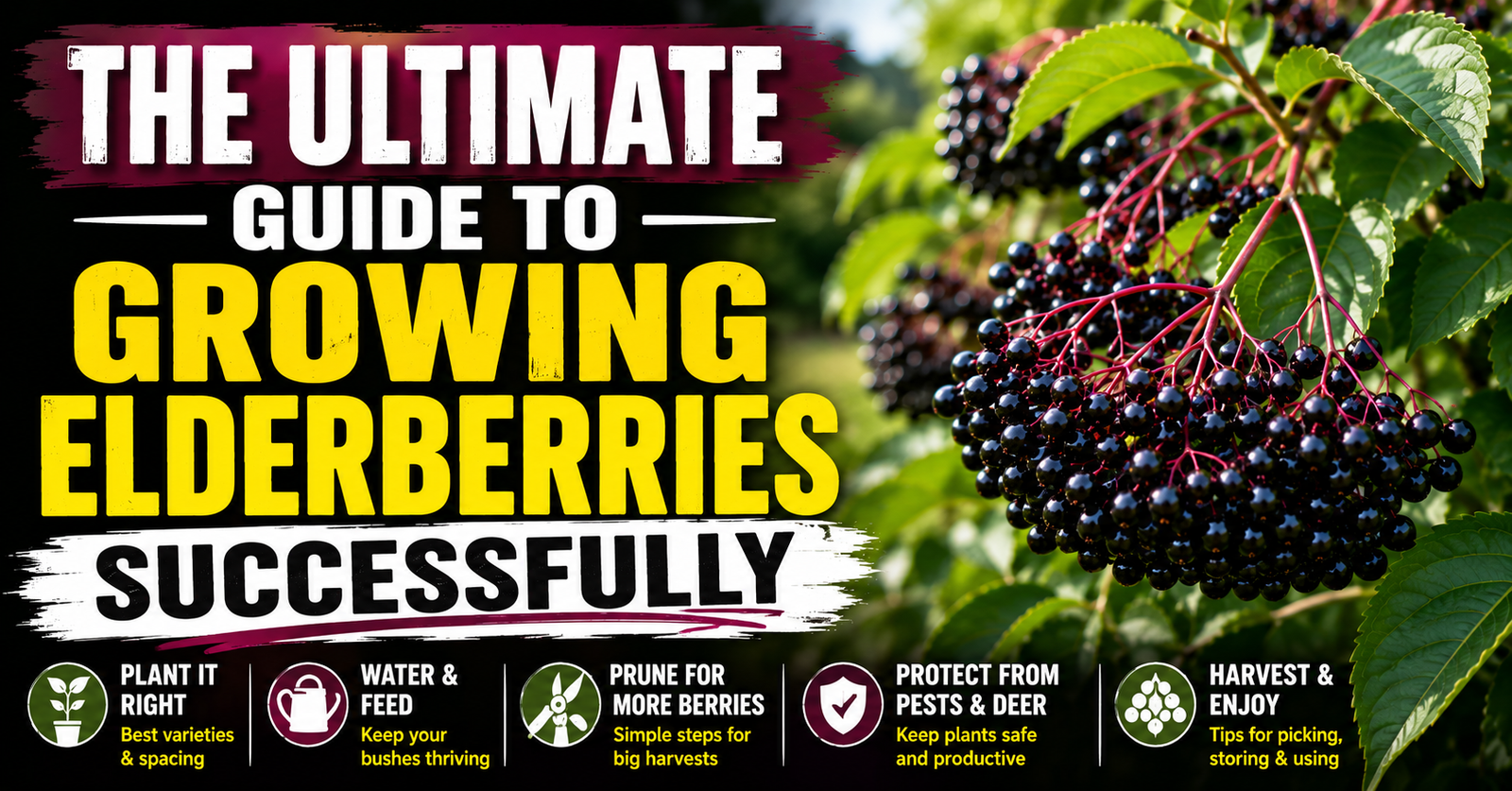
This guide brings together everything I’ve learned about growing elderberries into one place. Whether you’re planting your very first bush or trying to improve an older planting, my goal is to help you avoid the mistakes I made and enjoy healthier, more productive elderberries for years to come. Before applying these growing lessons, see where to find American elderberry plants for practical guidance on selecting a nursery and ordering a living plant.
Why I Love Growing Elderberries
I’ve grown a lot of different fruits over the years, but elderberries continue to be one of my favorites.
They’re hardy.
They’re productive.
They’re beautiful while flowering.
They’re loaded with berries when conditions are right.
Perhaps best of all, one healthy bush can eventually become several through propagation, making them an excellent long-term investment for almost any backyard grower. For propagation from cuttings, potting soil for cuttings explains when that medium works and where it can fall short.
Once established, elderberries require surprisingly little maintenance compared to many fruit trees while still producing generous harvests that can be turned into syrup, jelly, wine, tea, baked goods, and dozens of other recipes.
Start With Healthy Plants
Everything begins with healthy planting stock.

I’ve seen gardeners spend years trying to rescue weak plants when they could have started with vigorous nursery-grown elderberries from the beginning.
Healthy plants establish faster.
Develop stronger root systems.
Recover more quickly from stress.
And usually begin producing reliable harvests sooner.
That’s one reason I often recommend the Live American Elderberry Plants from Weaver Family Farms Nursery to new growers. Starting with vigorous plants gives you a tremendous advantage before you even dig the first hole.



Choosing The Right Planting Location
If I could only give one piece of advice to someone planting elderberries for the first time, it would be this:
Choose the location carefully.
A healthy bush may remain there for many years.
Trying to move mature elderberries later is far more work than spending an extra afternoon choosing the right location now.
When I’m evaluating a planting site, I consider:
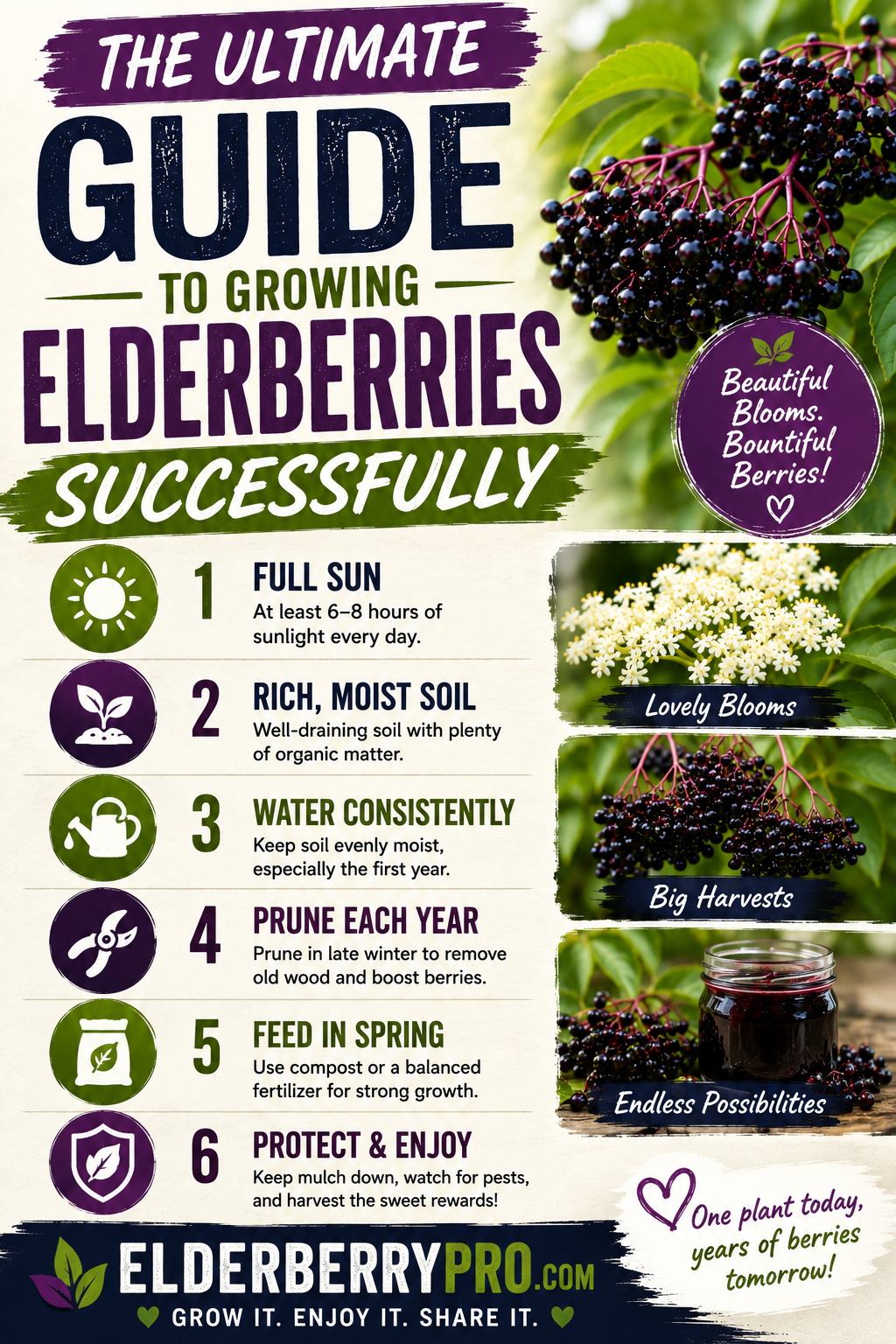
- Sunlight.
- Soil drainage.
- Air circulation.
- Available space.
- Access to water.
Getting those basics right solves many future problems before they ever begin.
Sunlight Makes A Bigger Difference Than Most People Realize
People often ask whether elderberries will grow in partial shade.
The answer is yes.
They’ll survive.
But surviving and thriving are two different things.
The healthiest bushes I’ve seen almost always receive plenty of direct sunlight throughout the day.
More sunlight generally means:
- Stronger growth.
- More flowers.
- Better berry production.
- Faster drying after rain.
- Healthier overall plants.

If your planting location doesn’t receive full sun, Can Elderberries Grow in Shade? Here’s What I Learned explains exactly how different light levels affect long-term growth and harvests.
Good Soil Doesn’t Have To Be Perfect
One thing I appreciate about elderberries is that they aren’t nearly as demanding as some fruit crops.
They tolerate a wide range of soil conditions.
That doesn’t mean they’ll perform equally well everywhere.
Healthy soil with plenty of organic matter and good drainage consistently produces stronger bushes than compacted, poorly drained ground.
I spend more time improving soil before planting than trying to fix problems after the bushes are already in the ground.
That investment continues paying dividends for years.
Proper Spacing Is An Investment In The Future
It’s tempting to plant young bushes closer together because they look so small.
I’ve learned that’s usually a mistake.
A mature elderberry occupies much more space than most people expect.
Good spacing improves airflow, makes harvesting easier, simplifies pruning, and reduces competition between neighboring plants.
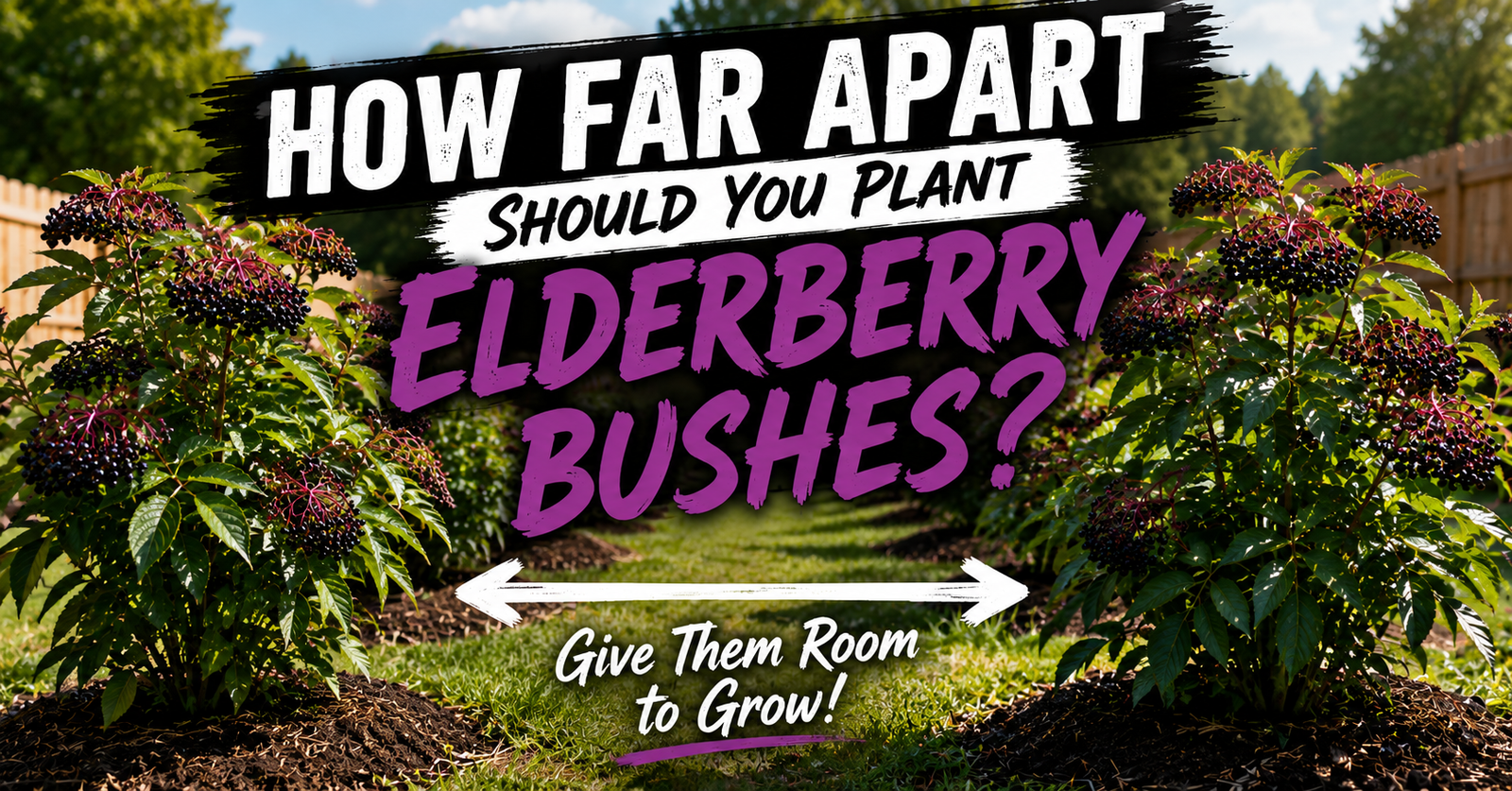
If you’re still deciding how much room each bush needs, How Far Apart Should You Plant Elderberry Bushes? covers the spacing that’s consistently worked best for me and why giving your bushes room to mature pays off in the long run.



Watering Is About Consistency, Not Constant Water
One of the biggest mistakes I made early on was assuming elderberries wanted wet soil all the time.
After all, they’re often found growing near creeks, ponds, and low-lying areas in the wild.
What I eventually learned is that consistently moist soil is very different from constantly waterlogged soil.
Healthy elderberries appreciate regular moisture, especially while becoming established and during hot summer weather, but they still need oxygen around their roots.
Standing water and poorly drained soil can create problems just as quickly as drought.
Learning that balance dramatically improved the health of my bushes.
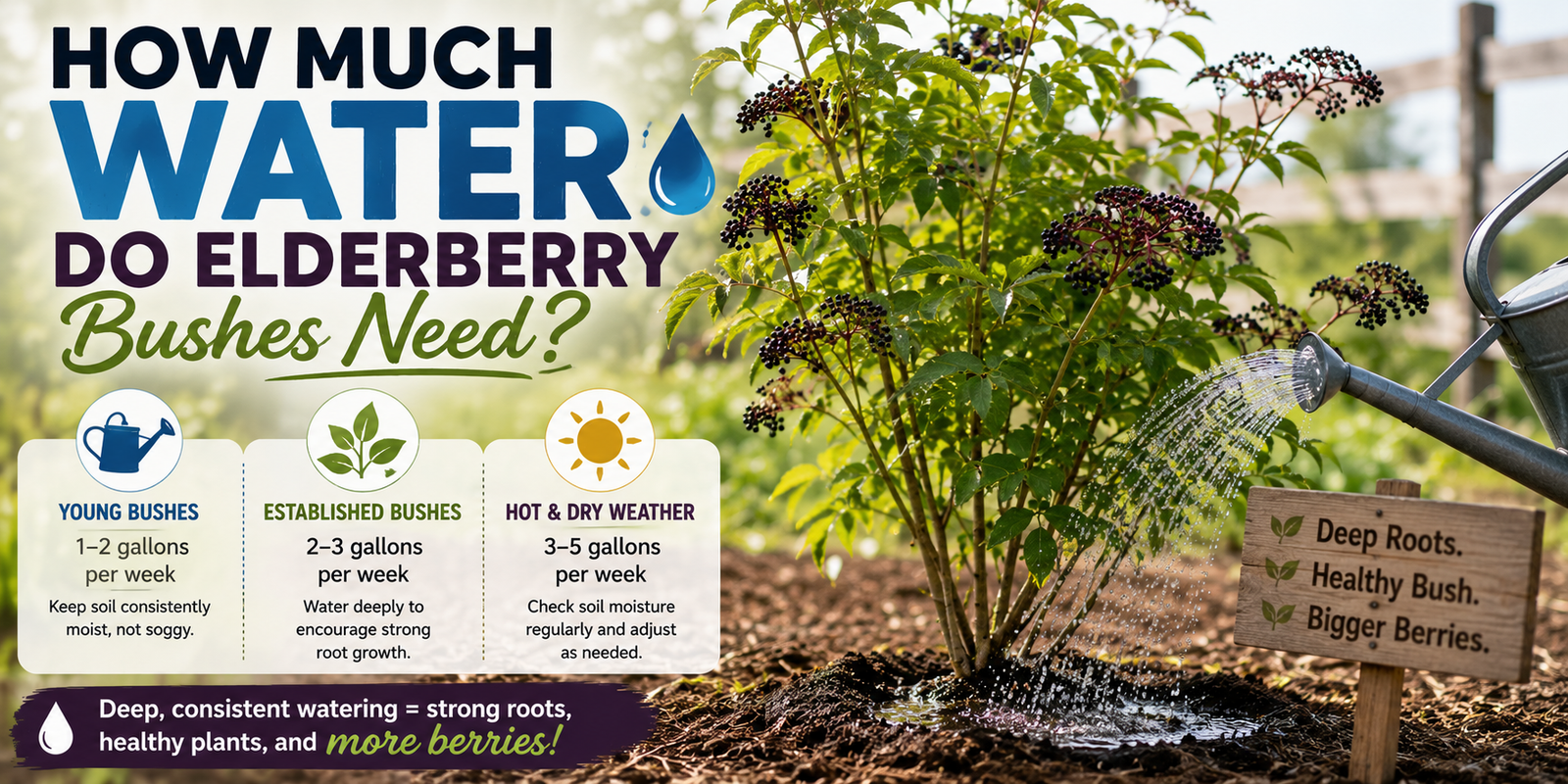
If you’re unsure how much is enough, How Much Water Do Elderberry Bushes Need? walks through exactly how I approach watering throughout the growing season.
Fertilizer Should Support Growth, Not Replace Good Gardening
People often ask me what fertilizer I use.
The truth is, fertilizer isn’t where successful growing starts.
Healthy soil, sunlight, proper spacing, and consistent watering all come first.
Once those basics are covered, fertilizer becomes a tool for encouraging stronger growth instead of trying to rescue struggling plants.

I’ve had very good results using Farmer’s Secret Fruit & Bloom Booster Fertilizer because it’s easy to apply and encourages vigorous growth without overcomplicating my routine.
Like any fertilizer, though, it works best when the bushes are already planted in good conditions.


Pollination Is Often Overlooked
I’ve met quite a few gardeners who spent years wondering why their elderberries produced beautiful flowers but very few berries.
Sometimes the answer wasn’t fertilizer.
Sometimes it wasn’t watering.
Sometimes it simply came down to pollination.
Many elderberry varieties can produce at least some fruit on their own, but I’ve consistently seen better harvests when two compatible bushes are growing near one another.
More flowers become berries.
Berry clusters become fuller.
Harvests become noticeably heavier.
If you’re only growing one bush today, adding a second compatible variety may be one of the easiest ways to improve future production.
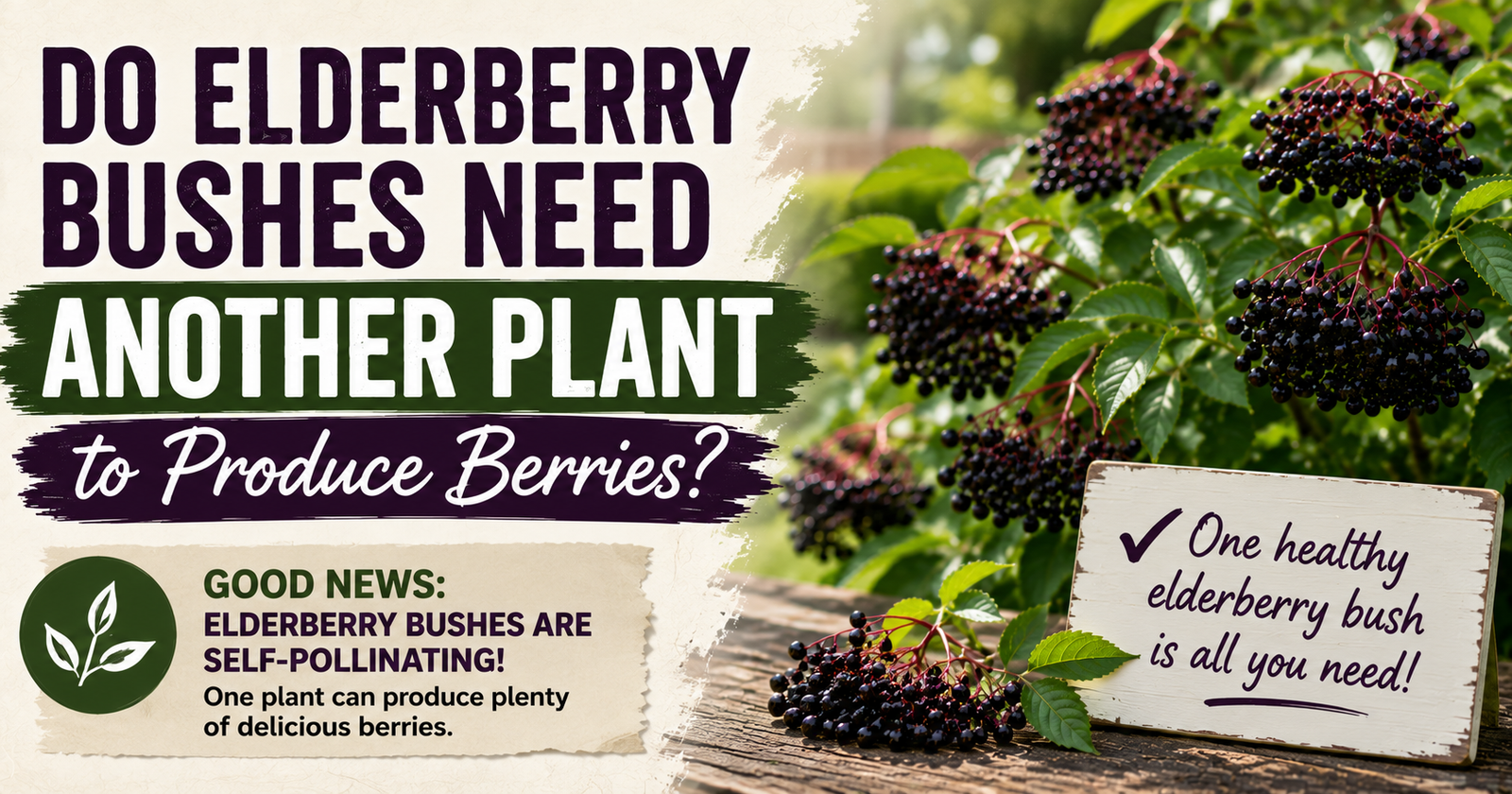
I cover the entire topic in Do Elderberry Bushes Need Another Plant to Produce Berries? because it’s one of the most misunderstood parts of growing elderberries.
Don’t Expect Berries Immediately
One thing I always tell new growers is to be patient.
Young elderberries are busy building something you can’t easily see.
Their root system.
The stronger those roots become during the first couple of seasons, the stronger the bush usually becomes later.
That’s why I don’t get discouraged if a young planting doesn’t produce buckets of berries right away.
Healthy elderberries reward patience.
Some seasons are spent building the foundation.
The larger harvests come afterward.


Pruning Keeps Bushes Productive
At first I hated pruning.
Every cut felt wrong.
I worried I was removing branches that would have produced berries.
Eventually I realized the opposite was often true.
Annual pruning encourages vigorous new growth, improves airflow, removes older unproductive wood, and helps keep bushes manageable for harvesting.
Today pruning is simply part of my yearly routine.
Instead of looking at it as cutting the bush back, I see it as preparing the plant for an even better growing season ahead.
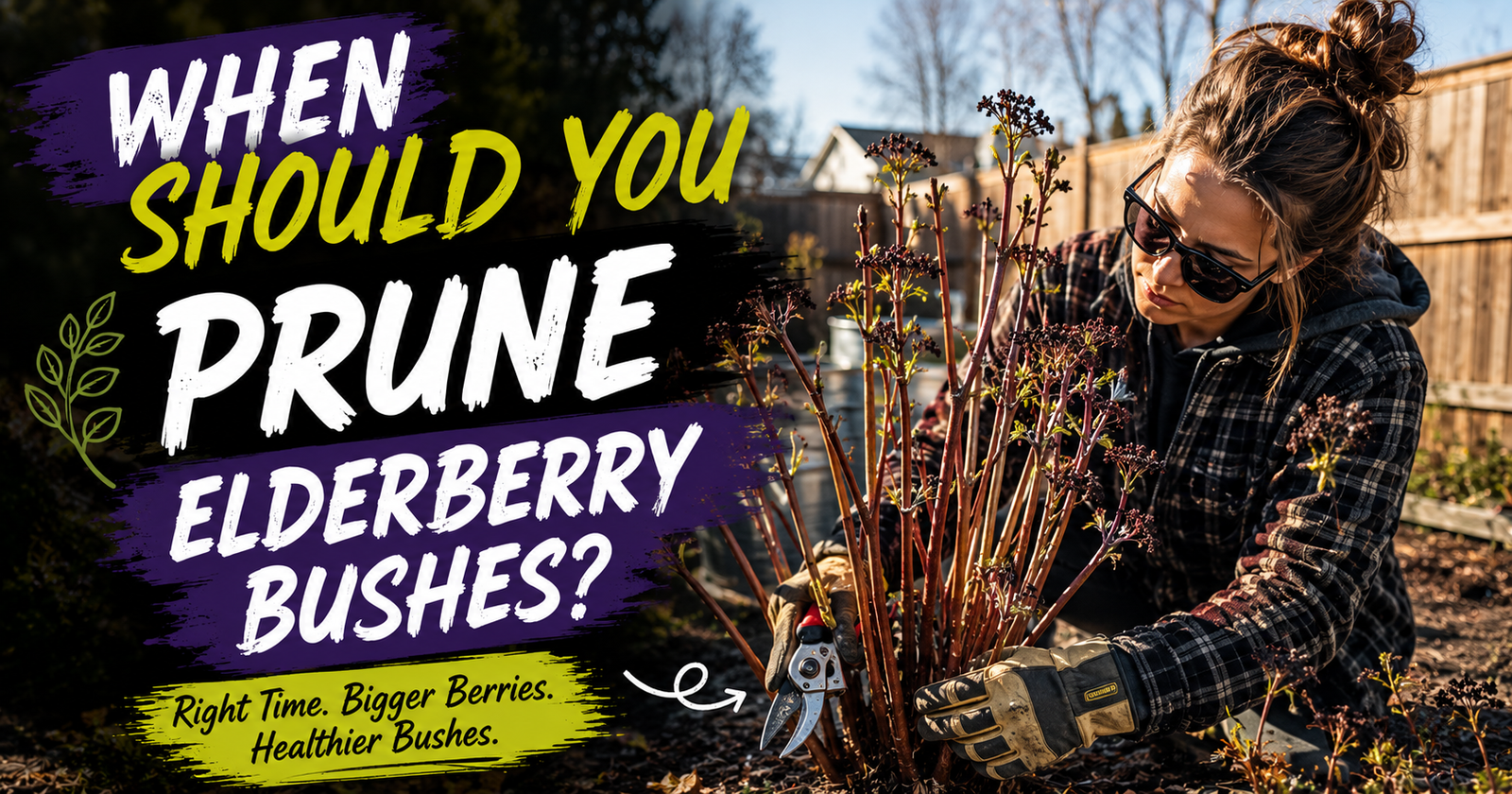
If you’re unsure when or how much to prune, When Should You Prune Elderberry Bushes? Here’s What Worksexplains the approach that’s consistently worked well for me.
Healthy Leaves Tell You A Lot
I probably spend more time looking at leaves than berries.
Leaves often tell you something is wrong long before the rest of the plant does.
Bright green foliage usually means the bush is actively growing and producing energy.
Yellow leaves, curling, spotting, or early leaf drop often signal that something else deserves attention.
Sometimes it’s water.
Sometimes nutrition.
Sometimes sunlight.
Sometimes natural seasonal change.
Learning to “read” your elderberries has helped me catch small problems before they became major ones.
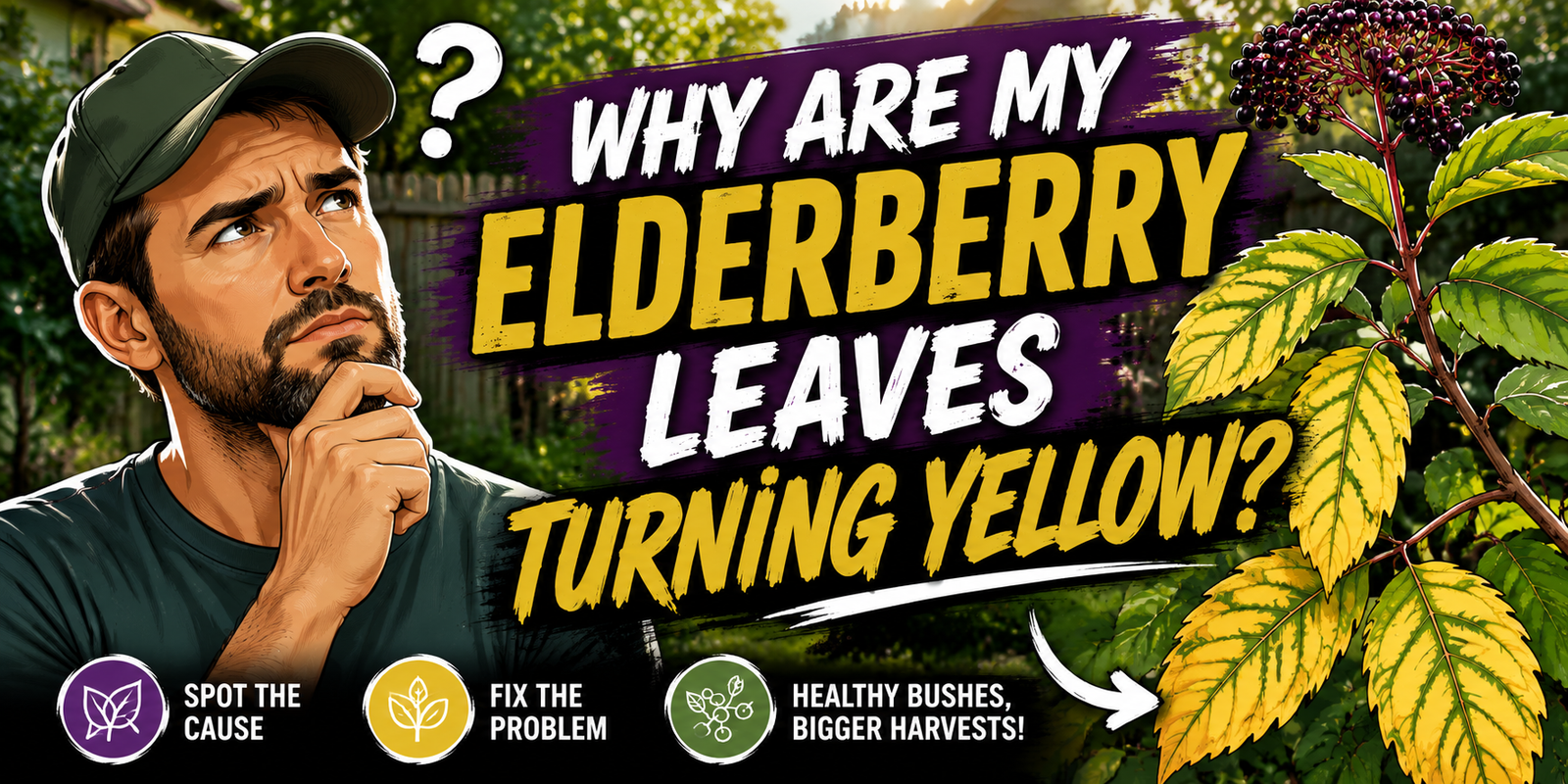
If your bushes aren’t looking their best, Why Are My Elderberry Leaves Turning Yellow? walks through the most common causes and the solutions I’ve found work best.
Not Every Flower Becomes A Berry
One thing that surprised me during my first few years was seeing flowers disappear without producing large berry clusters.
At first I assumed something had gone terribly wrong.
Now I know there can be many reasons.
Poor pollination.
Weather.
Late frosts.
Plant stress.
Even perfectly healthy elderberries won’t convert every single flower into fruit.
The goal isn’t perfection.
The goal is creating conditions where the bush can produce the best harvest it’s capable of each season.
Wildlife Can Undo Months Of Hard Work
One thing every elderberry grower eventually discovers is that you’re usually not the only one looking forward to harvest season.
As the bushes grow larger and begin producing flowers and berries, wildlife starts paying attention too.
Some years it might be birds.
Other years it’s deer.
Occasionally it’s both.
I’ve learned that protecting my elderberries isn’t about eliminating wildlife. It’s about making sure there’s still plenty of fruit left for my family after nature takes its share.
Planning ahead is much easier than reacting after the damage has already happened.
Birds Love Ripe Elderberries As Much As We Do
If you’ve ever walked outside expecting to harvest ripe elderberries only to find empty stems, birds were probably there before you.
They seem to know exactly when the berries are reaching peak ripeness.
Some mornings it honestly feels like they receive the news before I do.
Fortunately, protecting the crop doesn’t have to be complicated.

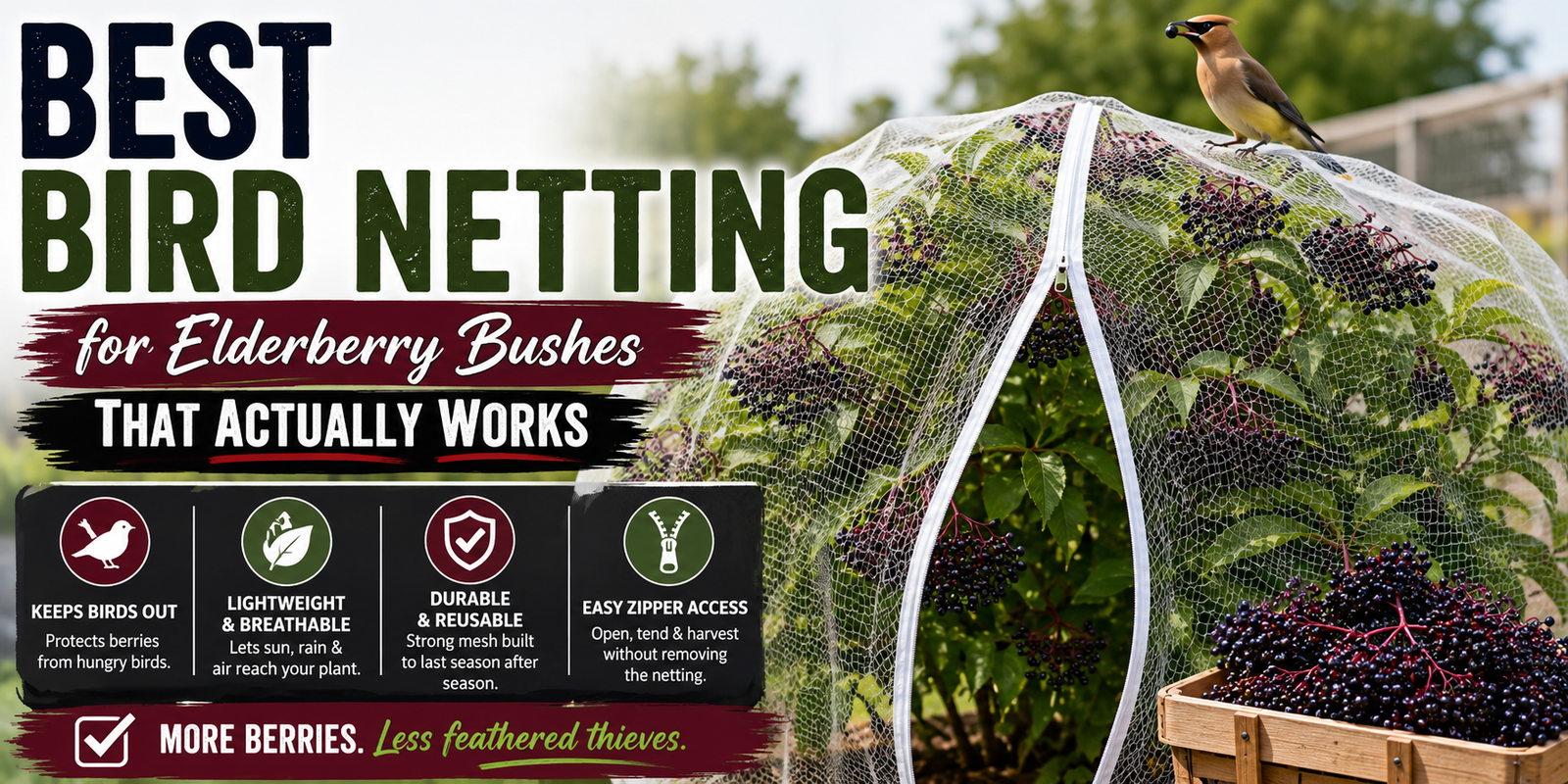
After trying several approaches, I’ve had the best results using Fruit Tree Netting with Drawstring and Zipper because it’s simple to install, reusable, and keeps birds from helping themselves to the harvest before I have a chance to pick it.
Deer Usually Prefer The Leaves
While birds target the berries, deer are usually interested in something completely different.
Tender shoots.
Fresh leaves.
Young stems.
Flower clusters.
I’ve watched healthy new growth disappear almost overnight after deer discovered my planting.
Young bushes are especially vulnerable because every branch is within easy reach.
Once the bushes mature, they recover more easily, but preventing damage is still far easier than repairing it afterward.

If wildlife has become a regular visitor, Do Deer Eat Elderberry Bushes? How to Keep Them Away explains what I’ve learned about recognizing deer damage before it gets out of hand.
A Healthy Bush Handles Stress Better
One thing I’ve noticed over the years is that vigorous elderberries recover from almost everything more quickly.
Heat.
Heavy pruning.
Minor insect damage.
Wildlife browsing.
Even weather extremes.
Healthy bushes simply have more energy available for producing new growth.
That’s another reason I focus so much attention on the basics instead of constantly searching for miracle products.
Good gardening habits solve far more problems than expensive fixes.
Propagation Lets One Bush Become Many
One of my favorite things about growing elderberries is that buying one healthy plant doesn’t necessarily mean you’ll always have only one bush.
As the years go by, healthy elderberries provide excellent material for propagation.
I’ve rooted new plants from cuttings, expanded my own planting, and even shared young bushes with friends who wanted to start growing elderberries themselves.
It’s one of the most rewarding parts of the entire hobby because every successful cutting feels like creating another opportunity for future harvests.
Cuttings Are Usually Better Than Seeds
People often assume seeds are the obvious way to grow more elderberries.
Technically they’re right.
Seeds absolutely work.
But after researching propagation and trying different methods myself, I understand why experienced growers almost always recommend cuttings instead.
They’re faster.
They’re more predictable.
Most importantly, they produce a new plant that’s genetically identical to the parent bush.
If you already have an elderberry you love, that’s a huge advantage.
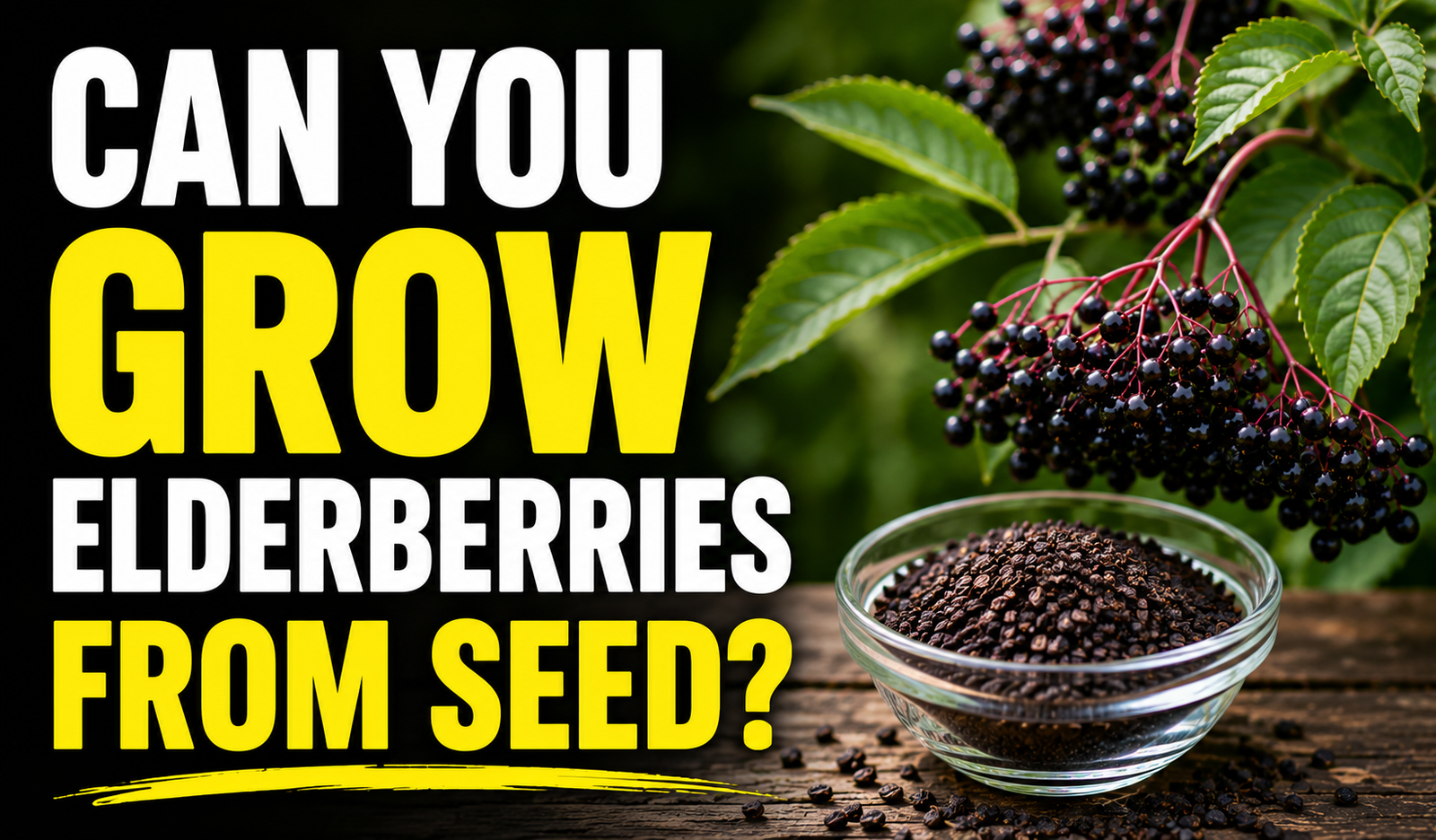
I explain the differences in detail in Can You Grow Elderberries From Seed? so you can decide which propagation method makes the most sense for your own garden.
Every Growing Season Teaches Something New
One thing I love about gardening is that no two years are exactly alike.
Some summers are hotter.
Some springs are wetter.
Some years pollination is exceptional.
Other years wildlife becomes the biggest challenge.
Every season teaches me something I didn’t know before.
That’s one reason I still enjoy growing elderberries after all these years.
There’s always another lesson waiting just around the corner, and every harvest helps me become a better gardener than I was the year before.
Troubleshooting Common Elderberry Problems
One thing I’ve learned is that elderberries usually give you clues when something isn’t right.
The trick is noticing those clues early instead of waiting until the entire bush looks unhealthy.
Most problems don’t appear overnight.
They develop gradually.
The sooner I recognize the signs, the easier they usually are to correct.
Here are a few of the issues I’ve encountered most often.
The Bush Isn’t Producing Many Berries
This is probably the number one question I hear.
Several different things can reduce berry production.
Young bushes may simply need more time to mature.
Plants growing in too much shade often flower less heavily.
Poor pollination can reduce fruit set.
Improper pruning may remove productive wood.
Even inconsistent watering during flowering can affect the final harvest.
Rather than guessing, I recommend working through the possibilities one at a time. Why Isn’t My Elderberry Bush Producing Berries? covers each of these situations in much greater detail.
The Bush Looks Healthy But Drops Its Fruit
Few things are more frustrating than watching healthy-looking berries suddenly begin falling before they’re ready to harvest.
I’ve seen this happen after periods of drought, severe weather, and other forms of plant stress.
Sometimes it’s completely natural as the bush sheds fruit it can’t fully support.
Other times it’s a signal that the plant needs better growing conditions.
The important thing is not assuming the bush is ruined.
Most elderberries recover well once the underlying issue is corrected.
Growing Great Elderberries Starts Long Before Harvest
It’s easy to focus on berries because that’s the exciting part.
But I’ve found the biggest harvests are usually earned months earlier.
Healthy roots.
Healthy leaves.
Healthy flowers.
Those are the stages that determine how many berries eventually develop.
Harvest season simply reveals how well the bush was cared for throughout the year.
That’s why I try to think about elderberries as a year-round project instead of something I only pay attention to when berries begin turning purple.
My Annual Elderberry Care Routine
People sometimes ask what I actually do throughout a normal year.
The truth is my routine is surprisingly simple.
Late Winter
- Inspect bushes for winter damage.
- Complete annual pruning.
- Remove dead or damaged wood.
- Prepare for spring growth.
Spring
- Watch for vigorous new shoots.
- Water when rainfall is limited.
- Apply fertilizer if needed.
- Monitor flower development.
Summer
- Continue watering during dry periods.
- Watch for deer and bird activity.
- Inspect leaves for signs of stress.
- Harvest ripe berries.
Fall
- Clean around the bushes.
- Evaluate the year’s growth.
- Plan future plantings or propagation.
- Prepare young bushes for winter.
Nothing about that schedule is complicated.
The consistency is what makes the difference.
Small tasks completed throughout the year are much easier than trying to rescue neglected bushes later.
Elderberries Reward Patience More Than Perfection
One lesson stands out above all the others.
You don’t have to grow perfect elderberries.
You simply have to keep improving.
Some years you’ll battle drought.
Some years birds will steal more berries than you’d like.
Some years late frosts will reduce your harvest.
That’s gardening.
The important part is that healthy elderberry bushes almost always give you another opportunity next season.
Every year your plants become a little larger.
Your knowledge grows.
Your harvest improves.
That’s one of the reasons I enjoy growing elderberries so much.
It’s a hobby that keeps rewarding you the longer you stick with it.
Continue Learning As Your Elderberries Grow
No single guide can answer every question you’ll ever have about growing elderberries, but I hope this one gives you a strong foundation to build on. As your bushes mature, you’ll naturally encounter new questions and opportunities to improve your harvests.
Whether you’re learning how to protect ripening berries, propagate new plants, troubleshoot growing problems, or turn your harvest into homemade products, Elderberry Pro has in-depth guides covering every stage of the journey.
Growing elderberries isn’t about mastering everything in one season.
It’s about learning a little more each year, making small improvements, and watching those efforts turn into healthier bushes and bigger harvests for many seasons to come.
About the Author
Avery Collins
Avery Collins is a backyard fruit grower and gardening writer with a passion for helping home gardeners grow healthier, more productive elderberries. Through Elderberry Pro, Avery shares practical, experience-based growing advice, propagation techniques, harvesting tips, and honest product recommendations so readers can enjoy thriving elderberry bushes for years to come.