

Most people assume growing elderberries from seed is the obvious way to start.
After all, that’s how countless flowers, vegetables, and fruit trees begin.
So when someone asked me if elderberries could be grown from seed, I expected the answer to be simple.
It was.
Yes, you absolutely can grow elderberries from seed.
The better question is whether you should.
The more I learned about elderberries, the more I realized that most experienced growers rarely start them this way. Instead, they usually rely on cuttings because they’re faster, more predictable, and produce plants identical to the parent bush. If you choose cuttings instead, why cuttings fail to root in soil can help troubleshoot the rooting process.
That doesn’t mean seeds don’t have their place.
Here’s what I’ve learned about growing elderberries from seed and why it isn’t always the best option.
Yes, Elderberry Seeds Will Grow
Healthy elderberry seeds are capable of producing new plants.
That’s how elderberries reproduce naturally in the wild.
Birds eat ripe berries.
The seeds pass through the bird.
Eventually they’re deposited somewhere new where another elderberry bush may begin growing.
Nature has been doing it that way for thousands of years.
Home gardeners can certainly grow elderberries from seed too, but the process requires considerably more patience than many people expect.


Seeds Don’t Produce Exact Copies
This is probably the biggest surprise for new growers.
A seed isn’t a clone.
Every seed contains a unique combination of genetics.
That means the new bush may differ from the plant the berries originally came from.
It might:
- Produce slightly different berries.
- Grow taller or shorter.
- Ripen at a different time.
- Produce heavier or lighter crops.
- Show different growth habits.
If you’ve found an elderberry bush you absolutely love, growing from seed won’t guarantee you’ll get another identical plant.


That’s Why Most Growers Use Cuttings
One reason cuttings have become so popular is consistency.
Every cutting is genetically identical to the parent plant.
If the original bush produces outstanding berries, vigorous growth, and excellent yields, every successful cutting has the potential to do the same.
That’s why commercial nurseries almost always propagate elderberries vegetatively instead of planting thousands of random seeds.
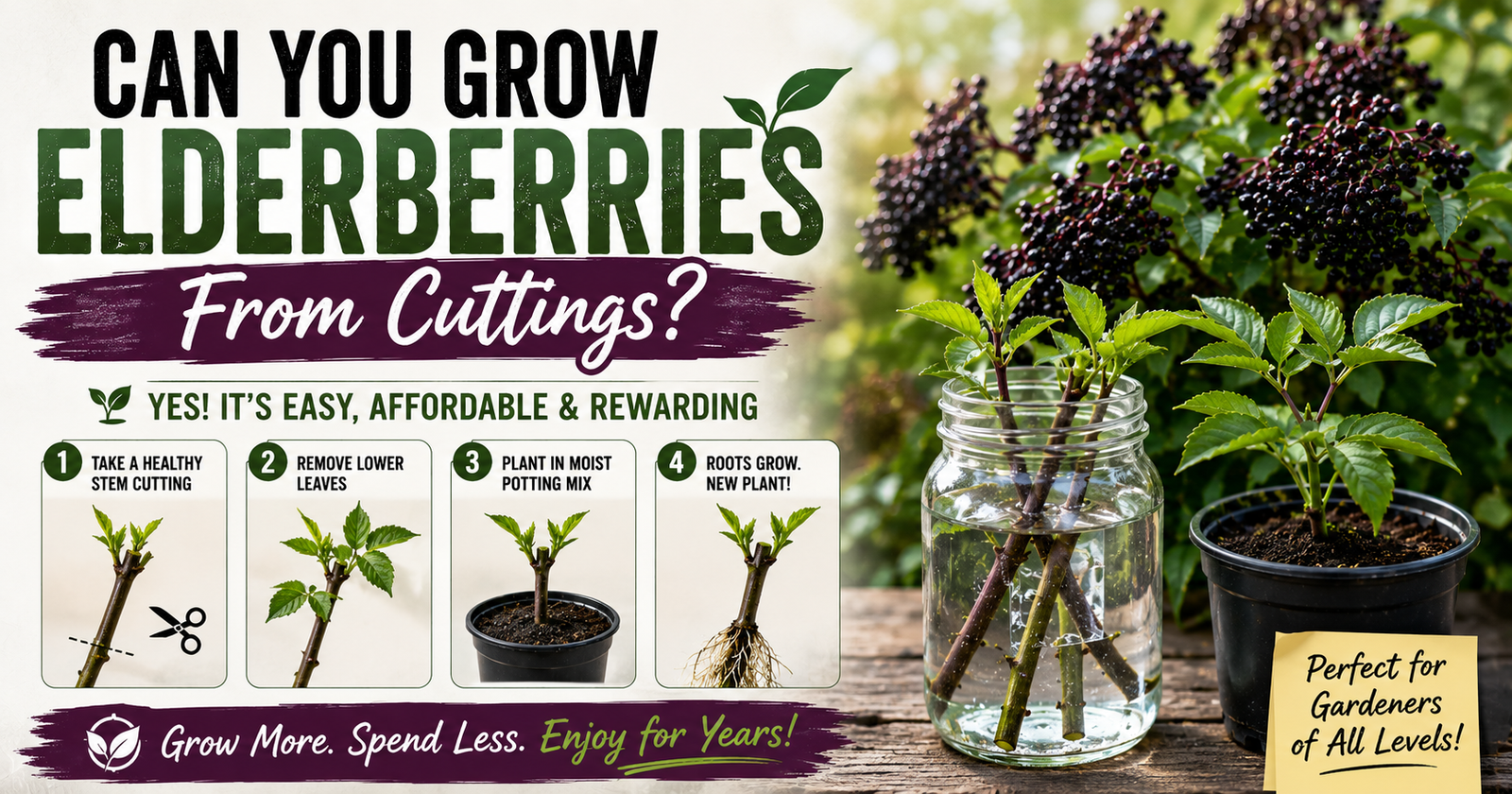
If you’re mainly interested in producing additional bushes from one healthy plant, Can You Grow Elderberries From Cuttings? explains why propagation has become the preferred method for most home gardeners.
Growing From Seed Usually Takes Longer
Another thing I’ve learned is that seeds require a little more patience.
Before they ever become productive shrubs, they must:
- Germinate.
- Develop roots.
- Produce healthy stems.
- Become established.
- Mature enough to flower and produce fruit.
That’s a much longer journey than starting with an established cutting that’s already part of a mature plant.
If your goal is harvesting berries as soon as possible, seeds usually aren’t the quickest path.


Fresh Seeds Aren’t Always Ready To Germinate
One thing many people don’t realize is that elderberry seeds naturally go through a dormant period.
In nature, ripe berries fall during late summer and fall.
The seeds then experience changing temperatures through the colder months before sprouting later.
That’s one reason germination can sometimes seem inconsistent if you simply plant fresh seeds immediately after harvesting them.
Understanding that natural cycle helps explain why growing elderberries from seed requires considerably more patience than many other garden plants.
Starting With Healthy Plants Still Matters
Even if you eventually decide propagation is the better choice, everything begins with healthy parent plants.
Strong bushes produce healthier berries, stronger cuttings, and better overall genetics for future generations.

If you’re still adding elderberries to your landscape, I’ve had great success recommending the Live American Elderberry Plants from Weaver Family Farms Nursery because starting with vigorous plants gives you an excellent foundation whether your future goal is harvesting berries, taking cuttings, or experimenting with seeds.


Growing From Seed Can Be A Fun Experiment
Even though I usually recommend cuttings, I still think growing elderberries from seed has its place.
There’s something rewarding about watching an entire shrub develop from a tiny seed.
If you enjoy experimenting in the garden or simply want to see what nature produces, starting a few seeds can be a fun long-term project.
I just wouldn’t rely on seeds if my goal was establishing a productive berry patch as quickly as possible.
Don’t Expect Every Seed To Sprout
One thing I’ve learned is that germination rates can vary quite a bit.
Some seeds sprout readily.
Others never germinate at all.
That’s perfectly normal.
Instead of planting one or two seeds and hoping for the best, I always recommend starting several.
Doing so gives you a much better chance of ending up with healthy young plants.
Patience is part of the process.



Seedlings Need The Same Care As Mature Bushes
Once your seeds finally sprout, the work is only beginning.
Young elderberry seedlings still need:
- Plenty of sunlight.
- Consistent moisture.
- Good drainage.
- Healthy soil.
- Protection from weeds and competing plants.
Strong early growth often determines how well those young bushes perform over the next several years.
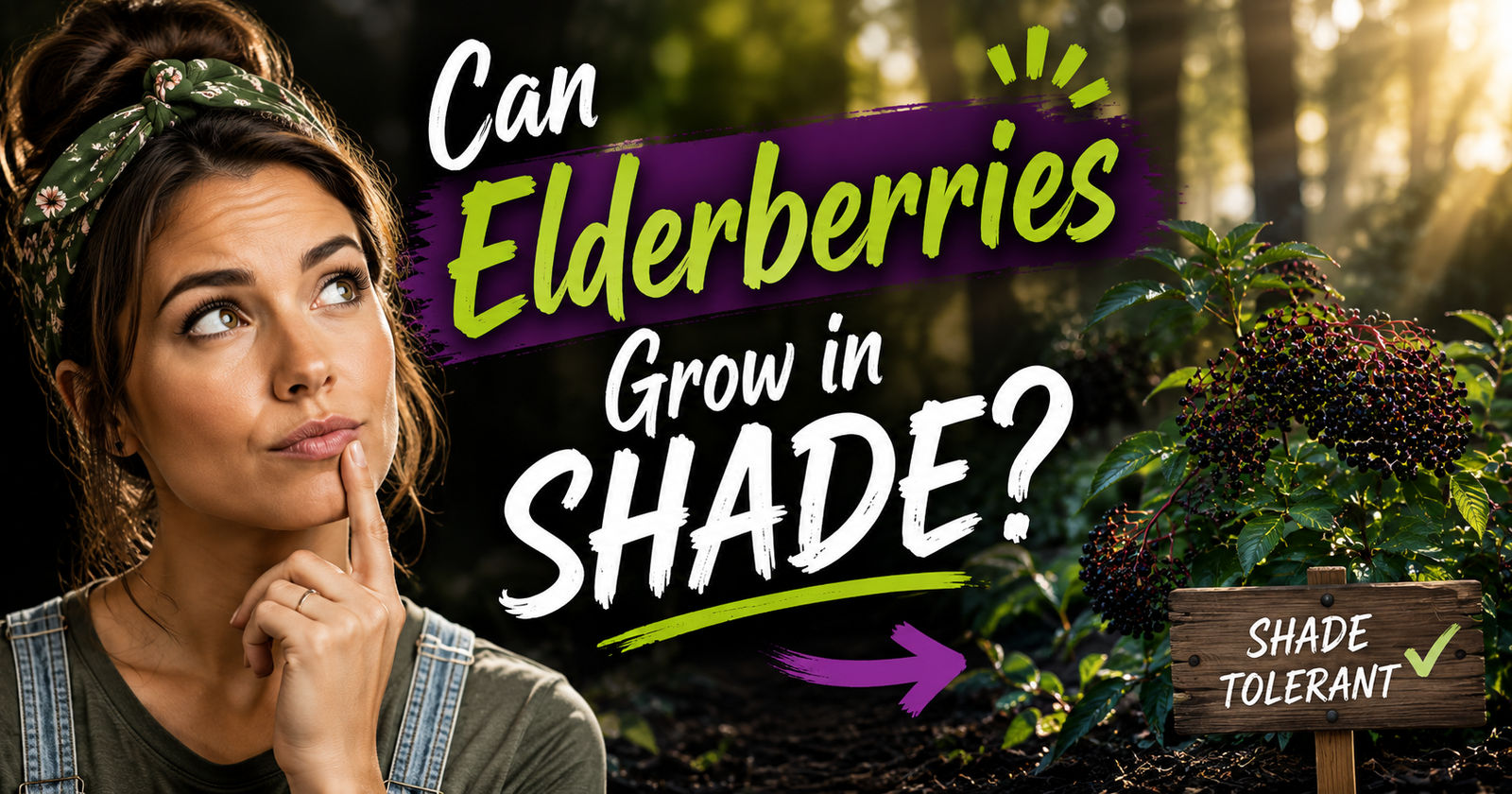
If your planting location doesn’t receive much direct sunlight, Can Elderberries Grow in Shade? Here’s What I Learned explains what kind of light produces the healthiest bushes and the best berry crops.
Seeds Or Cuttings? My Honest Recommendation
If someone asked me which method I’d choose today, I’d still pick cuttings almost every time.
Not because seeds don’t work.
They absolutely do.
But cuttings remove so much uncertainty.
You know exactly what variety you’re growing.
You know what the berries should taste like.
You know how the mature bush performs.
That’s incredibly valuable if you’ve already found an elderberry you love.
For gardeners wanting dependable results, propagation simply makes life easier.

Healthy Parent Plants Produce Better Everything
Whether you’re harvesting berries for seed, collecting cuttings, or simply enjoying fresh fruit each summer, healthy bushes make every project easier.
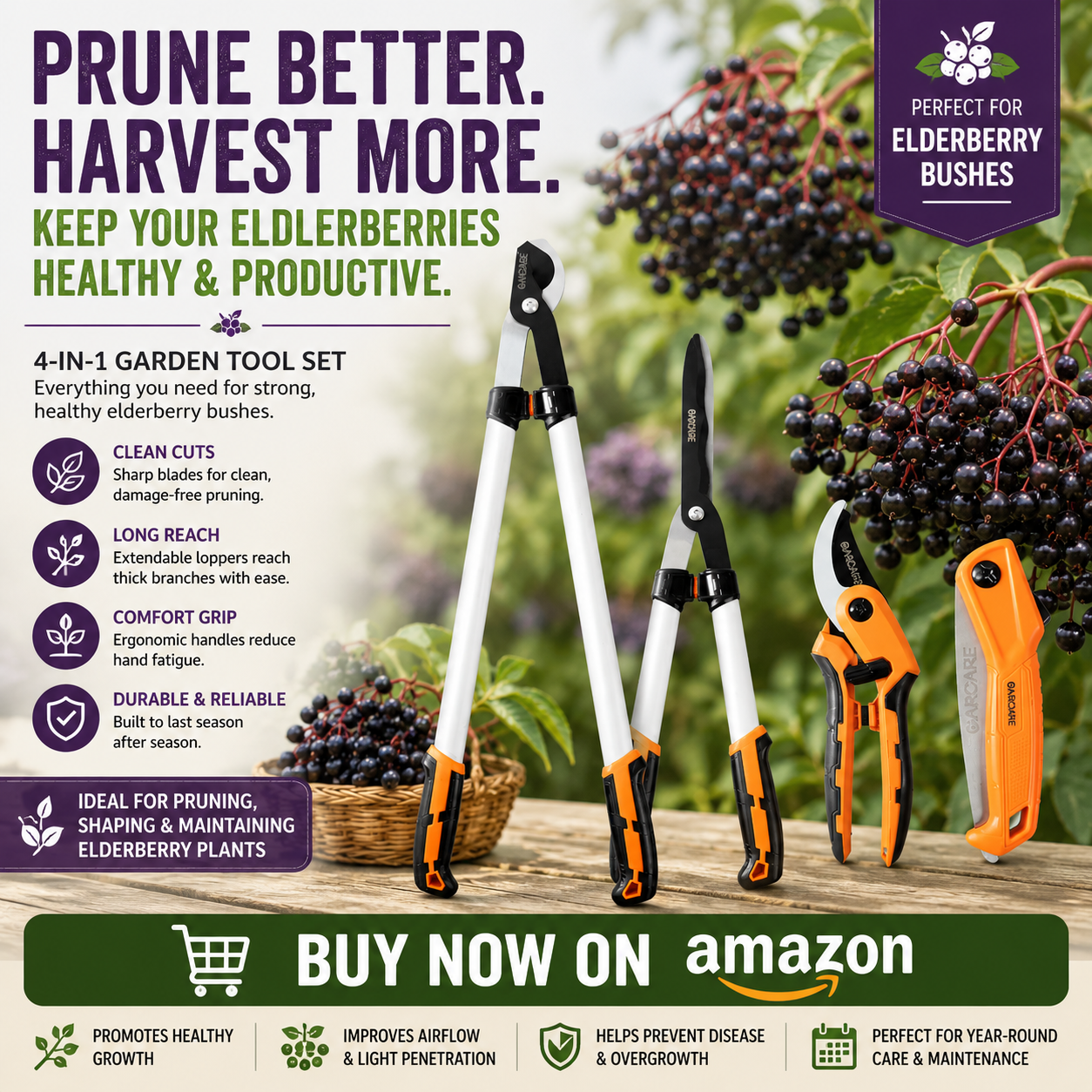
Good watering, annual pruning, proper spacing, and balanced fertilization all contribute to stronger plants that continue producing year after year. For the pruning part of that routine, elderberry pruning tools can help you prepare for maintaining mature bushes.
I’ve found that investing time in caring for mature bushes pays off no matter how you eventually decide to expand your planting.
Growing Elderberries Is A Long-Term Investment
One thing I appreciate most about elderberries is that they reward patience.
The first year often feels slow.
The second year is better.
A few years later you’re harvesting berries, taking cuttings, and maybe even collecting seeds from bushes you grew yourself.
That’s part of what makes growing elderberries so enjoyable.
Each season builds on the one before it.
The work you put in today continues paying off for years.
Continue Growing Your Elderberry Knowledge
Growing elderberries from seed is certainly possible, but for most gardeners it isn’t the fastest or most predictable way to expand a planting.
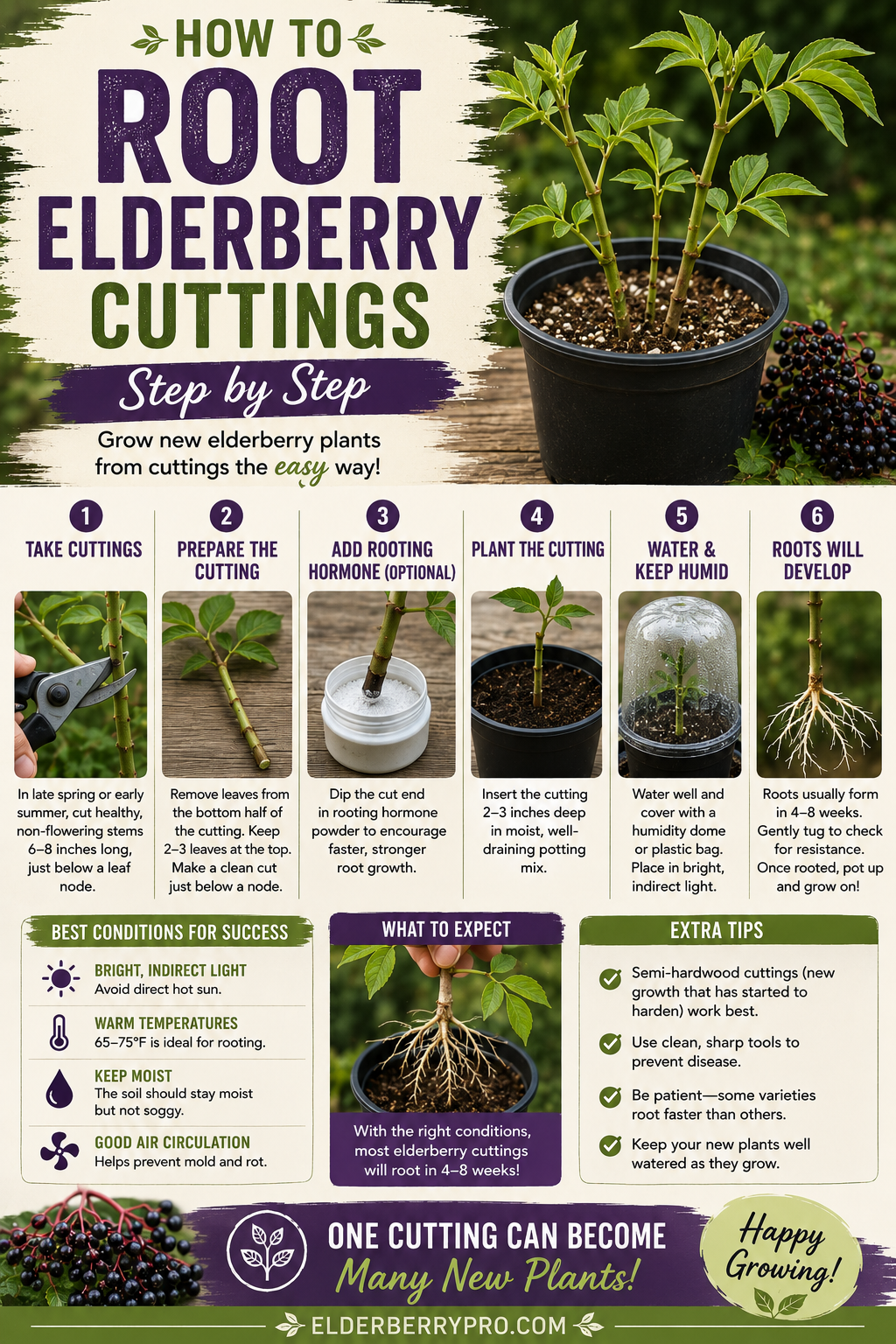
If you’d rather create new bushes that are identical to a proven parent plant, How to Root Elderberry Cuttings Step by Step walks through the propagation method that’s given me the best results. You’ll also want to read Can You Root Elderberry Cuttings in Water? if you’re considering different rooting methods, and How Long Does It Take an Elderberry Bush to Produce Fruit? to understand when your new plants are likely to reward you with their first harvest.
Whether you choose seeds or cuttings, every healthy elderberry bush starts with a little patience and the willingness to learn something new each growing season.
Seeds Can Still Teach You A Lot
Even though I generally recommend propagation by cuttings, I don’t think growing elderberries from seed is a waste of time.
Quite the opposite.
Watching seedlings develop helps you better understand how elderberries grow from the very beginning.
You begin noticing differences in vigor, leaf shape, growth habits, and overall development that you might otherwise overlook.
For gardeners who enjoy experimenting, raising a few seedlings can be a fun project even if most of your future bushes come from cuttings.
About the Author
Avery Collins
Avery Collins is a backyard fruit grower and gardening writer who enjoys helping home gardeners grow healthier elderberries through practical, experience-based advice. Through Elderberry Pro, Avery shares simple growing guides, propagation techniques, and real-world tips that help readers enjoy productive elderberry bushes for years to come.