
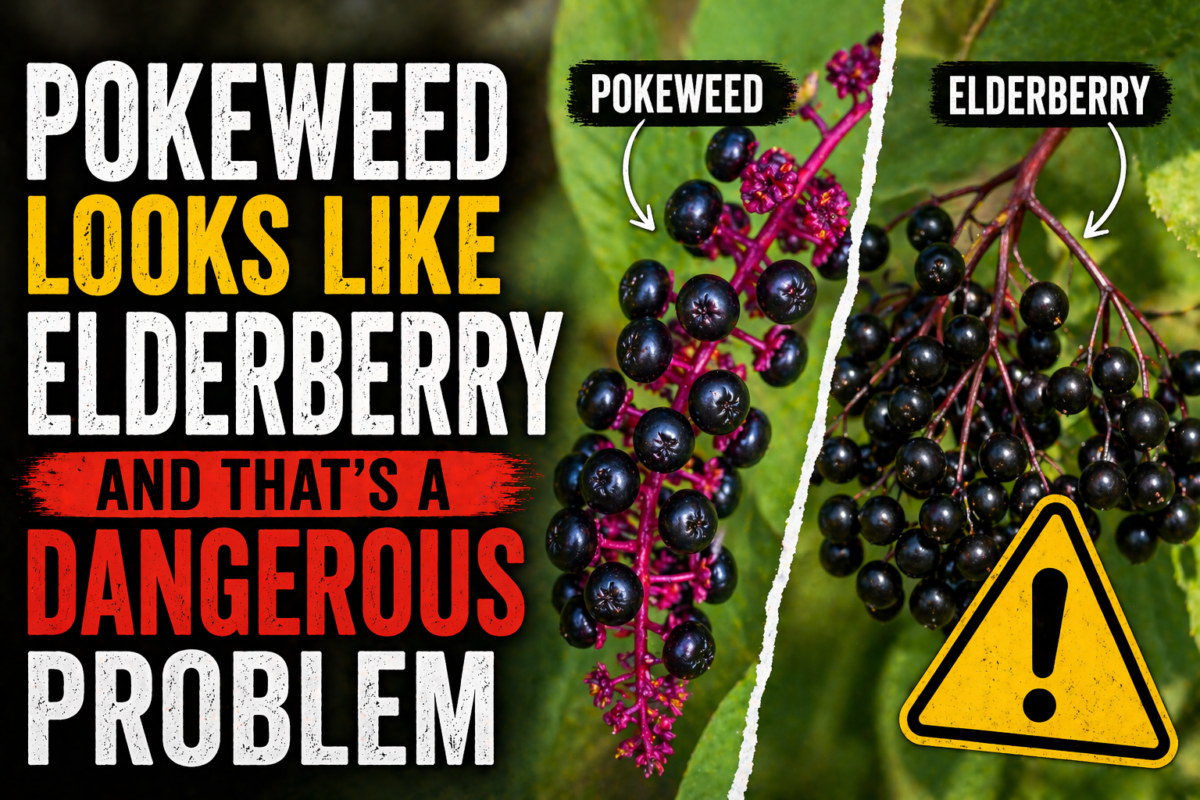
Both grow wild across the eastern US, both have dark purple berries, and both show up in backyards without warning. One is a medicinal powerhouse. The other can put you in the hospital.
Key Takeaways
- Pokeweed and elderberry both produce dark purple-black berries and grow wild across the eastern United States — the resemblance is genuinely confusing
- Pokeweed is toxic to humans and animals — all parts of the plant including berries, roots, leaves and stems
- Elderberry is safe when properly cooked — raw elderberries also cause illness but are far less dangerous than pokeweed
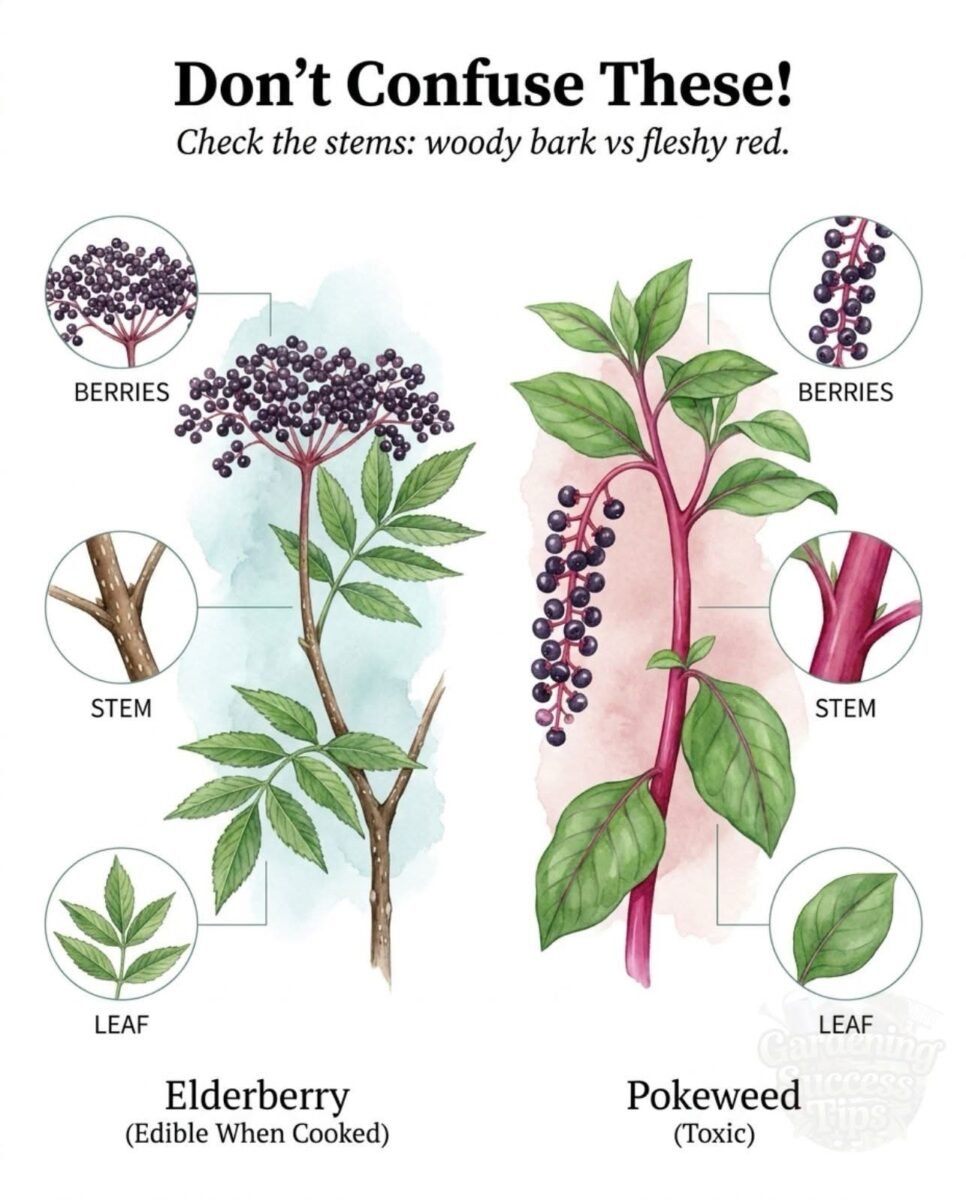
- The single fastest identification difference: cluster shape — elderberry grows in flat-topped umbrella clusters, pokeweed grows in elongated grape-like drooping spikes
- Stem color is a reliable secondary identifier — elderberry stems are green to light brown, pokeweed stems are bright magenta-pink to deep purple
- If you’re not 100% certain which plant you’re looking at, do not eat the berries — period
Every summer the same thing happens across backyards, hiking trails, and roadsides from Maine to Texas. Someone spots a plant covered in dark purple berries. They’ve heard elderberry is a superfood. The plant looks about right. They pick a handful.
Sometimes it’s elderberry. Sometimes it’s pokeweed.
The consequences of getting that wrong range from unpleasant to genuinely dangerous. Pokeweed toxicity is serious — it has sent people to the emergency room and in documented cases involving large consumption or the roots, it has been fatal.
This guide gives you every identification tool you need to tell these two plants apart confidently before you touch a single berry.


Why These Two Plants Get Confused
The confusion is understandable. Both plants:
- Grow wild across the eastern and midwestern United States
- Produce clusters of small dark purple-black berries in late summer
- Reach similar heights of 5–10 feet at maturity
- Favor the same types of disturbed habitat — roadsides, field edges, fence lines, garden borders
- Appear in backyards, parks, and wild areas without being intentionally planted
If you glance at either plant from a distance you see a tall shrub covered in dark berries. The resemblance at first look is real. The differences, once you know what to look for, are unmistakable.


The Fastest Way to Tell Them Apart — Berry Cluster Shape
This is the single most reliable quick identification feature and you can see it from several feet away.
Elderberry: berries grow in large flat-topped or slightly rounded umbrella-shaped clusters called corymbs. Picture a wide, relatively flat spray of small berries — like an upside-down umbrella or a broad shallow bowl shape. The cluster spreads outward and sits relatively flat at the top. Individual stems within the cluster branch repeatedly in multiple directions to create that flat-topped spread.
Pokeweed: berries grow in elongated, cylindrical, drooping clusters called racemes. Picture a thick dense spike of berries — like a stubby grape cluster or a fat cylindrical wand. The cluster hangs downward. Berries are packed tightly along a central stem in a single elongated formation rather than spreading outward.
If the berry cluster is flat and spreading like an umbrella — potentially elderberry.
If the berry cluster is long, cylindrical, and drooping like a thick grape bunch — pokeweed.
This single feature alone will correctly separate these plants in the vast majority of cases. Everything else below is confirmation.
Stem and Stalk Color — The Second Fastest Identifier
Elderberry: stems and branches are green to light tan or grayish-brown. Mature elderberry canes develop a corky, slightly rough texture and remain in the green-brown color range. The stems holding berry clusters are often reddish-pink — this is normal for elderberry and can cause momentary confusion — but the main woody stems and branches of the plant are not.
Pokeweed: the main stalk is one of the most distinctive features of the plant once you know what you’re looking at. Mature pokeweed develops a thick, smooth, bright magenta-pink to deep purple stalk that is unlike any other common wild plant. This color is vivid and unmistakable — not brownish-purple but genuinely bright pink-purple. Young pokeweed plants may have greener stems that darken with age, but by the time the plant is producing berries the stalk color is typically well-developed.
If you see a plant with bright magenta-pink or deep purple main stems and dark berry clusters — that is pokeweed. Do not eat those berries.



Leaf Differences
Elderberry leaves: elderberry has compound leaves — each leaf structure consists of 5–11 leaflets arranged in opposite pairs along a central stem with a single leaflet at the tip. Each individual leaflet is lance-shaped with serrated edges. The compound leaf structure is one of the most reliable elderberry identifiers — you’re not looking at a single simple leaf but a group of leaflets arranged in a feather pattern.
Pokeweed leaves: pokeweed has large simple leaves — single undivided leaves that can grow very large, up to 12 inches long and 5 inches wide. They are smooth-edged or very mildly wavy, not serrated, and oval to lance-shaped. The size and simplicity of pokeweed leaves are striking — they look almost tropical in their largeness.
The compound vs. simple leaf distinction is one of the most reliable separation features. If the leaves are large, simple, and smooth-edged — pokeweed. If the leaves are compound with multiple serrated leaflets — potentially elderberry.


Plant Structure and Growth Habit
Elderberry: grows as a multi-stemmed shrub with woody canes. Multiple stems grow from the base. The plant has genuine woody structure — established elderberry canes have real wood grain and don’t crush easily. Elderberry spreads through underground runners and often forms thickets of multiple plants.
Pokeweed: grows from a single large central stalk that emerges from an enormous taproot. The stalk is thick — often several inches in diameter at the base on mature plants — and has a pithy, almost hollow interior when cut. The plant dies back to the ground each winter and regrows from the perennial taproot. It grows as a single dominant stalk with branching rather than as a multi-stemmed shrub.
Flower Differences — Earlier in the Season
If you’re looking at the plant before the berries form, the flowers are a reliable identifier.
Elderberry flowers: tiny individual white flowers in large flat-topped clusters that mirror the berry cluster shape. The flower clusters are fragrant — a light, pleasant floral scent. Elderflower is itself edible and used in cordials and teas.
Pokeweed flowers: small white to pinkish-white flowers in elongated spike formations that mirror the eventual berry cluster shape. Less fragrant than elderflower and the elongated spike pattern is already visible at the flower stage.

Habitat and Season
Both plants overlap significantly in habitat — disturbed ground, roadsides, field edges, forest margins, and backyards throughout the eastern US.
Berry ripening timing is similar — late summer through early fall, typically August through October depending on location and species.
Neither habitat nor timing reliably separates these plants. Use the visual identification features above.

How Toxic Is Pokeweed Compared to Raw Elderberry?
This is worth understanding clearly because both plants are toxic raw — but the severity is very different.
Raw elderberries contain cyanogenic glycosides that cause nausea, vomiting, and stomach cramping. The symptoms are unpleasant and can be serious in large amounts or in small children. However, properly cooking elderberries destroys these compounds completely and makes them safe. The toxicity of raw elderberries is real but manageable and well understood. Full details: Never Eat Elderberries Until You Read This
Pokeweed is significantly more toxic. All parts of the plant — root, stem, leaves, unripe berries, and ripe berries — contain toxic compounds including phytolaccatoxin and phytolaccigenin. These cause severe gastrointestinal distress, vomiting, diarrhea, low blood pressure, and in serious cases respiratory depression and potentially death. The root contains the highest concentration of toxins.
Pokeweed berries are considered less toxic than the roots and stems — some traditional Appalachian practices involve cooking young pokeweed shoots after multiple water changes — but this is not something to attempt without expert guidance and the berries should never be consumed.
Importantly: cooking does not fully neutralize pokeweed toxins the way it neutralizes elderberry’s cyanogenic glycosides. Pokeweed is not a plant you can simply cook to make safe.


What to Do If Someone Eats Pokeweed
If you suspect pokeweed ingestion — berries, leaves, stems, or especially root — contact poison control immediately.
United States Poison Control: 1-800-222-1222
Provide information about what was consumed, approximately how much, and when. Do not wait for symptoms to appear before calling — pokeweed toxicity can develop and worsen rapidly.
If the person is showing symptoms including difficulty breathing, loss of consciousness, seizures, or severe vomiting — call 911.
For accidental consumption of one or two pokeweed berries by a healthy adult who is not symptomatic — still call poison control. They will advise monitoring versus treatment based on the amount and the person’s size.
Children and pets are at significantly higher risk from pokeweed due to smaller body weight. Any suspected pokeweed ingestion in a child or pet warrants an immediate call regardless of amount.
For pet owners specifically — pokeweed is toxic to dogs and cats as well as humans. If your dog has been near pokeweed plants and you suspect ingestion, contact your veterinarian or the ASPCA Animal Poison Control Center: (888) 426-4435. Elderberry toxicity in dogs is covered here: Are Elderberries Poisonous to Dogs — What Every Pet Owner Must Know


Other Plants Sometimes Confused With Elderberry
Pokeweed is the most common and most dangerous confusion but a few other plants are worth knowing:
Aralia spinosa (Devil’s Walking Stick): produces dark berry clusters on a single-trunked spiny plant. The thorny stems make it distinguishable from elderberry once you’re close enough to see them. Toxic.
Sambucus racemosa (Red Elderberry): this is actually an elderberry species — but one that produces red rather than black berries and is considered more toxic than black elderberry even when cooked. If the berries are red rather than dark purple-black, this may be red elderberry. Do not consume.
Wild grape: grape clusters are elongated like pokeweed but the plant is a vine rather than a shrub. Leaves are simple and lobed. Wild grapes are edible but the vine structure clearly separates them from elderberry shrubs.
Virginia creeper: produces small dark blue-black berries on a vine. Toxic. The vine growth habit and distinctive five-leaflet leaves distinguish it from elderberry.

The Complete Identification Checklist
Before consuming any wild berry you believe to be elderberry, confirm all of the following:
✅ Berry cluster is flat-topped and spreading like an umbrella — not elongated and drooping
✅ Main plant stems are green, tan, or light brown — not bright magenta-pink or purple
✅ Leaves are compound with multiple serrated leaflets — not large simple smooth leaves
✅ Plant grows as a multi-stemmed shrub — not from a single thick stalk
✅ Berries are deep purple-black and small — not in a tight cylindrical spike
✅ You are confident in your identification — not just hopeful
If any item on this checklist gives you pause — do not harvest. The berries will be there next week after you’ve confirmed your identification with additional research, local foraging groups, or an expert.
Foraging Elderberry Safely
If you’ve confirmed you have a genuine elderberry plant and want to harvest:
Harvest in late summer when berries are fully ripe — deep purple-black throughout the cluster. Unripe red or partially ripe berries have higher concentrations of cyanogenic compounds.
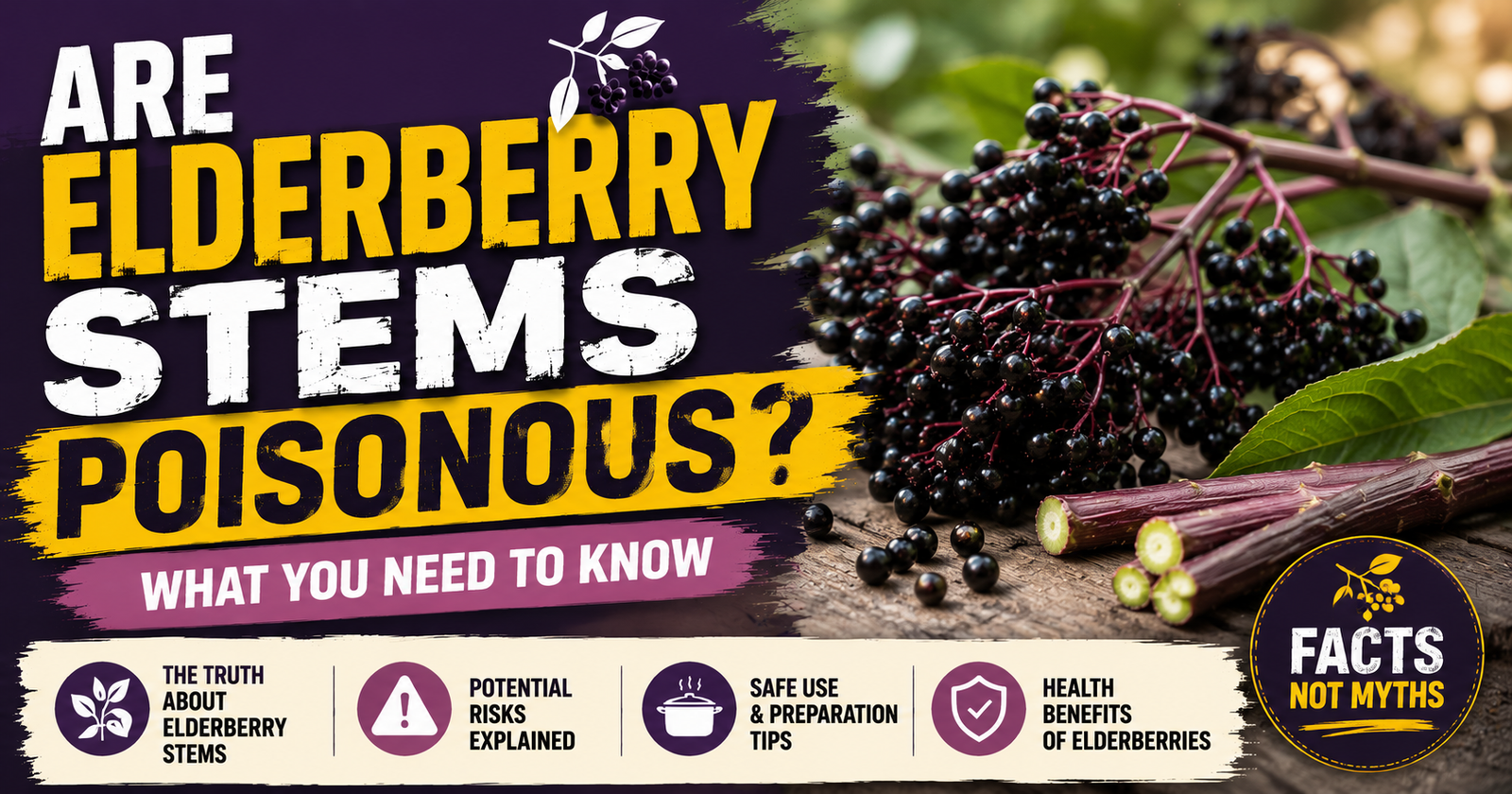
Remove stems before cooking — the stems contain more of the problematic compounds than the berries. Strip berries from stems using a fork before cooking.
Cook thoroughly — bring to a boil and simmer for at least 15 minutes before making syrup, jelly, or any other preparation. Do not consume raw.
Start with a small amount — even properly cooked elderberries can cause digestive upset in some people, particularly at large doses or if the preparation wasn’t sufficient. Start conservatively and see how your system responds.
For growing your own rather than foraging — eliminating the identification risk entirely — the complete guide: How to Grow Elderberries at Home
If you want to skip foraging or growing and start with a plant you’re confident in: American Elderberry Plants from Weaver Family Farms Nursery

Frequently Asked Questions
Is pokeweed the same as elderberry?
No. Pokeweed (Phytolacca americana) and elderberry (Sambucus nigra or Sambucus canadensis) are completely different plants from different plant families. They share similar berry color and overlapping habitat but are unrelated botanically and have very different toxicity profiles.
How can you tell pokeweed from elderberry at a glance?
Cluster shape is the fastest tell. Elderberry clusters are flat-topped and spread outward. Pokeweed clusters are elongated and drooping like a thick grape bunch. Stem color confirms it — pokeweed has distinctive bright magenta-pink to purple main stems.
Can you eat pokeweed berries if you cook them?
No — unlike elderberry where cooking destroys the toxic compounds, pokeweed toxins are not fully neutralized by cooking. Pokeweed berries should not be consumed. Some traditional preparations of young pokeweed shoots involve extensive boiling with water changes — but this is a separate practice requiring expert knowledge and does not apply to the berries.
What happens if you eat pokeweed berries by mistake?
Call poison control immediately at 1-800-222-1222. Symptoms can include nausea, vomiting, diarrhea, stomach cramping, low blood pressure, and in serious cases respiratory and neurological effects. Don’t wait for symptoms to develop before calling.
Do pokeweed and elderberry grow in the same areas?
Yes — both grow throughout the eastern United States in disturbed habitats including roadsides, field edges, forest margins, and backyards. Their geographic and habitat overlap is significant which is why knowing the identification differences matters.
Are pokeweed berries poisonous to dogs?
Yes — pokeweed is toxic to dogs, cats, horses, and most other animals. If your pet has been around pokeweed, contact your veterinarian or ASPCA Animal Poison Control at (888) 426-4435.
Is red elderberry the same as black elderberry?
No — red elderberry (Sambucus racemosa) is a related but different species that produces red rather than black berries. It is considered more toxic than black elderberry even when cooked. If the berries are red, do not consume.
Before You Pick Another Wild Berry
Foraging is one of the most rewarding connections you can have with the land around you. Elderberry specifically is worth learning to identify — it’s abundant, genuinely useful, and once you know it you’ll spot it everywhere.
But foraging demands certainty, not confidence. There is no undo button for eating the wrong berry. The identification features in this article are reliable and learnable — flat cluster versus elongated spike, green stems versus magenta stems, compound leaves versus large simple leaves. Twenty minutes with this guide and a plant in front of you builds the kind of recognition that lasts.
Know what you’re picking. Every time. Without exception.
About the Author
Marcus Webb is a health science writer with a background in nutritional biochemistry and over a decade of experience in natural health content. He contributes regularly to ElderberryPro.com and takes plant identification seriously enough to double-check every time — because the alternative isn’t worth it.
As an Amazon Associate we earn from qualifying purchases through some links in our articles.