
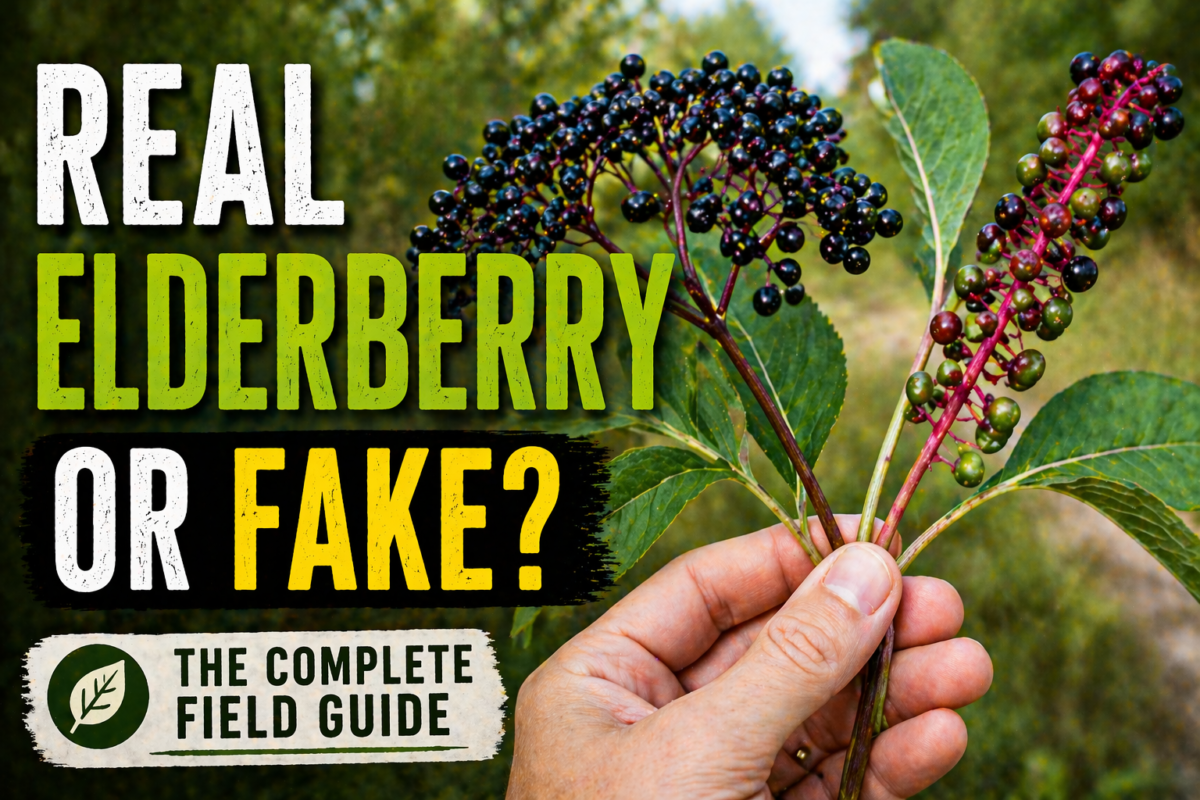
Learn how to identify elderberry with confidence — leaves, berries, flowers, stems, and the lookalikes that trip people up. The complete field guide.
Key Takeaways
- Elderberry has five reliable identification features: compound leaves, flat-topped berry clusters, green-to-brown stems, corky bark on mature canes, and opposite leaf arrangement
- The flat-topped umbrella cluster shape is the single fastest visual identifier at a distance
- Elderberry can be identified at every season — flowers in early summer, berries in late summer, bare canes in winter
- American elderberry and European elderberry share nearly identical identification features
- Never harvest wild berries based on a single identification feature — confirm at least three before picking
- When in doubt, grow your own — eliminates identification risk entirely
Elderberry grows wild in every contiguous US state and across most of Canada. It lines roadsides, fills fence rows, colonizes disturbed ground at forest edges, and shows up uninvited in backyards from Maine to Texas. Once you know what to look for, you’ll see it everywhere.

The problem is that “knowing what to look for” requires more than a quick Google image search. Elderberry has several toxic lookalikes — pokeweed being the most common and most dangerous — and the consequences of misidentification range from a miserable evening to a medical emergency. If a dog may have eaten a plant during that confusion, elderberry poisoning signs in dogs outlines the warning signs owners should watch for.
This guide gives you every identification tool you need to recognize elderberry with confidence at every stage of the season. Not just the berries — the leaves, stems, flowers, bark, growth habit, and the subtle features that separate elderberry from everything else that might be growing nearby.

Elderberry at a Glance — The Five Reliable Features
Before going deep on each feature, here are the five things that together confirm you’re looking at elderberry:
1. Compound leaves with 5–11 serrated leaflets arranged in opposite pairs along a central stem
2. Flat-topped berry or flower clusters — the umbrella shape that spreads outward rather than drooping down
3. Green to light brown woody stems — never bright magenta or purple on the main canes
4. Corky, warty bark on mature canes with visible lenticels (small horizontal pores)
5. Opposite branching — branches and leaves emerge in pairs directly across from each other on the stem
No single feature is definitive on its own. All five together give you confident identification.

Identifying Elderberry by Leaves
The leaves are one of the most reliable year-round identification features during the growing season and one of the first things to learn.
Compound Leaf Structure
Elderberry has compound leaves — not single simple leaves. Each leaf structure you see emerging from a stem is actually a group of leaflets arranged along a central stalk called a rachis.
A single elderberry compound leaf consists of 5 to 11 individual leaflets arranged in opposite pairs with one terminal leaflet at the tip. The most common configuration is 7 leaflets. This gives the leaf a feather-like appearance — a central stem with leaflets branching off symmetrically on both sides.
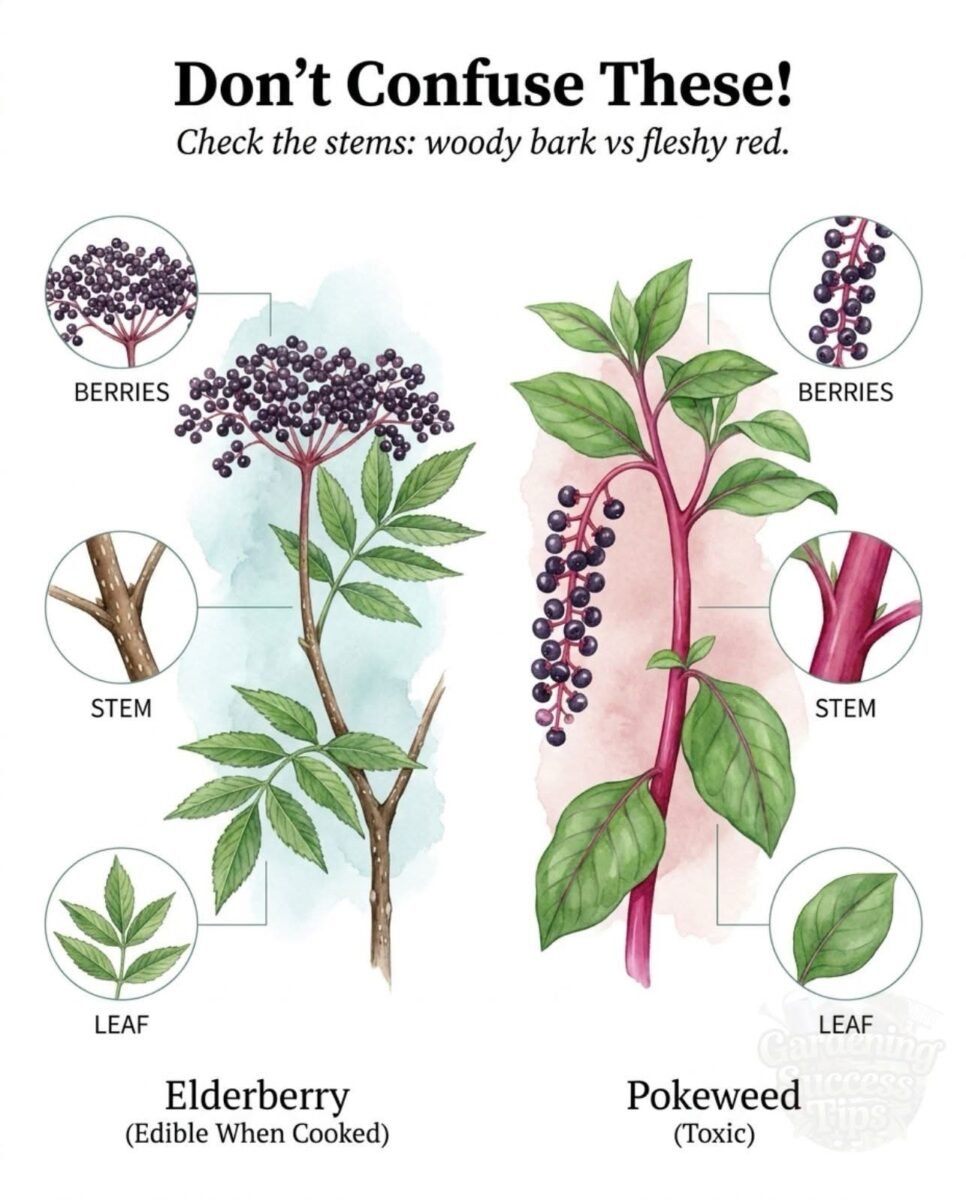
This compound structure immediately separates elderberry from pokeweed, which has large simple leaves. If what you’re looking at has single undivided leaves — not the compound multi-leaflet structure — it is not elderberry.
Individual Leaflet Shape
Each leaflet is lance-shaped to oval — widest near the middle and tapering to a pointed tip. The edges are distinctly serrated — saw-toothed with sharp fine teeth along the entire margin. This serration is visible and pronounced, not subtle.
Leaflet size varies with position on the compound leaf — leaflets near the base are typically smaller than those near the tip. The terminal leaflet is often the largest.
Leaf Color and Texture
Upper leaf surface is medium to dark green and relatively smooth. The underside is lighter green and may have fine hairs along the midrib and veins, particularly in American elderberry. The overall texture is soft rather than waxy or leathery.
Leaf Smell
Crush a leaflet between your fingers. Elderberry leaves have a distinctive, somewhat unpleasant smell — often described as musty, earthy, or faintly fetid. This isn’t a pleasant smell and it’s one of the reasons traditional foragers learned to identify elderberry by sight rather than scent. The smell is more pronounced in the leaves and stems than in the ripe berries.
Opposite Arrangement
Leaves emerge from the stem in opposite pairs — two compound leaves directly across from each other at each node, rather than alternating sides. This opposite arrangement is consistent throughout the plant and is a useful confirmation feature when the leaves are clearly visible.
Identifying Elderberry by Stem and Bark
Young Stems — Green and Pithy
New growth on elderberry is green, smooth, and soft. If you cut or break a young stem, you’ll find a white pith inside — soft, spongy, and easily removed. This pithy interior is one of the classic elderberry identification features and one that traditional foragers relied on.
The pith is white to cream-colored in American elderberry (Sambucus canadensis) and white in European elderberry (Sambucus nigra). Some related toxic species have different pith colors — red elderberry (Sambucus racemosa) has brown pith, which is one way to distinguish it from the edible black elderberries.
Mature Canes — Corky and Warty
As elderberry canes mature they develop a distinctive corky, warty texture with visible lenticels — small horizontal pores that appear as light-colored spots or dashes on the bark. These lenticels are one of the most reliable identification features on mature elderberry canes and are visible from several feet away on established plants.
The bark color on mature canes is gray to grayish-brown. The corky texture gives the cane a rough, somewhat bumpy appearance that is distinctive once you know it.
Stem Color — What It Should and Should Not Be
Elderberry main stems: green on new growth, transitioning to gray-brown with corky texture on mature canes. The stems that hold berry clusters are often reddish-pink — this is normal and not a cause for concern. It is the main woody canes and branches of the plant that should be green-brown, not pink-purple.
What it should never be: bright magenta-pink or deep purple on the main woody stems. That color means pokeweed. If the thick main stalk of the plant is vivid pink or purple — walk away.
Identifying Elderberry by Flowers
The flowers appear before the berries and offer some of the most reliable identification features for anyone who encounters the plant in late spring through early summer.
Flower Cluster Shape
Elderberry flowers grow in large flat-topped to slightly rounded clusters called cymes or corymbs. The cluster shape mirrors what the berry cluster will look like — a broad, flat spray that spreads outward rather than drooping down. Individual flower stalks branch repeatedly to create this flat umbrella shape.
Cluster size is generous — often 6 to 12 inches across at full development. A mature flowering elderberry in full bloom is striking — large white flower clusters visible from a distance against the green foliage.
Individual Flowers
Each flower is tiny — only a few millimeters across — with five white petals and five yellow stamens. The flowers are cream to white and have a pleasant, distinctive fragrance — often described as lightly floral with a slight musky undertone. The scent is recognizable once you know it and is one of the features traditional foragers used to locate elderberry.
Elderflower — Edible and Valuable
Elderflowers are themselves edible and have their own culinary and medicinal uses — elderflower cordial, elderflower tea, elderflower fritters. Correctly identified elderflowers are safe to consume without the cooking requirement of the berries. This makes the flowering stage a good time to practice identification — the flower clusters are large, distinctive, and the plant is easy to find.
Identifying Elderberry by Berries
Cluster Shape — The Most Important Feature
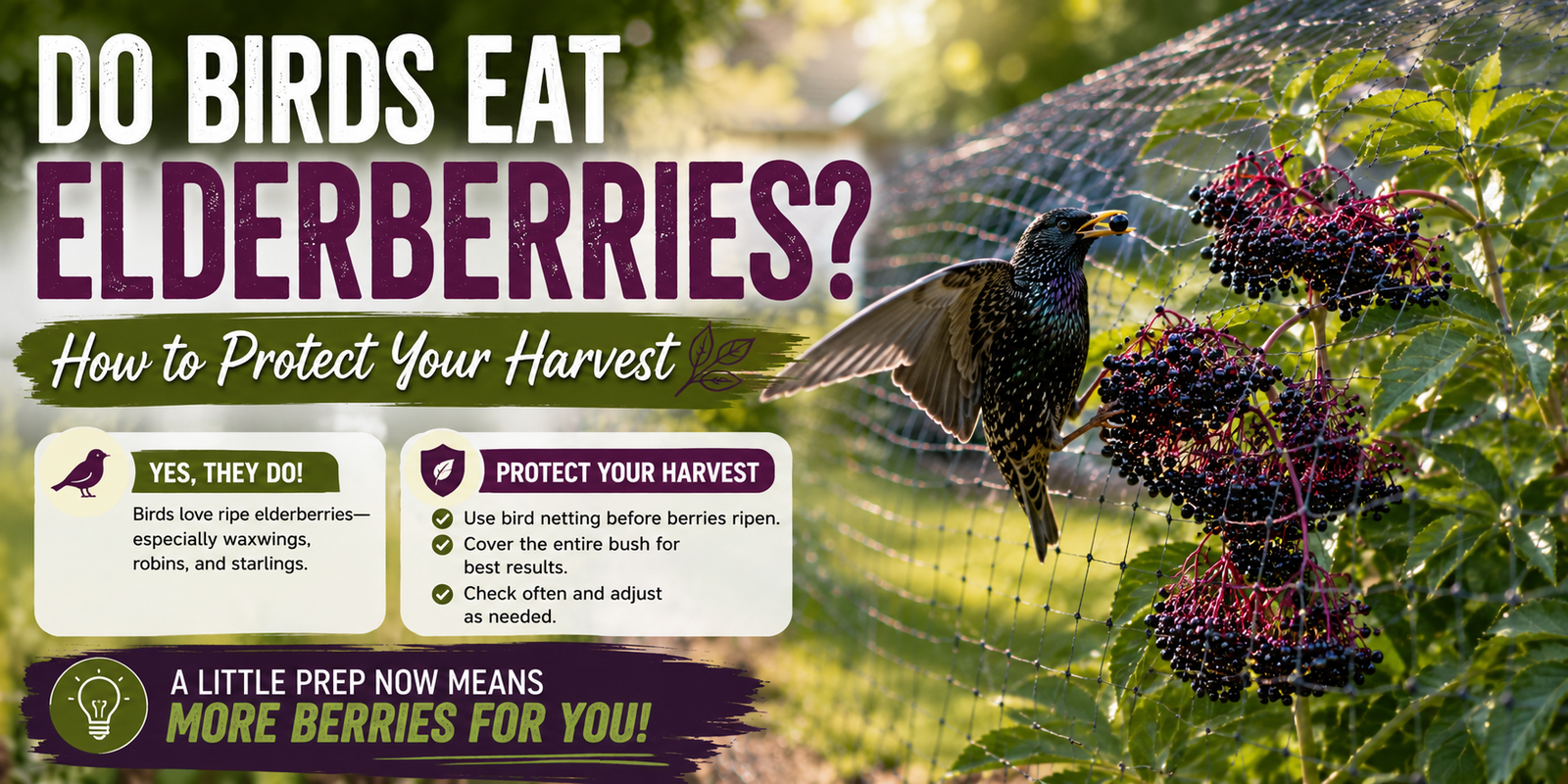
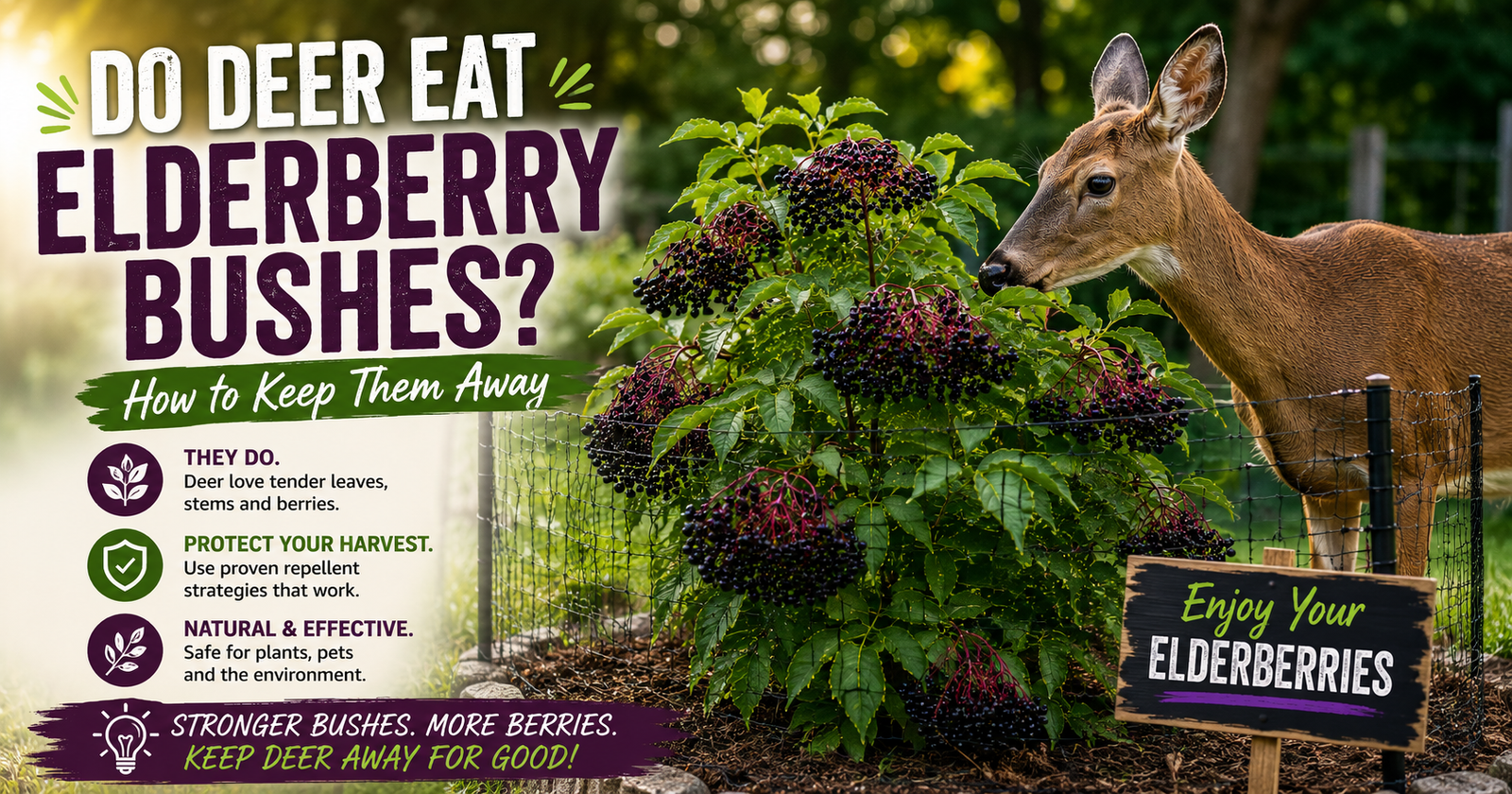
Ripe elderberries grow in large flat-topped clusters that mirror the flower cluster shape. The cluster spreads outward and sits relatively level at the top — wide and flat like an upturned umbrella or a shallow bowl shape. Individual berry stems branch repeatedly outward from a central point. As these clusters reach maturity, knowing how to keep ripe berries protected can help you avoid losing them before harvest.
This flat-topped cluster shape is the single fastest visual identifier from a distance and the feature that most reliably separates elderberry from pokeweed at a glance. If the cluster droops downward in an elongated grape-like spike — that is pokeweed, not elderberry.
Berry Color and Size
Ripe elderberries are deep purple-black — nearly black with a slight purple or blue sheen in good light. They are small — roughly 4–6mm in diameter, about the size of a small pea. Each berry has a tiny five-pointed star pattern at the base where the flower sepals were attached — visible on close inspection.
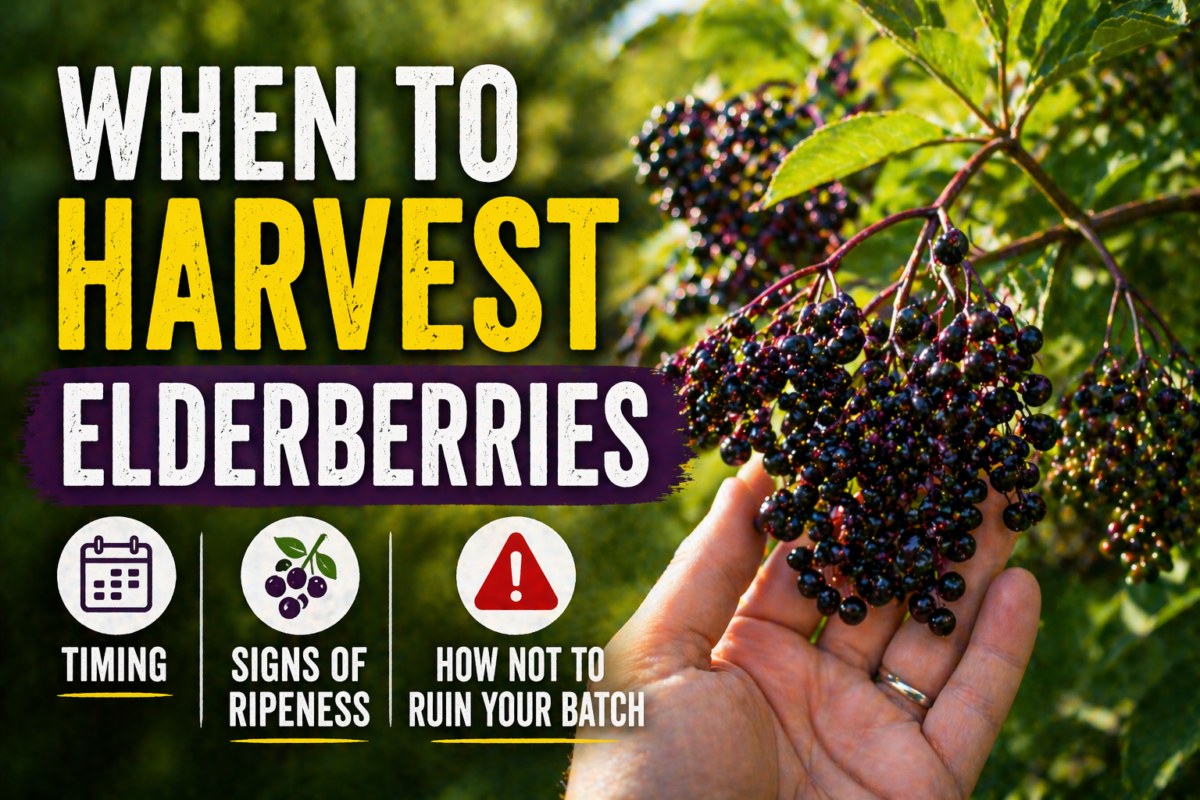
Unripe elderberries are red. This is important. Red or partially purple elderberries are not ripe and should not be harvested. Unripe berries have higher concentrations of the cyanogenic compounds that make raw elderberries problematic. Wait for full deep purple-black color throughout the cluster.
Cluster Stem Color
The stems within the elderberry berry cluster — the small stalks holding individual berries — are typically red to reddish-pink. This reddish stem color is normal for elderberry and is one of the distinctive visual features of a ripe cluster. It does not indicate toxicity. It is the main woody plant canes that should not be red-purple — not the berry cluster stems.
Berry Juice
Elderberries produce intensely deep purple-black juice that stains hands, clothing, and surfaces immediately. If you crush a ripe elderberry the juice is deeply pigmented — dark purple-red. This is the juice that makes elderberry syrup its characteristic rich dark color.
Identifying Elderberry in Winter — Bare Canes
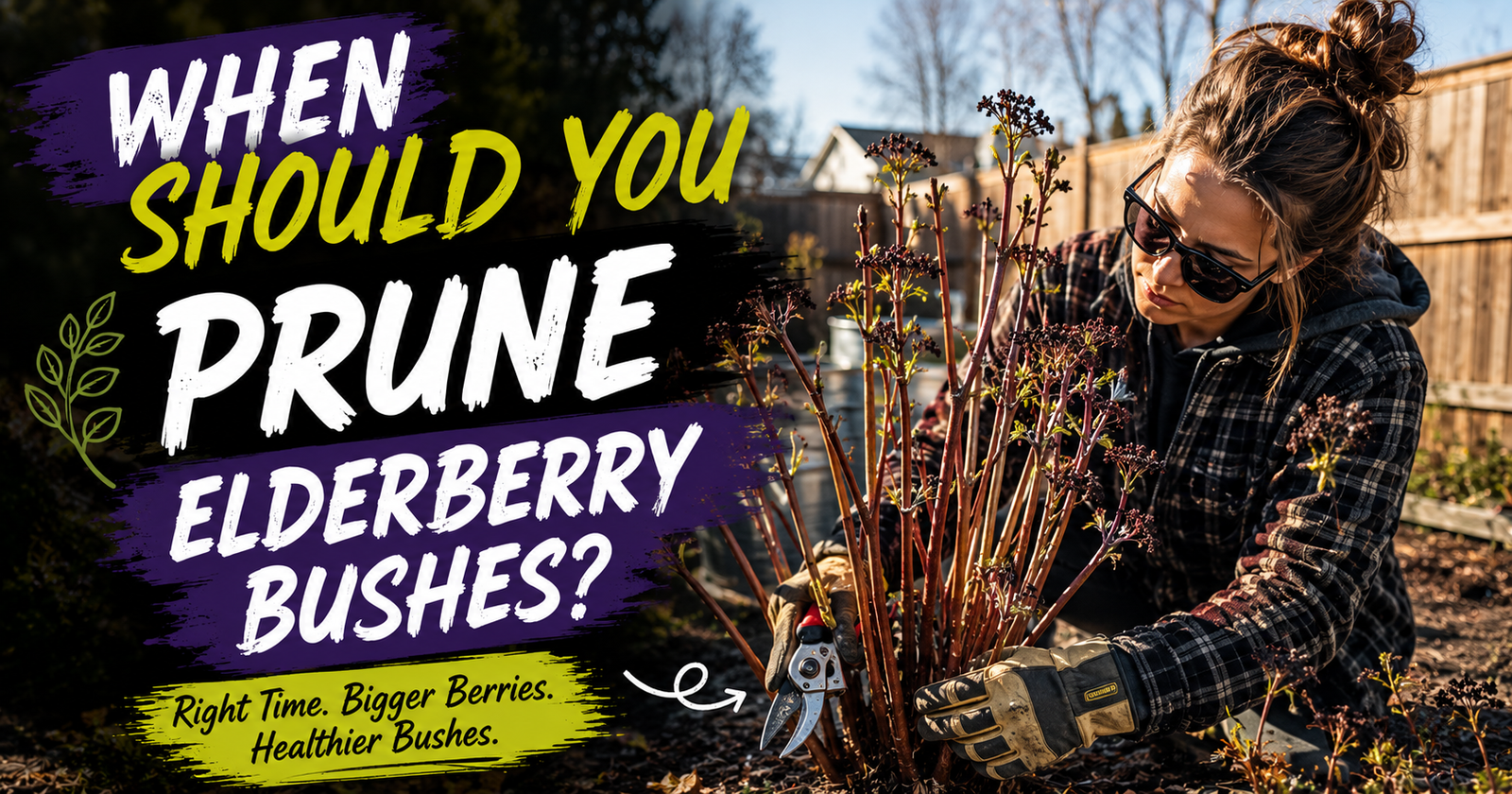
Many people encounter elderberry in winter when no leaves, flowers, or berries are present. The bare canes still offer reliable identification features. Once you can identify the bare canes, knowing when to prune elderberry bushes makes dormant-season care easier.
Lenticels on bark: the distinctive horizontal pore marks on the gray-brown corky bark are visible year-round and are one of the most reliable winter identification features.
Opposite branching: even on bare winter canes, the opposite branching pattern — pairs of branches emerging directly across from each other — is visible and consistent.
Pith check: cut a small section of cane and examine the interior. White spongy pith confirms American or European elderberry. Brown pith suggests red elderberry.
Growth habit: multiple stems emerging from the base in a shrub form, rather than a single dominant trunk.
Remnant berry cluster stems: often the dried remnants of berry clusters persist through winter — the flat-topped branching structure of old cluster stems is distinctive even when no berries remain.
Once You’ve Identified Them, Handle Them Correctly
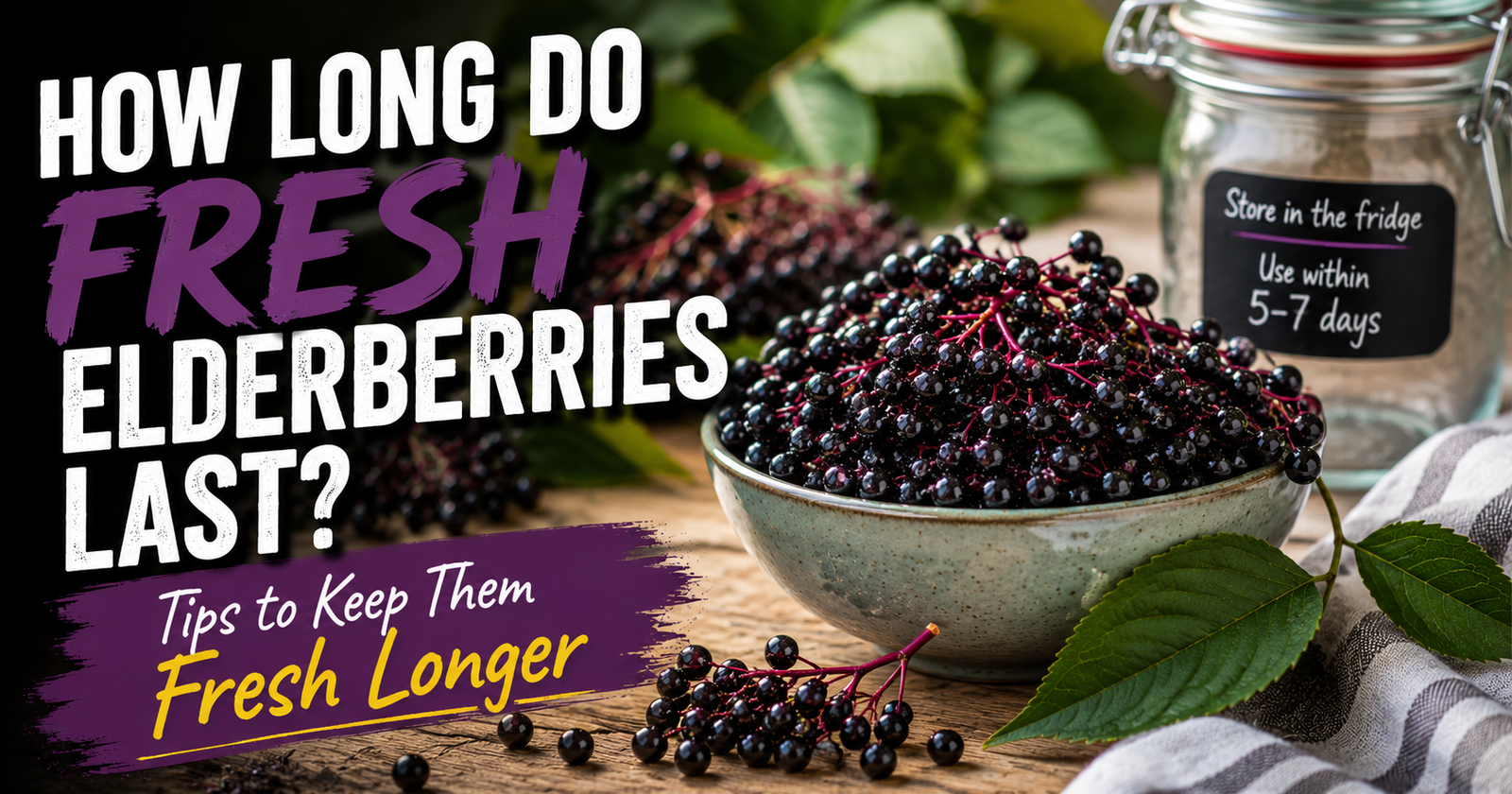
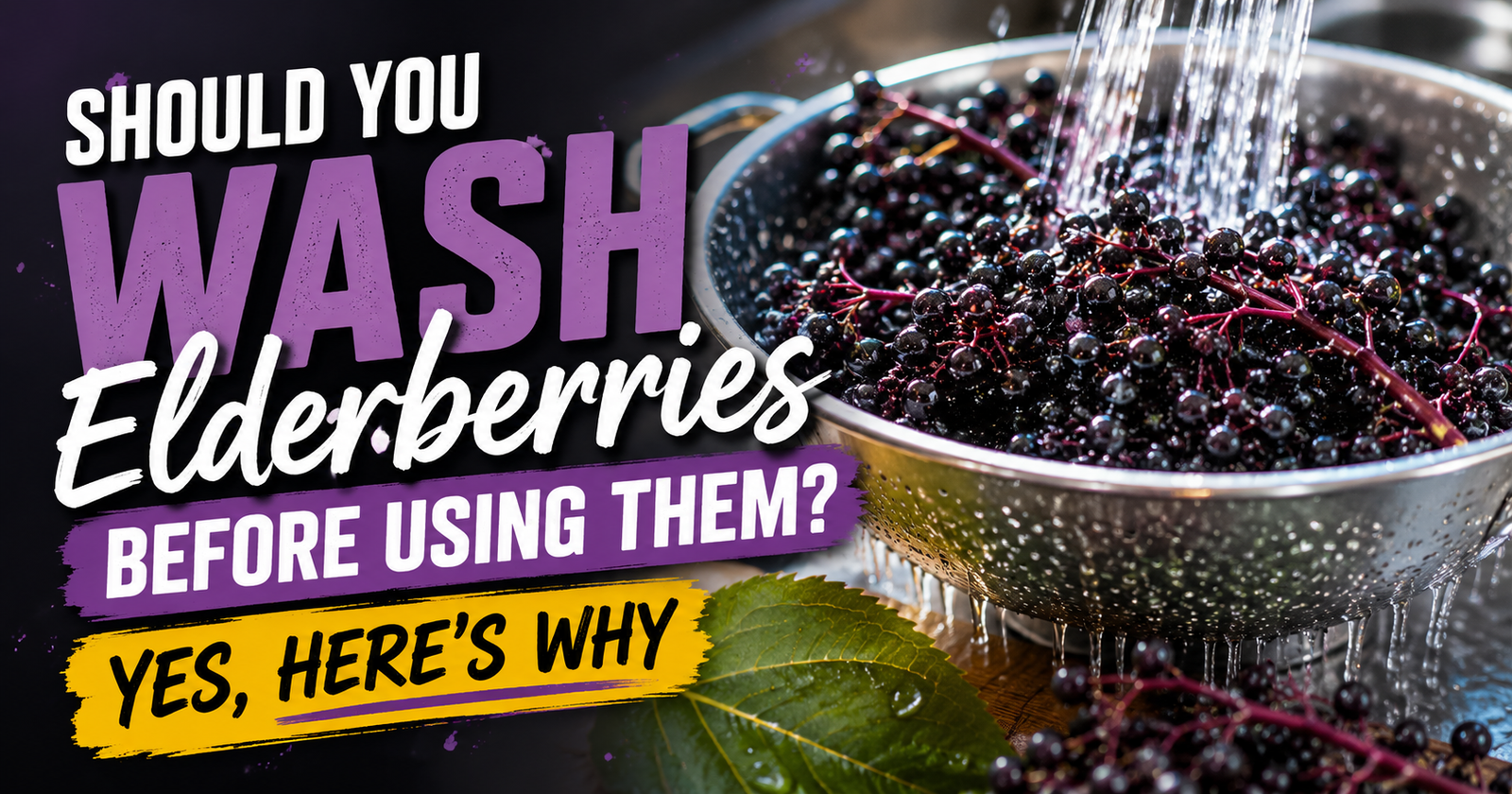
Correct identification is only the first step. Once you’ve confirmed you’re harvesting real elderberries, taking care of them properly makes a huge difference. I usually refrigerate or freeze my harvest as soon as possible because fresh berries don’t stay at their best for very long. If you’re planning to cook with your harvest later, my guides on how long fresh elderberries actually last and the best way to freeze elderberries can help you preserve both quality and flavor.


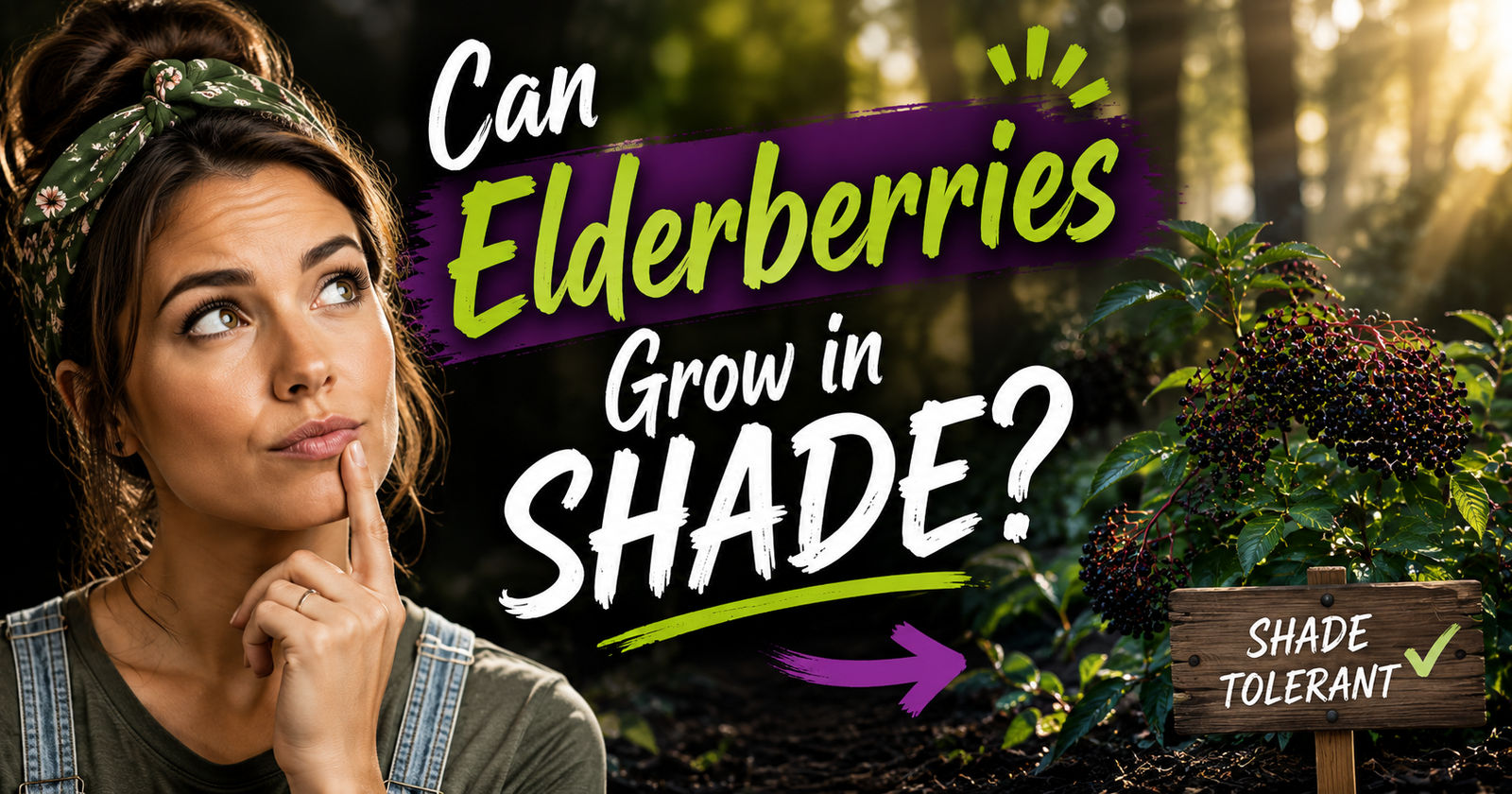
American Elderberry vs. European Elderberry — Identification Differences
Both species share nearly identical identification features. The differences are subtle:
American elderberry (Sambucus canadensis): slightly more upright growth habit, white pith, leaflets may have more pronounced hair on undersides, berries tend to ripen slightly earlier
European elderberry (Sambucus nigra): often larger individual plant, white pith, bark sometimes develops more pronounced corky texture on mature canes, slightly larger individual berries
For practical field identification purposes, the two species are effectively identical. Both are appropriate for harvesting and use. Both share the same flat-topped cluster shape, compound leaves, and corky-barked canes. The full species comparison: American Elderberry vs. European Elderberry
Toxic Lookalikes — What to Watch For
Pokeweed (Phytolacca americana) — Most Common and Most Dangerous
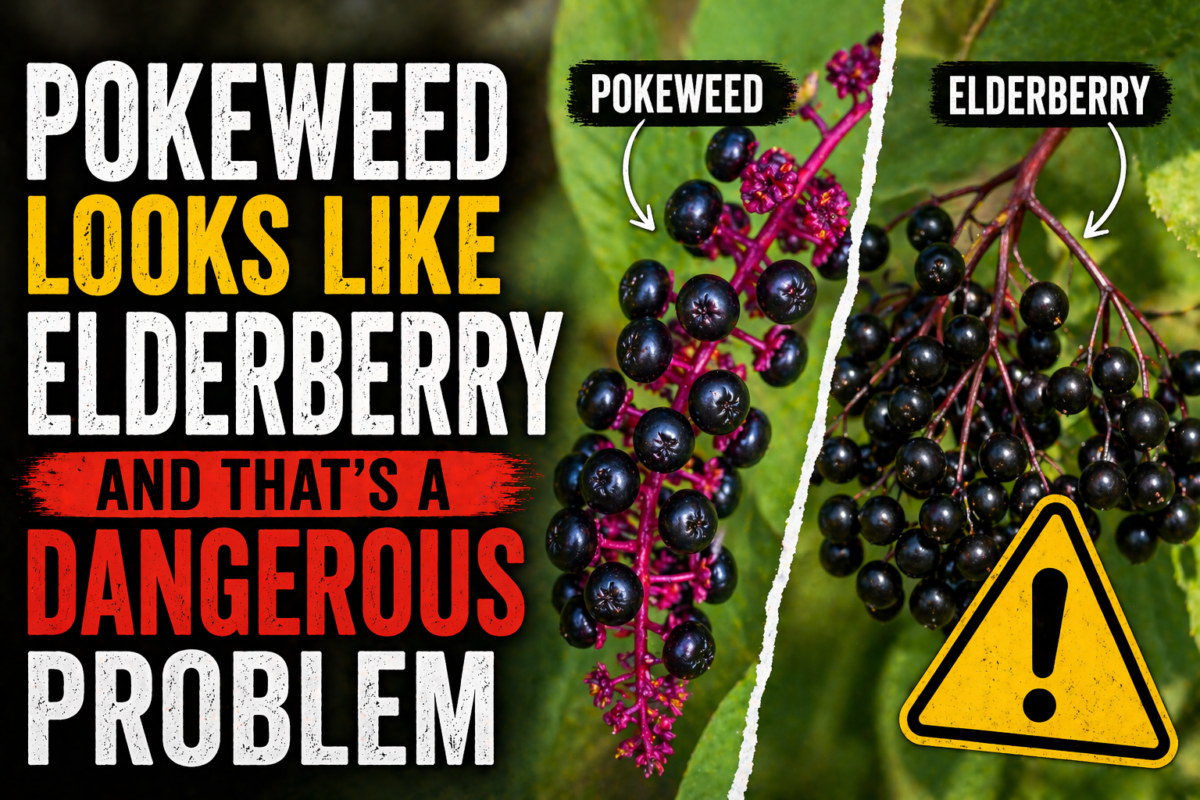
The most important lookalike to know. See the complete identification comparison: Pokeweed Looks Like Elderberry and That’s a Dangerous Problem
Quick separation: pokeweed has elongated drooping berry clusters (not flat-topped), bright magenta-pink main stems (not green-brown), and large simple leaves (not compound leaflets).
Red Elderberry (Sambucus racemosa)
A related elderberry species that produces red rather than dark berries, growing in more northern and mountain regions. Identified by red berry color and brown pith (cut a stem to check). Considered more toxic than black elderberry even when cooked. Do not harvest.
Water Hemlock (Cicuta species)
Highly toxic. Grows in wet areas. Has compound leaves that can superficially resemble elderberry at a glance. Key differences: water hemlock has hollow stems (not pithy), white flowers in flat-topped clusters that are smaller and more delicate than elderflower, and distinctively chambered roots. Grows primarily in wet soil, marshes, and stream banks.
Devil’s Walking Stick (Aralia spinosa)
Large compound leaves that can be confused with elderberry. Key difference: the stems are covered in sharp thorns — unmistakable on close inspection. Also produces dark berries but in drooping rather than flat-topped clusters.



Building Confident Identification — The Confirmation Protocol
Never harvest wild elderberries based on a single feature. Use this confirmation protocol:
Step 1: Is the berry cluster flat-topped and umbrella-shaped? (Yes = proceed. No = stop.)
Step 2: Are the main plant stems green to gray-brown, not bright pink-purple? (Yes = proceed. No = stop — likely pokeweed.)
Step 3: Are the leaves compound with multiple serrated leaflets? (Yes = proceed. No = stop.)
Step 4: Do mature canes show corky bark with visible lenticels? (Yes = strong confirmation.)
Step 5: Does a cut stem show white spongy pith? (Yes = confirmation. Brown pith = red elderberry, do not harvest.)
Step 6: Are the berries deep purple-black and fully ripe throughout the cluster? (Yes = appropriate to harvest. Red or partially ripe = wait.)
All six steps confirmed — you have elderberry. Any step fails — do not harvest.
The Easiest Way to Eliminate Identification Risk
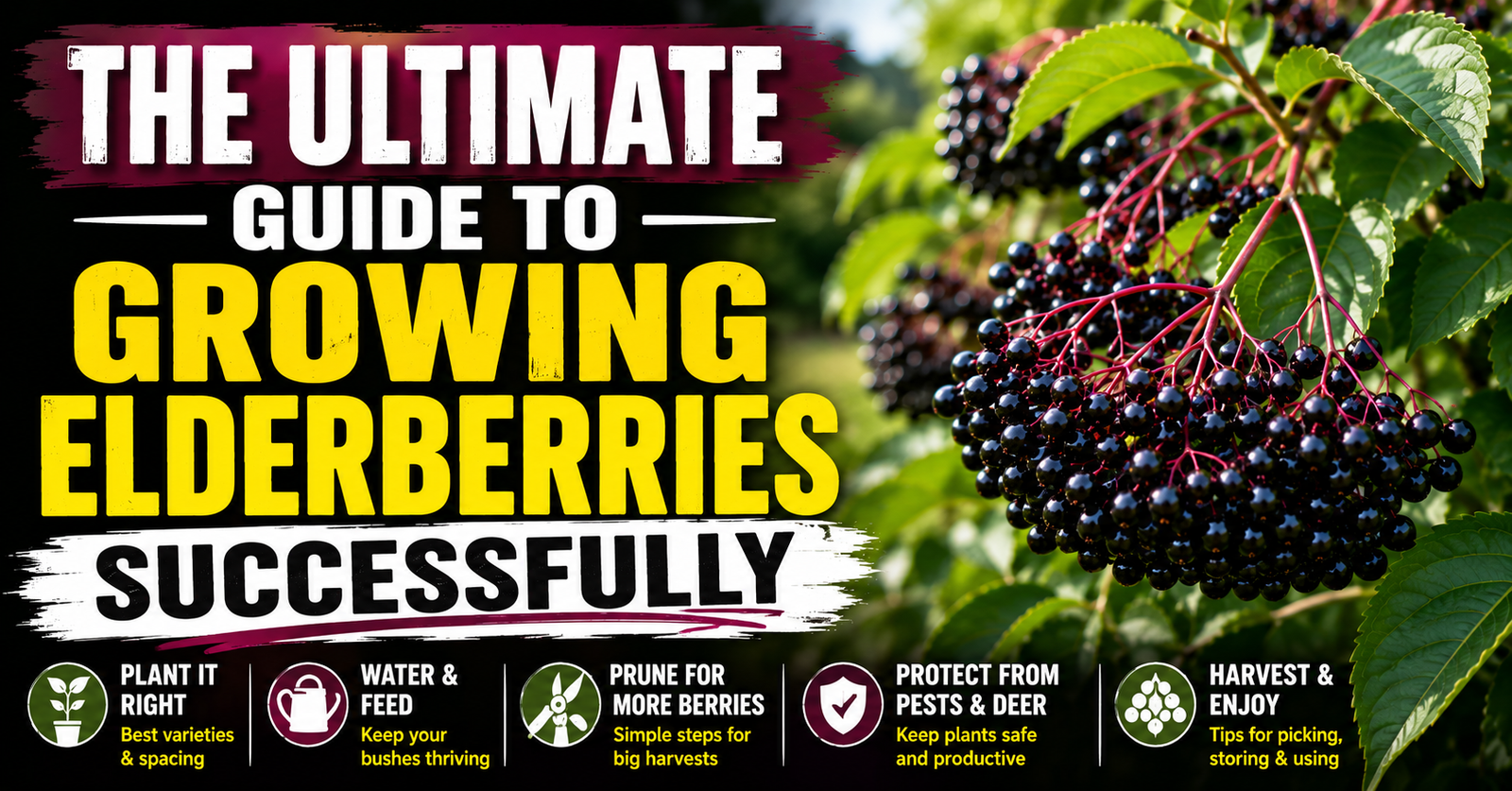
Growing your own eliminates the guesswork entirely. A cultivated American elderberry plant from a reputable nursery is confirmed Sambucus canadensis — no field identification required, no lookalike risk, and a productive plant that yields 12–15 pounds of berries per season within a few years. Once you have a correctly identified plant, this guide to growing American elderberries explains how to establish it and improve its productivity.
If you want to grow elderberry: How to Grow Elderberries at Home — What Nobody Tells You Before You Plant
To skip the nursery hunt and start with plants selected for strong production: American Elderberry Plants — Weaver Family Farms Nursery
Frequently Asked Questions
What does elderberry look like?
A multi-stemmed shrub 5–12 feet tall with compound leaves of 5–11 serrated leaflets, flat-topped clusters of tiny white flowers in early summer, and large flat-topped clusters of deep purple-black berries in late summer. Mature canes have corky gray-brown bark with visible lenticels.
How do I identify elderberry berries?
Deep purple-black, small (pea-sized), growing in large flat-topped umbrella-shaped clusters on reddish stems. The flat-topped cluster shape is the fastest visual identifier — elongated drooping clusters indicate pokeweed, not elderberry.
What does elderberry smell like?
The leaves and stems have a distinctive musty, somewhat unpleasant smell when crushed. The flowers are pleasantly fragrant — lightly floral with a faint musky note. The ripe berries have a mild dark berry smell.
How do I tell elderberry from pokeweed?
Cluster shape, stem color, and leaf type. Elderberry: flat umbrella clusters, green-brown stems, compound leaves. Pokeweed: elongated drooping clusters, bright magenta-pink stems, large simple leaves. Full comparison: Pokeweed Looks Like Elderberry and That’s a Dangerous Problem
Can I identify elderberry in winter?
Yes — by the corky bark with lenticels, opposite branching pattern, white pithy interior of cut stems, and often remnant dried berry cluster stems.
What does elderberry bark look like?
Young stems are green and smooth. Mature canes develop gray-brown corky bark with distinctive horizontal lenticels — small pore marks that appear as light-colored dashes or spots on the bark surface. This corky lenticel texture is one of the most reliable identification features on established elderberry plants.
The More You Look, the More You’ll Find
Elderberry is one of those plants that becomes impossible to unsee once you know it. The compound leaves with serrated leaflets. The flat-topped white flower clusters in June. The drooping heavy berry clusters in August. The corky gray canes in winter.
It was always there. It was always growing along that road you drive every day. Now you know what you’re looking at.
Learn it well. Confirm every feature. Harvest with confidence.
About the Author
Marcus Webb is a health science writer with a background in nutritional biochemistry and a genuine interest in plant identification and traditional medicine. He contributes regularly to ElderberryPro.com and believes that knowing what’s growing around you is one of the most useful things you can learn.