
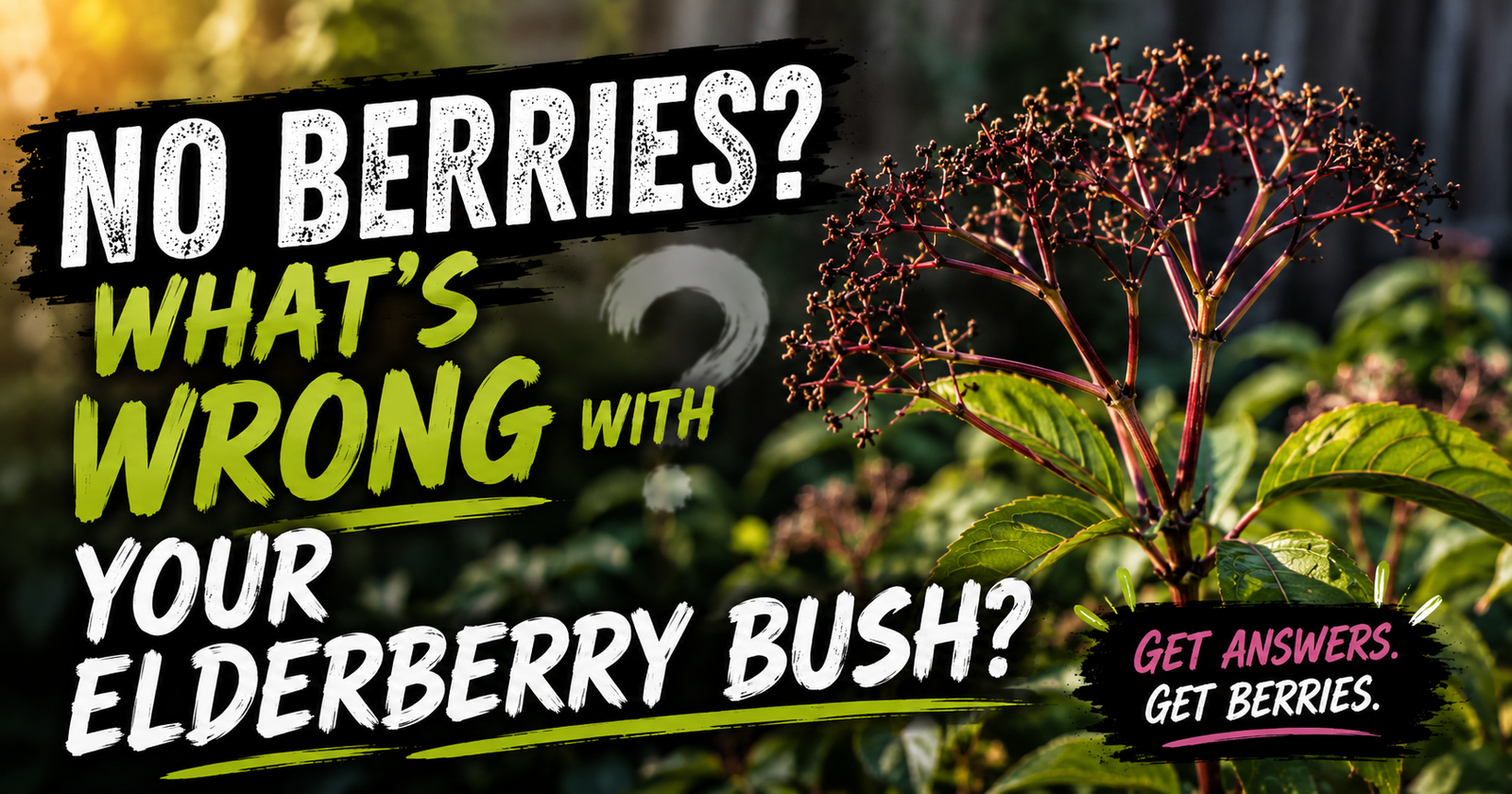
One of the hardest parts about growing elderberries isn’t planting them.
It’s waiting.
I completely understand the excitement. You bring home a healthy young elderberry plant, find the perfect spot in the yard, water it faithfully, and start imagining homemade elderberry syrup, jelly, or wine from berries you grew yourself.
Then the first growing season passes.
Maybe the second.
Still no buckets of berries.
Naturally, the questions start.
“Did I do something wrong?”
“Is my elderberry supposed to be producing by now?”
“Should I dig it up and start over?”
The good news is that most gardeners simply expect fruit sooner than elderberries are ready to produce it.
Like many perennial fruiting plants, elderberries spend their early years building something far more important than berries.
They’re building a root system.
That investment below the soil is what allows them to support larger harvests year after year. Planting conditions and ongoing care also shape that long-term progress, as explained in The Ultimate Guide to Growing Elderberries Successfully.
So before you assume your plant has failed, let’s look at what a realistic timeline actually looks like.
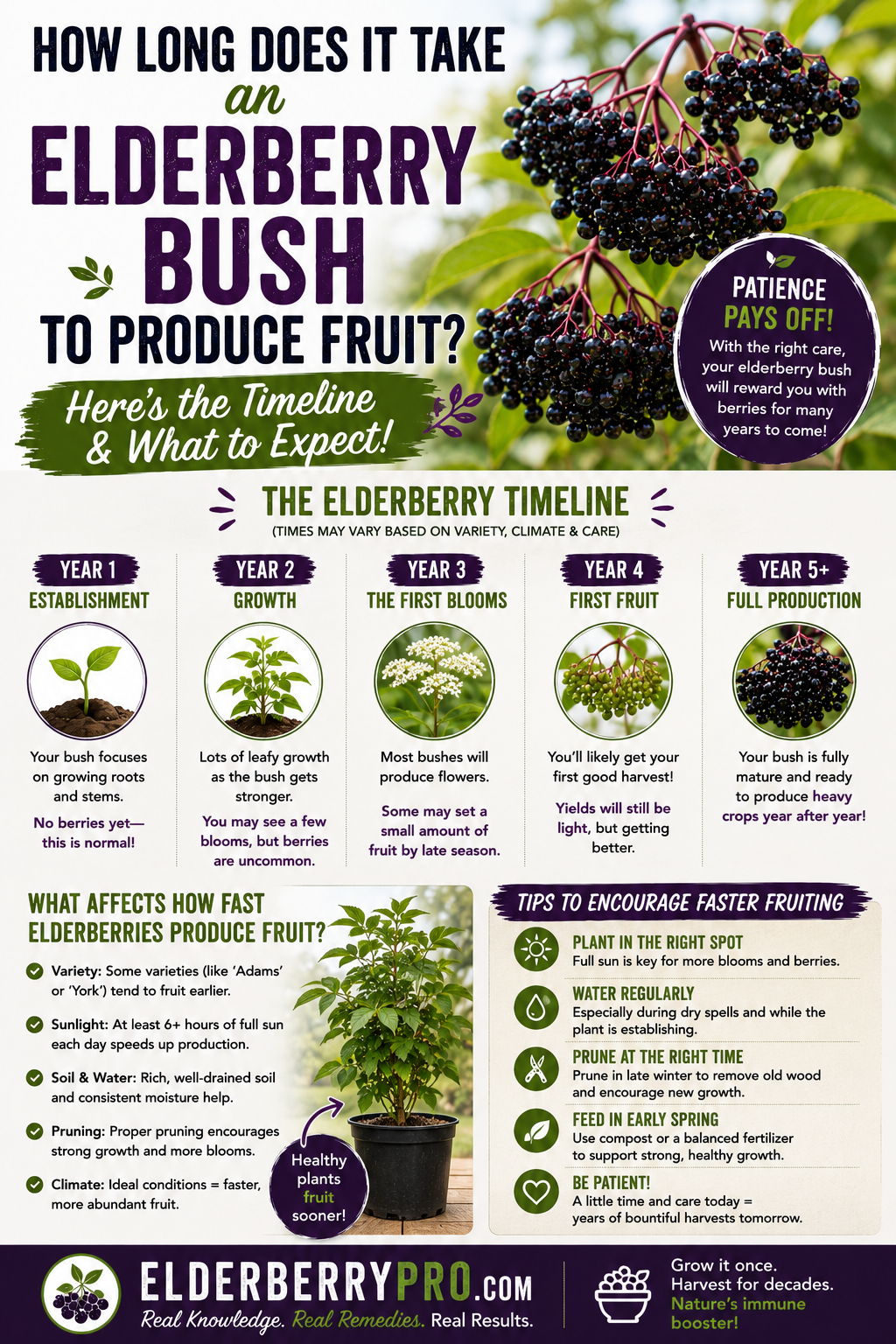
The First Year Is Mostly About Establishment
If you planted your elderberry this spring, don’t be disappointed if you don’t harvest anything this year.
In fact, I’d consider that completely normal.
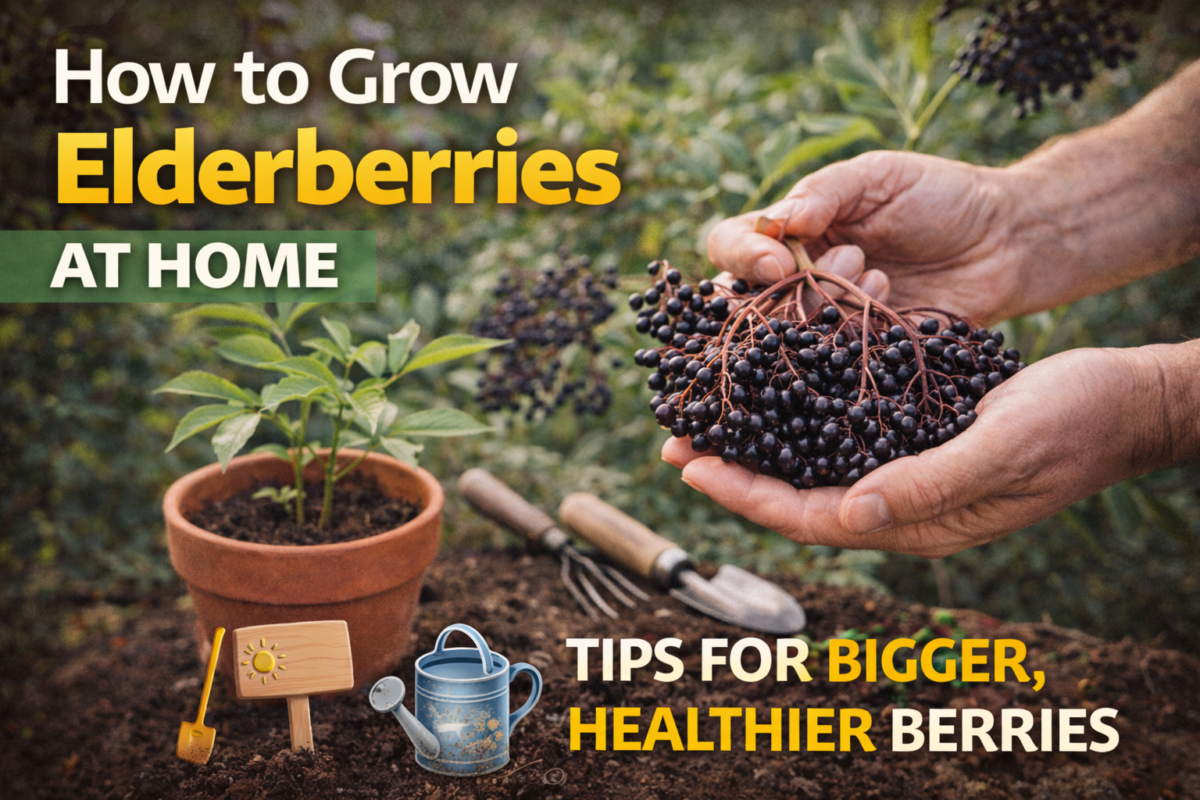
During its first growing season, your elderberry is focused on: For practical first-year care, How to Grow Elderberries at Home (What Nobody Tells You Before You Plant) covers watering, mulching, and early plant development.
- Expanding its roots.
- Adjusting to its new location.
- Producing healthy canes.
- Developing enough energy for future growth.
Sometimes you’ll see a few flowers.
Occasionally you may even get a small cluster of berries.
I treat those as a bonus rather than an expectation.
Honestly, I’d rather see a young plant investing its energy underground than trying to produce a heavy crop before it’s ready.



What Usually Happens During Year Two?
This is where things start getting exciting.
A healthy elderberry that’s receiving plenty of sunlight and consistent moisture often begins showing much stronger growth during its second year.
Many gardeners see:
- More canes.
- Taller plants.
- More flowers.
- Their first meaningful berry harvest.
I say “meaningful” because it still won’t look like the photos you see from mature bushes.
You’re simply beginning to see what the plant is capable of.
One thing I’ve learned is not to compare a second-year bush to one that’s been growing for six or seven years.
They’re completely different stages of the plant’s life.



Years Three Through Five Are When Things Really Take Off
This is usually when people fall in love with growing elderberries.
Instead of a handful of berry clusters, you’re suddenly harvesting enough fruit to start planning recipes before the berries are even ripe.
When everything comes together, a mature planting can produce an impressive amount of fruit every season.
That’s one reason I encourage new growers to think long term.
The first couple of years require patience.
The years that follow often reward it.
The Plant You Start With Matters More Than Most People Realize
Not every elderberry plant begins life in the same condition.
I’ve seen weak nursery stock struggle for years before finally taking off.
I’ve also seen vigorous, healthy plants establish themselves surprisingly quickly.

If you’re still shopping for plants or you’re planning to add another variety to improve pollination, it’s worth starting with quality stock. I recommend the live American elderberry plants from Weaver Family Farms Nursery because healthy roots and vigorous young plants give you a much better foundation than trying to revive stressed nursery plants. Their article on the best time to plant elderberries is also worth reading before you put a shovel in the ground.
Starting well doesn’t guarantee faster fruit, but it certainly improves your odds.


Don’t Compare Your Bush To Someone Else’s
One of the biggest mistakes I see is comparing one elderberry bush to another without knowing their history.
Maybe your neighbor’s plant produced berries in its second year.
Great.
That doesn’t automatically mean yours should.
Growth can vary depending on:
- The variety.
- Soil quality.
- Rainfall.
- Sunlight.
- Pollination.
- Winter weather.
- Plant health.
Every yard is different.
Every growing season is different.
That’s why I try to judge my elderberries by how they’re improving year after year instead of comparing them with someone else’s harvest photos online.
One Question Changes Everything
Whenever someone tells me their elderberry still isn’t producing after several years, there’s one question I almost always ask.
“How many elderberry bushes do you have?”
More often than not, the answer is one.
That’s important because many elderberry varieties produce significantly better when another compatible variety is planted nearby.
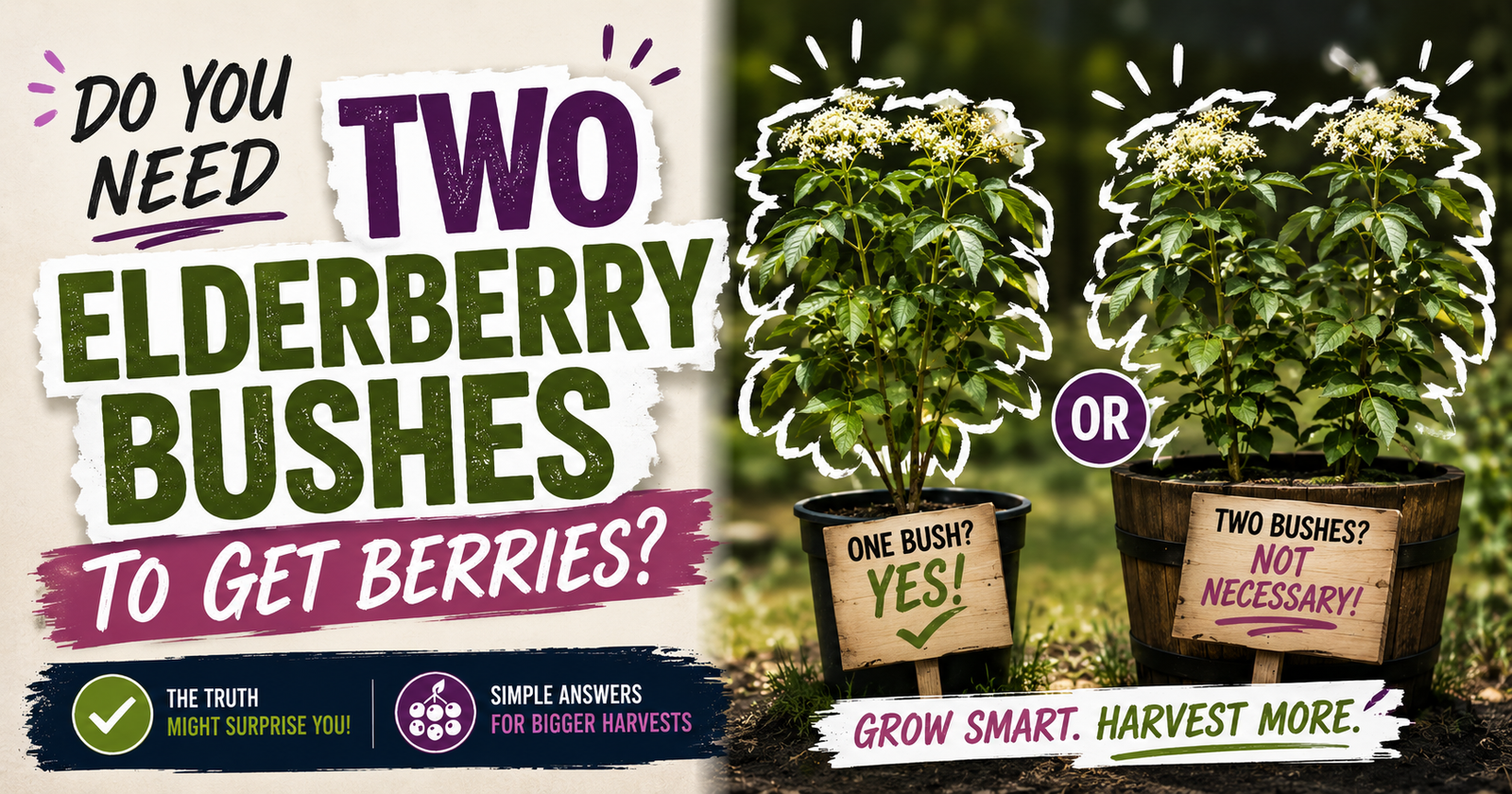
I cover that in much greater detail in Do You Need Two Elderberry Bushes to Get Berries? because adding a second variety is often the easiest way to improve future harvests.
It isn’t the only factor, but it’s one that many first-time growers overlook.


If Your Bush Still Isn’t Producing After Three Years
This is usually the point where people start wondering if something is wrong.
And honestly, that’s a fair question.
By the third growing season, most healthy elderberry bushes should at least be showing signs that they’re heading in the right direction. Maybe you aren’t filling five-gallon buckets yet, but you should normally be seeing stronger growth, more flowers, and at least some berry production if conditions are favorable.
If that’s not happening, it’s time to play detective instead of simply waiting another year.
The first thing I’d do is think back over the entire growing season.
Did the bush flower?
Was it planted in full sun?
Did it receive enough water during dry weather?
Is another elderberry variety growing nearby?
Those answers usually point you toward the real problem.
In fact, after hearing from so many frustrated gardeners, I ended up writing an entire guide explaining why an elderberry bush might not be producing berries because there are several surprisingly common reasons that have nothing to do with the age of the plant.
Don’t Rush To Fertilize
I’ve seen this happen countless times.
Someone becomes frustrated because their elderberry isn’t producing berries.
So they buy the strongest fertilizer they can find.
The next year…
The bush doubles in size.
Huge leaves.
Long new canes.
Beautiful green growth.
Still almost no berries.
The fertilizer didn’t fail.
It simply encouraged the wrong kind of growth.
Too much nitrogen often tells a plant to keep producing stems and foliage instead of flowers and fruit.
That’s why I always recommend figuring out why a bush isn’t producing before adding more fertilizer.
Sometimes the best thing you can do is absolutely nothing except give the plant another season.



A Healthy Root System Is Something You Never See
One thing that’s easy to forget is that the most important part of an elderberry bush is underground.
Every season those roots are expanding.
They’re storing energy.
They’re searching for moisture.
They’re supporting next year’s growth long before you ever see it above the soil.
When you realize that, waiting becomes a little easier.
The bush isn’t standing still.
It’s preparing.
That’s one reason transplanting can temporarily slow fruit production.
Whenever a plant has to rebuild part of its root system, berry production usually moves lower on its list of priorities.
Sunlight Is Worth More Than Fancy Fertilizer
If someone asked me whether they should spend money on fertilizer or move an elderberry bush into better sunlight, I’d usually choose sunlight.
Good light solves a surprising number of problems.
I’ve watched elderberries growing along the edge of open fields produce incredible harvests while another bush only thirty feet away beneath mature trees struggled year after year.
The difference wasn’t fertilizer.
It wasn’t watering.
It was simply access to sunlight.
If you’re still planning your planting location, the detailed elderberry growing guide from Weaver Family Farms Nursery does an excellent job explaining what these plants need to thrive over the long term. Reading it before planting can save years of frustration later.



Be Realistic About Your First Harvest
Let’s imagine everything goes perfectly.
You planted healthy nursery stock.
You chose a sunny location.
You have two compatible varieties growing nearby.
The weather cooperates.
Pollinators show up.
What should you expect?
Probably not enough berries to supply the entire neighborhood.
Your first meaningful harvest is usually exciting because it’s yours, not because it’s enormous.
A few pounds of berries can still produce several batches of homemade syrup or jelly.
As the bushes mature, so will your harvests.
Bigger Harvests Create A New Problem
This is actually my favorite problem to have.
Eventually you’ll walk outside one morning and realize your bushes are absolutely loaded.
Now the question changes from…
“Why don’t I have berries?”
to…
“What am I supposed to do with all of these?”
That first large harvest catches many people off guard.
Fresh elderberries don’t stay fresh very long after picking, so having a plan before harvest day arrives makes life much easier.

Some years I make syrup immediately using my favorite homemade elderberry syrup recipe.
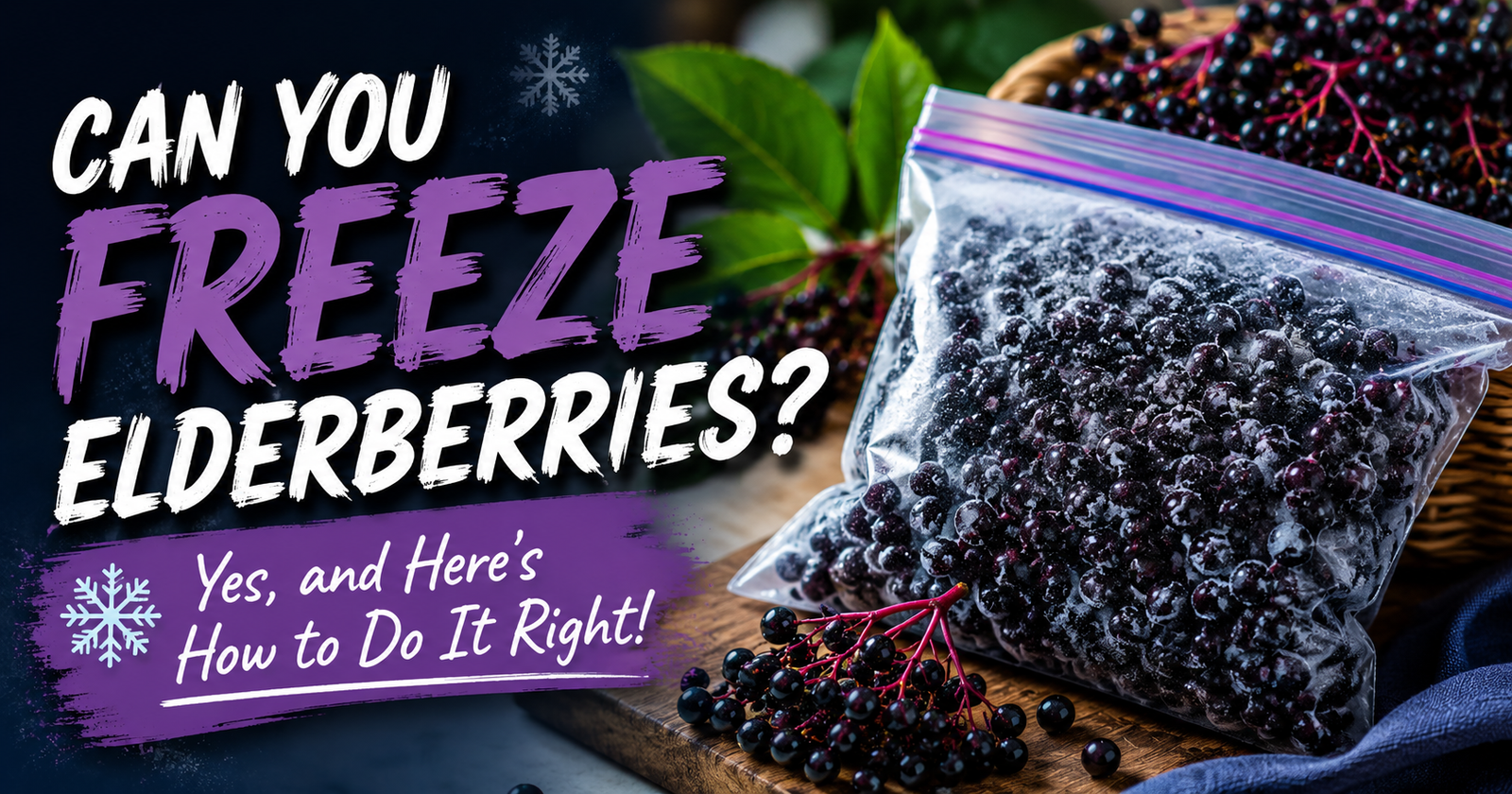
Other years I simply freeze everything until life slows down a little. My guide on freezing elderberries the right wayhas become one of the resources I send people most often because it takes so much pressure off during harvest season.
One Kitchen Tool I Wish I’d Bought Earlier
Speaking of freezing…
One purchase completely changed how I store elderberries.
For years I relied on ordinary freezer bags.
They worked.
Sort of.
After a few months I’d often find freezer burn, ice crystals, and berries that simply weren’t as good as when I picked them.

Eventually I switched to the Bonsenkitchen Vacuum Sealer, and I honestly wish I’d done it sooner.
Now I freeze the berries first, vacuum seal them, and can enjoy harvest-quality elderberries months later with far less freezer burn. I originally bought it for elderberries, but now it gets used for vegetables from the garden, venison, chicken, and just about everything else that ends up in our freezer.
Growing Elderberries Is Really About Thinking Years Ahead
One thing I’ve come to appreciate about elderberries is that they teach patience better than almost any other fruiting plant I’ve grown.
You’re rarely planting them for next summer.
You’re planting them for all the summers after that.
A healthy elderberry bush can continue rewarding you for many years, which makes those first couple of seasons of waiting feel pretty small in the grand scheme of things.
Whenever I plant a new bush, I remind myself that I’m investing in future harvests, not instant gratification.
That mindset has made growing elderberries a lot more enjoyable.
Questions I Hear From New Elderberry Growers Every Year
After talking with gardeners over the years, I’ve noticed many people ask the exact same questions once they’ve planted their first elderberry bush. Here are the answers I usually give.
Can An Elderberry Bush Produce Fruit The First Year?
It can, but I wouldn’t count on it.
Some larger nursery plants may surprise you with a few flower clusters during their first season, but I consider that a bonus rather than something to expect.
If your newly planted elderberry spends its first year producing healthy roots and strong new canes instead of berries, it’s doing exactly what it should.
Is It Normal To Get Just A Few Berries At First?
Absolutely.
One of the biggest mistakes people make is comparing a young plant to a mature bush that’s been growing for five or ten years.
Those impressive photos online usually show well-established plants that have had years to develop.
Your first harvest might only be enough for a small batch of syrup, and that’s perfectly okay.
Every season your bush becomes a little stronger.
Does Pruning Delay Fruit Production?
Not when it’s done correctly.
In fact, proper pruning often helps maintain a healthier, more productive bush over the long term.
The key is removing dead, damaged, or older canes without getting carried away.
Many new gardeners either avoid pruning altogether or remove far too much.
Finding the middle ground usually produces the best results.
Will Watering More Make It Produce Faster?
Unfortunately, no.
Water is important, especially during dry weather, but you can’t force an elderberry bush to mature by giving it extra water.
What you can do is reduce unnecessary stress.
Consistent moisture helps the plant stay healthy while it’s developing the root system that will eventually support heavier harvests.
What I Do Once My Bushes Finally Start Producing
When those first heavy clusters finally appear, I already have a plan.
Fresh elderberries don’t stay at their best for very long after harvest, so I try to process them as quickly as possible.
If I have the time, I usually make a fresh batch using my favorite homemade elderberry syrup recipe because nothing beats syrup made from berries that were picked just hours earlier.
Some years, though, life gets busy.
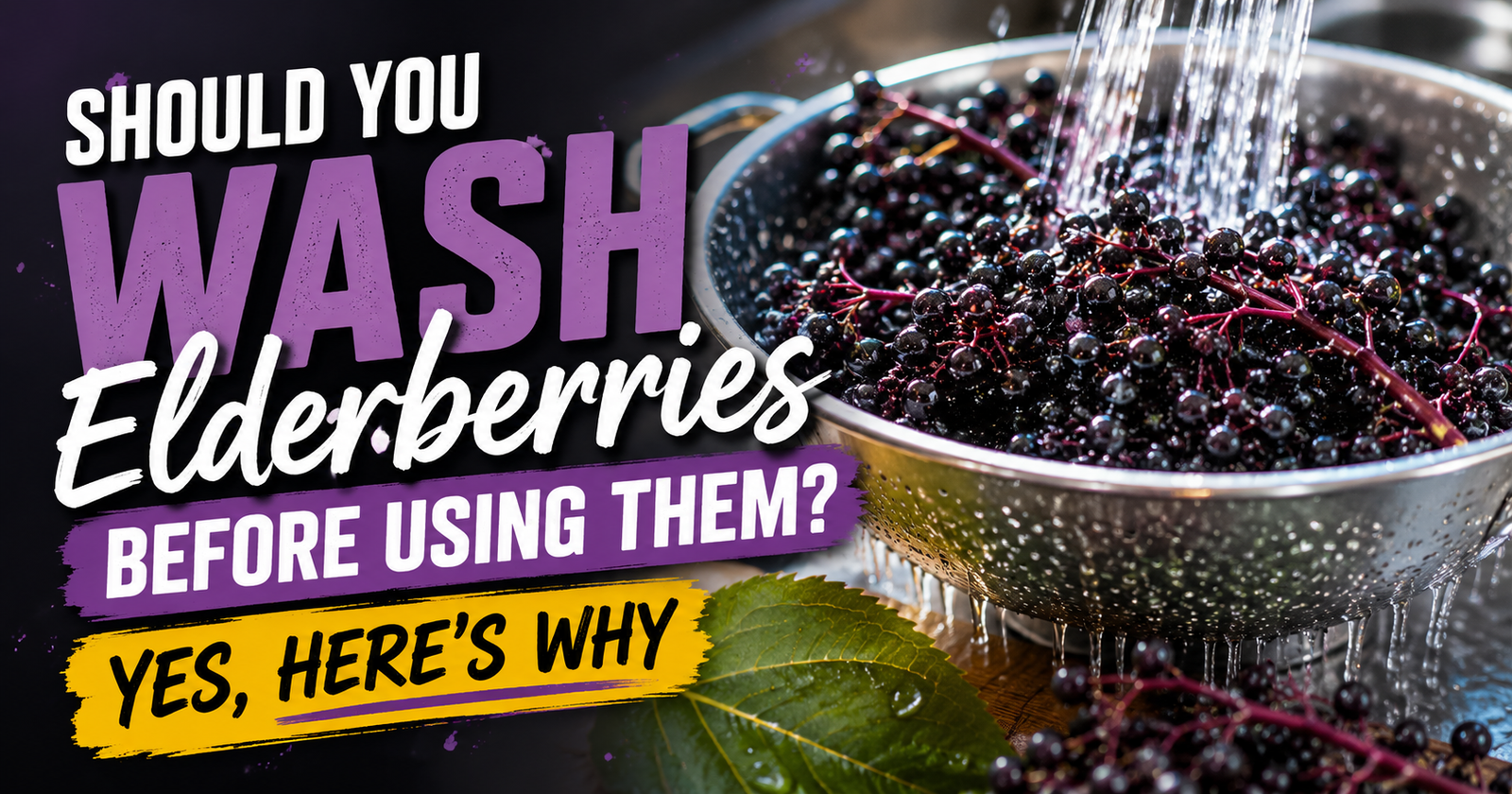
Instead of rushing through the process, I freeze the berries and come back to them later. Before they ever go into the freezer, I always make sure they’re cleaned properly. If you haven’t harvested elderberries before, my guide on why you should wash elderberries before using them explains exactly how I prepare mine.
After freezing, I vacuum seal the berries to protect them from freezer burn. I originally bought the Bonsenkitchen Vacuum Sealer just for elderberries, but it quickly became one of the most useful kitchen tools I own because we use it for everything from garden vegetables to meat and leftovers.
Remember Why You Planted Elderberries In The First Place
It’s easy to become impatient when you’re waiting for your first real harvest.
I’ve been there.
You check the bushes every few days.
You count flower clusters.
You wonder if this is finally the year.
But one thing I’ve learned is that elderberries are a long-term investment.
A couple of years may seem like a long wait today, but once your bushes mature, they’ll reward that patience season after season.
I’d much rather wait an extra year for a healthy, productive planting than rush the process and end up disappointed.
That’s one reason I always encourage people to start with vigorous nursery plants if they’re just beginning. The live American elderberry plants from Weaver Family Farms Nursery have consistently impressed me, and starting with healthy plants gives you a much better chance of enjoying strong growth from the beginning.
Keep Learning As Your Bushes Grow
One of the things I enjoy most about growing elderberries is that there’s always something new to learn.
Every growing season teaches you a little more about your plants.

If you’re just getting started, I’d also recommend reading why some elderberry bushes don’t produce berries because it covers the most common production problems once your plants are old enough to fruit. You’ll also find my guides on how to identify elderberries correctly and when to harvest elderberries for the best flavor helpful as your bushes begin producing larger crops.
Growing elderberries isn’t about getting everything perfect the first year.
It’s about learning a little more every season, making small improvements, and enjoying bigger harvests as your plants mature.
About the Author
Caleb Morgan
Caleb Morgan is a lifelong backyard gardener, fruit grower, and native plant enthusiast who enjoys helping homeowners successfully grow elderberries and other productive landscape plants. Through Elderberry Pro, he shares practical growing advice, harvesting tips, preservation techniques, and research-backed information to help readers enjoy healthier plants and bigger harvests year after year.