
Few things make a dog owner panic faster than realizing their pet just ate something they weren’t supposed to.
Maybe you were harvesting berries from an elderberry bush and your dog grabbed a few that fell to the ground. Maybe your dog wandered into the garden and started nibbling on berries before you noticed. Or maybe you’re standing there right now searching for answers because your dog just ate raw elderberries.
The first thing I want to say is this: don’t panic.
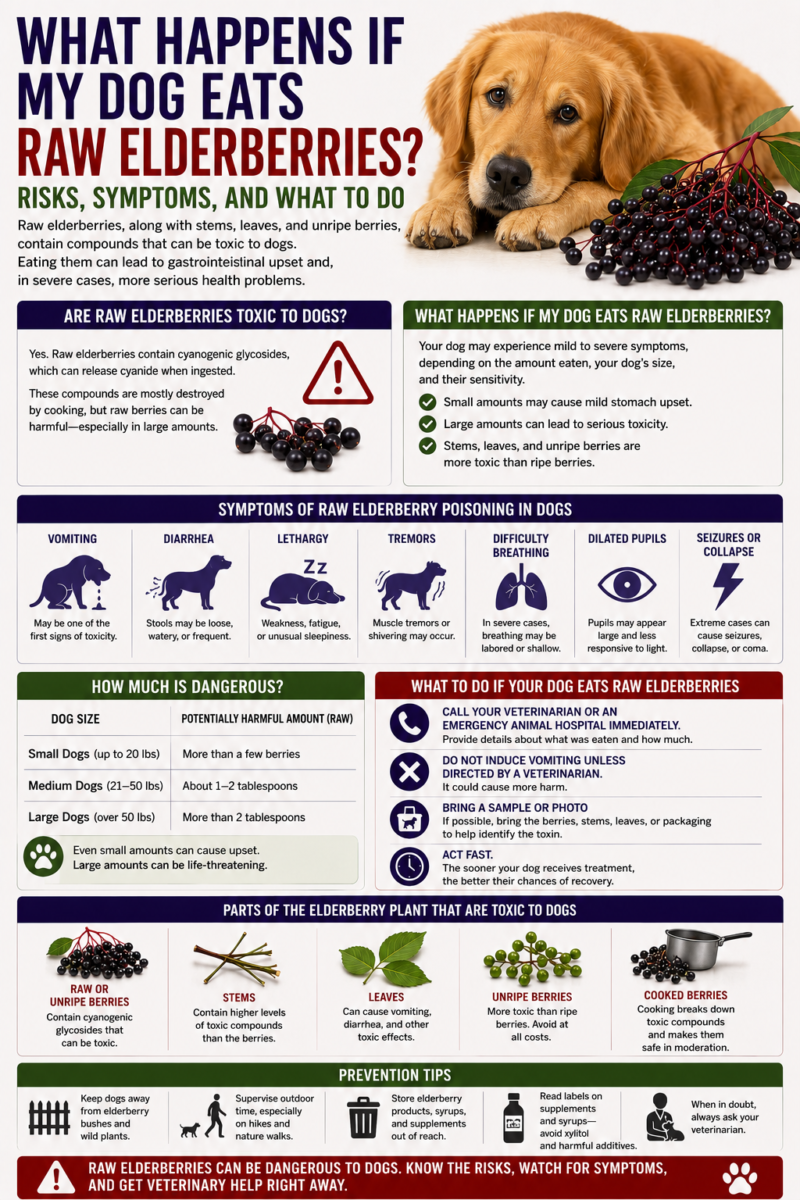
While raw elderberries can potentially cause problems for dogs, the severity depends on several factors, including how many berries were eaten, whether stems or leaves were involved, your dog’s size, and whether symptoms have started to appear.
The key is understanding what to watch for and knowing when it’s time to contact your veterinarian.

Why Raw Elderberries Are Different From Cooked Elderberries
One of the biggest sources of confusion is that people often hear about elderberry syrup, elderberry gummies, and elderberry tea being used by humans and assume fresh elderberries must be perfectly safe. This explanation of why raw elderberries are unsafe also distinguishes uncooked berries from properly prepared elderberry products.
That isn’t necessarily true.
Raw elderberries contain naturally occurring compounds called cyanogenic glycosides.
These compounds are found throughout the elderberry plant, including:
- Raw berries
- Leaves
- Stems
- Bark
- Roots
- Unripe berries

This is one reason I always recommend reading Never Eat Elderberries Until You Read This before consuming berries directly from a bush.
Cooking helps reduce many of these compounds, which is why properly prepared elderberry products are generally considered much safer than raw berries.

If you’re curious about the difference, check out Can Dogs Eat Cooked Elderberries? What Every Dog Owner Should Know.
Is My Dog In Immediate Danger?
Not necessarily.

Many dogs that eat a small number of raw elderberries may only experience mild digestive upset or no symptoms at all. For a broader look at the risks of elderberries in different forms, see Are Elderberries Poisonous to Dogs? What Every Pet Owner Must Know.
However, there are situations that deserve closer attention.
The risk tends to increase when:
- Large amounts are consumed
- Stems are attached
- Leaves are eaten
- Unripe berries are involved
- A small dog consumes the berries
- Symptoms begin developing
The important thing is evaluating the situation carefully rather than assuming everything is fine.


How Many Raw Elderberries Did Your Dog Eat?
This is one of the first questions your veterinarian will likely ask.
For example:
One Or Two Berries
A large dog that eats one or two ripe elderberries may experience no noticeable symptoms.
A Small Handful
The risk becomes more difficult to predict.
Monitoring becomes important.
Large Quantities
Large amounts increase the likelihood of digestive issues and other symptoms.
Berries Plus Plant Material
If your dog consumed leaves, stems, bark, or unripe berries along with the fruit, the level of concern increases significantly.
The First Symptoms To Watch For
Most dogs that react to raw elderberries will initially show digestive symptoms.
Watch carefully for:
- Vomiting
- Diarrhea
- Excessive drooling
- Loss of appetite
- Nausea
- Stomach discomfort
These symptoms may begin within a few hours after consumption.
In many cases, digestive upset is the first sign that something is wrong.

Raw berries are only one part of the elderberry plant that can create concerns for dogs. If you’re unsure whether your dog may be developing symptoms, I recommend reading Elderberry Poisoning Symptoms In Dogs: Signs Every Owner Should Know.

Dogs that chew on branches, leaves, or other plant material should also be evaluated using the information found in Are Elderberry Plants Toxic To Dogs? What Owners Should Know and Are Elderberry Leaves Poisonous To Dogs?.


Symptoms That May Indicate A More Serious Problem
Although severe reactions appear relatively uncommon, it’s important to recognize warning signs.
Contact your veterinarian promptly if your dog develops:
- Significant lethargy
- Weakness
- Difficulty walking
- Tremors
- Disorientation
- Excessive panting
- Difficulty breathing
These symptoms deserve immediate attention.
What If My Dog Ate Elderberry Leaves Or Stems?
This situation generally worries me more than a dog eating a few ripe berries.
Leaves and stems contain higher concentrations of the compounds responsible for toxicity concerns.
If your dog chewed on:
- Leaves
- Branches
- Stems
- Bark
I would be much more inclined to contact a veterinarian for guidance.



What If My Dog Ate Unripe Elderberries?
Unripe elderberries are another concern.
Green berries contain higher concentrations of potentially problematic compounds compared to fully ripe berries.
If your dog consumed green elderberries, close monitoring is especially important.
Should I Make My Dog Throw Up?
This is a question many owners ask immediately.
The answer is simple.
Do not attempt to induce vomiting unless your veterinarian specifically instructs you to do so.
Making a dog vomit incorrectly can sometimes create additional problems.
Instead, focus on gathering information and contacting your veterinarian if necessary.


What Information Should You Gather?
Before calling a veterinarian, try to collect as much information as possible.
Helpful details include:
- Approximately how many berries were eaten
- Whether the berries were ripe or unripe
- Whether leaves or stems were consumed
- Your dog’s weight
- Your dog’s age
- When the incident occurred
- Any symptoms you’ve noticed
Having this information ready can help your veterinarian assess the situation more quickly.
How Long After Eating Raw Elderberries Will Symptoms Appear?
Every dog is different.
Some dogs may develop symptoms within a few hours.
Others may take longer.
Generally speaking, the first 24 hours are the most important monitoring period.
Watch your dog closely during this time.



What If My Dog Ate Elderberry Syrup Instead?
Many owners accidentally land on the wrong information because they search for “elderberry” without specifying the form.
Raw elderberries and elderberry syrup are very different situations.
Elderberry syrup is typically made using cooked berries.

If your dog got into syrup instead of raw berries, read Can Dogs Eat Elderberry Syrup? What Pet Owners Need To Know for guidance specific to that situation.
Can Dogs Recover From Eating Raw Elderberries?
In many situations, yes.
Many dogs recover fully, especially when only small amounts were consumed and veterinary guidance is obtained when necessary.
The biggest mistake owners make is ignoring symptoms because they assume their dog will simply “sleep it off.”
Paying attention early often leads to better outcomes.
Why Garden Owners Should Be Careful
As elderberries become more popular, more people are planting them in their yards.

If you’re considering adding elderberries to your property after reading How To Grow Elderberries At Home: What Nobody Tells You Before You Plant, it’s wise to think about your pets beforehand.
Dogs should not be allowed to routinely chew on:
- Leaves
- Branches
- Bark
- Roots
- Unripe berries
A little prevention can eliminate a lot of worry later.
Other Plants That Look Similar To Elderberries
Plant identification mistakes happen more often than many people realize.
One particularly dangerous example is pokeweed.
Many people confuse pokeweed and elderberry, especially when berries first begin developing.
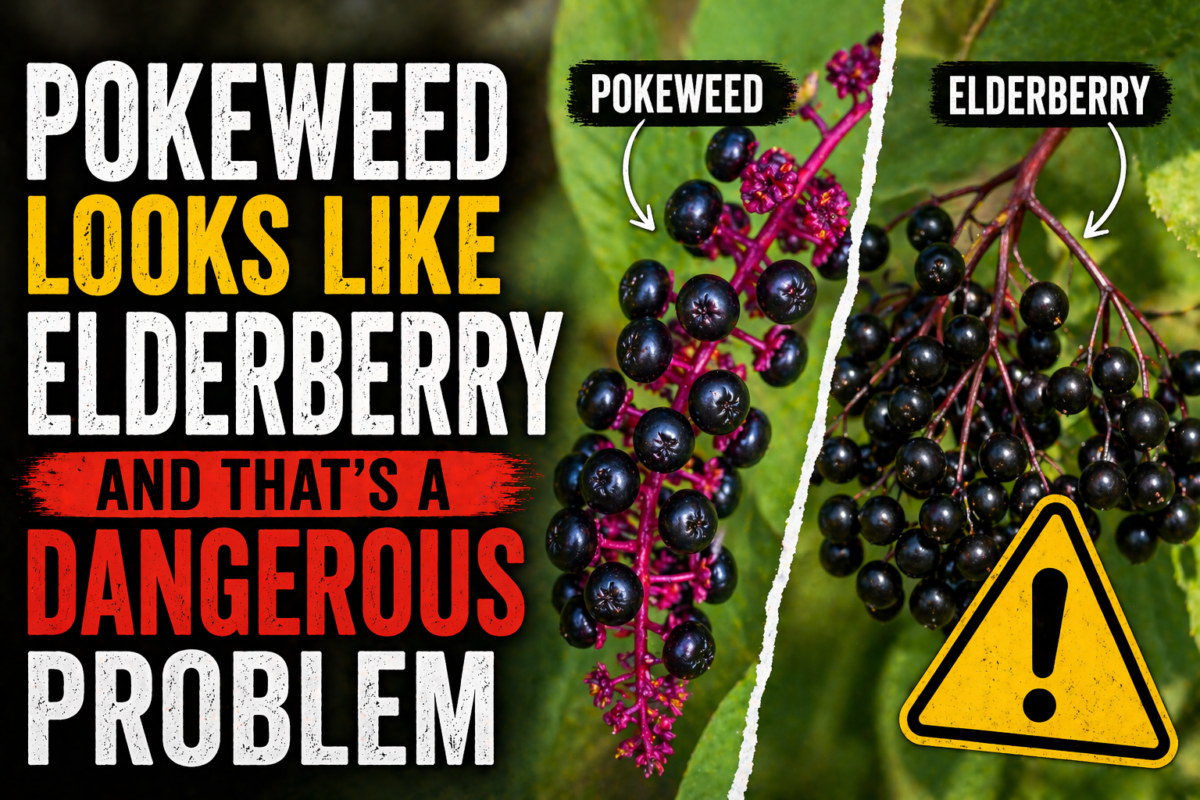
If you forage or grow wild plants, I highly recommend reading Pokeweed Looks Like Elderberry And That’s A Dangerous Problem.
Proper identification is important for both humans and pets.
When Should You Call A Veterinarian?
I would contact a veterinarian if:
- Your dog ate a large amount of raw elderberries
- Leaves or stems were consumed
- Unripe berries were eaten
- Symptoms develop
- Your dog is very small
- Your dog has existing health conditions
When it comes to potential poisoning situations, getting professional guidance is never a bad idea.
What I’d Do If This Happened To My Dog
If one of my dogs ate a few raw elderberries, I would first determine exactly what was consumed.
Were they ripe berries?
Were stems attached?
Were leaves involved?
Then I would monitor closely for symptoms while keeping my veterinarian’s number handy.
If leaves, stems, unripe berries, or significant symptoms entered the picture, I would contact my veterinarian immediately.
The goal isn’t to panic.
The goal is to stay informed and respond appropriately.
Author
Sarah Whitmore
Sarah Whitmore is an herbal enthusiast, backyard grower, and independent researcher who has spent years studying elderberries, traditional plant remedies, and home gardening. Through Elderberry Pro, she shares practical guides, safety information, recipes, and research-backed insights to help readers better understand the benefits, risks, and real-world uses of elderberries.