

If you have elderberry bushes growing in your yard and a curious dog that likes to investigate every plant it finds, you’ve probably wondered whether elderberry leaves are dangerous.
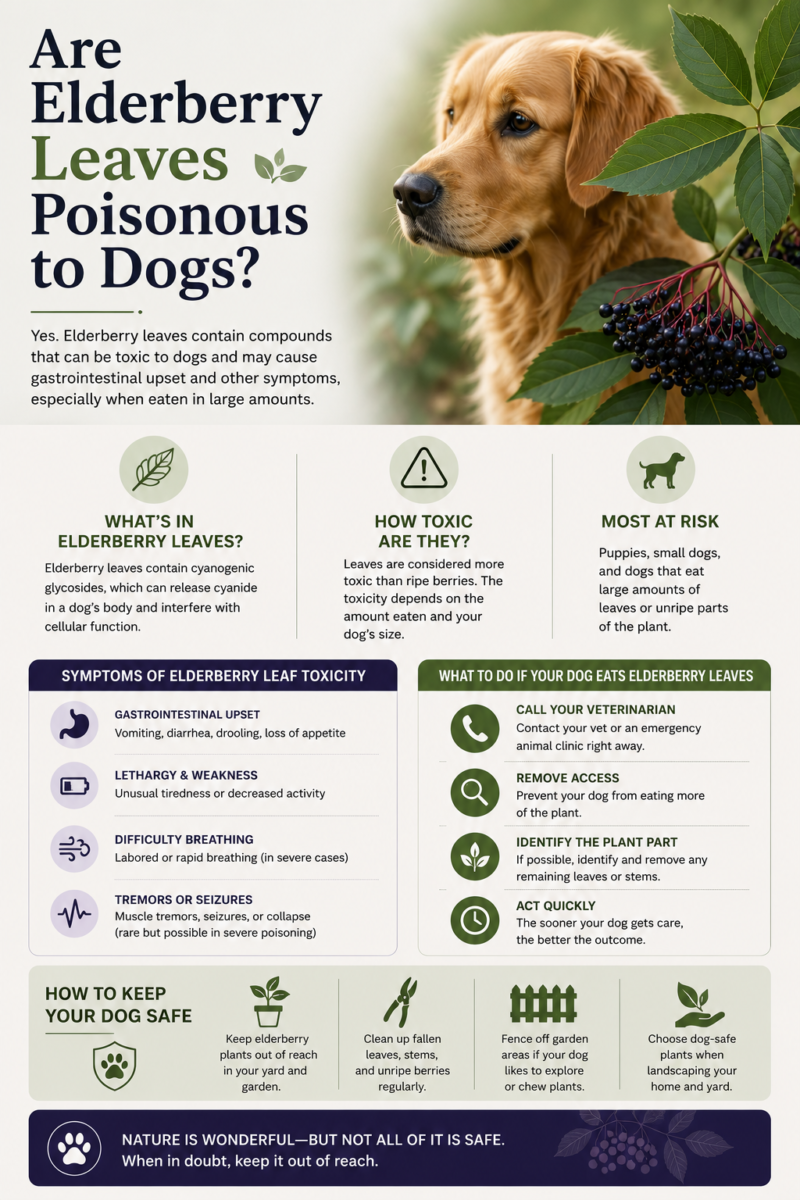
The short answer is yes.
Elderberry leaves are considered one of the parts of the elderberry plant that dogs should not eat.
While many pet owners focus on the berries themselves, the leaves often create a greater concern because they contain naturally occurring compounds that can potentially cause toxicity symptoms in both people and animals.
Fortunately, not every dog that chews on an elderberry leaf becomes seriously ill. However, understanding the risks can help you respond quickly if an accident happens.
Why Elderberry Leaves Are Different From Elderberries
One of the biggest misconceptions I see is people assuming that if elderberry syrup is popular, every part of the elderberry plant must be safe.
That isn’t the case.
Elderberry plants contain naturally occurring compounds called cyanogenic glycosides.
These compounds are found in:
- Leaves
- Stems
- Bark
- Roots
- Unripe berries
The leaves often contain significantly higher concentrations than properly prepared elderberry products.

This is one reason I always encourage readers to learn more about elderberry safety by reading Never Eat Elderberries Until You Read This.
What Happens If A Dog Eats Elderberry Leaves?
The answer depends on several factors.
These include:
- How many leaves were consumed
- The dog’s size
- The dog’s age
- Whether symptoms develop
- Overall health
Some dogs may only experience mild digestive upset.
Others may develop more significant symptoms.
Common Symptoms To Watch For
The first signs usually involve the digestive system.
Symptoms may include:
- Vomiting
- Diarrhea
- Drooling
- Nausea
- Loss of appetite
- Stomach discomfort
Many owners first notice that their dog simply seems “off.”
More Serious Symptoms
Larger exposures can sometimes cause:
- Weakness
- Lethargy
- Tremors
- Difficulty walking
- Disorientation
These symptoms deserve immediate veterinary attention.


What If My Dog Only Ate One Leaf?
Many owners panic after seeing their dog grab a single leaf.
In some situations, a single leaf may not cause noticeable symptoms, particularly in a larger dog.
However, monitoring is still important because every dog responds differently.
Puppies And Elderberry Leaves
Puppies deserve extra caution.
They are:
- Smaller
- More curious
- More likely to chew plants
Because of their size, even limited exposure may create greater concern.
Why Leaves Create More Concern Than Syrup
Many people confuse elderberry leaves with elderberry products.
They are not the same thing.
Elderberry syrup is typically made from cooked berries.

If your dog got into syrup instead, read Can Dogs Eat Elderberry Syrup? What Pet Owners Need to Know.
Leaves remain one of the parts of the plant that should never be intentionally consumed.
Growing Elderberries Around Dogs

If you grow elderberries after reading How to Grow Elderberries at Home: What Nobody Tells You Before You Plant, it’s important to keep an eye on dogs that enjoy chewing plants.
Most mature dogs ignore elderberry bushes entirely.
Problems tend to occur with:
- Puppies
- Plant chewers
- Bored dogs
- Dogs left unsupervised in the garden


When To Call A Veterinarian
Contact your veterinarian if:
- Multiple leaves were consumed
- Symptoms develop
- Your dog is very small
- Other parts of the plant were also eaten
Quick action is always better than waiting for symptoms to worsen.
What Owners Should Remember
Elderberry leaves are considered one of the more problematic parts of the elderberry plant for dogs.
While not every exposure results in serious illness, leaves should never be considered safe treats.
If your dog chews on elderberry leaves, monitor closely and contact your veterinarian whenever symptoms appear or large amounts have been consumed.


Author
Sarah Whitmore
Sarah Whitmore is an herbal enthusiast, backyard grower, and independent researcher who has spent years studying elderberries, traditional plant remedies, and home gardening. Through Elderberry Pro, she shares practical guides, safety information, recipes, and research-backed insights to help readers better understand the benefits and risks of elderberries.