
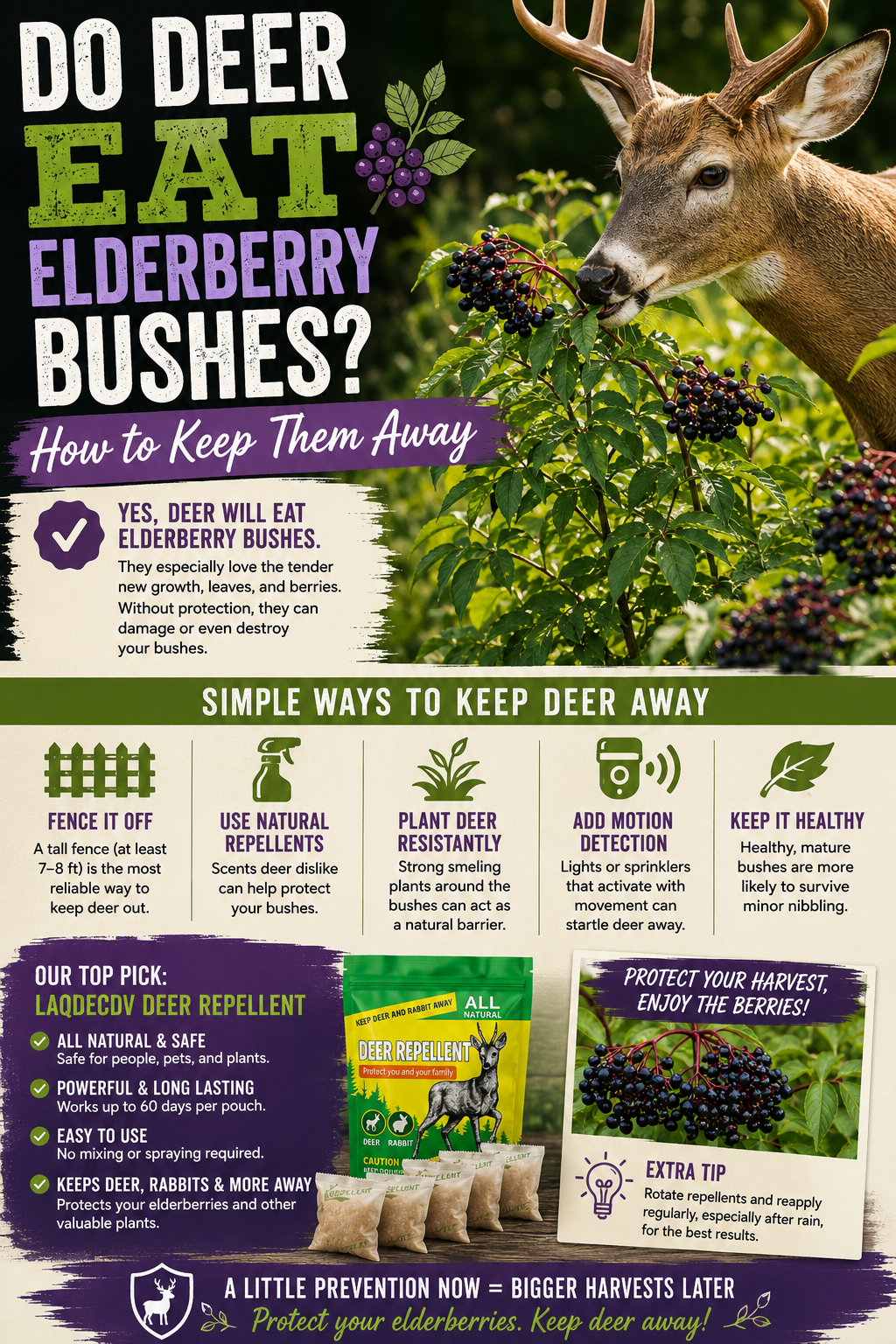
The first time I found deer damage on my elderberry bushes, I honestly wasn’t sure what had happened.
The evening before, everything looked great.
Fresh green leaves.
Healthy new shoots.
Flower buds were starting to form.
The next morning it looked like someone had walked through my garden taking random bites out of every plant they passed.
Several stems were missing their leaves.
Tender shoots had been clipped clean off.
Some branches looked like they had simply disappeared.
My first thought was rabbits.
Then I noticed the hoof prints.
It was deer.
If you’ve found yourself asking whether deer eat elderberry bushes, the answer is yes. And if they discover your plants, they’ll often come back unless you take steps to protect them.
The good news is that elderberries are resilient plants, and with the right approach you can usually stay one step ahead of hungry wildlife.
Yes, Deer Do Eat Elderberry Bushes
Deer aren’t picky eaters.
When fresh food is available, they’ll browse all kinds of shrubs, fruit plants, flowers, and young trees.
Elderberries are no exception.
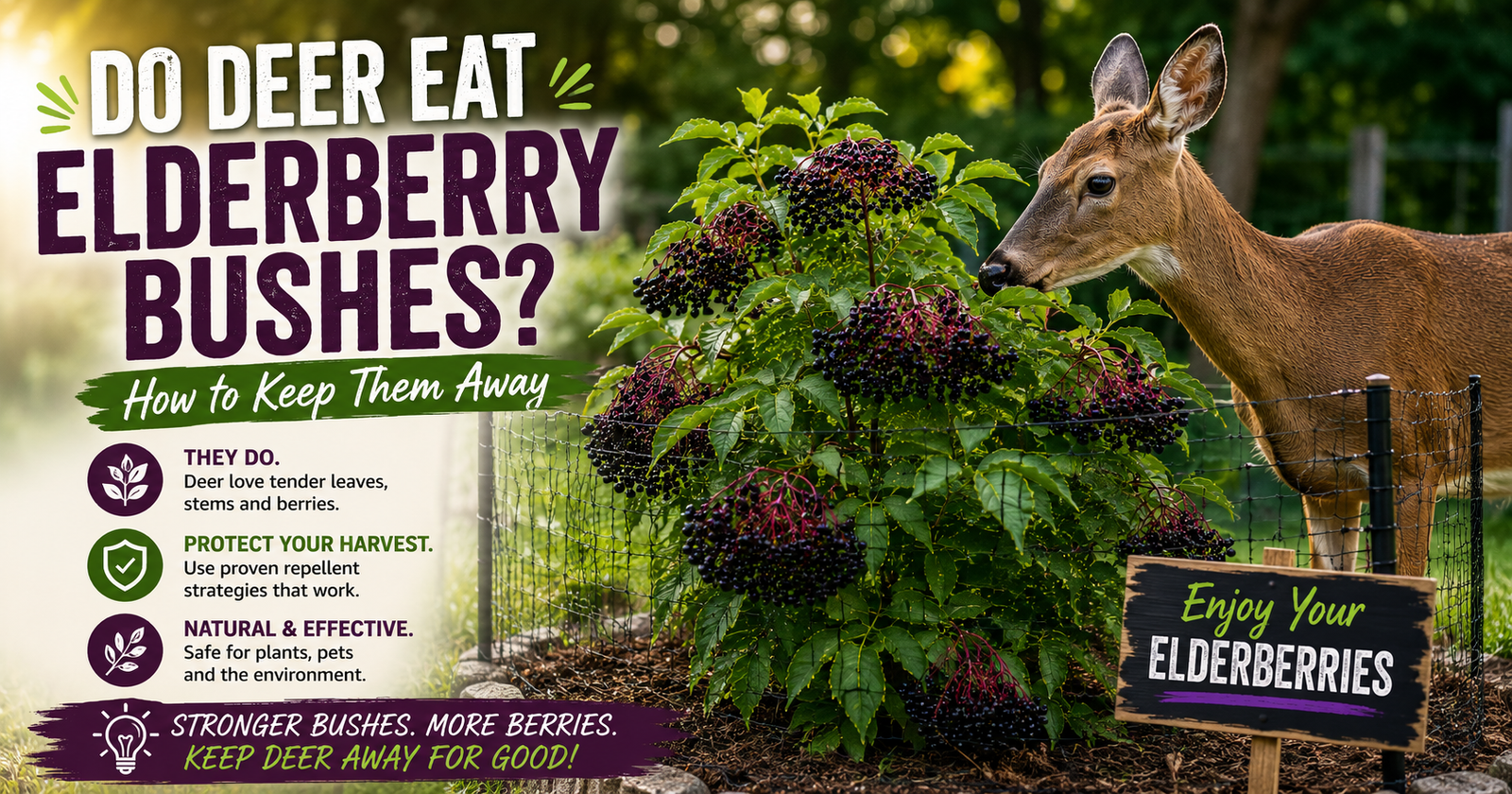
The parts deer seem to enjoy most include:
- Tender new spring growth.
- Young leaves.
- Fresh stems.
- Flower clusters.
- Occasionally developing berries.
Young bushes are especially vulnerable because nearly every part of the plant is within easy reach.
Older bushes can usually recover more quickly, but repeated browsing can still reduce berry production and slow overall growth.



Deer Damage Usually Happens Overnight
One thing that surprised me was how quickly the damage appeared.
I checked the bushes one evening.
Everything looked perfect.
The next morning several branches had already been stripped.
Deer are most active around dawn and dusk, so it’s common for damage to appear almost overnight.
If your elderberry bushes seem fine one day and heavily browsed the next, deer should be high on your list of suspects.



The Earlier You Protect Your Elderberries, The Better
One lesson I’ve learned is that waiting until deer have already chewed on your bushes usually means you’re playing catch-up. Once deer discover a reliable food source, they’ll often come back every few nights to check whether there’s another easy meal waiting for them.

That’s why I prefer putting protection in place before I ever notice damage. Over the years I’ve had the best luck with the LAQDECDV Deer & Rabbit Repellent because it’s incredibly simple to use around elderberry bushes. Instead of spraying every plant after each rain, I can place the scent pouches around the planting and let them help discourage deer from making my bushes part of their regular route.
After using several different approaches over the years, I realized there were big differences between the products available. Some worked for only a few days, while others required constant attention or frequent reapplication. I wanted something that was easy to maintain because I’d rather spend my time growing elderberries than chasing wildlife around the yard.
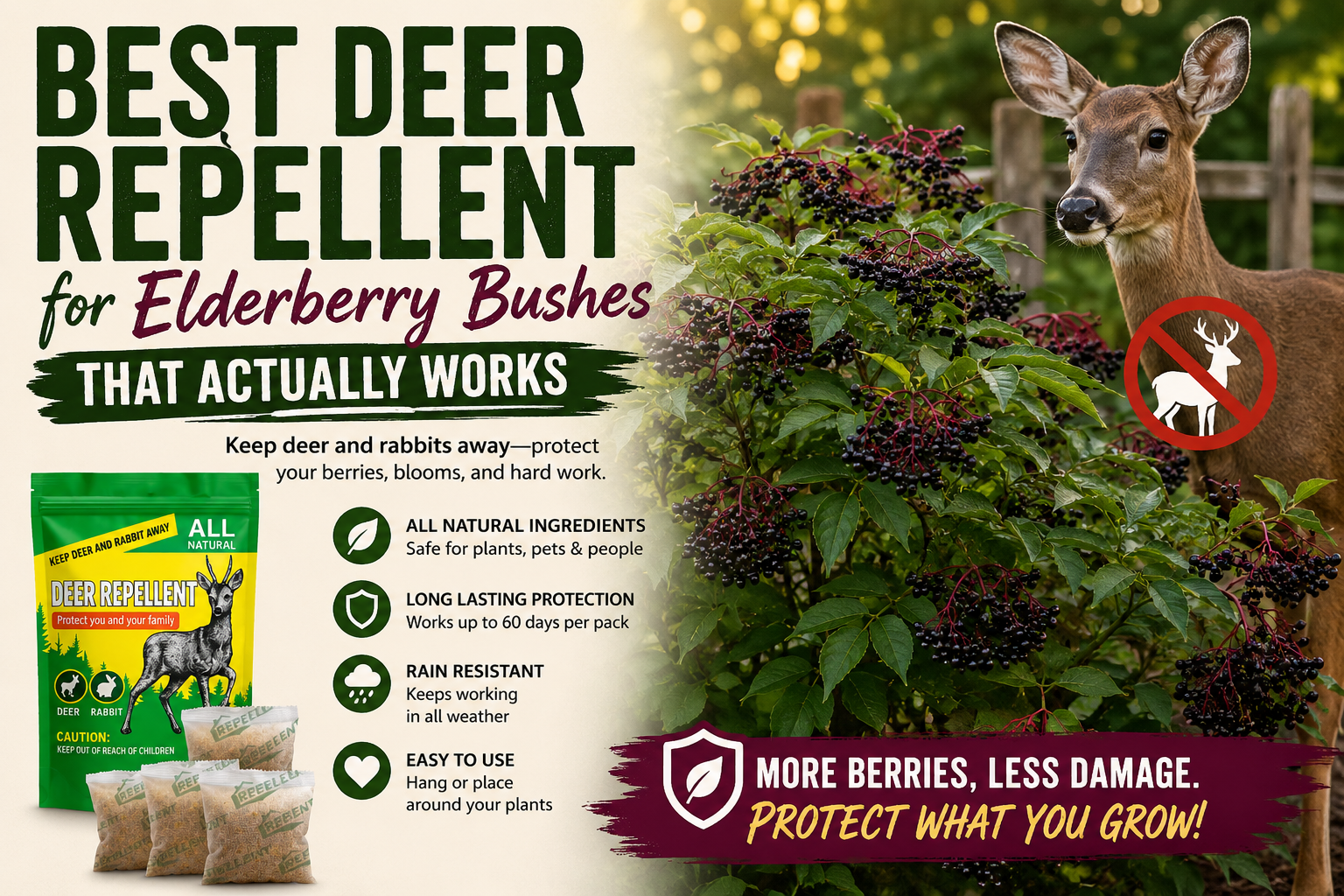
That’s exactly why I put together my detailed guide on Best Deer Repellent for Elderberry Bushes That Actually Works. In that article, I explain why I chose this particular repellent, what I like about it after using it, and how I use it alongside other simple strategies to protect my elderberry bushes throughout the growing season.
Protecting Young Bushes Is Especially Important
I’ve noticed that deer rarely damage mature elderberries as severely as newly planted bushes.
Young plants have fewer stems, less stored energy, and much smaller root systems.
Losing several shoots from a mature bush may only slow it down.
Losing those same shoots from a first-year plant can delay its development for an entire growing season.
That’s why I pay the closest attention during the first few years after planting.
Helping young elderberries become established has a lasting impact on how productive they’ll be later.
If you’re looking for the deer repellent that’s given me the most consistent results, Best Deer Repellent for Elderberry Bushes That Actually Works explains exactly how I use it around my own planting.


How To Tell If Deer Are The Problem
Sometimes it’s obvious.
Other times it takes a closer look.
Here are a few things I check.
- Missing leaves on the upper part of the bush.
- Tender shoots clipped off.
- Ragged ends where stems were bitten instead of cut cleanly.
- Hoof prints in soft soil.
- Deer droppings nearby.
- Damage that appears suddenly overnight.
Rabbits usually stay much closer to the ground.
Birds target the berries.
Deer often browse the entire upper portion of young plants.
Once you’ve seen deer damage a couple of times, it becomes much easier to recognize.
Young Elderberries Need The Most Protection
One thing I’ve learned is that the first few growing seasons are the most important.
Young elderberries are still developing their root systems.
Every new shoot matters.
When deer repeatedly remove fresh growth, the plant has to spend valuable energy replacing those shoots instead of becoming larger and stronger.
That’s why I start protecting young bushes early in the season instead of waiting until I notice damage.
Preventing browsing is much easier than helping a stressed plant recover from it.


Deer Don’t Usually Kill Healthy Elderberries
This is one piece of good news.
Healthy elderberries are surprisingly tough.
Even after significant browsing, most established bushes recover well once the deer stop feeding on them.
That doesn’t mean you should ignore the problem.
Repeated browsing can reduce flowering, delay fruit production, and keep bushes from reaching their full potential.
But if your mature elderberry has been chewed by deer, don’t assume you’ve lost the plant.
With good care, it will often bounce back surprisingly well.
Healthy Bushes Recover Faster
One thing I’ve noticed over the years is that vigorous elderberries recover from wildlife damage much better than stressed plants.
Bushes growing in full sun with healthy soil and consistent moisture usually replace damaged growth much faster than bushes already struggling with other issues.
That’s why I focus on overall plant health just as much as wildlife protection.

If you’re still building your elderberry patch, I’ve had excellent success recommending the Live American Elderberry Plants from Weaver Family Farms Nursery because healthy nursery-grown plants establish quickly and develop into vigorous bushes that handle stress much better over the long term.
Their elderberry growing guide is also one of my favorite resources for helping new growers start with healthy plants from day one.


Deer Usually Come Back If Nothing Changes
One thing I noticed after the first time deer found my elderberries was that the damage didn’t stop there.
They came back.
Once deer discover a reliable food source, they often include it in their regular travel route.
That’s why I don’t wait until the bushes have been chewed several nights in a row before taking action.
The sooner you protect your plants, the less likely deer are to make your elderberries part of their routine.
Spring Is Usually The Worst Time
If I had to pick one season when deer cause the most damage, it would be spring.
Fresh shoots are soft, tender, and full of moisture.
To a hungry deer, that’s about as appealing as a fresh salad.
Flower buds are another favorite.
Unfortunately, losing flower clusters doesn’t just affect how the bush looks.
It can directly reduce the number of berries you’ll harvest later that summer.
That’s why I start watching my bushes closely as soon as new growth appears.

Deer Damage Can Mean Fewer Berries
Many people think deer only eat leaves.
While they certainly do, browsing often removes the exact parts of the plant that would have produced flowers and fruit.
The result may not become obvious until months later when your harvest is much smaller than expected.
If your bushes aren’t producing well, deer damage might only be one piece of the puzzle. Why Isn’t My Elderberry Bush Producing Berries? covers several other common reasons that can affect fruit production as well.
Don’t Wait Until Deer Become Regular Visitors
One lesson I’ve learned is that prevention almost always works better than reacting after damage has already occurred.
Instead of hoping deer move on to another yard, I prefer putting a deterrent in place before they develop a habit of browsing my elderberries.
That’s exactly why I put together my guide on Best Deer Repellent for Elderberry Bushes That Actually Works. In it, I share the deer repellent that’s worked best for me and explain why I prefer using it before deer ever become a problem instead of trying to chase them away afterward.
Fencing Isn’t Always Practical
People often suggest installing a tall fence around every garden.
While fencing certainly works, it’s not always realistic.
Large fences can be expensive.
They change the look of your landscape.
They’re not always allowed by neighborhood rules.
For many backyard gardeners with just a few elderberry bushes, using a quality deer repellent is often much simpler and far less expensive than enclosing the entire planting.
Healthy Plants Bounce Back Faster
One thing I’ve consistently noticed is that healthy elderberries recover from browsing much more quickly than stressed ones.
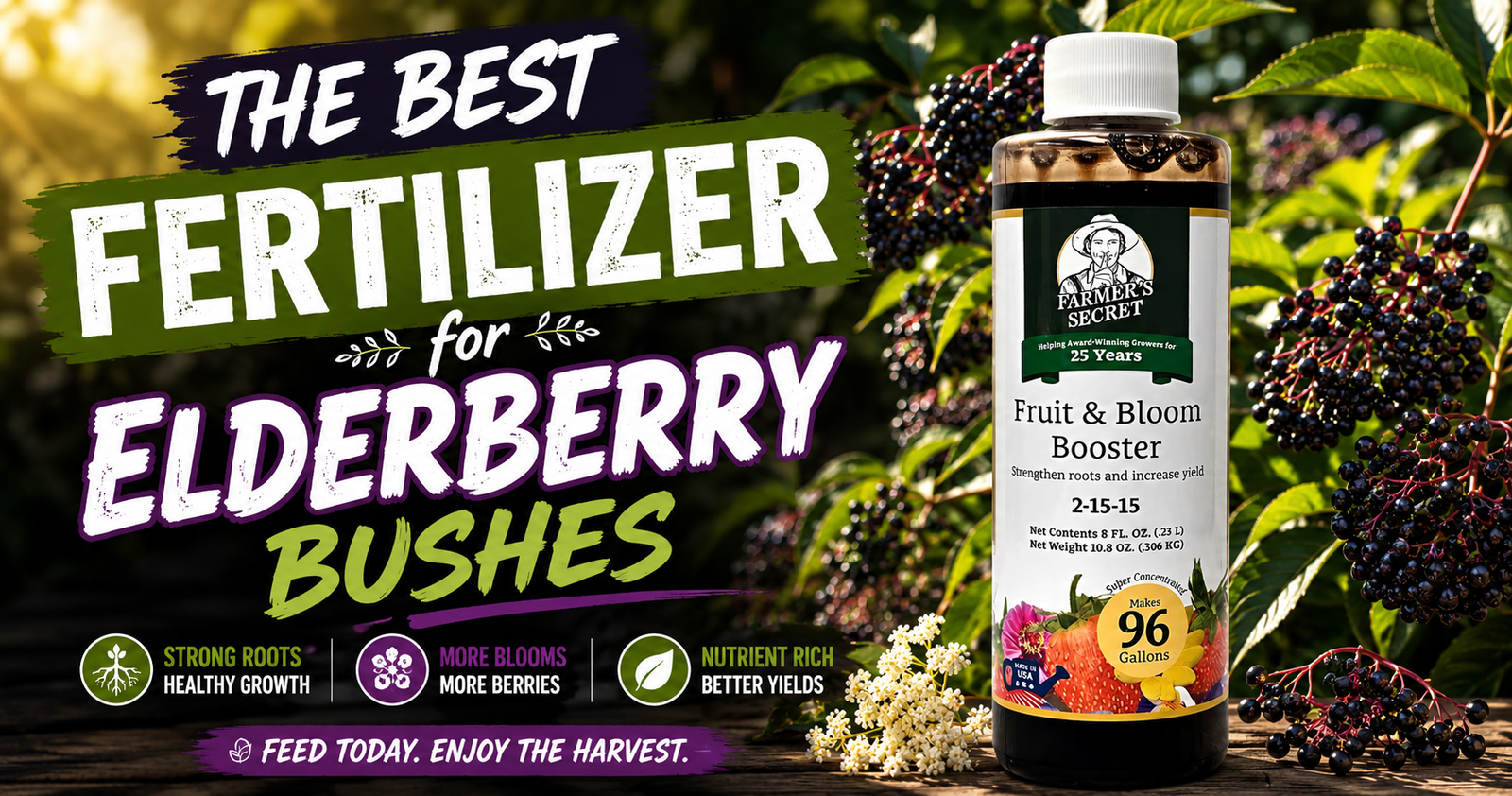
Bushes that receive enough water, sunlight, and nutrients usually replace damaged growth faster and continue producing vigorous new canes throughout the season.
That’s why I don’t think about deer protection as a separate task.
It’s simply another part of growing healthy elderberries.
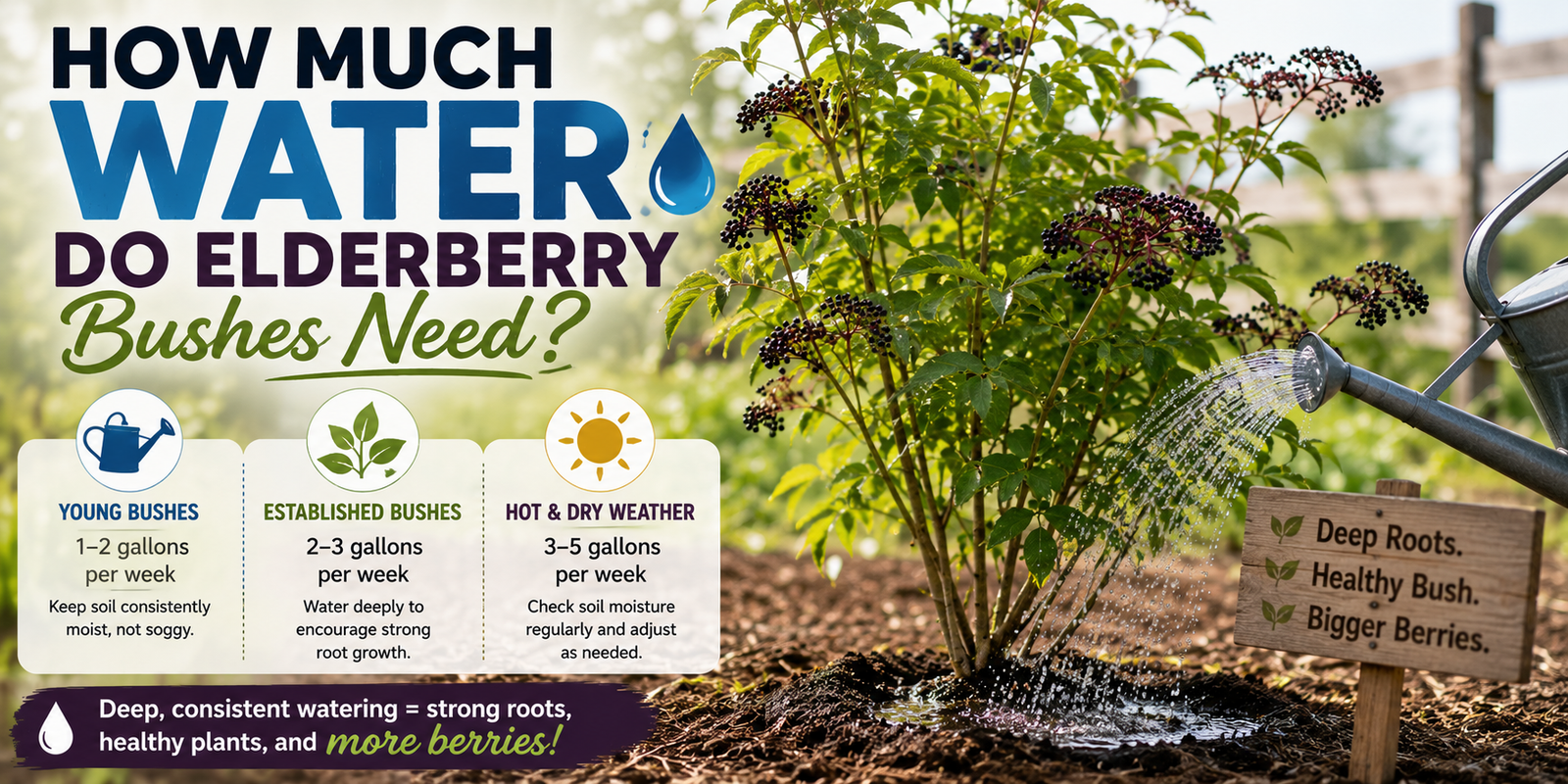
If your bushes seem stressed before deer ever show up, How Much Water Do Elderberry Bushes Need? and Best Fertilizer for Elderberry Bushes That Actually Works are two guides I’d recommend reading because they cover two of the biggest factors affecting overall plant health.
Walk Your Elderberries Often
I probably spend five or ten minutes each week simply walking around my elderberry patch.
I’m not always pruning.
I’m not always watering.
Most of the time I’m just looking.
Fresh browse marks.
New growth.
Flower clusters.
Signs of insects.
Animal tracks.
Those quick inspections have helped me catch problems long before they became serious.
It’s one of the easiest habits I’ve developed, and it’s probably saved more harvests than I realize.
Questions I Get About Deer And Elderberry Bushes
After talking with a lot of home gardeners, I’ve found that most people ask the same questions after they discover deer have been eating their plants.
Will Deer Keep Coming Back?
Usually, yes.
If deer find an easy food source and nothing changes, they’ll often return to the same area over and over.
That’s why I don’t like waiting until I’ve already lost several weeks of new growth.
Getting ahead of the problem has always worked better than reacting after the damage is done.
Do Deer Eat Mature Elderberry Bushes?
They certainly can.
Young bushes usually suffer the most damage because all of the tender growth is within easy reach, but mature bushes aren’t immune.
Deer often browse fresh spring shoots, lower branches, and flower clusters even on larger plants.
The difference is that established bushes usually recover much faster.
Can Elderberry Bushes Recover After Deer Damage?
Most healthy bushes recover surprisingly well.
I’ve had deer remove a significant amount of new growth only to watch the plant send out fresh shoots a few weeks later.
Recovery depends on several factors, including the health of the bush, the time of year, and whether the browsing continues.
That’s another reason I focus on growing vigorous plants rather than simply reacting to wildlife damage.
Are Deer More Active At Certain Times?
Absolutely.
Around my property, I notice the most activity near sunrise and again around dusk.
Spring is usually the busiest time because deer are searching for tender new growth.
Late summer can also bring increased browsing if natural food becomes harder to find.
Knowing when deer are most active helps me decide when to check my bushes and when to make sure my repellents are still in place.
Don’t Let Deer Ruin Harvest Season
One thing I’ve realized is that deer damage early in the year often leads to disappointment months later.
The shoots they eat today are often the same ones that would have supported flowers and berry clusters later in the season.
Protecting those young canes isn’t just about making the bush look nice.
It’s about protecting your future harvest.
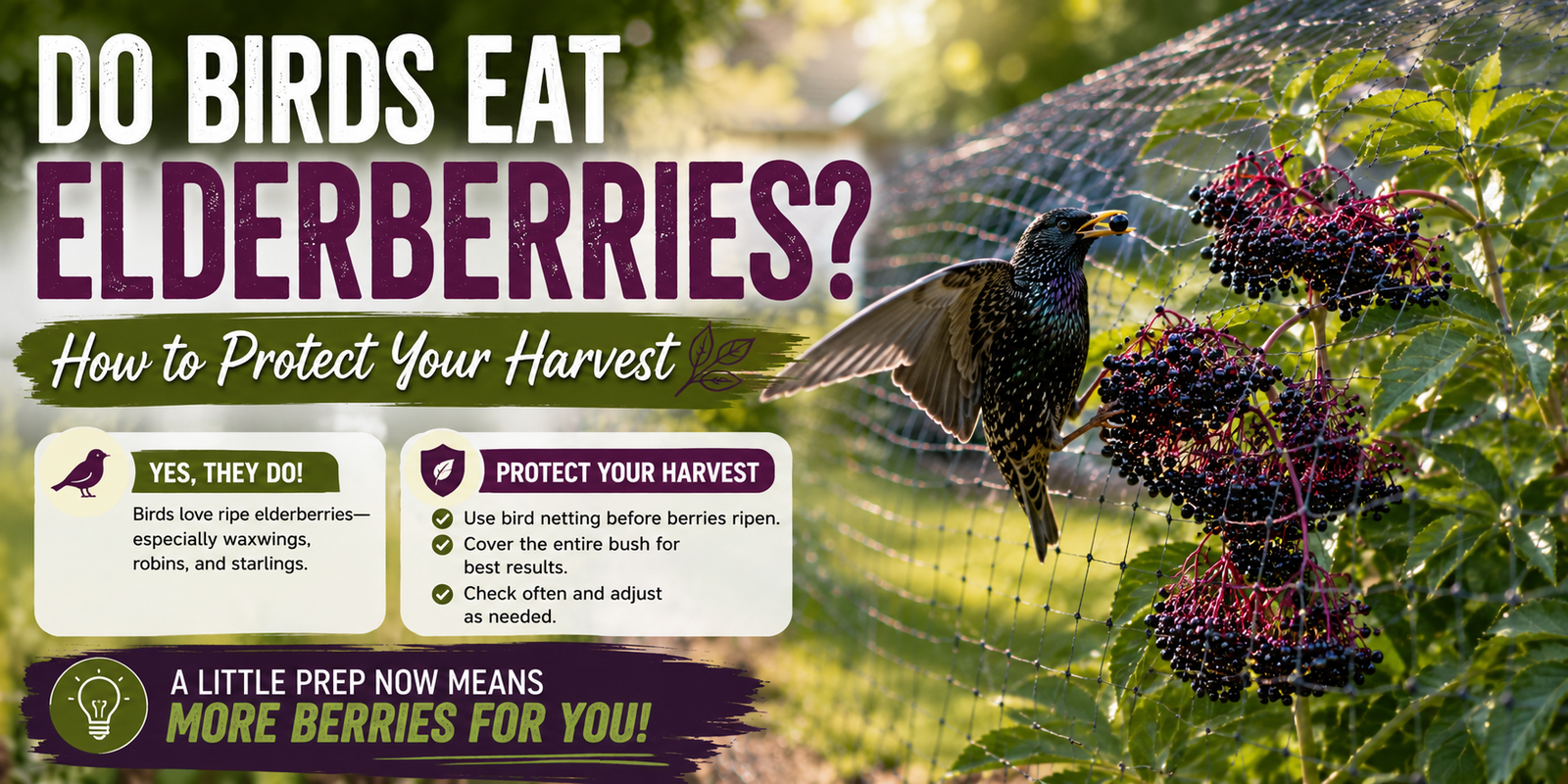
If birds become the next challenge once your berries begin ripening, Do Birds Eat Elderberries? How to Protect Your Harvest explains the methods that have helped me save far more fruit from hungry wildlife.
My Goal Isn’t To Eliminate Wildlife
I enjoy seeing deer around the property.
They’re beautiful animals.
I simply don’t enjoy watching them eat months of work overnight.
For me, the goal has never been to get rid of deer completely.
The goal is encouraging them to find dinner somewhere besides my elderberry bushes.
A simple deterrent combined with healthy gardening practices has been enough to accomplish that most years.
Healthy Bushes Recover Faster
Even when deer occasionally browse my elderberries, I’ve noticed healthy bushes bounce back much more quickly than stressed plants.
Consistent watering, annual pruning, balanced fertilization, and proper sunlight all contribute to stronger recovery after wildlife damage.
That’s another reason I focus so much attention on overall plant health instead of relying on one solution.
Strong elderberries are surprisingly resilient when they’re given the right growing conditions.
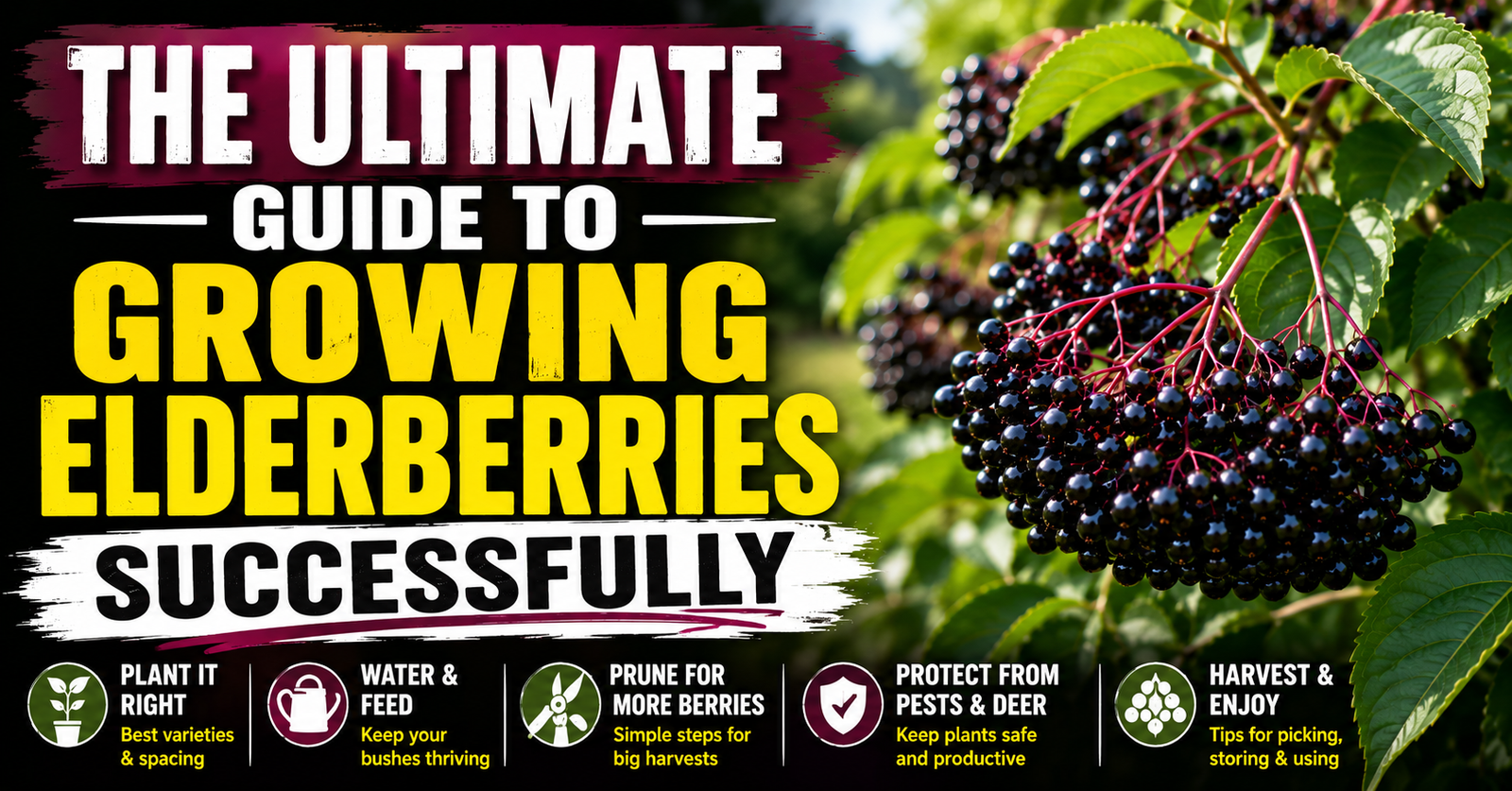
If you’d like to learn how all of those pieces fit together, The Ultimate Guide to Growing Elderberries Successfullywalks through every stage of growing productive elderberry bushes.
Keep Growing Healthier Elderberries
Deer are just one of several challenges you’ll eventually encounter while growing elderberries. Healthy plants that receive proper care are much better equipped to recover from occasional browsing and continue producing heavy crops.
If you’re continuing to improve your elderberry patch, I’d also recommend reading How Much Water Do Elderberry Bushes Need? to avoid one of the biggest growing mistakes, Can Elderberries Grow in Shade? Here’s What I Learned if you’re evaluating your planting location, and When Should You Prune Elderberry Bushes? Here’s What Works to keep your bushes vigorous and productive year after year.
Growing elderberries has taught me that you don’t need to win every battle with wildlife.
You just need to make your bushes a little less appealing than the next meal down the road.
About the Author
Caleb Morgan
Caleb Morgan is a lifelong backyard fruit grower and gardening writer who enjoys helping home gardeners grow healthier elderberries through practical, real-world advice. At Elderberry Pro, he shares hands-on growing tips, product recommendations, and proven solutions for common problems so readers can enjoy bigger harvests and healthier plants year after year.