

Puppies seem to have one mission in life.
Eat everything.
Leaves, sticks, bugs, mulch, socks, shoes, and just about anything else they can fit into their mouths.
If you use elderberry products at home or grow elderberries in your yard, it’s only natural to wonder whether elderberries are safe for puppies.
After all, elderberry syrup, elderberry gummies, and elderberry supplements have become incredibly popular among adults. Many families keep them in the kitchen year-round.
But puppies are not small humans.
Their bodies process foods differently, they weigh significantly less than adult dogs, and they often react differently to substances that might not bother a larger dog.
The short answer is that I do not recommend intentionally giving elderberry products to puppies unless specifically directed by your veterinarian.
Let’s take a closer look at why.

Why Puppies Require Extra Caution
One of the biggest mistakes pet owners make is assuming that if something is safe for an adult dog, it must also be safe for a puppy.
That’s simply not true.
Puppies have:
- Smaller body weights
- Developing digestive systems
- Developing immune systems
- Greater sensitivity to certain ingredients
- Less ability to tolerate accidental overconsumption
A large adult dog and a ten-week-old puppy can react very differently to the exact same substance.
That’s why veterinarians often recommend a more cautious approach whenever puppies are involved.



Can Puppies Eat Raw Elderberries?
No.
Raw elderberries should never be intentionally fed to puppies.
Raw elderberries contain naturally occurring compounds called cyanogenic glycosides.
These compounds are also found in:
- Leaves
- Stems
- Bark
- Roots
- Unripe berries

This is one reason I always recommend reading Never Eat Elderberries Until You Read This if you’re unfamiliar with elderberry safety.
The risks become even more important when dealing with a small puppy.



What Happens If A Puppy Eats Raw Elderberries?
The outcome depends on several factors.
These include:
- How many berries were eaten
- Whether stems were attached
- Whether leaves were consumed
- The puppy’s size
- The puppy’s overall health
Some puppies may develop only mild digestive upset.
Others may experience more significant symptoms.

For a detailed look at accidental ingestion, read What Happens If My Dog Eats Raw Elderberries?.
Many of the same concerns apply to puppies, but the smaller body size often increases the importance of close monitoring.
Can Puppies Have Elderberry Syrup?
This is one of the most common questions I receive.
Technically, elderberry syrup is very different from raw elderberries because the berries have been cooked during preparation.
However, that doesn’t automatically make it a good choice for puppies.
Many syrups contain:
- Honey
- Sweeteners
- Spices
- Flavorings
- Preservatives
Because every product is different, there is no universal answer.
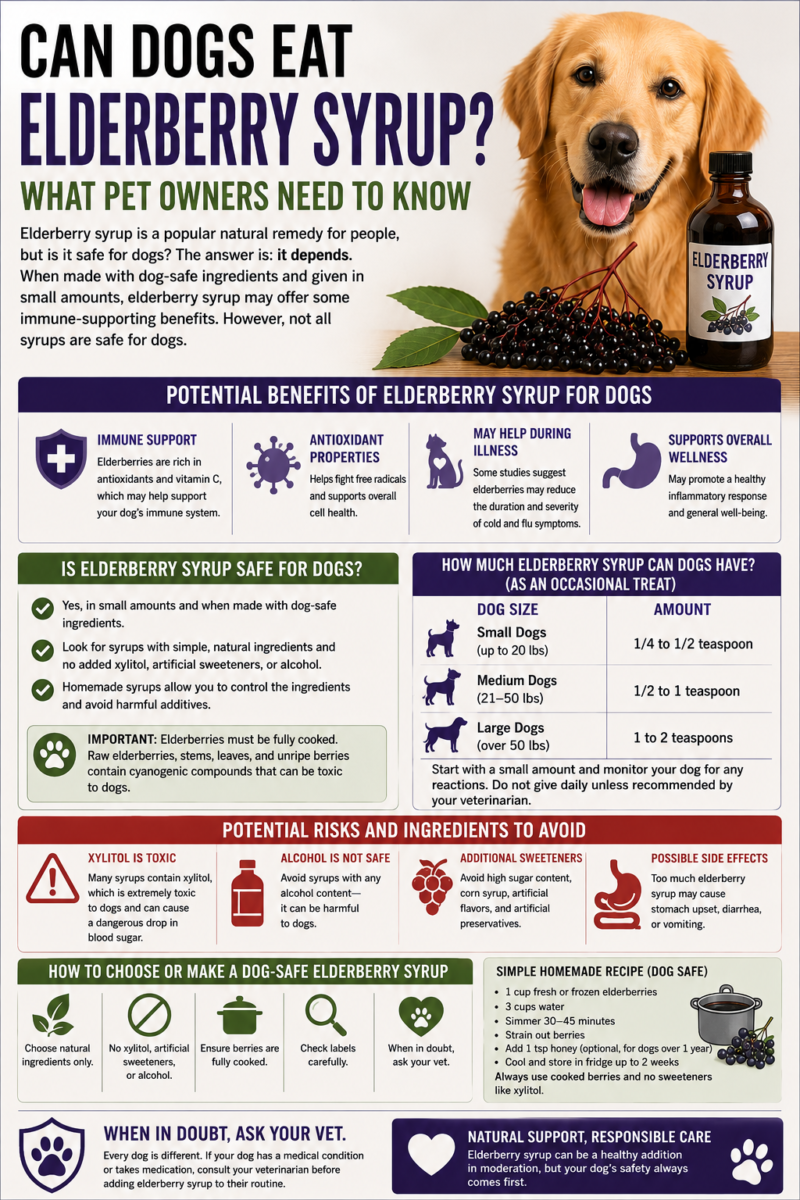
If you’re specifically concerned about syrup, make sure to read Can Dogs Eat Elderberry Syrup? What Pet Owners Need To Know.
Can Puppies Eat Elderberry Gummies?
Generally speaking, I would avoid giving elderberry gummies to puppies.
The elderberry itself may not be the biggest issue.
Instead, gummies often contain:
- Added sugar
- Artificial flavors
- Food coloring
- Preservatives
- Sweeteners
Puppies simply don’t need these ingredients.

If your puppy recently got into a bottle of gummies, read Can Dogs Eat Elderberry Gummies? What Owners Should Know for more detailed guidance.
Are Elderberry Plants Dangerous To Puppies?
In many ways, this may be the biggest concern.
Puppies love exploring.
They chew on plants, branches, leaves, and anything else they find outdoors.
If you grow elderberries at home, puppies may have access to:
- Leaves
- Stems
- Bark
- Fallen berries
- Young shoots
These parts of the plant create more concern than properly prepared elderberry products.

For a complete overview, see Are Elderberry Plants Toxic To Dogs? What Owners Should Know.
Why Puppies Chew Elderberry Plants More Often
Adult dogs often ignore elderberry bushes.
Puppies are different.
Puppies chew because they are:
- Teething
- Curious
- Bored
- Exploring their environment
That makes them far more likely to sample leaves, stems, and berries than a mature dog.
Symptoms To Watch For In Puppies
If your puppy consumes elderberries or other parts of the elderberry plant, watch for:
- Vomiting
- Diarrhea
- Drooling
- Loss of appetite
- Weakness
- Lethargy
- Unusual behavior
Because puppies are smaller, symptoms can sometimes appear more quickly than they would in adult dogs.



When Should You Call A Veterinarian?
I would strongly consider contacting a veterinarian if:
- Your puppy ate raw elderberries
- Leaves or stems were consumed
- Symptoms develop
- Your puppy is very young
- You’re unsure how much was eaten
It’s always better to ask questions early than wait until symptoms become severe.
Can Puppies Benefit From Elderberry?
At the moment, there is very little research showing that puppies need elderberry supplements.
While elderberry products are often discussed in relation to human health, puppies have very different nutritional needs.
For that reason, I generally recommend focusing on veterinarian-approved puppy nutrition rather than adding unnecessary supplements.
Growing Elderberries Around A Puppy

If you’re planting elderberries after reading How To Grow Elderberries At Home: What Nobody Tells You Before You Plant, it’s wise to think about your puppy’s access before the plants become established.
Simple precautions include:
- Supervising outdoor play
- Cleaning up fallen berries
- Removing pruned branches
- Using fencing when needed
These steps can greatly reduce the chances of accidental ingestion.
What New Puppy Owners Should Remember
Puppies are naturally curious, and that curiosity often gets them into trouble.
While properly prepared elderberry products may present less concern than raw plant material, puppies should generally not be given elderberry intentionally without veterinary guidance.
The greatest risks involve raw elderberries, leaves, stems, bark, roots, and unripe berries.
If your puppy accidentally consumes any part of an elderberry plant, monitor closely and contact your veterinarian whenever symptoms appear or uncertainty exists.
A cautious approach is usually the safest approach when puppies are involved.
Author
Sarah Whitmore
Sarah Whitmore is an herbal enthusiast, backyard grower, and independent researcher who has spent years studying elderberries, medicinal plants, traditional remedies, and home gardening. Through Elderberry Pro, she shares practical guides, safety information, recipes, and research-backed insights to help readers better understand the benefits, risks, and real-world uses of elderberries.