
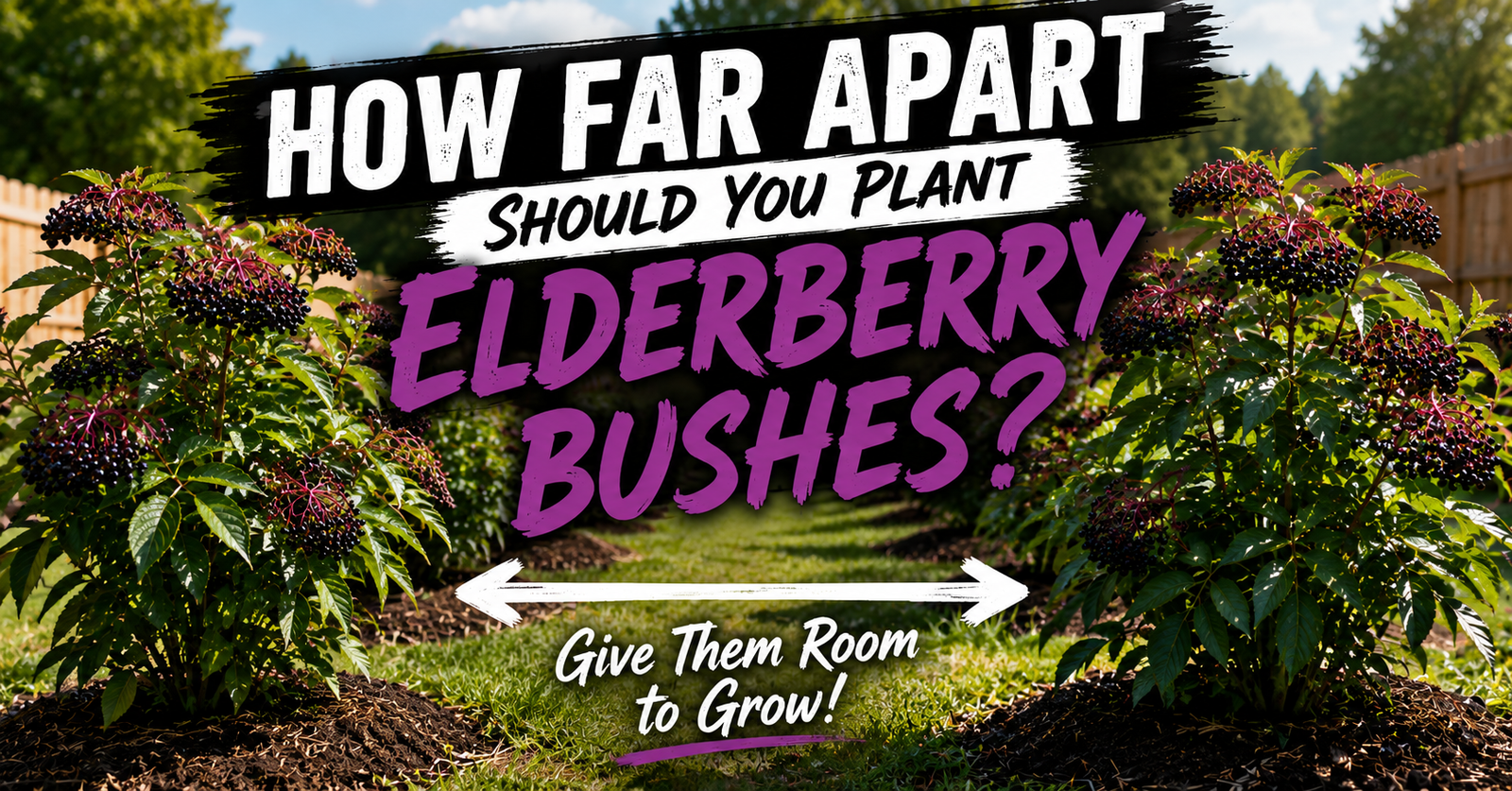
When I planted my first elderberry bushes, I made the same mistake I see a lot of new gardeners make.
I didn’t think much about spacing.
At the time, the plants looked tiny.
Standing there with a shovel in my hand, it felt ridiculous to leave six or eight feet between two little shrubs that barely reached my knees.
So I started second-guessing myself.
“Maybe I should squeeze them a little closer together.”
Thankfully, I didn’t.
A few years later those “little shrubs” had turned into large, vigorous bushes covered in flowers and berries, and I realized just how much room elderberries actually need.
Spacing may not seem like a big deal when you’re planting, but it affects almost everything afterward.
How much sunlight reaches the leaves.
How well air moves through the plants.
How easy they are to prune.
Whether you can comfortably harvest the berries.
Even how healthy the bushes stay as they mature.
Getting the spacing right from the very beginning is one of those decisions you’ll probably never have to think about again, and it’s much easier than trying to fix overcrowded bushes several years later.
The Short Answer

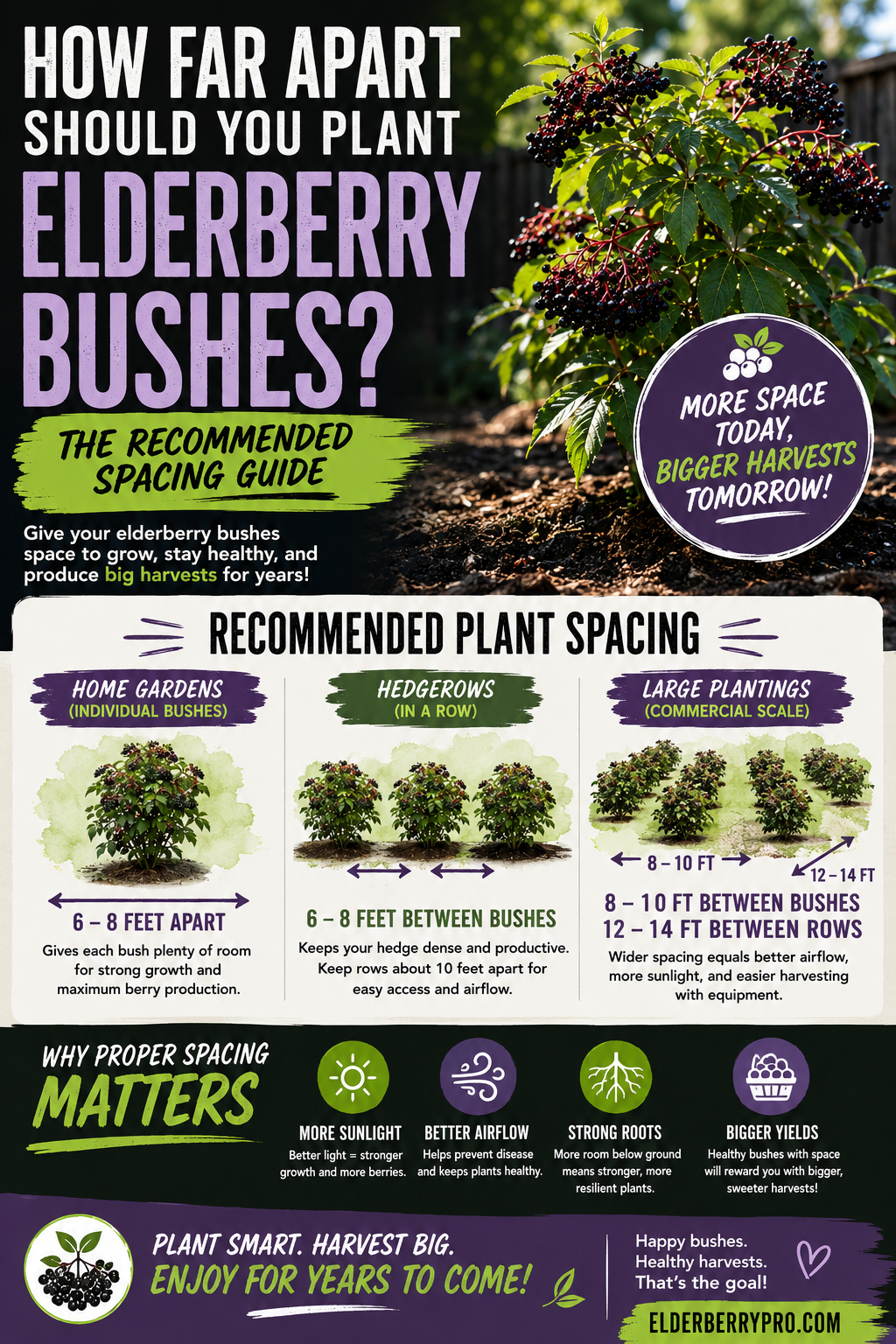
For most home gardeners, I recommend planting elderberry bushes about 6 to 8 feet apart. Spacing is only one part of establishing a productive patch, and How to Grow Elderberries at Home (What Nobody Tells You Before You Plant) brings the main planting decisions together.
That gives each plant enough room to mature without constantly competing with its neighbor.
If you’re planting multiple rows, I like leaving even more space between the rows so you can easily walk, mow, prune, and harvest.
It may look like too much empty space today.
Trust me…
A mature elderberry bush fills that space much faster than most people expect.
Why Spacing Matters More Than You Think
Many people assume spacing is simply about making the yard look nice.
It’s much more important than that.
Proper spacing helps with:
- Better air circulation.
- More sunlight reaching the entire bush.
- Easier harvesting.
- Easier pruning.
- Healthier root development.
- Better access for pollinators.
- Lower disease pressure.
When bushes become crowded, every one of those things becomes more difficult.
I’ve noticed that well-spaced elderberries simply seem happier.
They dry faster after rain.
They’re easier to maintain.
Harvesting becomes enjoyable instead of feeling like you’re crawling through a jungle.



Think About The Bush Five Years From Now
One thing I always tell new gardeners is this:
Don’t plant for today.
Plant for five years from now.
Right now your elderberry might only be two feet tall.
In a few years it could easily be several times that size with dozens of productive canes spreading in every direction.
That’s why it’s worth resisting the temptation to squeeze “just one more plant” into a small area.
Future you will appreciate having enough room to work around the bushes without constantly fighting branches.
Planting Two Bushes? Don’t Put Them On Opposite Ends Of The Property
Earlier in the growing cluster, we talked about how planting two compatible elderberry varieties often improves pollination and berry production.
That doesn’t mean they should be planted hundreds of feet apart.
Pollinators need to move easily between flowering bushes.
Keeping compatible varieties reasonably close together gives bees and other beneficial insects a much better chance of doing exactly that.
If you haven’t read it yet, my guide on Do You Need Two Elderberry Bushes to Get Berries? explains why planting multiple varieties often results in noticeably heavier harvests.


Spacing Also Helps With Pollination
Most people think spacing is only about giving bushes room to grow.
That’s certainly part of it.
But spacing also affects how well your elderberries are pollinated.
When compatible elderberry varieties are planted within a reasonable distance of one another, bees and other pollinating insects can move easily between flowering bushes during the same trip.
That movement helps transfer pollen and often results in fuller berry clusters and larger harvests.
Planting bushes too close together can create unnecessary competition for sunlight and airflow, while planting them extremely far apart may make pollination less efficient depending on your property and the number of pollinators visiting your garden.
Finding the right balance gives your bushes the best opportunity to thrive for many years.
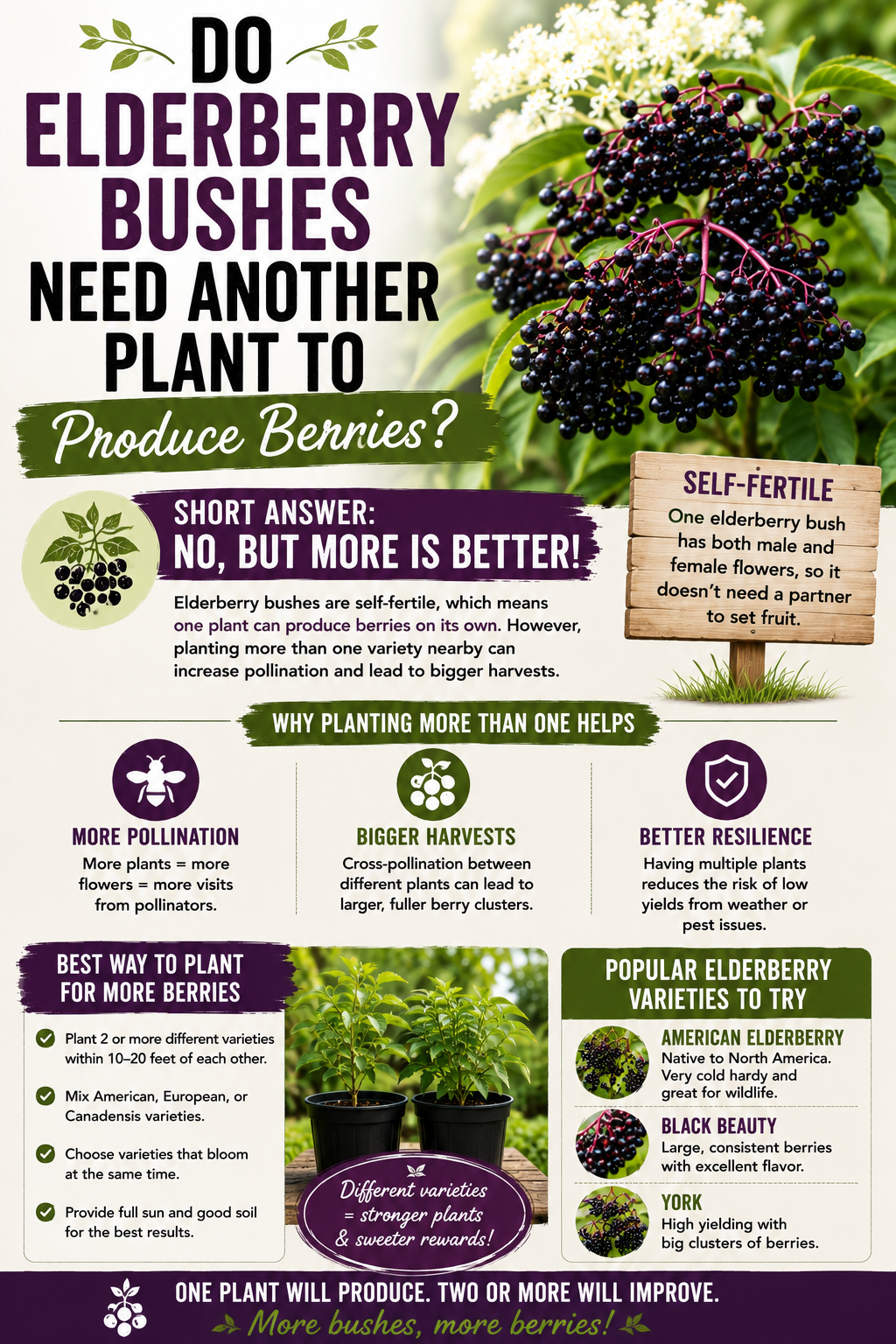
If you’d like a deeper explanation of how cross-pollination works, Do Elderberry Bushes Need Another Plant to Produce Berries? covers exactly why many gardeners plant more than one elderberry variety.
Give Them Room To Soak Up The Sun
Spacing isn’t only about the distance between bushes.
It’s also about allowing enough sunlight to reach the entire plant.
Crowded elderberries eventually begin shading one another.
That can reduce flowering and berry production over time.
If your planting location already receives partial shade, overcrowding only makes the problem worse.

Before planting, I’d also recommend reading Can Elderberries Grow in Shade? Here’s What I Learned because sunlight and spacing work together to produce healthier bushes and larger harvests.
Start With Healthy Plants
Proper spacing won’t do much good if the plants themselves struggle from the beginning.
That’s one reason I always encourage people to start with vigorous nursery-grown stock rather than buying the cheapest plant they can find.

I’ve had excellent experiences recommending the 👉👉 Live American Elderberry Plants from Weaver Family Farms Nursery 👈👈 because healthy plants establish faster, produce stronger canes, and make those first few growing seasons much more enjoyable.
While you’re planning your planting layout, their guide on the best time to plant elderberries is also worth reading. Timing your planting correctly gives young bushes an excellent start before they ever begin producing fruit.
Don’t Forget About The Roots
Most people think about the branches when they picture a mature elderberry bush.
I think about the roots.
Everything happening above ground starts below the soil.
As your elderberry grows, its root system gradually expands in every direction looking for moisture and nutrients. When bushes are planted too close together, those roots begin competing with one another much sooner than they should.
The result isn’t always obvious right away.
In fact, everything may look perfectly fine for the first couple of years.
Then growth begins slowing.
Berry production starts declining.
The bushes become more difficult to keep healthy.
Giving each plant enough room from the beginning helps avoid many of those problems before they ever have a chance to develop.

Don’t Plant Them Right Next To Your Fence
I’ve seen this happen countless times.
Someone plants an elderberry two feet from a fence because the plant looks so small.
Five years later they’re trying to squeeze between the fence and a massive bush just to harvest berries.
Remember that elderberries aren’t ornamental shrubs that stay neatly in one place forever.
Healthy bushes become surprisingly wide.
When choosing a location, think about future maintenance.
Will you still have room to prune?
Can you comfortably walk around both sides?
Will harvesting require crawling through branches?
If the answer is no, give yourself a little more space now.
You’ll never regret it.
Leave Yourself Room To Harvest
Harvest day should be fun.
You’re finally collecting the berries you’ve waited months, sometimes years, to enjoy.
The last thing you want is fighting through tangled branches because every bush has grown into the next one.
One thing I appreciate about proper spacing is how much easier harvesting becomes.
I can walk around each bush.
I can see the berry clusters.
I don’t accidentally knock ripe fruit onto the ground trying to reach the middle of an overcrowded planting.
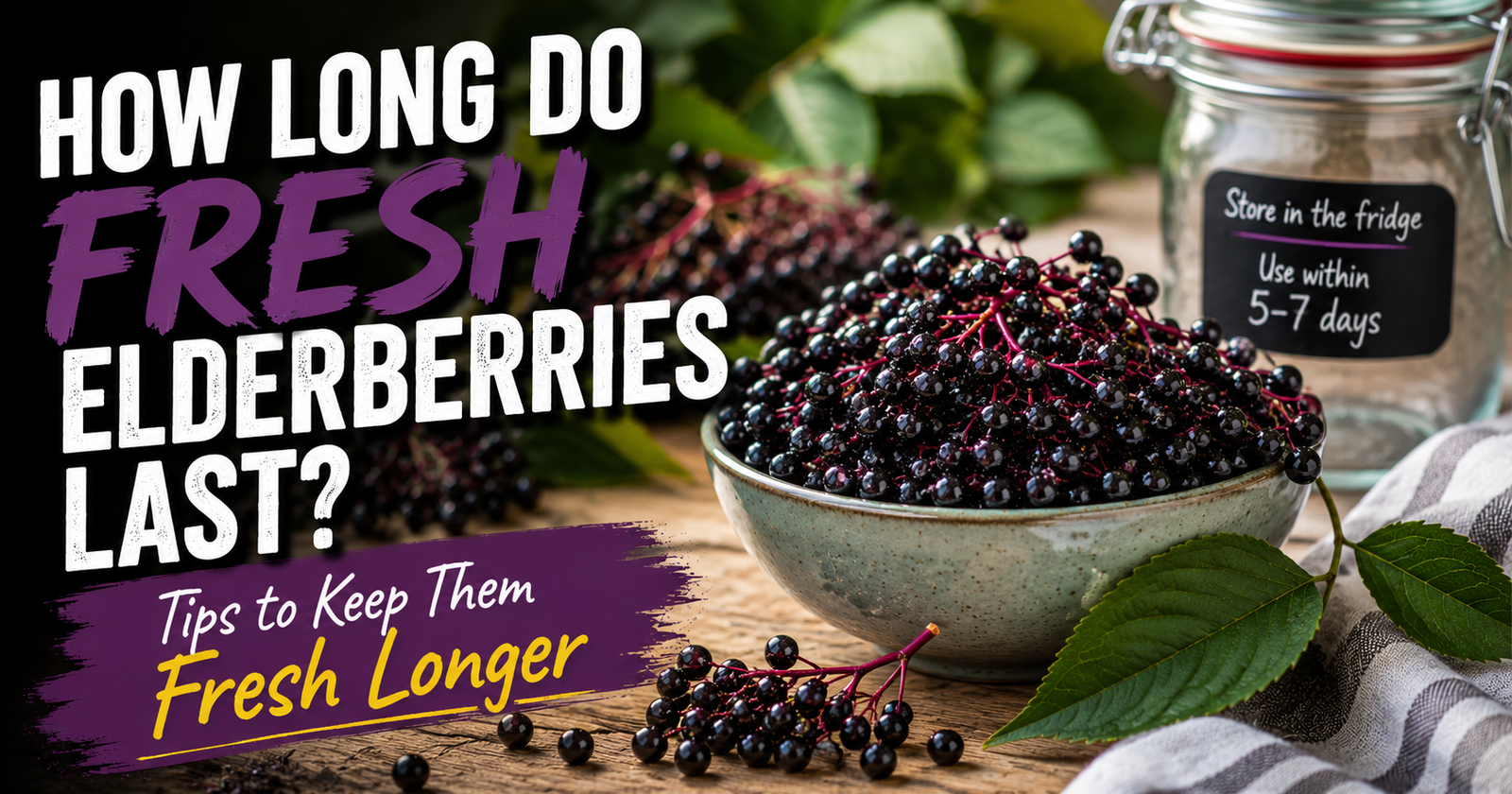
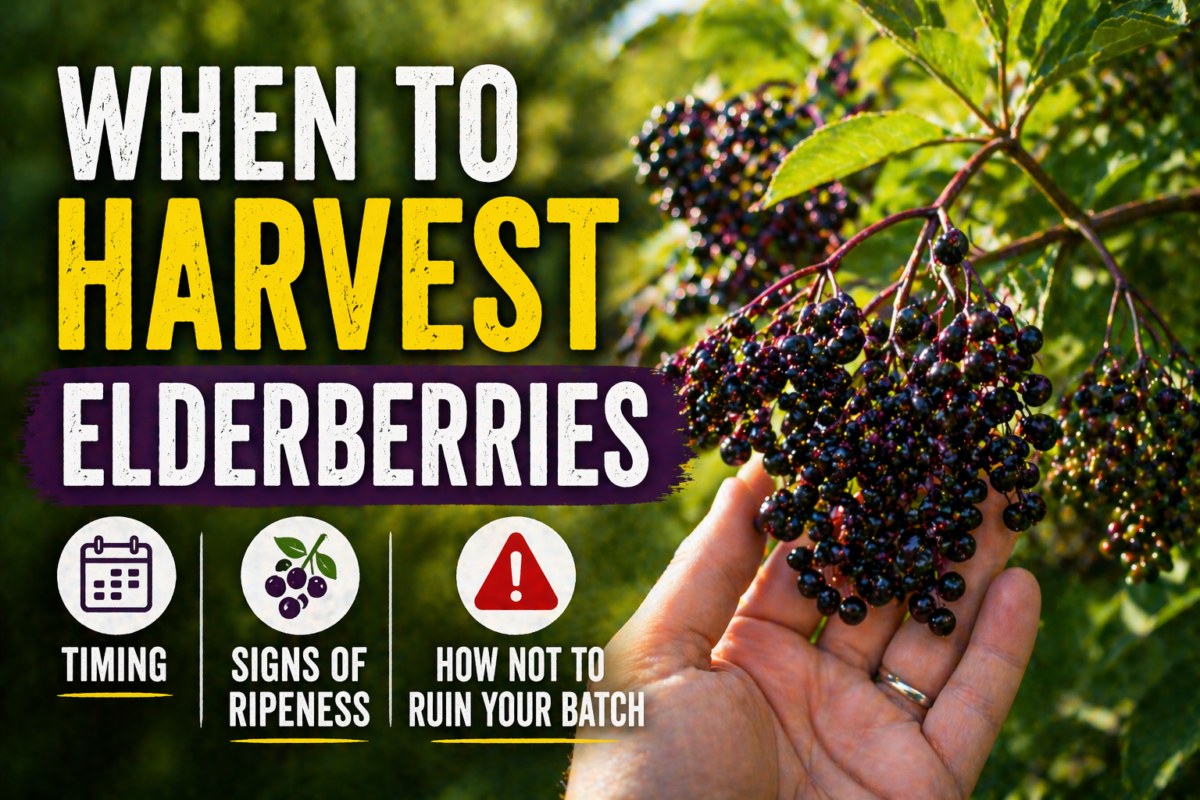
Once those berries are picked, I process them quickly because fresh elderberries don’t last very long. If you haven’t harvested them before, my guide on how long fresh elderberries stay fresh after picking will help you avoid wasting part of your crop.


Airflow Is One Of Gardening’s Best Friends
This isn’t something many new gardeners think about.
Good airflow helps leaves dry faster after rain or heavy morning dew.
Bushes that dry more quickly generally experience fewer disease problems than plants that stay damp for long periods.
Proper spacing creates natural airflow without requiring you to do anything later.
It’s one of those invisible benefits you don’t fully appreciate until you’ve seen overcrowded plantings struggle.
Think About Next Year’s Pruning Today
One lesson I’ve learned is that pruning is much easier when the bushes aren’t growing into one another.
Every winter or early spring, I like being able to step around each plant and clearly see which canes should stay and which ones should go.
If every bush is tangled together, that job becomes much harder than it needs to be.
Planning for future maintenance is just as important as planning for next year’s harvest.
A Little Extra Space Usually Pays For Itself
Whenever someone asks whether six to eight feet is really necessary, I usually smile.
Because I’ve asked myself the same question before.
When the plants are tiny, that spacing feels excessive.
A few years later, it suddenly feels just right.
I’ve never heard someone say,
“I wish I’d planted my elderberries closer together.”
I have heard plenty of people wish they’d given their bushes more room.
That’s why I always lean toward giving elderberries the space they’ll eventually need instead of the space they need today.
Planning A Backyard Elderberry Patch
If you’re planting several bushes instead of just one or two, spend a little time sketching the layout before digging.
Think about:
- Where the sun moves during the day.
- How you’ll mow around the bushes.
- Where you’ll walk while harvesting.
- Whether you’ll eventually add more varieties.
- How close your irrigation or water source is.
Five minutes of planning can save hours of work later.
If you’re still deciding which varieties to grow, it’s also worth reading American Elderberry vs. European Elderberrybefore placing your order. Understanding the differences makes choosing the right plants much easier.
Good Spacing Doesn’t Replace Good Care
Spacing is important.
But it’s only one piece of successful elderberry growing.
Healthy bushes also need:
- Plenty of sunlight.
- Consistent moisture.
- Healthy soil.
- Good pollination.
- Occasional pruning.
- Reasonable fertility.
I’ve noticed that gardeners sometimes focus so much on one factor that they forget about the others.
The biggest harvests usually come from getting lots of small things right instead of chasing one magic solution.

That’s why spacing works so well alongside articles like Best Fertilizer for Elderberry Bushes That Actually Worksand How Long Does It Take an Elderberry Bush to Produce Fruit?. None of these topics exist on their own. Together, they create the foundation for healthier plants and better harvests year after year.
Questions I Get About Elderberry Spacing
Even after someone decides where to plant their elderberries, a few questions almost always come up before the first shovel of dirt is turned.
Is It Better To Plant Them Closer Together?
In my opinion, no.
I understand why people ask.
Young elderberry bushes look so small that leaving six to eight feet between them almost feels like wasted space.
But remember, you’re planting for what those bushes will become, not what they look like today.
Every season they’ll produce more canes, spread a little wider, and take up more room.
What feels spacious now often feels just right a few years down the road.
Can I Plant Elderberries Next To My House?
You can, but I’d leave enough room for the mature bush.
Think about how you’ll prune it, harvest berries, and maintain the area years from now.
I generally avoid planting them where branches will constantly rub against the house or where harvesting means squeezing into a narrow space.
Giving yourself working room makes owning elderberries much more enjoyable.
Can I Plant Elderberries Along A Fence?
Absolutely.
In fact, a fence can make a nice backdrop.
Just don’t crowd it.
Leave enough distance so you can comfortably walk behind the bush if needed. You’ll appreciate that extra space every time you prune, weed, or harvest.
Can I Plant Them In Raised Beds?
Yes, provided the raised bed is large enough.
I’ve seen beautiful elderberries grown in oversized raised beds, but keep in mind these aren’t compact herbs or annual vegetables.
They eventually become large shrubs with extensive root systems.
If the bed is too small, the plant will quickly outgrow it.
My Favorite Backyard Layout
If I were starting completely from scratch today, I’d keep the design simple.
I’d plant two compatible elderberry varieties about six to eight feet apart in one of the sunniest areas of the property.
Around them I’d leave enough room to:
- Push a wheelbarrow.
- Mow comfortably.
- Spread fresh mulch every spring.
- Walk completely around each bush during harvest.
It isn’t the most exciting layout.
It’s simply the one I think works best after seeing how much mature elderberries actually grow.
Sometimes simple really is better.
One Small Decision That Pays Off Every Year
Spacing is one of those gardening decisions you make once but benefit from for years.
Unlike fertilizer, watering, or pruning, you usually don’t get another chance without digging everything back up.
That’s why I always encourage people to slow down before planting.
Measure twice.
Picture the mature bush instead of the tiny one in the nursery pot.
Think about where the sun will be in July instead of where it is today.
Those few extra minutes of planning often save years of wishing you’d done things differently.
The Harvest Gets Better Every Year
One of my favorite things about elderberries is watching the harvest improve as the bushes mature.
The first few years teach patience.
Then one summer you walk outside and realize your bushes are absolutely loaded with fruit.
When that day comes, you’ll be glad you gave them enough room to grow.

After harvesting, I usually decide right away whether I’m making syrup immediately or preserving the berries for later. If they’re headed for the freezer, I vacuum seal them using the 👉👉 Bonsenkitchen Vacuum Sealer 👈👈 because it’s done an excellent job preventing freezer burn and keeping our harvest tasting fresh for months.
It’s one of those purchases that ended up being useful far beyond elderberries. We now use it for vegetables from the garden, meat, and just about everything else that goes into our freezer.
Keep Building Your Elderberry Knowledge
One thing I enjoy most about growing elderberries is that every season teaches you something new.
Getting the spacing right is a great start, but it’s only one piece of growing healthy, productive bushes.

As your plants mature, you’ll probably find these guides helpful too. If you’re still deciding where to plant, don’t miss Can Elderberries Grow in Shade? Here’s What I Learned. If you’re waiting on your first harvest, How Long Does It Take an Elderberry Bush to Produce Fruit? explains what a realistic timeline looks like. And if your bushes still aren’t producing the way you expected, Why Isn’t My Elderberry Bush Producing Berries? walks through the most common reasons and how to fix them.
The more I grow elderberries, the more convinced I become that success rarely comes from one big secret.
It’s usually the result of getting dozens of small decisions right.
Proper spacing is one of those decisions.
Make it once, make it well, and your elderberry bushes will reward you for many growing seasons to come.
Plan For What Your Garden Will Look Like Five Years From Now
One mistake I’ve seen many gardeners make is planning around the size of a young nursery plant instead of the mature shrub it will eventually become.
A one-gallon elderberry doesn’t look like it needs much room.
Five years later, that same bush may be producing vigorous canes, spreading outward, and carrying heavy clusters of berries every summer.
Thinking ahead makes pruning easier.
Harvesting becomes more enjoyable.
Airflow improves.
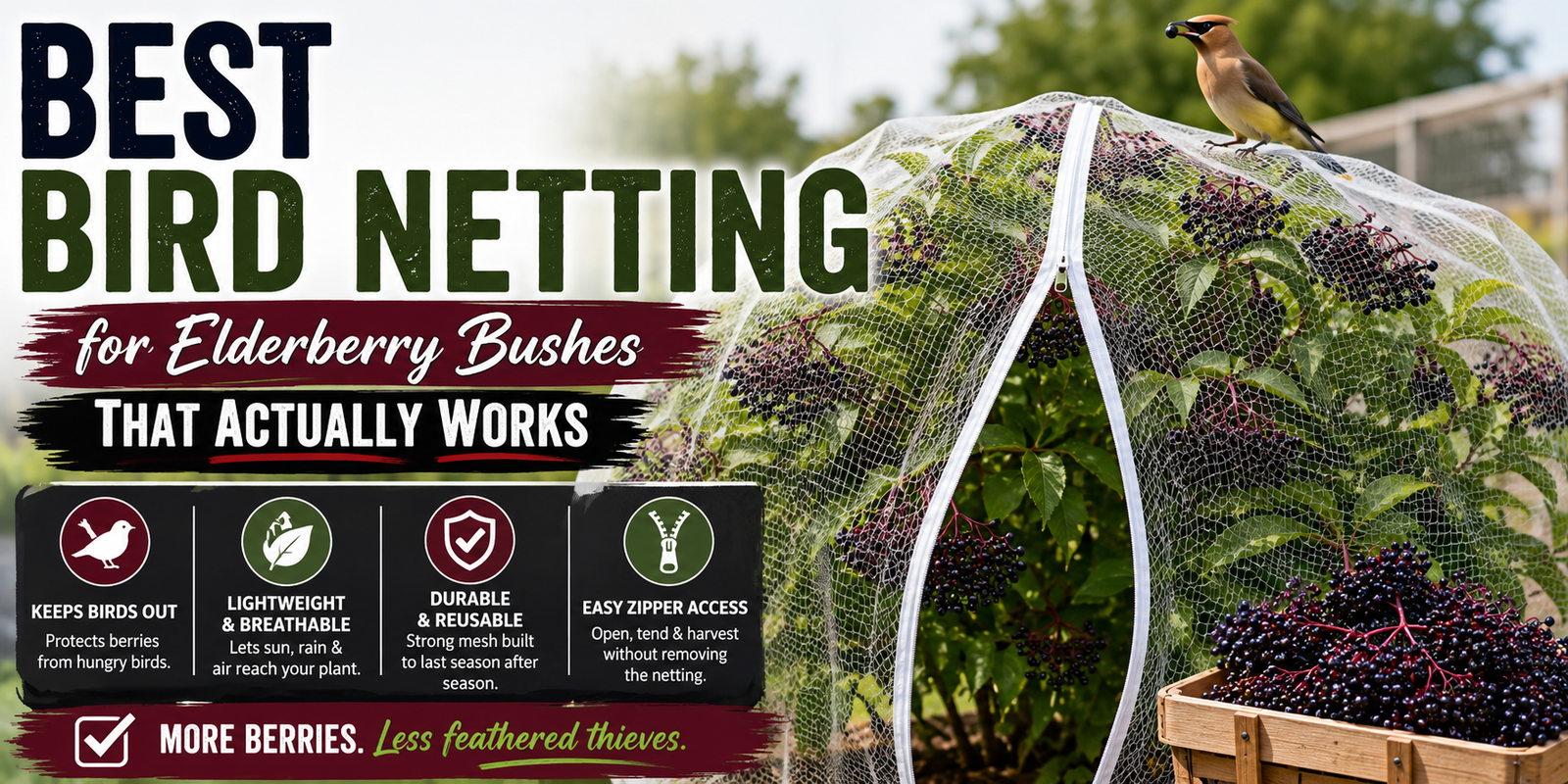
Wildlife protection is easier to install.
Most importantly, your elderberries won’t spend years competing with one another for the same sunlight and nutrients.
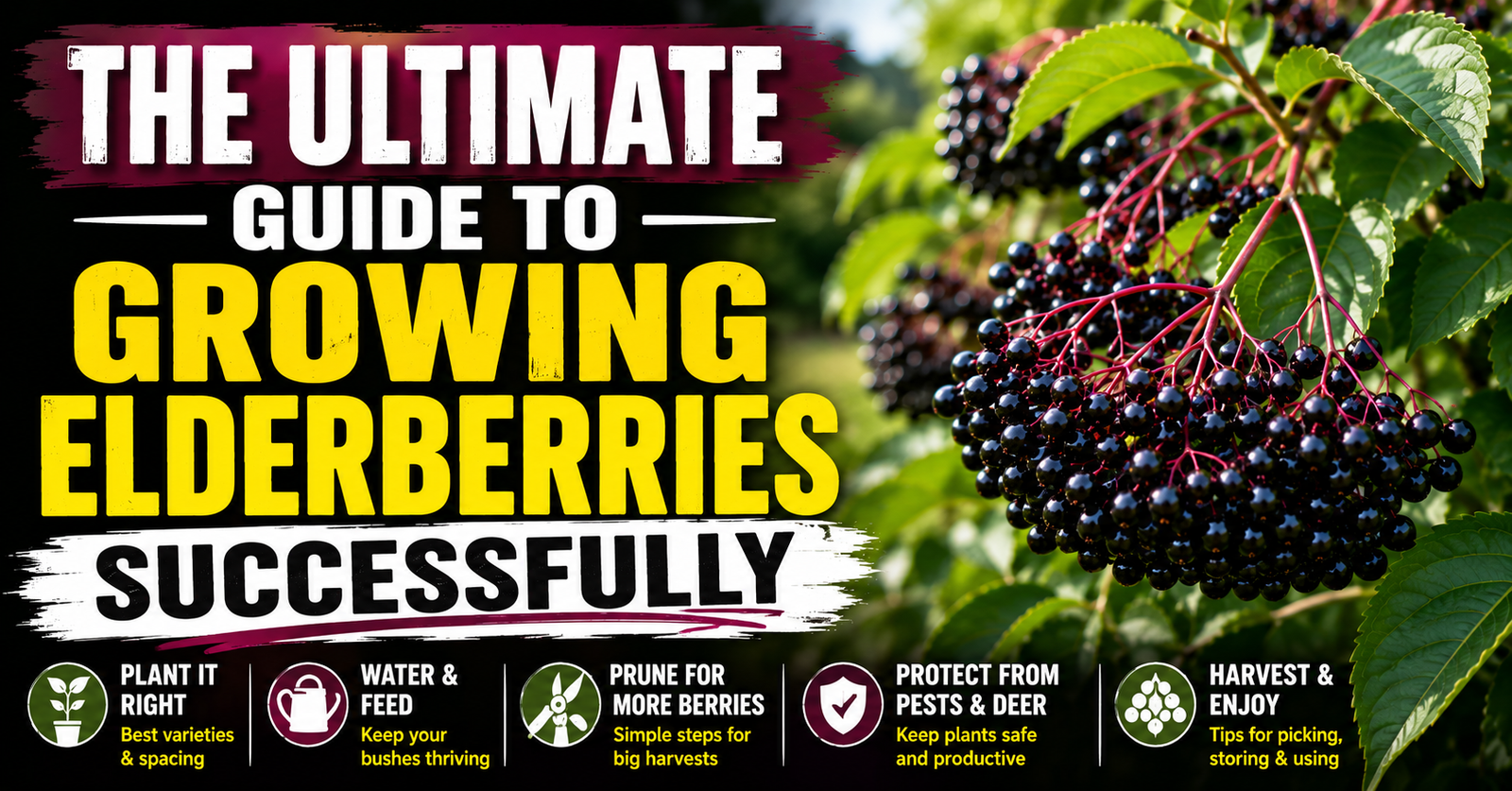
If you’re just beginning your planting, The Ultimate Guide to Growing Elderberries Successfully explains how spacing fits together with sunlight, watering, fertilizing, pruning, wildlife protection, and every other part of growing healthy elderberry bushes.
About the Author
Caleb Morgan
Caleb Morgan is a lifelong backyard fruit grower and native plant enthusiast who has spent years growing elderberries and helping other gardeners avoid common planting mistakes. Through Elderberry Pro, he shares practical growing advice, real-world experience, and research-backed tips that help readers grow healthier bushes, harvest more berries, and enjoy elderberries for years to come.