
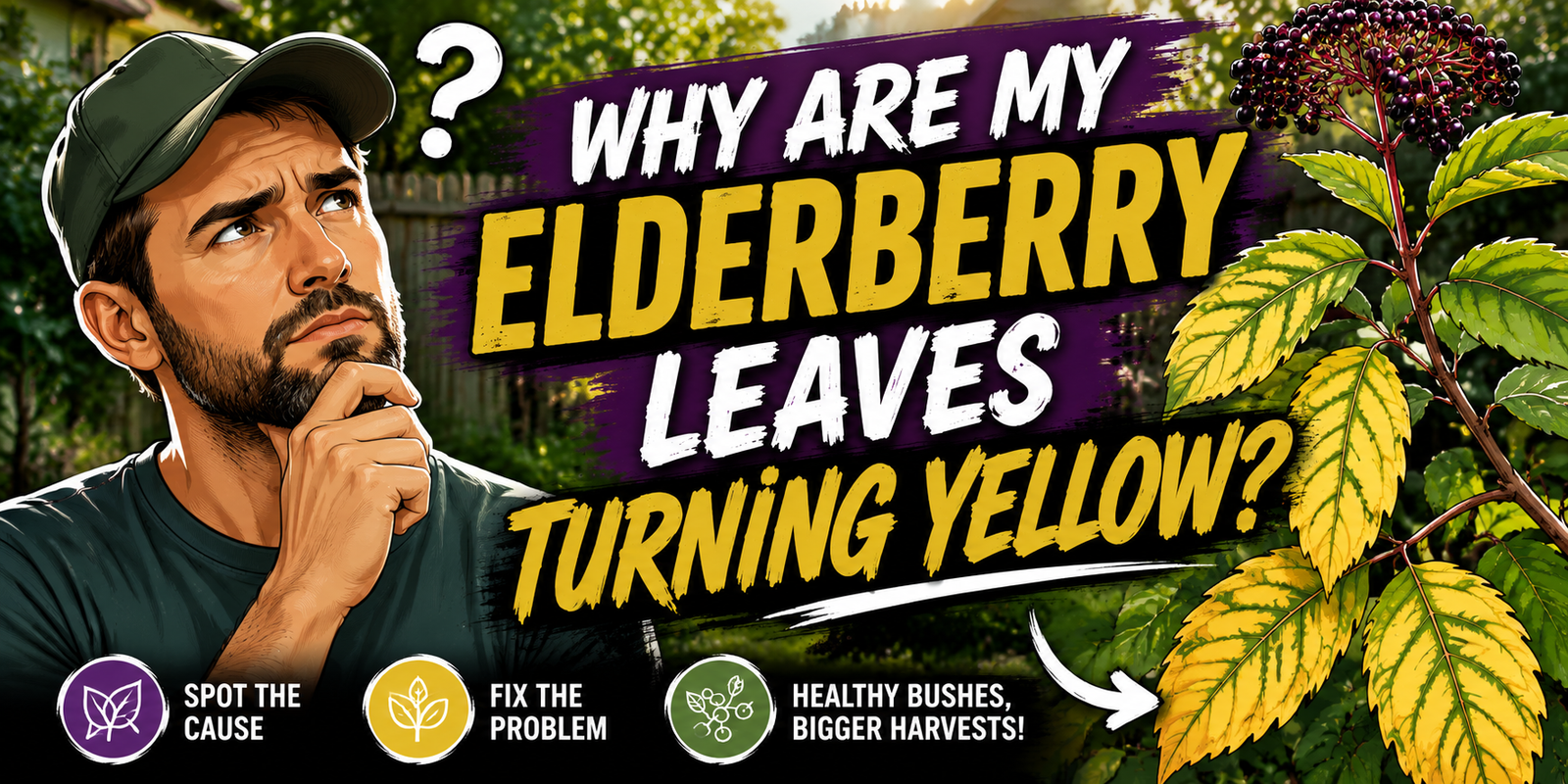
The first time I noticed yellow leaves on one of my elderberry bushes, my stomach sank.
Just a few days earlier the plant looked perfectly healthy.
Now bright green leaves were slowly turning yellow, and I immediately assumed the worst.
Was it dying?
Did it have a disease?
Had I done something wrong?
As it turns out, yellow leaves don’t always mean disaster.
In fact, elderberry bushes can develop yellow leaves for several completely different reasons. Some are minor and easy to fix. Others need attention before they start affecting the overall health of the plant.
The good news is that your elderberry is usually giving you clues if you know what to look for.
Over the years, I’ve learned that yellow leaves are less about guessing and more about working through the possibilities one step at a time.
Start By Looking At The Entire Bush
One mistake I made early on was focusing on a single yellow leaf.
Instead, take a few steps back and look at the entire plant.
Ask yourself:
- Are only a handful of leaves turning yellow?
- Is the entire bush affected?
- Are older leaves yellow while new growth stays green?
- Are the leaves also curling or developing brown edges?
- Has the plant recently been transplanted?
Those observations can point you toward the real problem much faster than immediately reaching for fertilizer or pesticides.
Sometimes the answer is surprisingly simple.
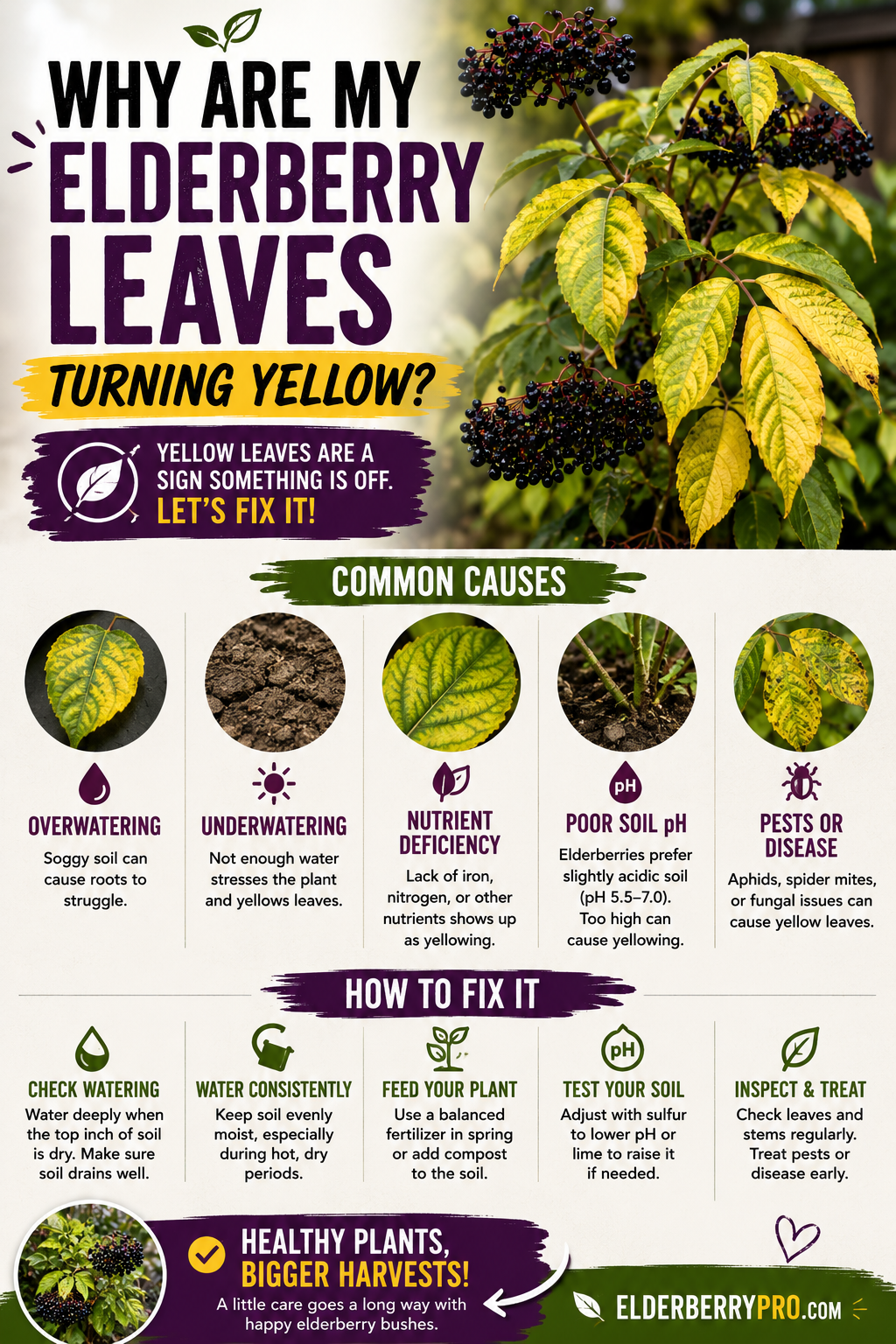
Too Much Water Is More Common Than Most People Think
When people think a plant looks unhealthy, the first thing they usually do is water it.
Sometimes that’s exactly the wrong move.
Elderberries enjoy consistent moisture, but they don’t like sitting in waterlogged soil for long periods.
When roots stay saturated, they struggle to absorb oxygen.
That stress often shows up as yellowing leaves.
If you’ve had several days of heavy rain or you’ve been watering every day, check the soil before adding even more water.
Healthy roots need oxygen just as much as they need moisture.


Not Enough Water Can Look Surprisingly Similar
The confusing part is that underwatering can create many of the same symptoms.
During long stretches of hot, dry weather, elderberries may begin dropping older leaves or turning yellow simply because the plant is trying to conserve moisture.
That’s why I never diagnose watering problems by looking at the leaves alone.
I always check the soil first.
A quick look beneath the surface tells me much more than the foliage ever could.
Yellow Leaves Don’t Always Mean Your Bush Needs Fertilizer
This is probably the biggest misconception I hear.
Yellow leaves appear.
Someone immediately buys fertilizer.
Sometimes that works.
Sometimes it makes the problem worse.
If your elderberry is actually suffering from poor drainage, root stress, or too much shade, adding fertilizer won’t solve anything.
In fact, overfeeding a stressed plant can create additional problems.
Before adding nutrients, I like asking whether the bush actually needs fertilizer in the first place.
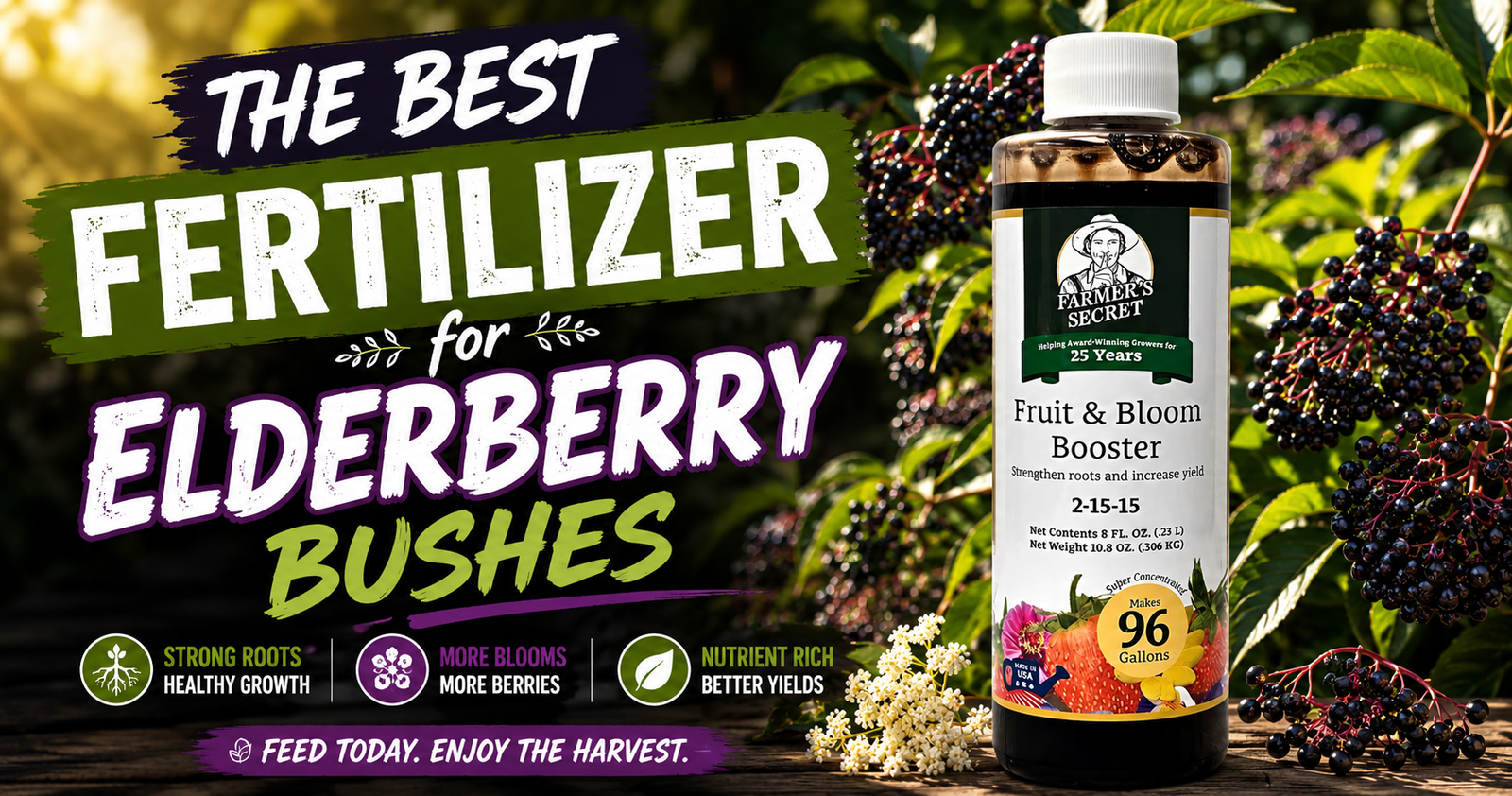
That’s exactly why I put together my guide on Best Fertilizer for Elderberry Bushes That Actually Works. It explains when fertilizer helps, when it doesn’t, and why healthy soil usually comes first.

Is Your Elderberry Getting Enough Sunlight?
One thing I’ve noticed over the years is that elderberries growing in heavy shade often struggle in subtle ways.
Growth slows.
Berry production decreases.
Leaves sometimes become lighter in color than normal.
Sunlight doesn’t just help produce berries.
It powers the entire plant.
If your bush spends most of the day beneath mature trees or next to buildings, shade could be contributing to the problem.

My article Can Elderberries Grow in Shade? Here’s What I Learned goes much deeper into how sunlight affects long-term plant health and berry production.
Sometimes It’s Completely Normal
This surprised me when I first started growing elderberries.
Not every yellow leaf means something is wrong.
As bushes mature throughout the season, older leaves naturally age.
Toward the end of the growing season, it’s perfectly normal for foliage to begin yellowing before eventually dropping.
If the bush is otherwise healthy, producing berries, and putting on good growth, a handful of yellow leaves usually isn’t cause for panic.
The trick is learning the difference between natural aging and widespread yellowing that’s happening much earlier than it should.



Start With Healthy Plants
One thing I’ve learned is that healthy plants handle stress much better than weak ones.
Whether it’s drought, heavy rain, or transplant shock, vigorous nursery-grown elderberries usually recover faster.

If you’re adding another bush or replacing one that never established well, I’ve had excellent experiences recommending the Live American Elderberry Plants from Weaver Family Farms Nursery . Starting with strong plants gives you a much better foundation than trying to rescue unhealthy stock from the very beginning.
Their elderberry growing guide is also one of the better resources I’ve found for learning how to keep plants healthy before problems like yellow leaves ever develop.
Poor Drainage Can Slowly Stress The Entire Plant
One thing I’ve learned about elderberries is that they enjoy moisture, but they don’t enjoy constantly soggy roots.
There’s a difference.
If water sits around the base of the plant for days after every rain, the roots can become stressed because they aren’t getting enough oxygen.
The leaves often tell you something is wrong before anything else does.
They begin losing that deep green color.
Growth slows.
The bush may even appear to stop thriving altogether.
If your planting area stays wet for long periods, improving drainage may do far more good than adding fertilizer.


Nutrient Deficiencies Do Happen
While fertilizer isn’t the answer to every yellow leaf, nutrient deficiencies certainly can cause problems.
Nitrogen deficiencies often show up as older leaves gradually turning pale or yellow while overall growth slows.
Other nutrient deficiencies may create yellowing between the veins while the veins themselves stay green.
The important thing is not guessing.
I’ve found it’s much better to look at the overall health of the plant before assuming which nutrient might be missing.
If your elderberry has been growing in the same location for years and suddenly begins looking pale, it may be worth reviewing your fertilizing routine.
That’s one reason I recommend reading Best Fertilizer for Elderberry Bushes That Actually Works before buying the first product you see at the garden center. Feeding the plant the right way is much more important than simply feeding it more.
Could The Bush Be Root Bound?
This mostly applies to younger elderberries that have been growing in containers.
If roots have completely filled the pot, the plant may struggle to absorb enough water and nutrients.
Yellow leaves are sometimes one of the first signs that it’s time for a permanent home in the ground or a much larger container.
Whenever I buy nursery plants, I like getting them planted as soon as practical instead of leaving them in their pots for weeks or months.



Transplant Shock Can Cause Yellow Leaves
If you recently planted your elderberry, don’t be surprised if it looks a little unhappy for a while.
Moving any shrub from a container into the ground creates stress.
The roots need time to spread into the surrounding soil.
During that adjustment period, a few yellow leaves are completely normal.
As long as the plant continues producing healthy new growth, I usually let it settle in before worrying too much.
Patience solves many transplant problems.
Crowded Bushes Sometimes Develop More Problems
One thing I didn’t appreciate when I started growing elderberries was how much spacing affects overall plant health.
When bushes become crowded, sunlight struggles to reach the center.
Airflow decreases.
Leaves stay damp longer after rain.
Over time that extra stress can contribute to foliage problems, including yellowing.
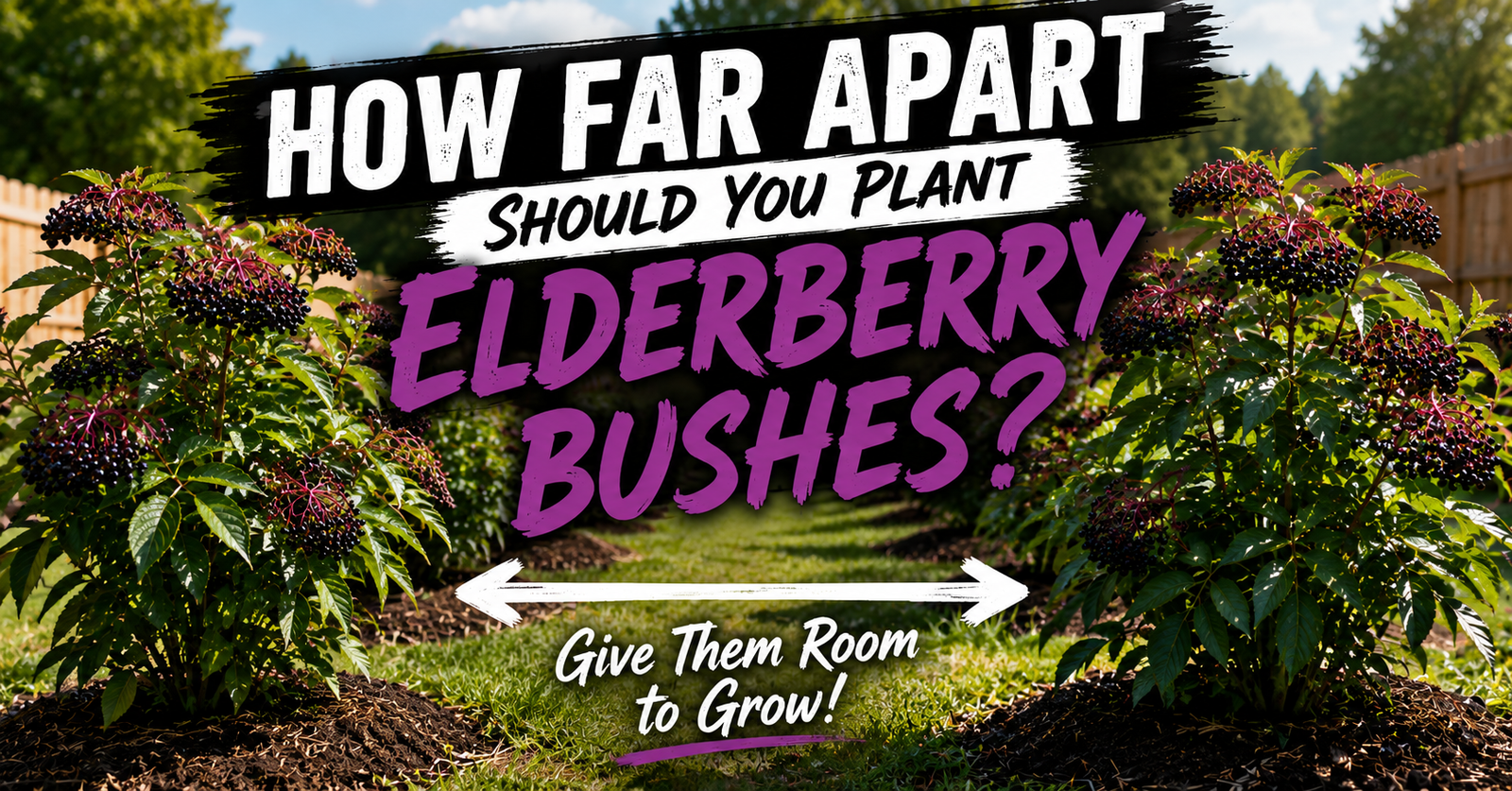
If your elderberries have grown into one another over the years, it may be worth reviewing your planting layout. My guide on How Far Apart Should You Plant Elderberry Bushes? explains why giving mature bushes enough room often improves their long-term health.
Don’t Forget About Pruning
Healthy pruning and healthy foliage often go hand in hand.
An overcrowded bush traps humidity and reduces airflow around the leaves.

That’s one reason I make pruning part of my annual routine instead of waiting until the bushes become overgrown. Having pruning tools for elderberry care nearby can make that annual maintenance easier to approach.
Removing older canes and thinning crowded growth allows sunlight and fresh air to reach more of the plant.
If pruning feels intimidating, don’t worry.
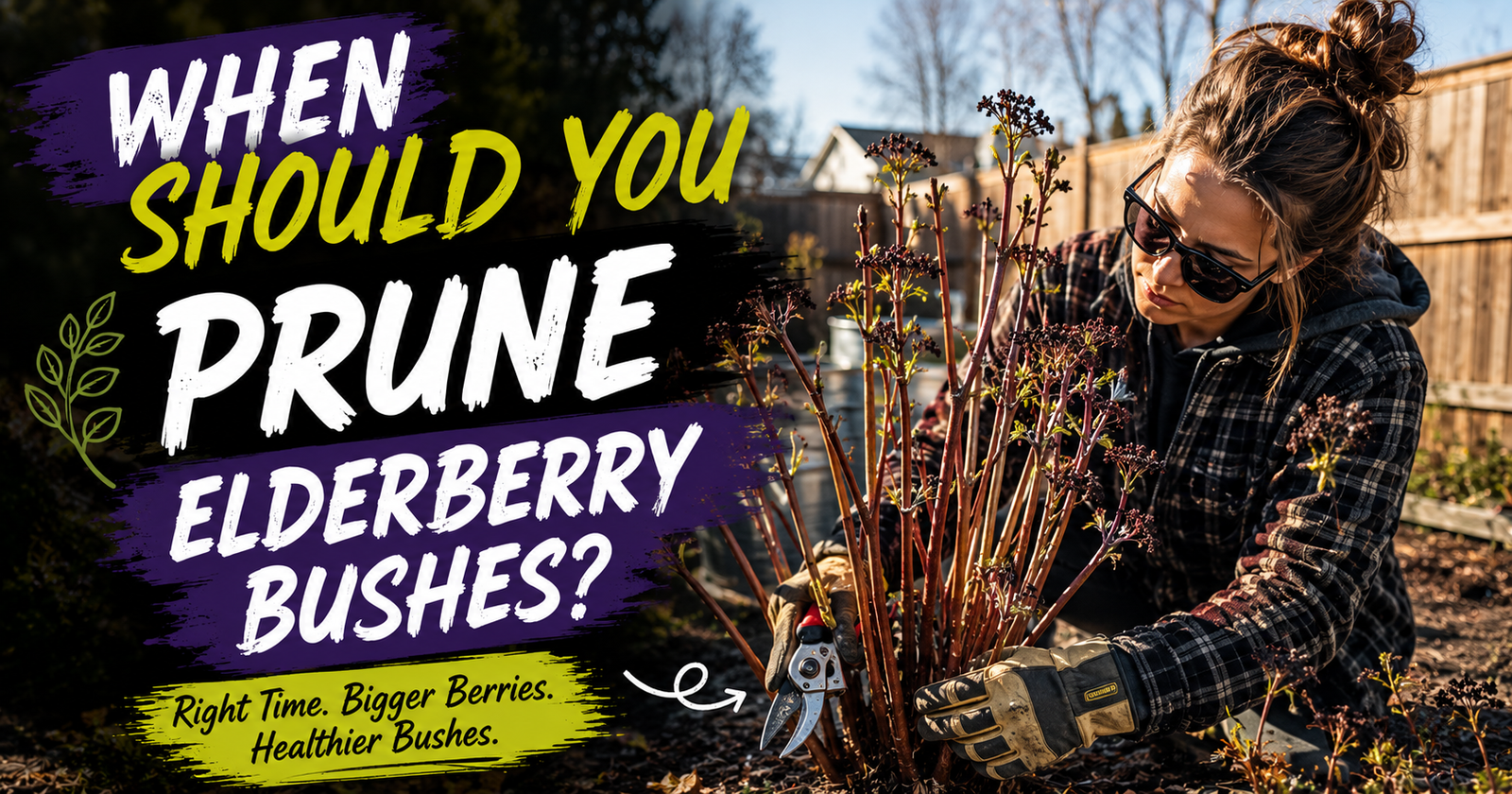
My guide on When Should You Prune Elderberry Bushes? Here’s What Works walks through the approach that’s worked best for me over the years.
Sometimes Yellow Leaves Mean The Plant Is Simply Growing Up
I’ve noticed something interesting with vigorous elderberries.
Early in the season they’re focused almost entirely on producing lush green growth.
Later, once they’re carrying heavy clusters of berries, the plant naturally shifts where it spends its energy.
Some older leaves begin aging.
A few yellow leaves appear.
That’s completely different from a bush turning yellow from top to bottom.
Learning to recognize what’s normal has probably saved me more unnecessary worry than anything else I’ve learned about growing elderberries.
Yellow Leaves Can Slow Down Future Harvests
When I first noticed yellowing leaves on one of my elderberry bushes, I mostly worried about how the plant looked.
Now I know the bigger concern is what those leaves are no longer doing.
Healthy green leaves are essentially the bush’s food factories. They’re capturing sunlight and producing the energy the plant needs for growing new canes, developing flowers, and eventually filling those berry clusters later in the season.
Once leaves begin turning yellow, that process slows down. If the underlying problem continues long enough, you may notice weaker growth, fewer flowers, or smaller harvests the following year.
That’s why I don’t treat yellow leaves as only a cosmetic issue anymore. I see them as an early warning that something in the growing environment deserves attention.
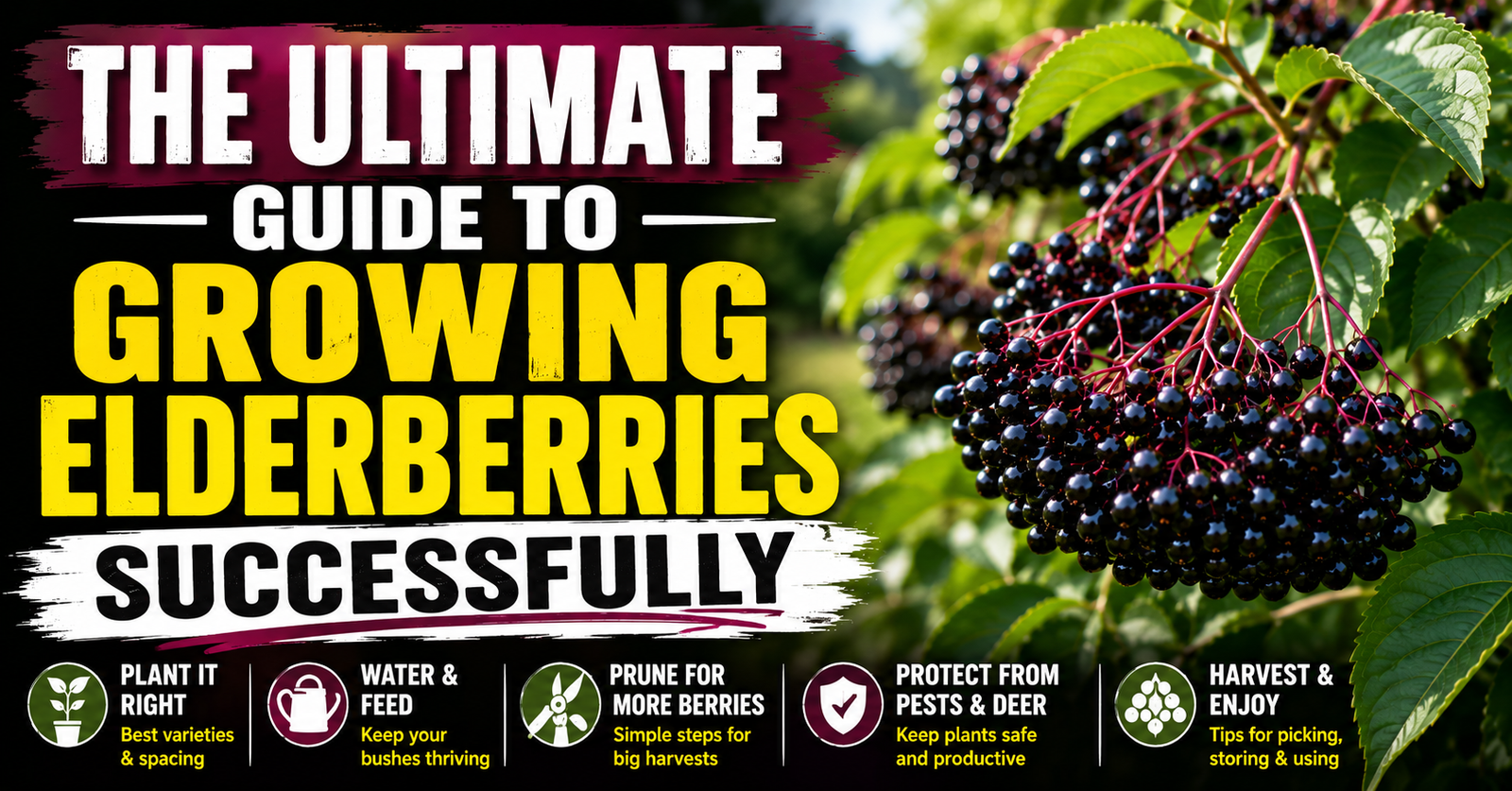
If you’re trying to maximize berry production instead of simply correcting yellow foliage, The Ultimate Guide to Growing Elderberries Successfully walks through every major factor that contributes to healthy, productive bushes throughout the year.
Don’t Ignore The Berry Production
Whenever I see yellow leaves, I don’t just look at the foliage.
I also look at the berries.
Is the bush flowering normally?
Are berry clusters developing?
Is new growth still appearing?
If the answer to those questions is yes, the yellow leaves may be much less serious than they first appear.
On the other hand, if yellowing leaves are accompanied by poor growth and little or no fruit production, it’s time to investigate further.
In fact, one of the first articles I send people to is Why Isn’t My Elderberry Bush Producing Berries? because many of the same growing conditions that reduce berry production can also contribute to unhealthy foliage.
Most Problems Are Easier To Fix Early
One thing gardening has taught me is that small problems are usually much easier to solve than large ones.
A few yellow leaves today might simply mean adjusting your watering schedule.
Waiting several months could mean dealing with a much more stressed plant.
That’s why I try to walk through my elderberry patch every week or so during the growing season.
Those quick inspections have helped me catch little issues long before they became major headaches.
The bushes almost always tell you what’s happening.
You just have to slow down enough to notice.
Questions I Hear Most Often About Yellow Elderberry Leaves
After talking with other gardeners over the years, I’ve realized that yellow leaves make almost everyone nervous. Here are the questions I hear most often.
Should I Remove The Yellow Leaves?
Usually, no.
If only a few older leaves are turning yellow while the rest of the bush looks healthy, I normally leave them alone.
The plant will often drop them naturally when it’s ready.
However, if leaves are badly damaged, diseased, or completely dead, removing them can help tidy the bush and improve airflow.
I try to focus on fixing the underlying problem instead of simply removing the evidence.
Will Yellow Leaves Hurt My Berry Harvest?
Sometimes.
It depends on why the leaves are turning yellow.
A few aging leaves late in the season probably won’t affect your harvest at all.
But if the entire bush is struggling because of poor drainage, severe drought, nutrient deficiencies, or too much shade, berry production can definitely suffer.
Healthy leaves are like little solar panels.
The more healthy green foliage your elderberry has, the more energy it can produce for flowers and fruit.
Can Hot Weather Cause Yellow Leaves?
Absolutely.
During long periods of extreme heat, especially when combined with dry soil, elderberries can become stressed.
Older leaves are often the first to show it.
That’s one reason I try to keep a generous layer of mulch around my bushes.
Mulch helps keep the soil cooler, slows evaporation, and reduces sudden swings in soil moisture during the hottest part of summer.
Could Insects Be The Cause?
Occasionally.
While elderberries are generally tough plants, insects that feed on foliage can sometimes weaken leaves enough to cause discoloration.
That’s why I don’t just look at the color.
I flip a few leaves over.
I check for chewing damage.
I look for tiny insects or eggs hiding underneath.
A thirty-second inspection often tells me much more than simply looking at the top of the plant.
Healthy Elderberries Rarely Have Just One Good Habit
One thing I’ve noticed is that the healthiest elderberry bushes almost never owe their success to one single thing.
They’re planted in a sunny location.
They have enough space to grow.
The soil drains well.
They receive consistent moisture.
They’re pruned every year.
They aren’t overfed.
All those little decisions work together.
That’s why I always encourage people to avoid searching for one magic fix.
Healthy elderberries are usually the result of dozens of small habits repeated every growing season.
Don’t Panic Over Every Yellow Leaf
If there’s one thing I’d like every new elderberry grower to remember, it’s this:
Plants aren’t supposed to look perfect every day of the year.
Leaves get damaged.
Weather changes.
Older foliage naturally ages.
A few yellow leaves don’t automatically mean something is seriously wrong.
What matters is the overall health of the bush.
Is it producing healthy new growth?
Is it flowering?
Is it setting berries?
Is most of the foliage still green and vigorous?
If the answer is yes, you’re probably doing much better than you think.
Healthy Elderberries Usually Have Healthy Leaves
Over the years I’ve found that vigorous elderberry bushes rarely develop widespread yellow leaves without a reason.
Sometimes the issue is water.
Sometimes it’s nutrition.
Sometimes too much shade is reducing the plant’s ability to produce enough energy through photosynthesis.
The important thing is looking at the entire plant instead of focusing only on the leaves themselves.
Healthy roots support healthy stems.
Healthy stems support healthy leaves.
Healthy leaves support bigger berry harvests.
Everything works together.
Keep Building Healthier Elderberry Bushes
Yellow leaves are often your elderberry’s way of asking you to pay a little closer attention, but they don’t always signal a major problem. The more you understand how these plants grow, the easier it becomes to recognize what’s normal and what deserves a closer look.
If you’re continuing to improve your elderberry patch, I’d also recommend reading Best Fertilizer for Elderberry Bushes That Actually Works to make sure you’re feeding your plants appropriately. If your bushes are growing in less-than-ideal conditions, Can Elderberries Grow in Shade? Here’s What I Learned explains how sunlight affects long-term plant health. And if your plants still aren’t producing the harvest you expected, Why Isn’t My Elderberry Bush Producing Berries? walks through the most common causes and practical solutions.
The longer I grow elderberries, the more I realize they aren’t difficult plants.
They’re simply observant ones.
If you pay attention to what they’re telling you, they’ll usually point you toward the solution long before a small issue turns into a major problem.
About the Author
Caleb Morgan
Caleb Morgan is a lifelong backyard fruit grower and gardening writer with a passion for helping home gardeners succeed with elderberries. Through Elderberry Pro, he shares practical growing advice, real-world troubleshooting tips, and hands-on experience to help readers grow healthier bushes, solve common problems, and enjoy bigger harvests year after year.