
If you’ve ever seen elderflower syrup sitting beside elderberry syrup, it would be easy to assume they’re basically two versions of the same thing.
They’re not.
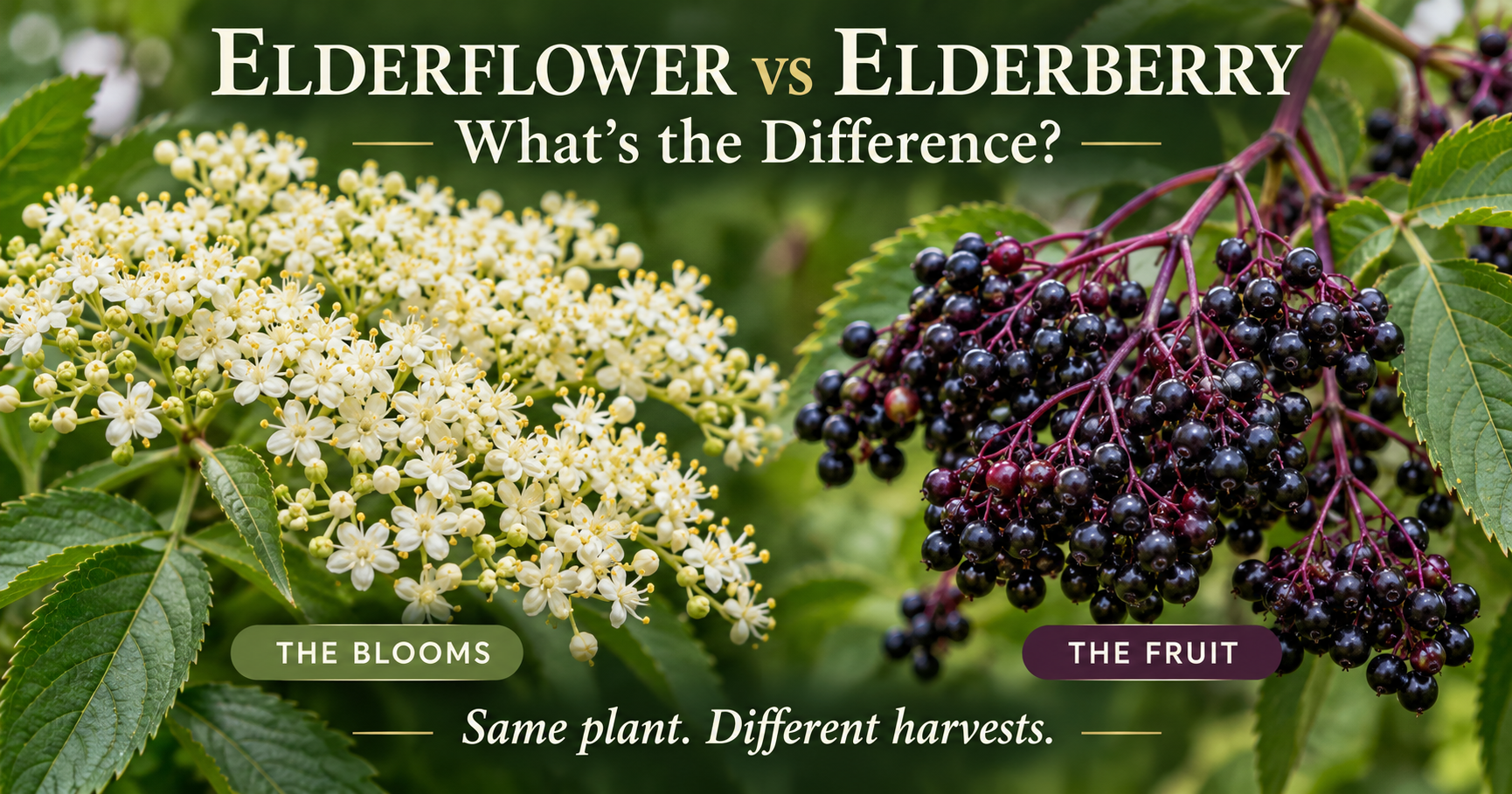
What makes the comparison interesting is that elderflowers and elderberries can actually come from the same elder plant.
One is the flower.
The other is the fruit that develops later.
That sounds simple enough, but once you start growing, harvesting, or cooking with elder, the difference becomes much more important.
They taste completely different.
They’re harvested at different times.
They’re used in different recipes.
They require different preparation.
And if you’re growing your own elderberry bushes, there’s an important tradeoff most people don’t think about at first: every flower cluster you harvest is a cluster that can no longer turn into elderberries later.
That’s why I don’t look at elderflower and elderberry as interchangeable ingredients.
I look at them as two completely different harvests from the same incredible plant.
Elderflower vs Elderberry at a Glance
The easiest way I explain the difference is this:
Elderflower is the blossom. Elderberry is the fruit that follows the blossom.
Elderflowers appear first, usually as broad clusters containing many tiny creamy-white flowers.
If those flowers remain on the plant and are successfully pollinated, small green berries begin developing afterward.
Those berries mature later in the growing season and eventually become the elderberries most people recognize.
So if you’re standing in front of an elder plant covered in flowers, you’re essentially looking at part of your potential future berry crop.
That’s something I keep in mind every time I’m tempted to harvest another flower cluster.

Do Elderflowers and Elderberries Come From the Same Plant?
Yes, they can.
That’s probably the biggest misconception worth clearing up.
“Elderflower” isn’t necessarily the name of one plant while “elderberry” refers to another.
The elder plant flowers first and produces berries afterward.
Different Sambucus species and cultivars exist, and they aren’t all identical, but the basic relationship remains the same: flowers come before fruit.
That also explains why people who grow elderberries primarily for fruit may barely think about harvesting elderflowers at all.
They’re trying to preserve as many potential berry clusters as possible.
Someone interested in elderflower cordial, syrup, tea, or other flower-based recipes may look at the exact same bush and see an entirely different harvest opportunity.
What Do Elderflowers Look Like?
Elderflowers are surprisingly delicate compared with the berries that eventually replace them.
Instead of one large flower, you get a broad cluster containing many tiny individual blossoms.
From a distance, a mature elder in full bloom can look like someone scattered creamy-white patches across the entire shrub.
Up close, the individual flowers are much smaller.
This flowering stage is also one of the easiest times for me to appreciate just how productive a mature elderberry bush can become.
When you see cluster after cluster of flowers, you’re looking at the foundation of the berry crop that may follow.
Of course, not every single flower ultimately becomes a mature berry.
Weather, pollination, plant health, moisture, and other growing conditions can all affect fruit set.
What Do Elderberries Look Like?
After flowering and successful pollination, small green berries begin developing.
They’re easy to overlook at first.
As the fruit develops, those clusters become much more obvious.
The berries eventually mature into the dark fruit associated with elderberry harvest season, although exact appearance varies by elder species.
This transformation is one of the reasons I think growing your own elderberries teaches you more than simply buying a bottle of elderberry syrup ever could.
You get to watch the entire process.
Dormant plant.
New growth.
Flowers.
Tiny green berries.
Ripening fruit.
Harvest.
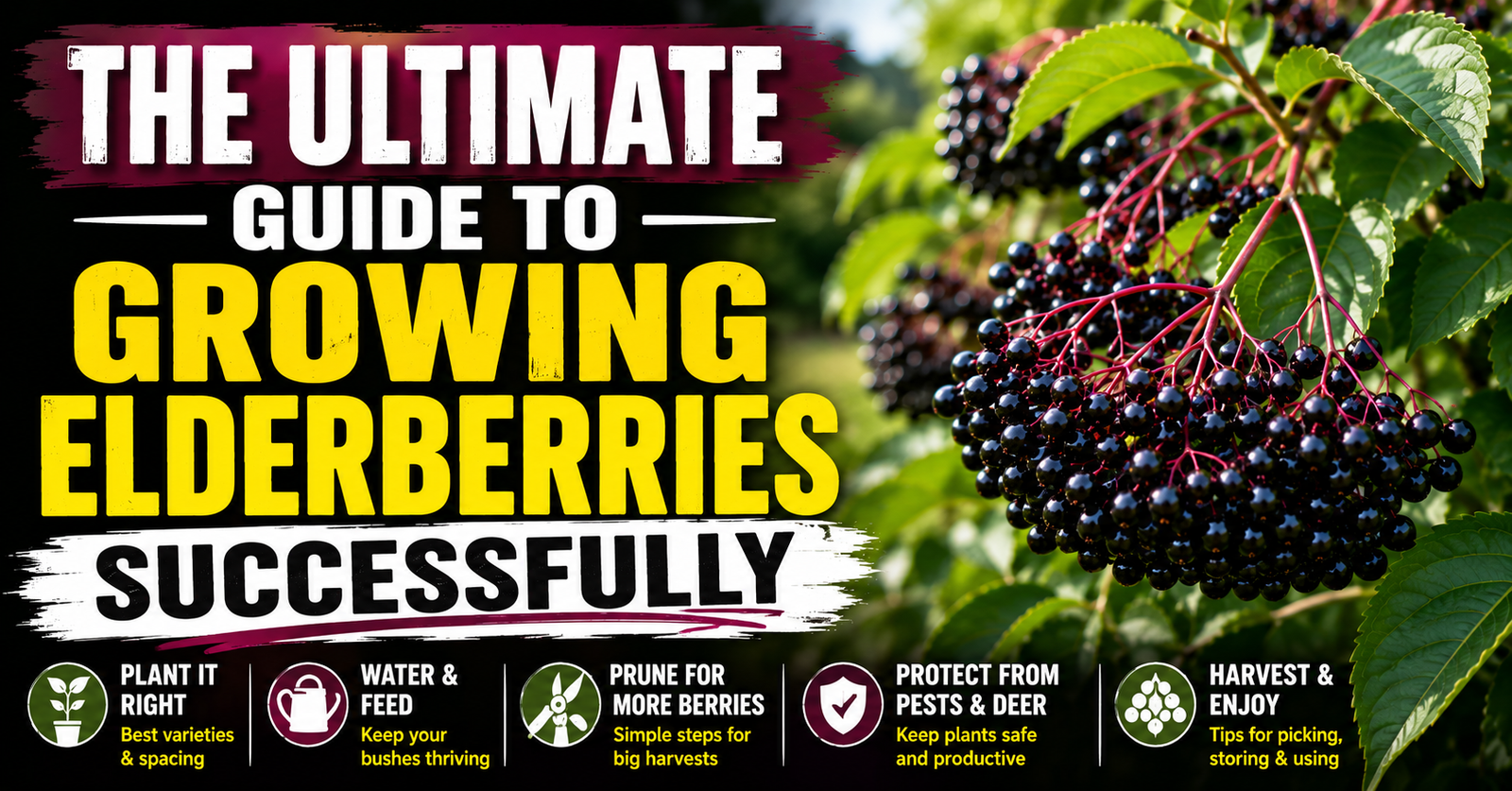
If you’re starting with the plant rather than the ingredient, my Ultimate Guide to Growing Elderberries Successfullygoes much deeper into sunlight, water, spacing, pollination, pruning, wildlife, propagation, and the other factors that determine how productive a bush eventually becomes.

Elderflower and Elderberry Taste Completely Different
This is probably the biggest difference once they reach the kitchen.
Elderberry tastes like a berry.
But I wouldn’t describe it as simply tasting like a blueberry, blackberry, or grape.
It has its own flavor.
I find elderberry noticeably tart, somewhat earthy, fruity, and capable of becoming fairly intense depending on how concentrated the preparation is.
That’s one reason honey and other ingredients pair so naturally with elderberry syrup.
Elderflower goes in a completely different direction.
It’s much lighter.
Floral.
Fragrant.
Fresh.
Some people notice citrus-like characteristics as well.
If someone tasted elderflower syrup and elderberry syrup without knowing they came from the same type of plant, I wouldn’t blame them for assuming the two ingredients were unrelated.
That’s how different the experience can be.
Which Tastes Better?
I don’t think there’s an honest universal answer.
It depends on what you like and what you’re making.
If I want a deep berry flavor for something like elderberry syrup, elderberries obviously make sense.
If I want something light and floral for a summer drink or floral syrup, elderflower makes more sense.
I wouldn’t choose between them based on which one is supposedly “better.”
I’d choose based on the flavor I actually want.
This is also why What Does Elderflower Taste Like? deserves its own article. Someone trying to decide whether they’ll enjoy elderflower doesn’t necessarily want a botanical comparison with elderberries. They want to know what the flower actually tastes and smells like before they make or buy something containing it.


You Harvest Elderflowers and Elderberries at Completely Different Times
This is where growing your own plant changes the conversation.
Elderflowers are harvested while the plant is blooming.
Elderberries come later after pollination and fruit development.
You can’t wait until the berries are ripe and then decide you’d also like to collect the flowers from those same clusters.
That opportunity has already passed.
Likewise, once you cut off an elderflower cluster, that particular cluster isn’t going to produce elderberries later.
You physically removed the flowers.
That’s why I think harvesting elderflowers requires more thought than picking berries at the end of the season.
Harvesting Elderflowers Means Giving Up Some Elderberries
This is probably the single most useful thing I can add to the elderflower-versus-elderberry conversation.
If you grow elderberries because you want fruit, don’t strip the bush of flowers.
Every flower cluster you remove represents potential berries you’re giving up.
That doesn’t mean I think you should never harvest elderflowers.
Far from it.
I just think the decision should be deliberate.
If a mature, healthy plant is absolutely covered in flowers, taking a limited number of clusters may still leave plenty behind for pollinators and fruit production.
But walking through and cutting every beautiful flower cluster because you suddenly discovered an elderflower syrup recipe would obviously change your berry harvest later.
For me, that’s part of what makes elderflower harvesting interesting.
You’re choosing between two harvests.
Flowers now.
Or potentially berries later.

Pollination Connects the Two Harvests
The flowers aren’t simply decorative.
They’re where the future berry crop begins.
Pollinators moving among elderberry flowers help make fruit production possible.
That’s why I’ve become much more interested in what’s happening during flowering season rather than only paying attention when berries begin ripening.
A bush can look spectacular in bloom and still disappoint at harvest if fruit set is poor.
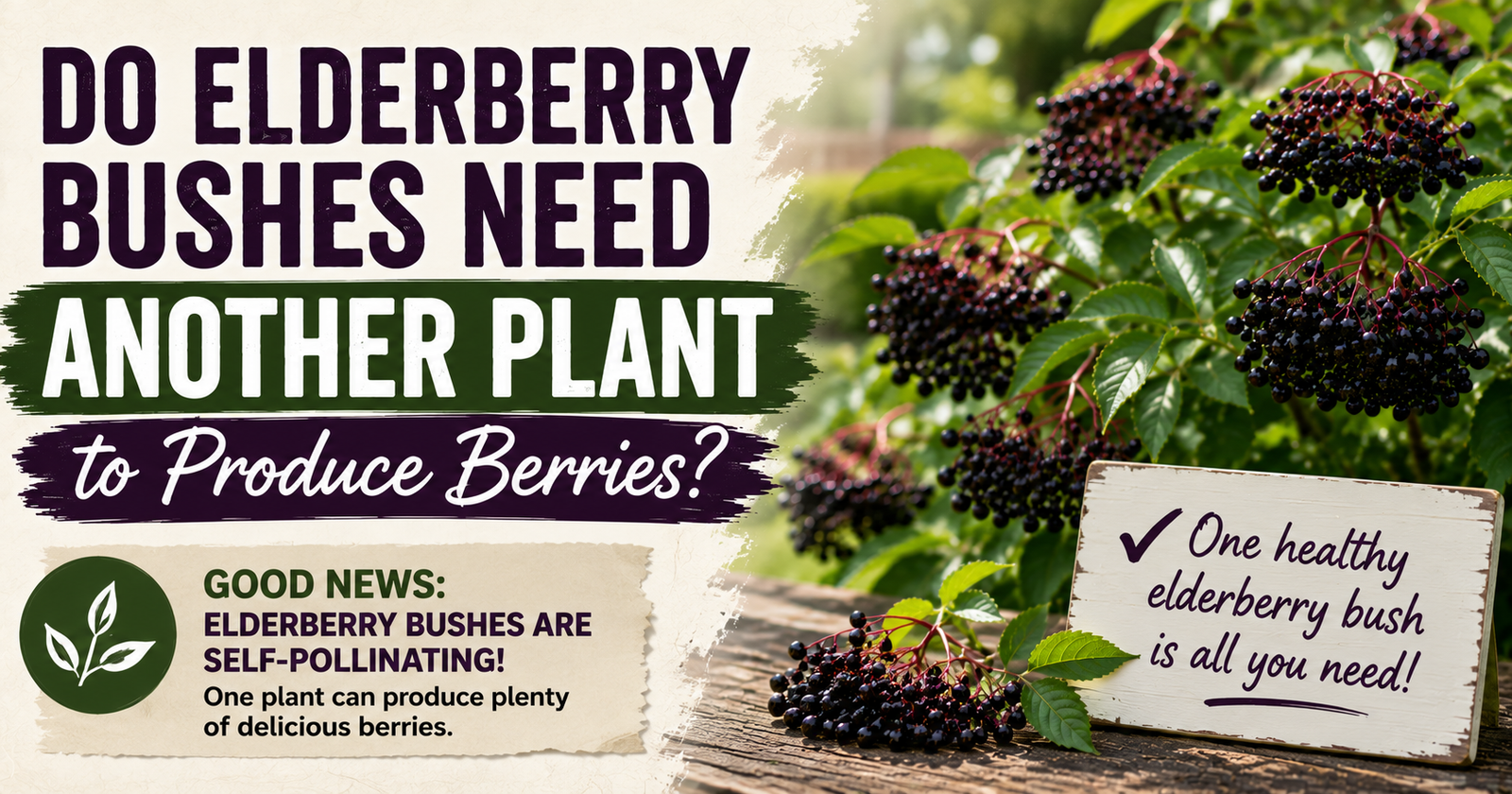
Growing compatible elderberries near one another can help improve pollination and berry production, which is why I put together a separate guide explaining whether elderberry bushes need another plant to produce berries.
Understanding that relationship also makes me more selective about which flowers I harvest.
I’m not just cutting something pretty off the bush.
I’m removing part of the reproductive process that could have produced fruit later.
Elderflower Is Usually About Aroma and Delicate Flavor
When I think about using elderflowers, I think about preserving their fragrance and lighter flavor.
That’s why they’re commonly associated with preparations such as:
- Elderflower syrup.
- Elderflower cordial.
- Drinks.
- Teas and infusions.
- Desserts.
- Floral flavoring.
The goal is very different from reducing dark elderberries into a concentrated berry syrup.
And that’s exactly why I’m keeping our upcoming elderflower syrup recipe completely separate from the elderberry syrup recipes already on Elderberry Pro.
Someone searching for elderflower syrup doesn’t want to land on a page primarily explaining how to cook dried elderberries.
They’re different ingredients with different search intent.
Elderberries Have Their Own Set of Uses
Once the flowers have become mature berries, an entirely different collection of recipes opens up.
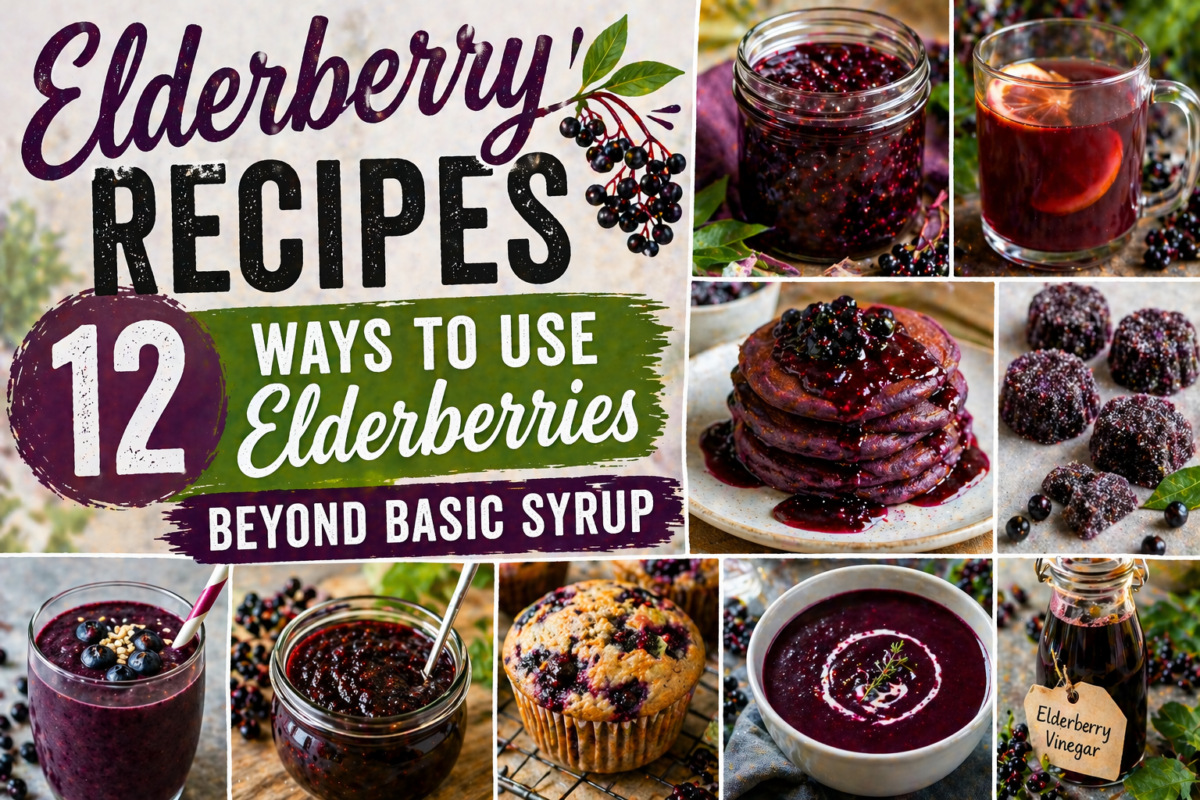
That’s where I think about elderberry syrup, tea, jelly, wine, dried berries, and other preparations. Readers looking for a practical starting point can find elderberry recipes and preparations collected in one place.
We’ve already built extensive resources around that side of the plant because elderberries themselves remain the main focus of Elderberry Pro.
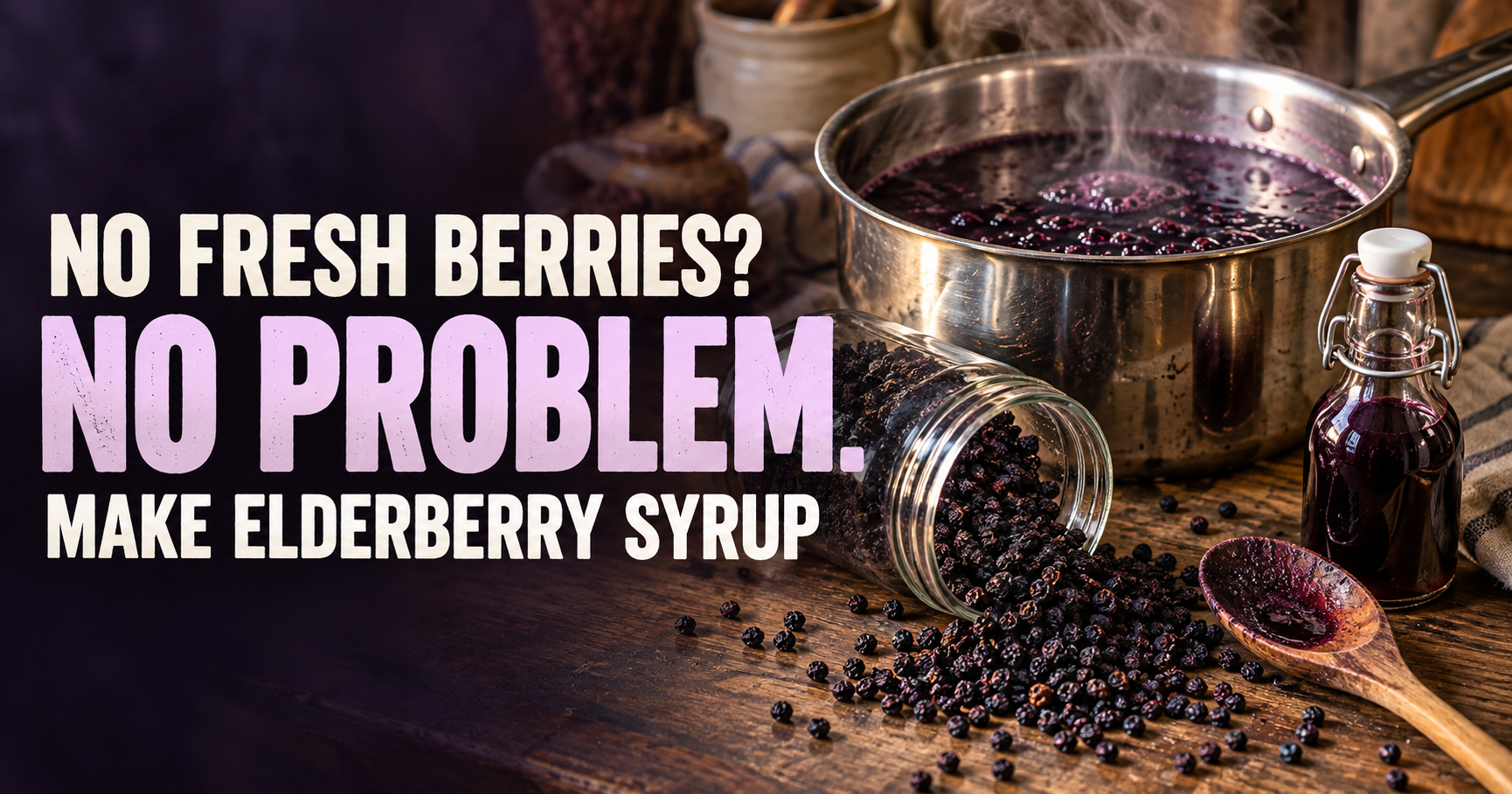
For example, someone starting with dried fruit can follow my elderberry syrup recipe with dried elderberries rather than trying to adapt an elderflower recipe.
The important thing is recognizing which ingredient you’re actually working with before choosing a recipe.
Elderflower syrup and elderberry syrup aren’t two names for the same product.
They’re genuinely different preparations.
Can You Harvest Both Elderflowers and Elderberries From One Bush?
Yes, and this is the approach that makes the most sense to me if the plant is large and productive enough.
You don’t have to choose one harvest exclusively.
Instead, you can harvest some flower clusters while leaving plenty of others untouched.
The clusters you leave have the opportunity to be pollinated and develop into berries.
That gives you a little elderflower harvest earlier in the season and an elderberry harvest later.
How aggressive I’d be depends heavily on the plant.
A young bush producing only a handful of flowers is different from a mature plant covered in blooms.
If berry production is my priority, I’m conservative with the flowers.
I’d rather leave too many than realize later that I harvested away a large portion of my potential fruit crop.
Young Elderberry Bushes Are Different
If I’ve just planted an elderberry and it’s still becoming established, I’m not obsessed with getting every possible ingredient from it immediately.
Young plants have work to do.
They need roots.
They need healthy canes.
They need foliage.
They need time.
That’s one reason patience has become such a recurring theme throughout my elderberry growing guides.
The plant doesn’t exist solely to give me something immediately.
A healthy mature bush can reward me for years.
I’d rather build that plant first and become more adventurous with harvesting once it’s vigorous enough to handle it.
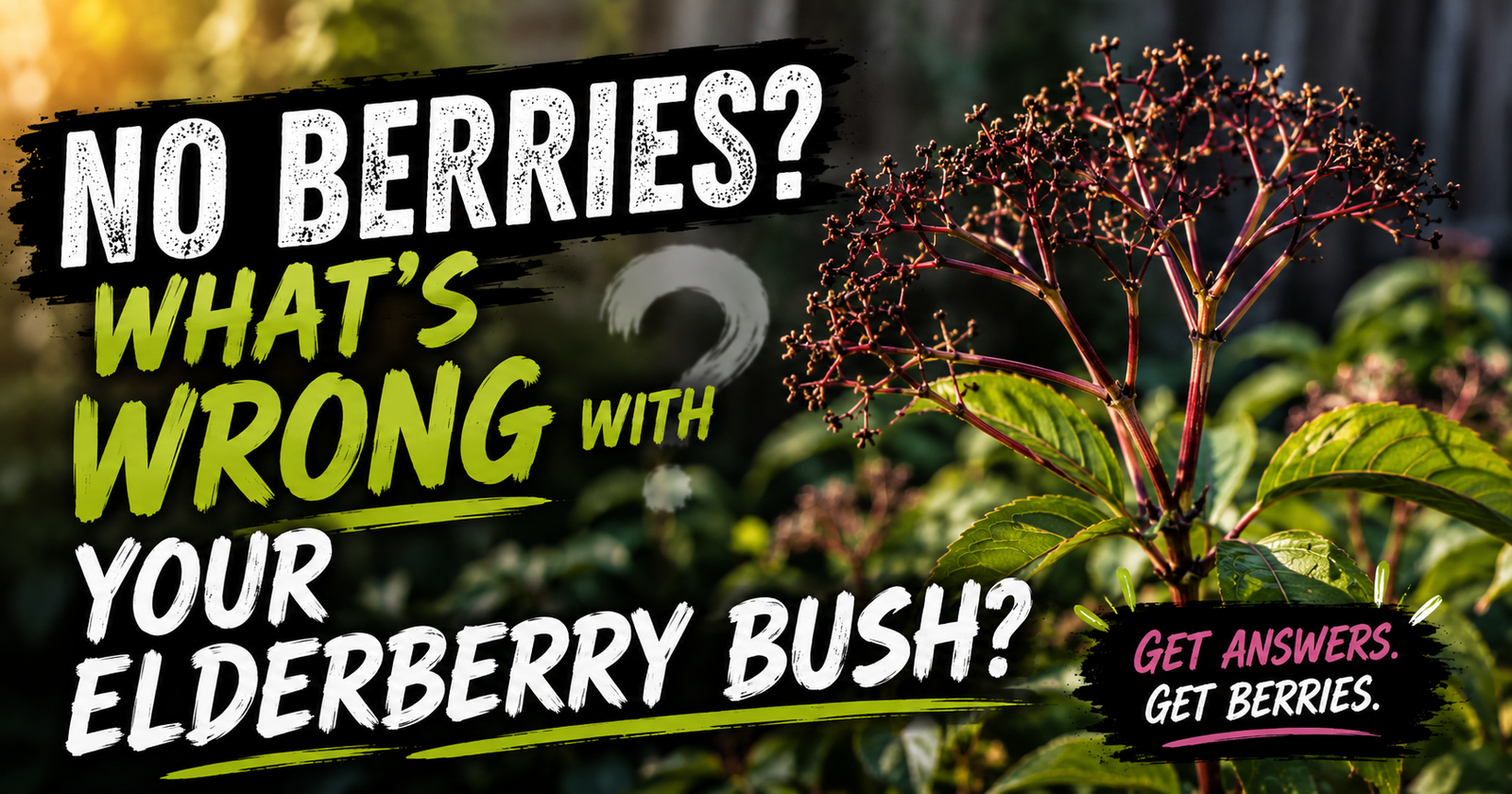
If you’re wondering how long that process realistically takes, How Long Does It Take an Elderberry Bush to Produce Fruit? explains what to expect as a young elderberry becomes established.
Don’t Confuse Elderflower With Any Random White Flower
This is especially important if you’re foraging rather than harvesting from a known elderberry plant you’ve grown yourself.
Plant identification matters.
A white cluster of flowers isn’t automatically elderflower just because it resembles a picture you saw online.
When I’m dealing with wild plants, I want to identify the entire plant rather than making a decision based on flowers alone.
Look at the growth habit.
Leaves.
Stem arrangement.
Flower structure.
Location.
And other identifying characteristics.
The same caution applies later when dark berries appear.
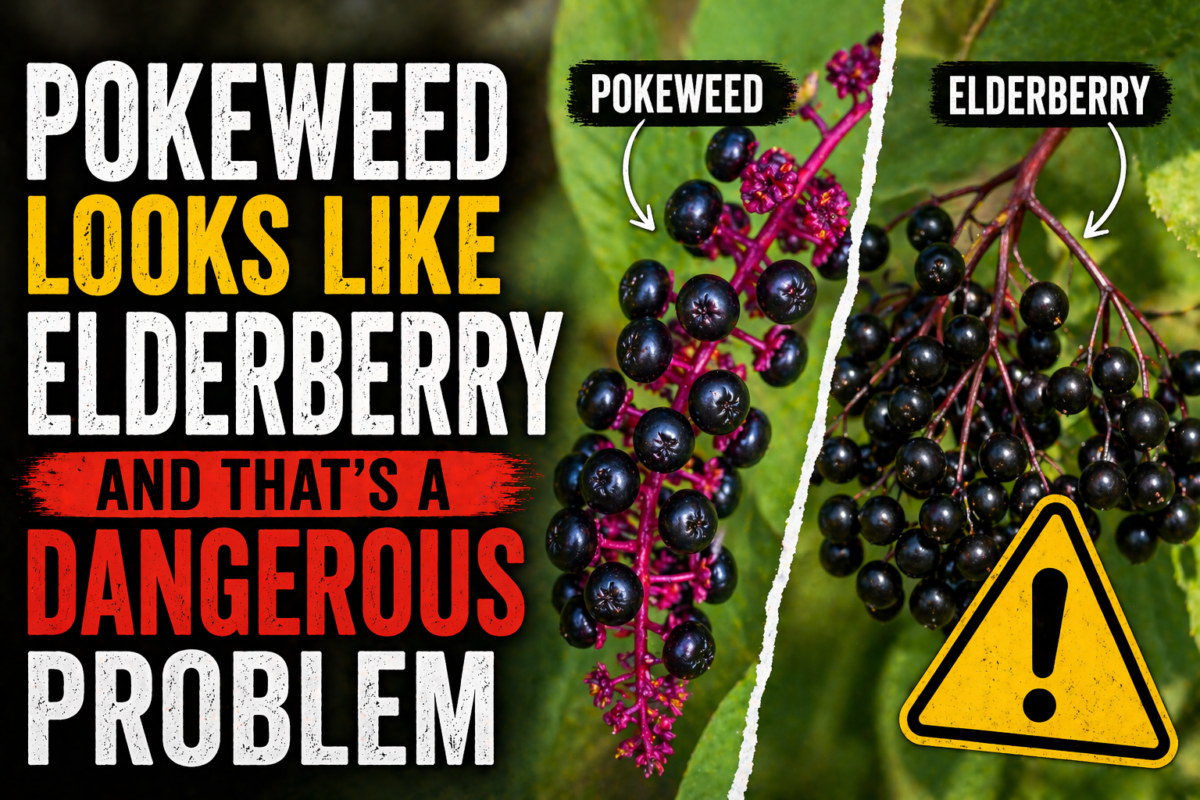
I’ve already covered one particularly dangerous source of confusion in my guide to pokeweed that looks like elderberry.
Foraging is not the place for “close enough.”
If I can’t confidently identify the plant, I don’t harvest it for food.
Elderflower and Elderberry Need Different Preparation
Another reason I don’t lump elderflower and elderberry together is that I don’t prepare them the same way.
With elderflowers, I’m usually interested in capturing that delicate floral aroma and flavor.
With elderberries, preparation has an additional safety consideration.

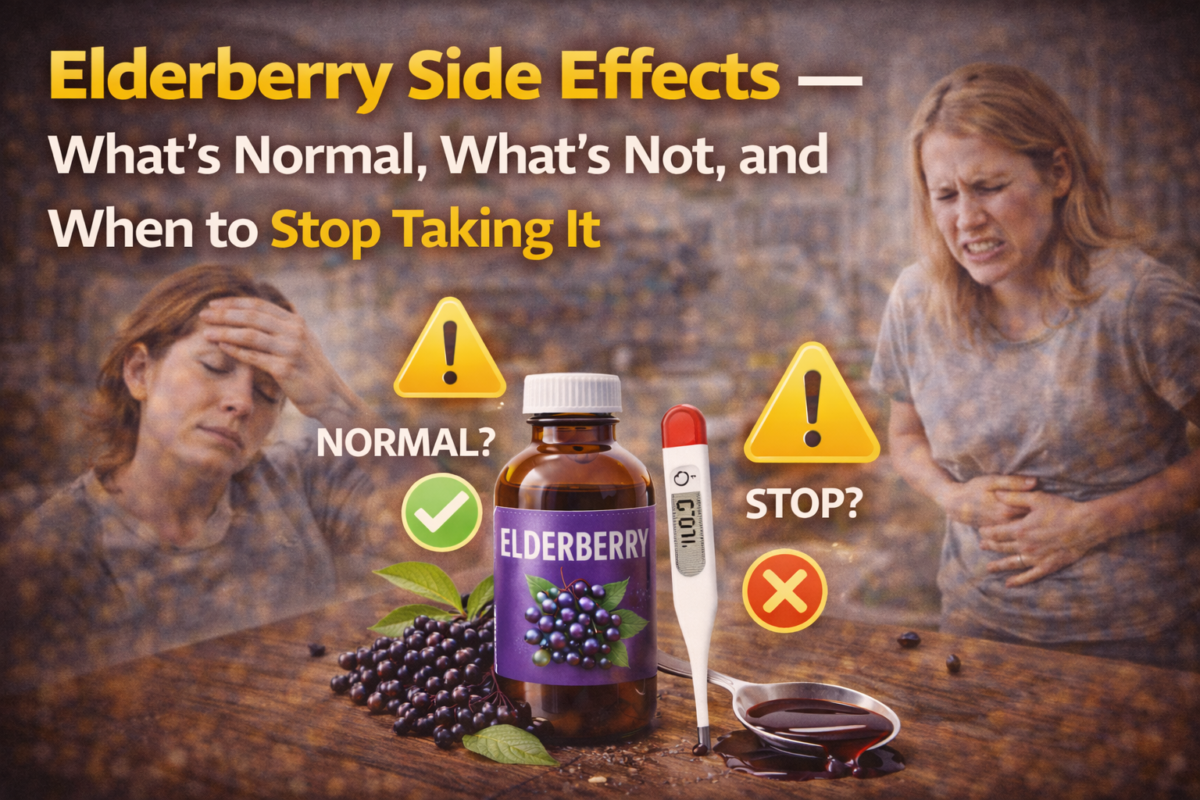
Elderberry plants contain naturally occurring cyanogenic glycosides, particularly in certain plant parts and unripe fruit. That’s why I don’t casually eat raw elderberries, stems, leaves, or other plant material simply because the plant itself is useful. For a fuller introduction to which parts are safe and how the plant develops, read Learn more about what exactly is an elderberry here!.
When I’m using elderberries, I follow an appropriate recipe and properly prepare the fruit.

If you’re new to that side of the plant, Never Eat Elderberries Until You Read This goes much deeper into what I do and don’t eat and why preparation matters.
Elderflower recipes deserve their own instructions too.
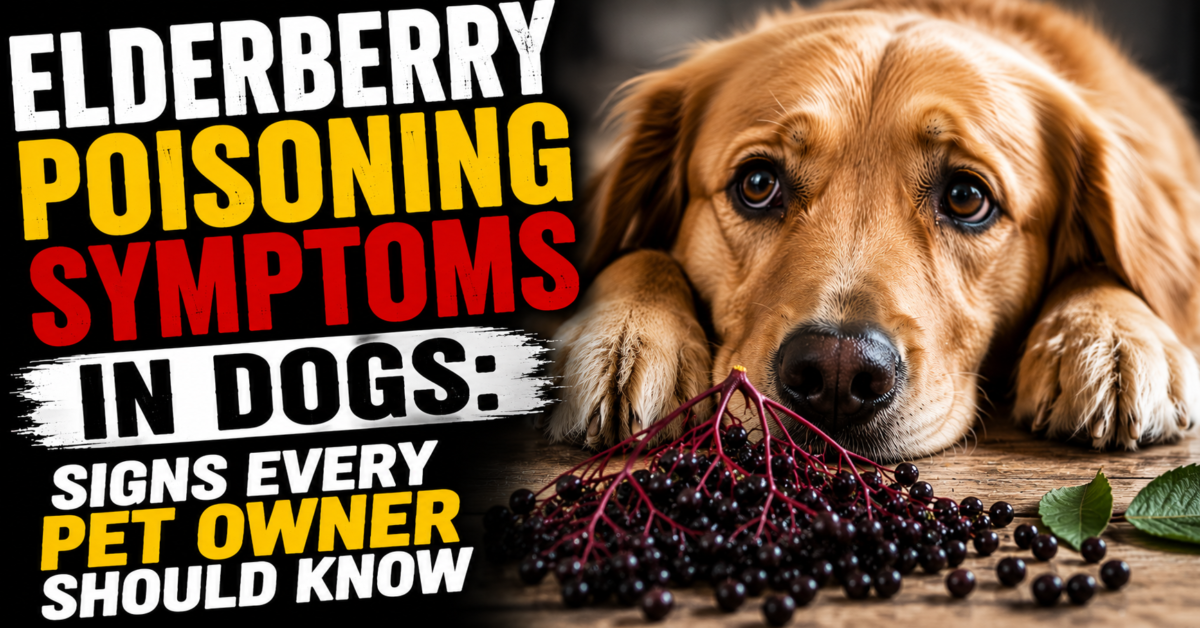
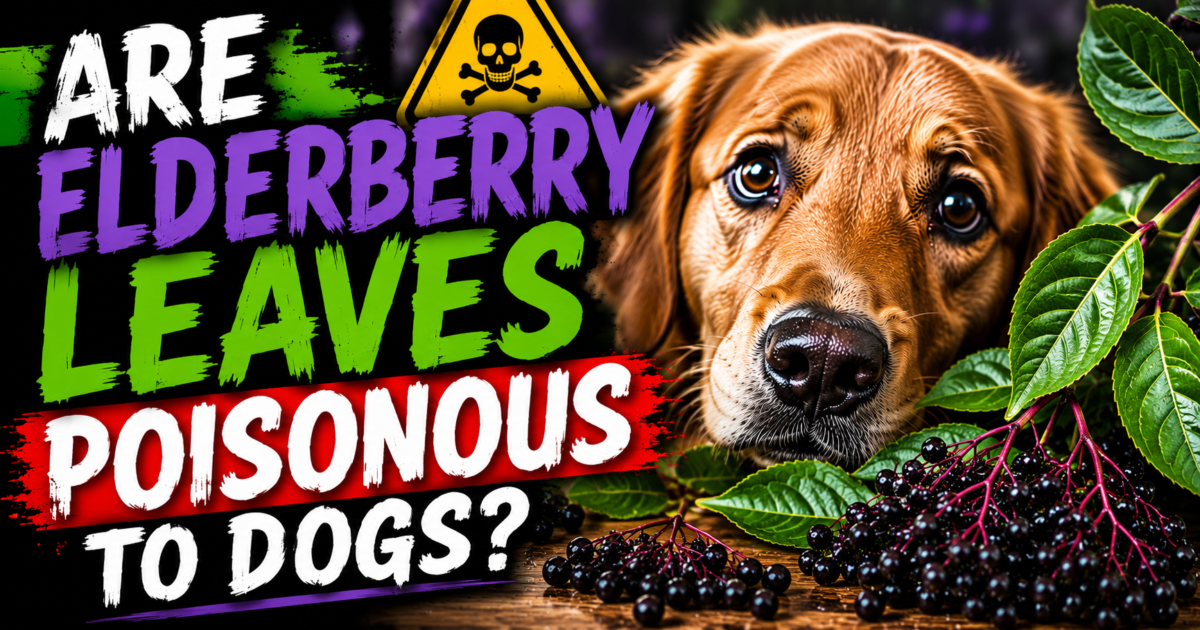
The important takeaway is that I don’t assume something is prepared the same way simply because it came from the same elder plant. That distinction is especially important around pets, and elderberry safety for dogs explains how preparation and plant parts affect the risk to dogs.
The Stems Aren’t Something I Want in My Recipes
Whether I’m working with flowers or berries, I pay attention to the plant material attached to what I’m harvesting.
With ripe elderberries, I remove the berries from the larger stems rather than tossing entire clusters into a recipe.
With elderflowers, recipes generally focus on the blossoms rather than treating thick stems and branches as ingredients.
This is another reason careful harvesting pays off.
The cleaner your harvest is when it comes inside, the less sorting you have to do in the kitchen.
Elderflowers Are More Seasonal Than Dried Elderberries
One thing I really appreciate about dried elderberries is that I can keep them around.
Flower season doesn’t offer that same convenience unless I intentionally preserve elderflowers for later.
Fresh elderflowers give you a relatively narrow harvest window.
Once flowering finishes and berries begin developing, those fresh blossoms are gone until the plant flowers again.
That’s part of what makes them special.
It’s also why our elderflower cluster needs a dedicated guide on how to dry elderflowers and store them for later.
Someone who enjoys elderflower tea or other flower-based preparations shouldn’t have to cram an entire year’s worth of use into flowering season.
Can Elderflowers Be Dried?
Yes, elderflowers can be preserved by drying, which extends their usefulness beyond the fresh flowering season.
But drying flowers isn’t something I want to cram into two paragraphs of this comparison article.
There are practical questions worth answering properly.
How do you harvest clean flower clusters?
How much stem should be removed?
How do you dry them without trapping moisture?
How do you know when they’re dry enough for storage?
What’s the best container afterward?
Those questions deserve their own detailed guide.
That’s exactly what I want this new elderflower cluster to do.
Instead of making one enormous page that vaguely answers everything, each article can solve one specific problem completely while linking naturally to the next step.
Does Elderflower Turn Into Elderberry?
In simple terms, the flowers are the beginning of the fruit-producing process.
After flowering and successful pollination, fruit develops.
So when you look at a flower cluster earlier in the season and a berry cluster later, you’re seeing different stages of the plant’s reproductive cycle.
That doesn’t mean every individual flower automatically becomes a mature berry.
It doesn’t.
Weather can interfere.
Pollination can vary.
The plant may be stressed.
Some developing fruit may be lost.
Wildlife may get involved later.
But without flowers, you’re certainly not getting berries from that cluster.
That’s why flowering season deserves much more attention than many first-time elderberry growers give it.
Should You Harvest Elderflowers or Wait for Elderberries?
If berries are your main goal, I’d leave most of the flowers alone.
That’s the easiest answer.
If you’re specifically interested in making elderflower syrup, cordial, tea, or another flower-based recipe, taking some flowers can make sense.
I wouldn’t turn it into an all-or-nothing decision.
A mature productive bush can potentially provide both.
Take a limited elderflower harvest.
Leave plenty of blooms behind.
Let pollinators work.
Then come back later in the season and see what develops.
That’s the balance I like.
How Many Elderflowers Should You Leave on the Bush?
I don’t think there’s one percentage that makes sense for every elderberry plant.
Think about the plant in front of you.
Is it young and producing only a few flower clusters?
I’d be conservative.
Is it a huge established bush absolutely covered in flowers?
There’s obviously more room to take a small harvest while leaving plenty behind.
What is your actual goal?
If you’re growing specifically for berries, the answer becomes even easier.
Leave the overwhelming majority of the flowers.
If elderflower is the ingredient you’re excited about, you may choose differently.
What I don’t recommend is blindly harvesting flowers without realizing you’re also affecting the potential berry crop.
Elderflower Harvesting Should Be Selective
When we write the dedicated harvesting guide, I want to go much deeper into this because there’s a real technique to harvesting elderflowers without unnecessarily stripping the bush.
For now, the principle is simple.
I don’t walk up to one branch and remove every flower cluster I can reach.
I spread the harvest around.
I take what I actually expect to use.
And I leave plenty of blooms behind.
That approach makes far more sense to me than maximizing today’s elderflower harvest and regretting it during berry season.
Elderberries Give You More Ways to Preserve the Harvest
Once ripe elderberries arrive, I have many options.
Fresh fruit can be processed.
Berries can be frozen.
They can be dried.
They can become syrup.
They can become jelly.
They can be used for wine and other recipes.
That’s one reason elderberry harvest season can get busy surprisingly quickly.
If you’re growing productive bushes, suddenly you aren’t asking whether you’ll get berries.
You’re figuring out what to do with all of them.
The site already has an entire collection of elderberry recipes and preparation guides because the fruit itself can be used in so many different ways.
Elderflower gives us the opportunity to build out the earlier part of that same plant’s seasonal story.
Elderflower Syrup Is Not Elderberry Syrup
I want to emphasize this because I can easily imagine someone searching for one and ending up confused by the other.
Elderflower syrup is made from the flowers.
Elderberry syrup is made from the berries.
They don’t taste the same.
They don’t look the same.
And I wouldn’t substitute one for the other in a recipe and expect the same result.
We already have multiple elderberry syrup recipes on Elderberry Pro, including versions made with fresh and dried berries.
The upcoming elderflower syrup recipe will remain completely separate.
That article will be about capturing the flavor of elderflowers, not trying to squeeze elderflower keywords into an elderberry syrup page that already satisfies a different search.
What Does Elderflower Smell Like?
The aroma is one of the biggest reasons people become interested in elderflowers in the first place.
Fresh elderflowers have a noticeable floral fragrance.
Exactly how someone describes that aroma varies, but floral, sweet, fresh, and lightly fruity or citrus-like descriptions are common.
And this is one area where freshness matters.
A flower growing outside doesn’t necessarily smell identical after harvesting, drying, steeping, or turning it into syrup.
Preparation changes the experience.
That’s another reason I’m excited about the next article in this cluster, What Does Elderflower Taste Like?
Rather than giving it a one-sentence answer here, we’ll compare the fresh flower aroma, elderflower tea, elderflower syrup, sweetness, floral intensity, and what someone should realistically expect before trying it.
Elderberry Flavor Is Much Darker and Heavier
Put elderflower beside elderberry and the contrast becomes obvious.
Elderberries have the deeper fruit character I’d expect from a dark berry.
That’s why they work so naturally in concentrated preparations.
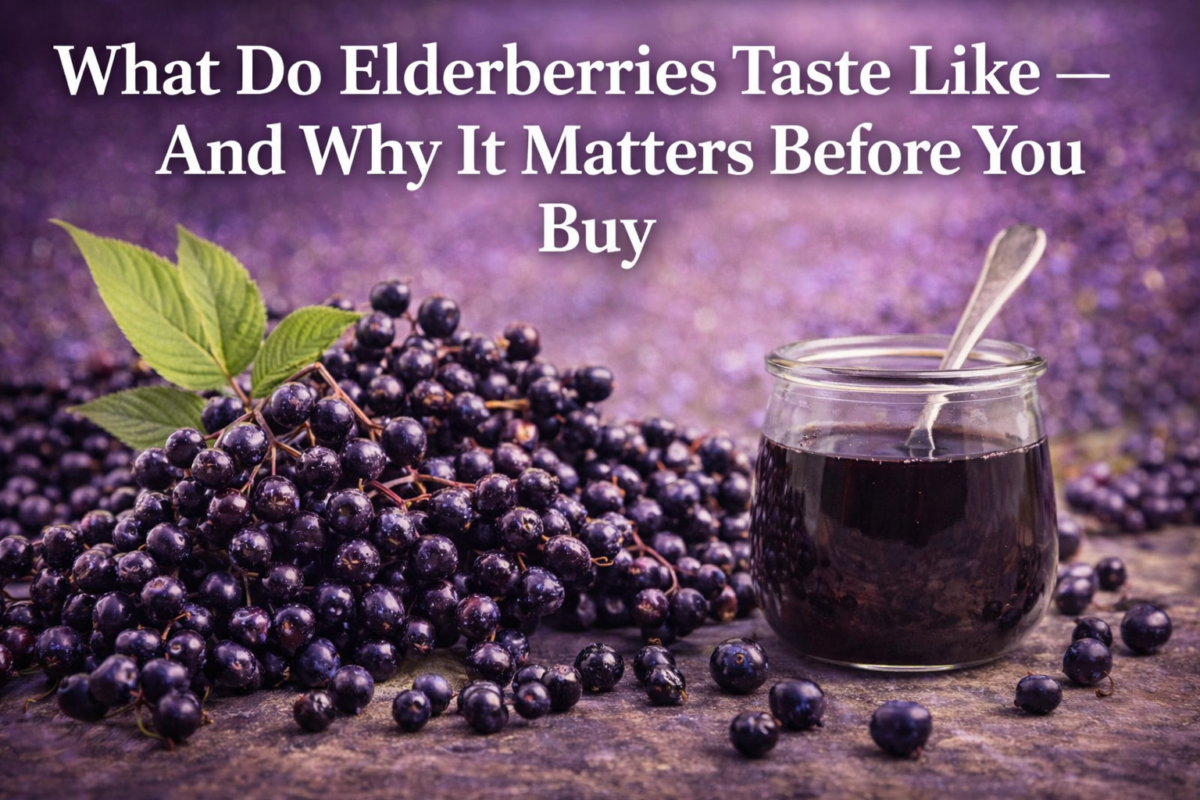
If you’ve never tried the fruit and want a more detailed description before buying or harvesting any, What Do Elderberries Taste Like and Why It Matters Before You Buy? covers the berry side much more thoroughly.
That page and our upcoming elderflower taste guide will make a particularly useful pair.
Someone can compare the two ingredients without us forcing both search intents into this one article.
Elderflower vs Elderberry Isn’t Really a Competition
The more I’ve worked with elderberries, the less I think “elderflower versus elderberry” needs a winner.
They’re two opportunities provided by the same plant.
Elderflower gives you something delicate and floral earlier in the growing season.
Elderberries give you dark fruit later.
One can become syrup.
So can the other.
One can be used for tea.
So can the other.
But the finished products remain distinctly different.
For someone growing elderberries at home, understanding that difference makes the plant even more interesting.
You aren’t simply waiting all year for one berry harvest.
The plant changes through the seasons, and different stages can have entirely different uses.
If I Could Only Harvest One, I’d Decide Based on My Goal
If I primarily wanted elderberries for syrup, jelly, drying, freezing, or other berry recipes, I’d protect my flower clusters and wait.
If elderflower syrup, cordial, tea, or floral recipes interested me more, I’d intentionally harvest some blossoms.
If I wanted both, I’d take the middle ground.
Harvest a reasonable amount of elderflower from a healthy mature plant and leave plenty behind for fruit.
There’s no need to make it more complicated than that.
Growing Your Own Makes the Difference Much Easier to Understand
Reading about elderflower and elderberry is one thing.
Watching the transformation on your own plant makes it obvious.
You see the flowers.
You watch pollinators move through them.
You notice the tiny developing berries.
You watch those berries change as the season progresses.
Eventually you’re standing there with a ripe cluster in your hand that began months earlier as a mass of tiny flowers.
That’s one reason I think growing elderberries changes how you look at the ingredient.
It’s no longer just something in a supplement bottle or bag of dried berries.
You understand the plant behind it.
And once you understand the plant, the difference between elderflower and elderberry becomes incredibly simple.
Elderflower is the beginning of the harvest story.
Elderberry is what can come later when you leave those flowers on the plant and let the growing season continue.
About the Author
Avery Collins is a backyard fruit grower and gardening writer who enjoys helping home gardeners understand elderberries from the first spring flowers through the final berry harvest. Through Elderberry Pro, Avery shares practical growing, harvesting, storage, and preparation guides designed to make elder plants easier to understand and use at home.