
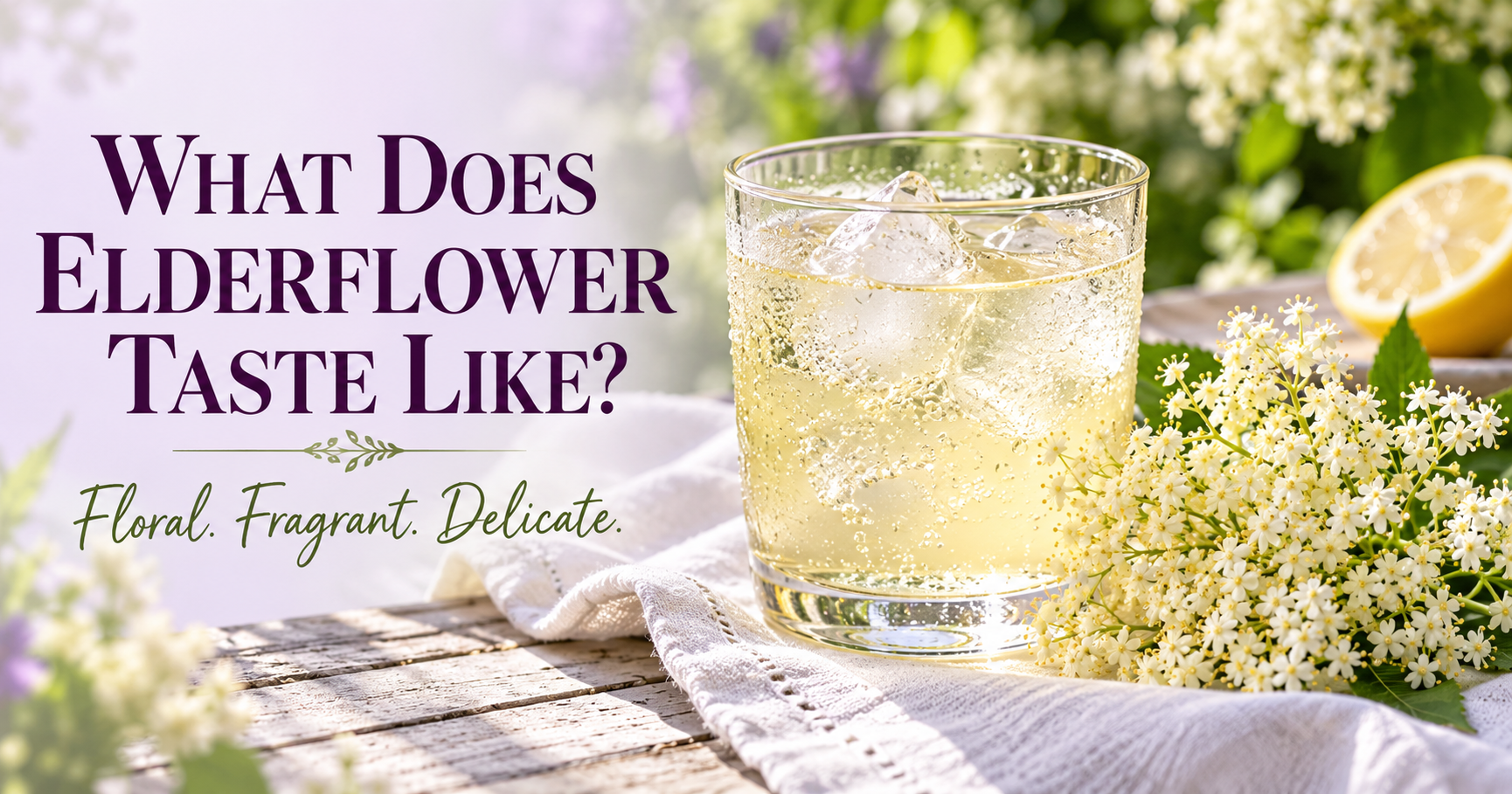
If someone handed me a glass of elderflower syrup without telling me what it was, I wouldn’t immediately guess that the flavor came from flowers growing on an elderberry bush.
That’s what makes elderflower so interesting.
It doesn’t taste like elderberries.
It doesn’t taste exactly like roses.
And despite coming from a flowering shrub, it doesn’t necessarily have that overpowering perfume flavor some people associate with edible flowers.
Instead, elderflower has a delicate combination of floral, fruity, and slightly citrusy flavors that can be surprisingly difficult to describe until you’ve tried it.
Some people compare it to pear.
Others notice hints of lychee, honeysuckle, or white grapes.
And depending on how it’s prepared, elderflower can taste wonderfully refreshing or a little too floral for someone who isn’t accustomed to flower-based drinks.
So what does elderflower actually taste like?
Here’s what you should expect before trying it, how different preparations change the flavor, and why the flowers taste nothing like the dark berries that develop later.
What Does Elderflower Taste Like?
Elderflower has a light, fragrant, floral flavor with subtle fruity notes and a slightly fresh, citrus-like character.
If I had to explain it to someone who had never tasted anything made with elderflowers, I’d tell them to imagine a combination of:
- The delicate fragrance of honeysuckle.
- The mild fruitiness of a ripe pear.
- A hint of white grape.
- A little citrus zest.
- A fresh, slightly herbal finish.
Not everyone notices those exact flavors.
Taste is subjective, and elderflower is particularly difficult to describe because so much of its character comes from aroma.
What one person calls floral, another might describe as fruity.
Someone else might notice the herbal character more than anything.
But there’s one thing most descriptions have in common.
Elderflower is generally much lighter and more delicate than people expect.

Does Elderflower Actually Taste Like Flowers?
Yes, but probably not in the way you’re imagining.
When people hear that something tastes floral, they sometimes picture accidentally getting perfume in their mouth.
That’s not necessarily what elderflower tastes like.
A well-balanced elderflower drink has a noticeable floral character without needing to taste overwhelmingly perfumed.
Think about the difference between smelling a fresh flower outdoors and smelling a bottle of concentrated perfume.
Both are floral.
But the intensity is completely different.
Elderflower preparations can be much closer to that lighter, fresher experience.
Of course, concentration matters.
A strongly flavored elderflower syrup may taste much more floral than a lightly prepared elderflower tea.
That’s why I wouldn’t judge every elderflower product based on one particularly strong drink.


What Fruit Does Elderflower Taste Most Like?
Pear is probably one of the easiest comparisons.
Not because elderflower tastes exactly like biting into a pear.
It doesn’t.
But some elderflower preparations have a delicate, almost pear-like fruitiness underneath the floral aroma.
Lychee is another common comparison.
If you’ve ever tried lychee, you’ll recognize that it’s a fruit with a distinctive floral quality.
That makes it a useful reference for elderflower.
White grape is another flavor people sometimes notice.
The important thing is that elderflower doesn’t have the bold, juicy flavor you’d expect from strawberries, raspberries, or blackberries.
Its fruity character is much more subtle.
Is Elderflower Sweet or Bitter?
This is where I think people sometimes get confused.
Elderflower itself isn’t naturally sweet in the same way ripe fruit or honey is sweet.
Much of the sweetness people associate with elderflower comes from the ingredients used to prepare it.
For example, elderflower syrup usually contains a substantial amount of sugar.
That sweetness changes how the floral flavor comes across.
Elderflower tea made without sugar may taste considerably less sweet.
Depending on the preparation, you might also notice a slightly herbal or bitter edge.
That’s why I think it’s important to distinguish between the flavor of elderflower and the flavor of a finished elderflower product.
They’re related, but they aren’t necessarily identical.


What Does Fresh Elderflower Smell Like?
One of the most interesting things about elderflower is how much its fragrance contributes to the overall experience.
Fresh elderflowers are known for their distinctive floral aroma.
Depending on the flowers and growing conditions, that fragrance may seem sweet, fruity, fresh, or slightly musky.
Some people find the smell wonderful.
Others find certain elderflower aromas less appealing.
That’s completely normal.
Flowers don’t all produce identical fragrances, and even flowers from the same plant can change as they age.
Freshly opened blossoms may smell different from older clusters that are beginning to fade.
That matters when you’re planning to harvest flowers for food.
If the goal is capturing a delicate floral flavor, I want fresh, healthy blossoms rather than clusters that are already turning brown.
Why Elderflower Tastes Nothing Like Elderberry
This is probably my favorite part of the comparison.
The same elder plant can produce two ingredients with completely different flavors.
Elderflower comes first.
Elderberry comes later.
The flowers have that lighter floral character.
The berries develop a darker, earthier, more tart fruit flavor.
That’s why elderflower syrup and elderberry syrup are completely different experiences.
One emphasizes delicate floral flavor.
The other emphasizes concentrated berry flavor.
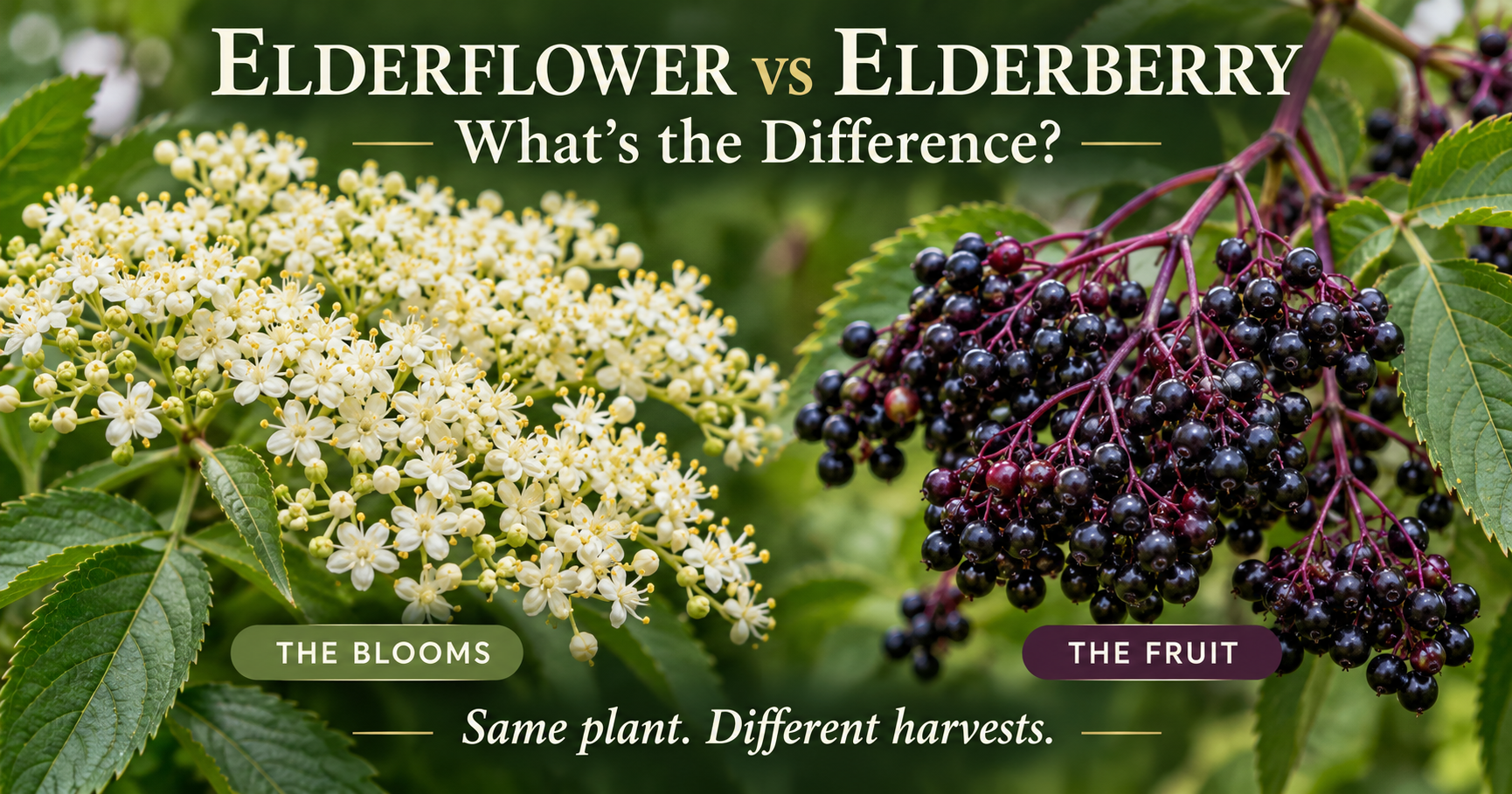
If you’re curious about the relationship between the two, my guide to elderflower vs. elderberry explains how they develop on the same plant, when each is harvested, and why collecting flowers affects your future berry harvest.
Understanding that difference makes it much easier to choose the right ingredient for a recipe.



What Does Elderflower Syrup Taste Like?
Elderflower syrup is probably one of the easiest ways to experience the flavor.
The sweetness helps bring out the floral character.
Many recipes also include lemon, which adds a refreshing tartness and balances the sugar.
The finished syrup often tastes sweet, floral, lightly fruity, and citrusy.
But there’s an important distinction.
Elderflower syrup is a concentrated ingredient, not necessarily something you’re supposed to drink straight.
Depending on the recipe, it may be intended for dilution with water or another beverage.
That makes a tremendous difference.
A spoonful of concentrated syrup might taste overwhelmingly sweet and floral.
The same syrup mixed into a glass of cold water may taste light and refreshing.
If you’re trying elderflower for the first time, I think that distinction matters more than most people realize.
What Does Elderflower Cordial Taste Like?
Elderflower cordial and elderflower syrup are closely related.
In many recipes, the terms describe similar sweetened elderflower concentrates.
Cordial is especially common terminology in the United Kingdom.
When diluted properly, elderflower cordial generally has a refreshing floral flavor with fruity and citrus-like notes.
Some preparations are sweeter.
Others are more tart.
A lot depends on the amount of sugar, lemon, and elderflower used.
I wouldn’t automatically assume every bottled cordial tastes identical.
Just as two homemade lemonade recipes can taste different, elderflower cordial can vary significantly depending on how it’s prepared.

What Does Elderflower Tea Taste Like?
Elderflower tea is where the flavor becomes more delicate.
Without all the sugar found in syrup or cordial, the floral character has less sweetness surrounding it.
The result can taste more herbal.
Some people notice a mild grassy quality.
Others enjoy the gentle floral fragrance.
If you’re expecting elderflower tea to taste like a sweet bottled elderflower drink, you might be surprised.
They’re different preparations.
That’s also why I wouldn’t automatically add large amounts of sugar before tasting the finished tea.
You may find you enjoy its natural flavor.
Or you may prefer a little honey.
Either way, the important thing is understanding that elderflower tea isn’t simply diluted elderflower syrup.
Does Dried Elderflower Taste Different From Fresh Elderflower?
Yes, drying can change the flavor and aroma.
Fresh elderflowers are prized for their delicate fragrance.
During drying and storage, some of the volatile aromatic compounds responsible for that fresh floral character can be lost.
That means dried elderflowers may produce a preparation that tastes less bright and more herbal than one made from fresh blossoms.
This doesn’t automatically make dried elderflowers inferior.
They’re simply different.
Dried flowers are convenient because you can store them beyond the flowering season.
Fresh flowers offer an opportunity to capture their distinctive aroma while they’re available.
Which one makes more sense depends on what you’re preparing.
For a drink where the fresh floral aroma is the main attraction, fresh elderflowers are often preferred.
For a simple herbal infusion outside flowering season, properly dried elderflowers can be useful.

Can Elderflower Taste Like Soap or Perfume?
Yes, particularly when the flavor becomes too concentrated.
This is one reason I think some people try elderflower once and decide they don’t like it.
They may have tried a drink containing far more elderflower flavor than they actually enjoy.
Floral flavors can become overwhelming when used too heavily.
The same thing happens with ingredients such as lavender or rose.
A little can be pleasant.
Too much can dominate everything.
If an elderflower drink tastes overly perfumed, I’d first consider whether the preparation is simply too concentrated.
Diluting a syrup or cordial according to its directions may make the flavor much more enjoyable.
However, if a homemade preparation has an unusual spoiled odor, visible mold, unexpected fermentation, or another sign of spoilage, discard it rather than trying to improve the flavor.
Does Elderflower Taste Like Honeysuckle?
Honeysuckle is one of the more useful comparisons because both can have a delicate floral character.
But I wouldn’t call them identical.
Elderflower often has additional fruity or slightly herbal notes that distinguish it from honeysuckle.
And remember that much of what people describe as elderflower flavor comes from its aroma.
That makes comparisons with other fragrant blossoms particularly helpful.
If you enjoy lighter floral flavors, elderflower may appeal to you.
If you strongly dislike anything floral in drinks or desserts, you may prefer starting with a very lightly flavored preparation.
Does Elderflower Taste Like Lavender?
Not exactly.
Lavender has a distinctive herbal floral character that can become quite strong.
Elderflower is generally described as lighter, fruitier, and less intensely herbal.
That’s why I wouldn’t automatically assume someone who dislikes lavender will also dislike elderflower.
The two have different flavor profiles.
Of course, personal preference still matters.
Someone who dislikes floral flavors altogether may not enjoy either one.
But if you’ve avoided elderflower because you once tried an overpowering lavender dessert, I’d consider giving a lightly flavored elderflower drink a chance.
What Foods and Drinks Pair Well With Elderflower?
This is where elderflower becomes particularly interesting in the kitchen.
Because the flavor is delicate, I think it makes sense to pair it with ingredients that complement rather than overwhelm it.
Lemon is an obvious example.
The tartness can balance sweetness while complementing elderflower’s fresh character.
Pear is another natural pairing because the fruit shares some of the subtle flavor notes people associate with elderflower.
Other possibilities include strawberries, peaches, mint, and lightly flavored desserts.
For drinks, sparkling water is a simple way to enjoy elderflower syrup without making something complicated.
The important thing is allowing the elderflower flavor to remain noticeable.
If you add too many strongly flavored ingredients, you may lose the very thing that makes elderflower interesting.
How Can You Try Elderflower Without Making an Entire Recipe?
If you’ve never tasted elderflower before, I wouldn’t necessarily start by harvesting a large quantity of flowers and making several bottles of syrup.
That’s a lot of effort for an ingredient you may discover you don’t particularly enjoy.
A small commercially prepared elderflower drink or cordial can give you an introduction to the flavor.
Just remember that the finished product may contain sugar, lemon, and other ingredients that influence the taste.
If you’re buying cordial, follow its dilution instructions rather than assuming it should be consumed straight.
You can always adjust the strength after tasting it.
Once you know you enjoy elderflower, making your own preparations becomes much more appealing.
Does Elderflower Flavor Change During the Growing Season?
It can.
Flowers don’t remain at exactly the same stage throughout blooming.
Freshly opened flowers may have a different fragrance from older blossoms nearing the end of their flowering period.
Weather also affects the condition of the flowers.
Heavy rain can damage delicate blossoms.
Hot weather may accelerate aging.
And flowers that have already begun turning brown aren’t the same as healthy, freshly opened clusters.
That’s why people harvesting elderflowers for culinary use generally look for fresh, fully opened blossoms.
If you’re growing elderberries primarily for fruit, though, remember that every flower cluster you remove is one that cannot produce berries later.
I prefer being selective rather than stripping an entire bush of flowers.
Can You Use Elderflowers From Your Own Elderberry Bush?
Potentially, yes, provided you’ve correctly identified a suitable edible elder species and follow a reliable preparation method.
The flowers appear before the berries, which means you have an opportunity to harvest them earlier in the growing season.
But I wouldn’t remove every flower cluster.
If your goal is also harvesting elderberries, leave plenty of flowers for pollination and fruit development.
This is particularly important with young bushes that aren’t producing many flower clusters yet.
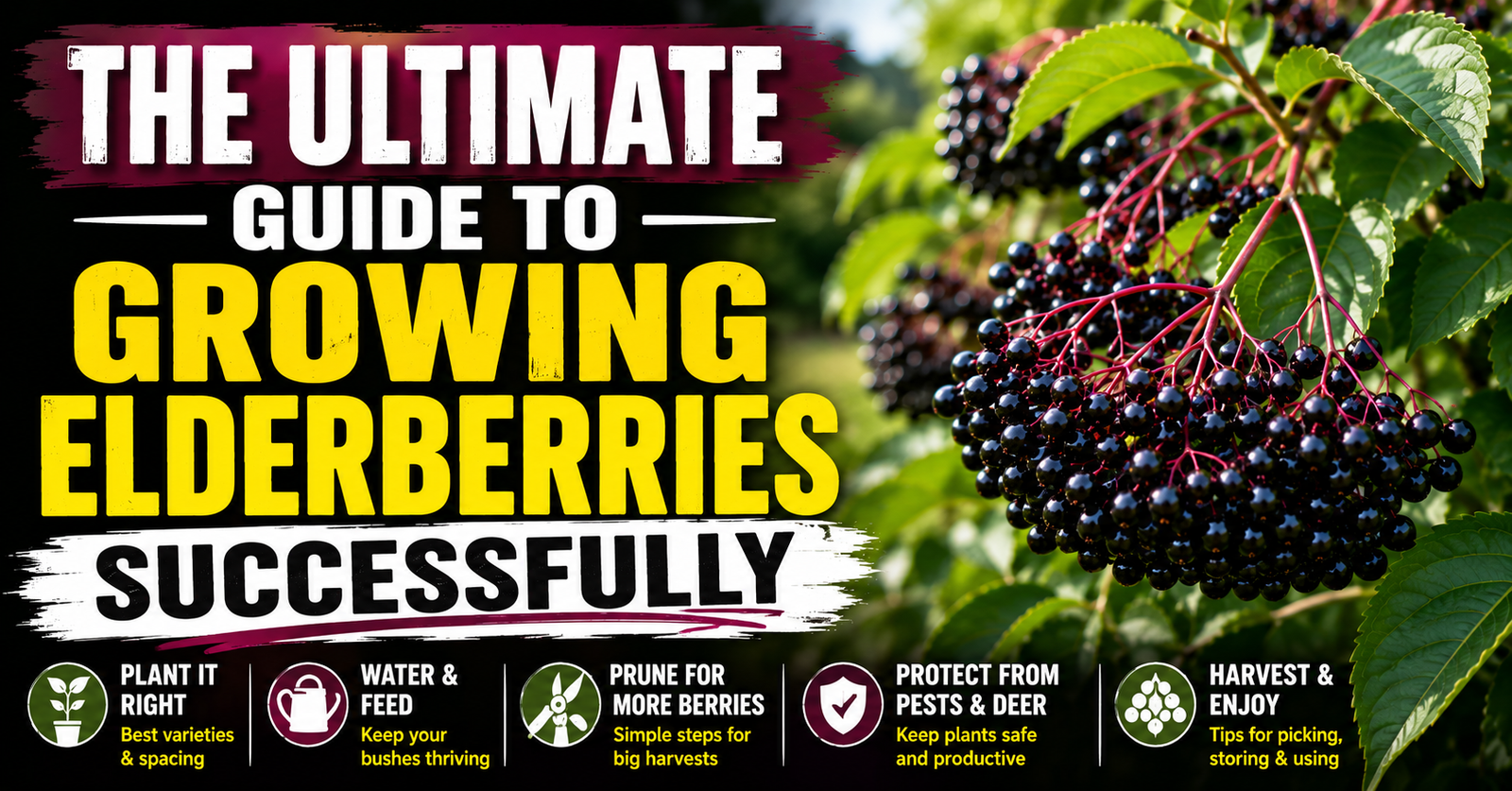
If you’re interested in growing the plant itself, my complete elderberry growing guide covers the conditions that encourage healthy growth, flowering, and berry production.
One healthy elderberry bush can provide years of enjoyment, so I think it’s worth taking care of the plant rather than focusing only on one harvest.
Is Elderflower Safe to Eat?
Correct identification and preparation matter.
Not every plant with clusters of white flowers is an edible elder.
And even when you’ve identified an appropriate elder species, you shouldn’t assume that every part of the plant belongs in food.
Elder leaves, bark, and stems contain compounds that can be harmful if consumed. Because pets may chew on these plant parts, elderberry poisoning risks for dogs provides more specific guidance on canine exposure.
Culinary elderflower preparations generally focus on the blossoms while minimizing unwanted stem material.
I recommend following a reliable elderflower recipe rather than casually eating unidentified flowers or experimenting with different plant parts.
This is especially important if you’re foraging.
If you’re uncertain about the plant’s identity, don’t use it for food.
Is Elderflower Worth Trying?
I think it depends on what you’re hoping to taste.
If you love bold, tart berry flavors, elderflower might initially seem surprisingly delicate.
If you enjoy lighter floral drinks, fresh citrus flavors, and subtle fruitiness, it may be exactly what you’re looking for.
The biggest thing I’d remember is that elderflower doesn’t have one identical flavor in every preparation.
Fresh flowers, dried flowers, tea, syrup, and cordial can all offer different experiences.
That’s part of what makes elderflower interesting.
You can start with a lightly flavored drink, discover whether you enjoy its floral character, and then decide whether you want to explore more recipes.
For someone already growing elderberries, it’s also a chance to appreciate a completely different part of a familiar plant.
The flowers that eventually produce those dark berries have their own distinctive character.
And once you’ve tasted elderflower, it’s much easier to understand why people have been making floral drinks and syrups from these blossoms for generations.
About the Author
Avery Collins writes about growing, harvesting, and preparing elderberries for Elderberry Pro. Avery focuses on practical gardening information, ingredient comparisons, and straightforward explanations that help readers understand the differences between elderflowers, elderberries, and the foods and drinks made from them.