

If you already have a bag of dried elderberries in the pantry, making tea is one of the simplest ways to use them.
But there’s one important difference between dried elderberries and the typical dried herbs you might use for tea.
I don’t just pour hot water over dried elderberries and let them steep for five minutes.
I cook them.
Dried elderberries should be properly heated before they’re consumed, so my homemade elderberry tea starts on the stove with water and dried berries rather than in a mug with a tea infuser.
The good news is that it’s still incredibly easy.
For a basic mug, you need dried elderberries, water, a small saucepan, and about 20 minutes. You can drink it plain or add honey, cinnamon, ginger, lemon, or another flavor you enjoy.
Here’s exactly how I make it.
My Dried Elderberry Tea Recipe
For approximately one large mug of elderberry tea, I use:
Ingredients
- 1 tablespoon dried elderberries
- 2 cups water
- Honey to taste, optional
- Lemon, cinnamon, or ginger, optional
You’ll start with more water than you’ll ultimately drink because some will evaporate while the elderberries simmer.
That’s normal.
If you want a stronger tea, you can use up to 2 tablespoons of dried elderberries for the same amount of water.
I’d start with 1 tablespoon the first time.
You can always make the next mug stronger.

How Much Dried Elderberry Should You Use for Tea?
For a single serving, 1 tablespoon of dried elderberries in 2 cups of water is a good starting point.
For a stronger cup, increase that to 2 tablespoons.
Dried elderberries are concentrated compared with fresh fruit, so you don’t need to fill half the saucepan with berries.
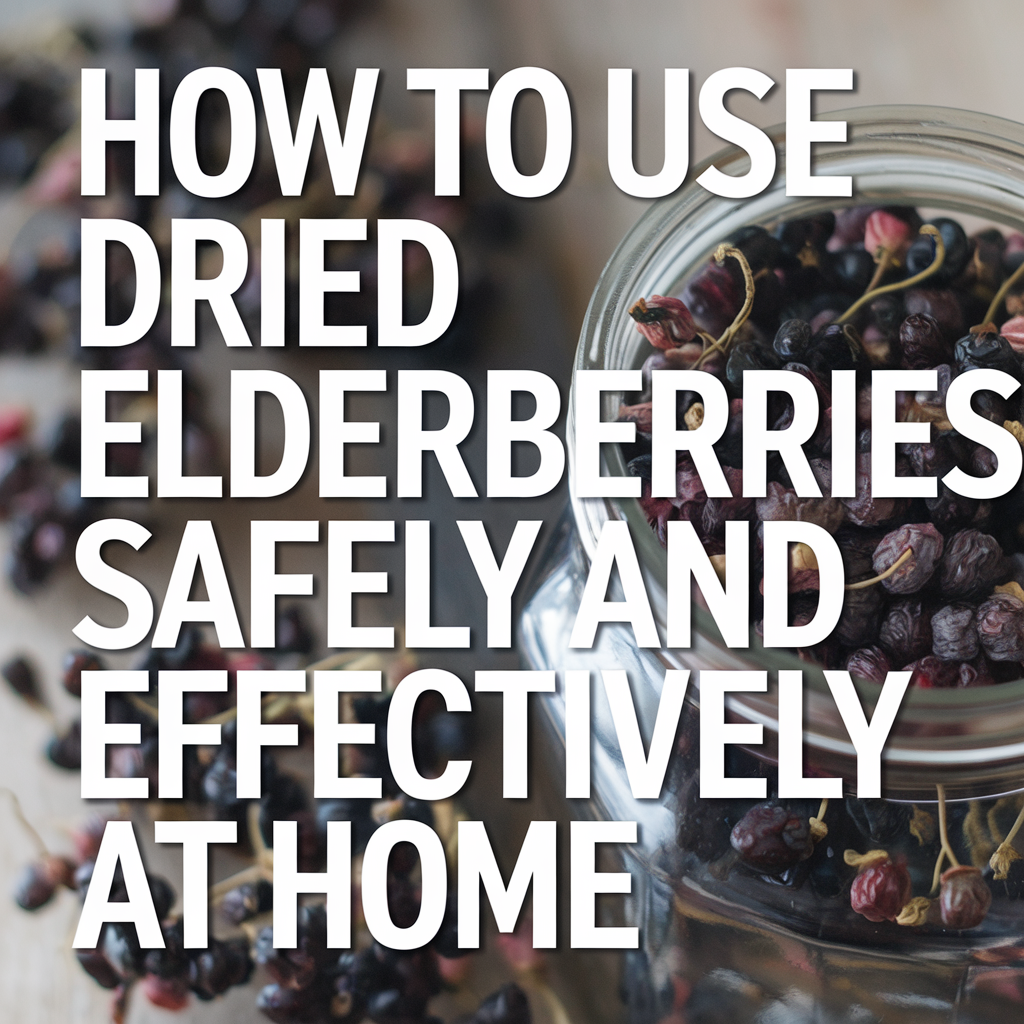
If this is your first bag and you’re wondering what else you can actually do with them, my guide to using dried elderberries safely at home goes beyond tea and covers some of the other practical ways to prepare them.

Step 1. Put the Elderberries and Water in a Saucepan
Add 1 tablespoon of dried elderberries and 2 cups of water to a small saucepan.
If I’m using cinnamon or fresh ginger, I’ll usually add it now so it can simmer along with the berries.
For example, you could add:
- A small cinnamon stick
- A few thin slices of fresh ginger
- A combination of cinnamon and ginger
You don’t need any of them.
Plain elderberry tea works perfectly well, and making it plain the first time gives you a much better idea of what elderberry itself actually tastes like.
Step 2. Bring the Elderberries to a Boil
Bring the water and elderberries to a boil.
Once the water reaches a boil, turn the heat down.
You want the tea simmering, not violently boiling until half of it ends up on your stove.
The water will gradually turn a deep reddish-purple as the dried elderberries soften and rehydrate.


Step 3. Simmer the Dried Elderberries
I simmer dried elderberries for approximately 15 to 20 minutes when making tea.
This isn’t a recipe where I simply turn off the burner as soon as the water boils.
Give the berries time to cook.
That’s particularly important with elderberries because drying them doesn’t mean they should automatically be eaten without further preparation.
Why I Simmer Dried Elderberries Instead of Just Steeping Them
This is probably the most important part of the entire recipe.
Dried elderberries may look like tiny raisins, but I don’t treat them like ordinary dried fruit.
Elderberries contain naturally occurring cyanogenic glycosides. Drying removes moisture, but dried elderberries should still be cooked before consumption.
That’s why my method brings the berries to a boil and then keeps them simmering.

If you want the fuller explanation before making your first cup, read Are Dried Elderberries Safe to Eat?.
The practical rule for this recipe is much easier to remember:
Boil them, simmer them, and strain them.
Don’t toss a spoonful of dried elderberries into lukewarm water and treat them like a cold-brew tea.


Step 4. Strain the Tea
After the berries have simmered for 15 to 20 minutes, remove the saucepan from the heat.
Pour the tea through a fine-mesh strainer into your mug.
You’ll be left with soft, cooked elderberries in the strainer.
I don’t leave the whole berries floating around in my finished tea.
Straining gives you a much cleaner drink, and the berries have already done what I needed them to do.
What Should You Do With the Used Elderberries?
I discard them.
I know there’s a temptation to look at the cooked berries and think:
There has to be something else I can make with these.
Technically, they’ve been cooked, but they’ve also just spent 15 to 20 minutes giving their flavor and color to your tea.
I’m not interested in saving a spoonful of soggy, spent elderberries for another recipe.
I also don’t reuse the same berries for another full-strength cup.
Dried elderberries aren’t so expensive that I need to squeeze three cups of weak tea out of one tablespoon.
Use fresh dried berries for the next batch.



Step 5. Add Honey, Lemon, or Other Flavors
Now comes the part you can customize.
Elderberry tea has an earthy, tart, dark-fruit flavor. It’s not naturally sweet like apple juice or a fruity herbal tea blend.
I actually think that’s part of what makes it good.
But if it’s too tart or earthy for you, a little honey changes the flavor considerably.
You can also try:
- Fresh lemon
- Cinnamon
- Fresh ginger
- Honey
- A combination of ginger, lemon, and honey
If you’re adding honey, I prefer letting the tea cool somewhat first rather than stirring honey into liquid that’s still furiously boiling.
Taste it before adding a bunch of sweetener.
You might find that you like elderberry tea much less sweet than elderberry syrup.
How to Make a Larger Batch of Dried Elderberry Tea
You definitely don’t have to make this one mug at a time.
If several people want tea or you want enough for later, scale up the recipe.
For a larger batch, try:
4 tablespoons dried elderberries + 8 cups water
Bring everything to a boil, reduce the heat, and simmer for approximately 15 to 20 minutes.
Then strain out the berries.
You can drink the tea warm immediately or allow the remaining tea to cool and refrigerate it in a clean, covered container.
I still prefer relatively small batches.
One of the advantages of dried elderberries is that the unused berries store much better than a giant container of prepared tea.

Elderberry Tea or Elderberry Syrup?
These two get lumped together because they start with the same fruit, but they’re pretty different in the kitchen.
Tea is lighter.
It’s something I can make one mug at a time with a tablespoon or two of dried berries and water.
Syrup is concentrated, reduced longer, and typically sweetened with considerably more honey.
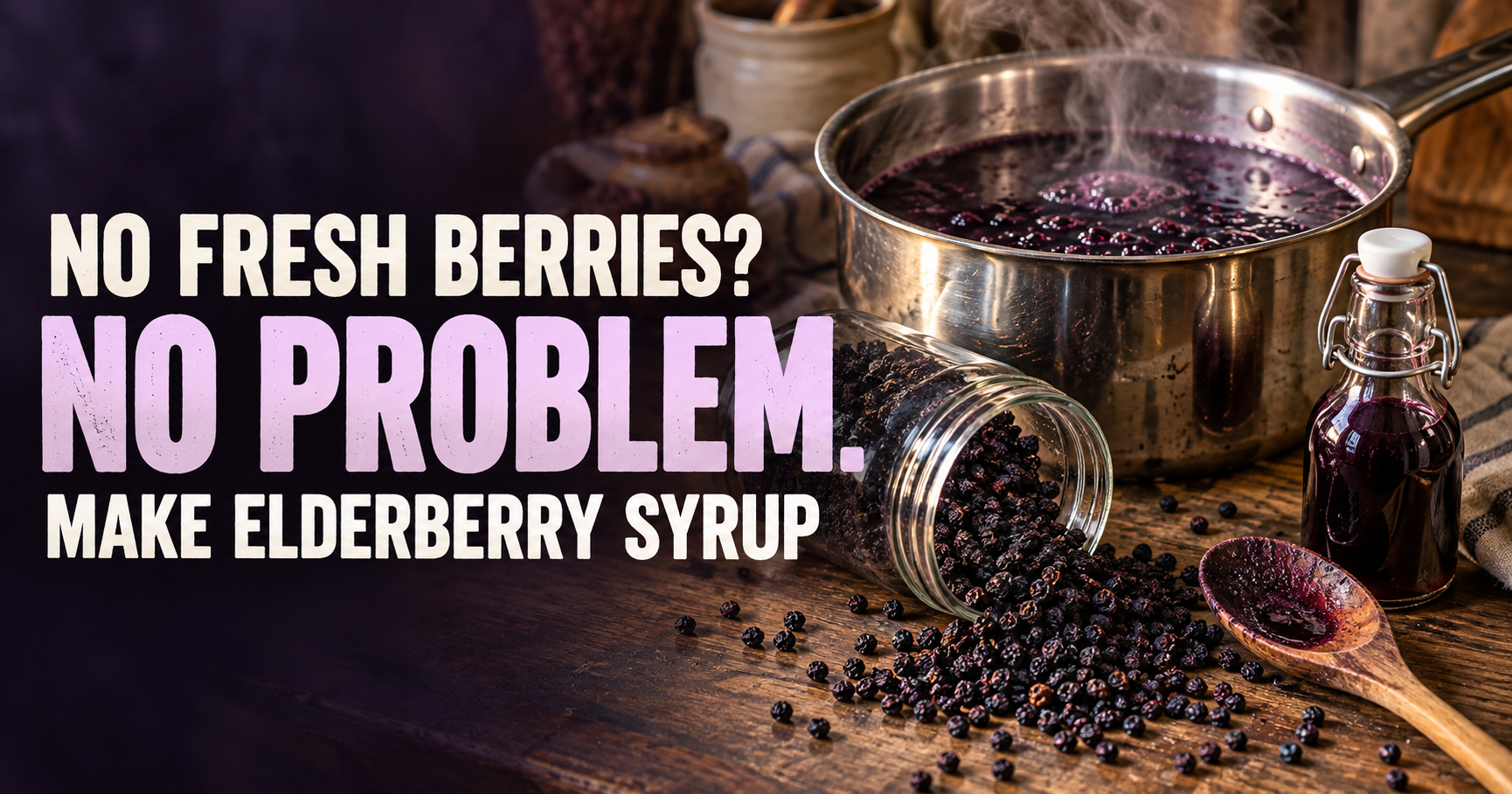
If you bought dried berries specifically because you want to make syrup, use my elderberry syrup recipe with dried elderberries instead. It gives you the exact berry-to-water ratio, simmering instructions, straining process, honey amount, and storage information for syrup.
For me, there’s room for both.
Tea when I want a hot drink.
Syrup when I specifically want syrup.
Trying to make one recipe serve both purposes just makes things unnecessarily confusing.
Can You Drink Elderberry Tea Cold?
Absolutely.
There’s nothing about this recipe that requires drinking the tea while it’s hot.
After I’ve simmered and strained the elderberries, I can let the tea cool and refrigerate it. Once chilled, it becomes more like a tart berry drink than a traditional hot tea.
You can serve it over ice and add lemon or a little honey if you want something sweeter.
Just remember that making it cold doesn’t mean skipping the cooking step.
I still prepare the elderberries exactly the same way first:
Bring them to a boil.
Simmer them for 15 to 20 minutes.
Strain them.
Then cool the finished tea.
I wouldn’t make “cold elderberry tea” by soaking uncooked dried elderberries in cold water overnight.
How Strong Should Elderberry Tea Be?
There’s quite a bit of room for personal preference here.
My starting point is 1 tablespoon of dried elderberries for 2 cups of water.
If that tastes too weak, use 2 tablespoons the next time.
You can also simmer the tea a little longer and allow more water to evaporate, although I wouldn’t keep cooking it endlessly just to make it stronger.
I prefer adjusting the amount of dried elderberries rather than dramatically changing the cooking process.
After a couple of batches, you’ll quickly figure out whether you like a lighter tea or something darker and more concentrated.
Can You Drink Elderberry Tea Every Day?
This is where I think it’s important not to turn a simple tea recipe into medical advice.
Elderberry tea is still an elderberry preparation, and whether someone should consume elderberry products regularly can depend on the person, medications, pregnancy or breastfeeding, health conditions, and other factors.
I’m not going to tell everyone reading this that they should drink a certain number of cups every day.

If you’re interested specifically in what elderberry tea may do rather than how to prepare it, I’ve covered that separately in my guide to the health benefits of elderberry tea.
For this recipe, my focus is simply preparing dried elderberries properly and making a good cup of tea.
If you plan to use elderberry regularly and have questions about whether it’s appropriate for you, that’s a conversation worth having with your healthcare professional.
Does Elderberry Tea Need to Be Refrigerated?
If I’m drinking the tea immediately, obviously there’s no reason to refrigerate it first.
If I’ve made a larger batch that I’m saving for later, it goes into the refrigerator once it has cooled.
I don’t leave a pot of homemade elderberry tea sitting on the counter all day and continue drinking from it.
Store leftover tea in a clean, covered container in the refrigerator.
I also prefer making smaller batches rather than trying to prepare enough elderberry tea for an entire week at once.
It’s so easy to make from dried berries that there’s really no advantage to keeping a huge pitcher around.
Can You Reheat Elderberry Tea?
Yes.
If you’ve refrigerated a batch and want another hot cup later, pour what you need into a small saucepan and warm it.
There’s no need to add another spoonful of dried elderberries.
The tea has already been prepared.
I also wouldn’t repeatedly heat and cool the entire batch every time you want a cup. Keep the main container refrigerated and reheat only the amount you’re going to drink.
Why Does My Elderberry Tea Taste Bitter?
A little tartness and earthiness are normal.
Extremely bitter tea can happen when you make the tea too concentrated, simmer it down too far, or load it with other strong ingredients.
This is another reason I recommend starting with the basic recipe.
One tablespoon of dried elderberries.
Two cups of water.
Then taste it.
If you immediately throw in elderberries, cloves, cinnamon, ginger, lemon peel, and half the spice cabinet, it’s difficult to figure out which ingredient you actually dislike.
If plain elderberry tea tastes stronger than you prefer, dilute it with a little additional hot water or add some honey.
Common Mistakes When Making Tea From Dried Elderberries
This is a simple recipe, but there are still a few ways to make it unnecessarily difficult.
Treating Dried Elderberries Like a Regular Tea Bag
This is the big one.
I don’t put dried elderberries into a tea infuser, pour hot water over them, wait five minutes, and drink it.
They go into a saucepan and get properly cooked.
Using Too Many Dried Elderberries
More isn’t automatically better.
Start with 1 tablespoon for 2 cups of water and adjust future batches based on your taste.
There’s no prize for making the darkest, strongest elderberry tea possible.
Boiling Away Most of Your Water
Some evaporation is expected.
That’s why this recipe starts with 2 cups of water for approximately one large mug.
But if you start with 2 cups and finish with a few tablespoons of extremely concentrated liquid, your heat was probably too high or you simmered it much too long.
Forgetting to Strain the Berries
I strain the cooked berries out before drinking the tea.
You’re making elderberry tea, not elderberry soup.
Reusing the Same Berries Over and Over
Once I’ve simmered a tablespoon of dried elderberries for 15 to 20 minutes, I discard them.
I’d rather use fresh dried berries for the next cup than keep extracting increasingly weak tea from already-spent fruit.
Assuming Dried Means Ready to Eat
This is worth repeating because dried elderberries look deceptively similar to other dried fruits.
I don’t snack on them while I’m measuring my tea.
They get cooked first.
Can You Make Tea From Dried Elderberries?
Yes, and it’s one of the easiest ways to use dried elderberries at home.
You don’t need a special tea blend.
You don’t need fresh elderberries.
And you don’t need complicated equipment.
For my basic version, all you really need is:
1 tablespoon dried elderberries + 2 cups water.
Bring the mixture to a boil, lower the heat, simmer for 15 to 20 minutes, and strain.
After that, you can drink it plain or add whatever flavors you prefer.
How Long Should You Simmer Dried Elderberries for Tea?
I use 15 to 20 minutes as my normal simmering time.
That’s different from the longer reduction I use when making elderberry syrup.
Tea doesn’t need to become thick or heavily concentrated.
You’re trying to properly cook the dried berries while extracting their flavor into the water.
Keep the heat low enough for a steady simmer instead of a hard rolling boil.
How Much Dried Elderberry Do You Need for One Cup of Tea?
Because some water evaporates during simmering, I don’t start with exactly one cup of water if I want a decent-sized mug.
My normal starting measurement is:
1 tablespoon dried elderberries + 2 cups water.
After simmering and straining, you’ll have less liquid than you started with.
For stronger tea, increase the berries to 2 tablespoons rather than drastically reducing the starting water.
Do You Have to Crush Dried Elderberries for Tea?
No.
I use the dried berries whole.
They soften and rehydrate while they’re simmering, so I haven’t found crushing or grinding them necessary for this recipe.
It also makes straining much easier.
Whole cooked berries stay in a fine-mesh strainer instead of leaving you with a bunch of tiny elderberry particles floating through your mug.
Can You Add Other Tea to Elderberry Tea?
Sure.
Once you understand the basic recipe, there’s plenty of room to experiment.
The easiest method is to cook the elderberries first and then use the hot strained elderberry liquid with another tea you enjoy.
That keeps the elderberry cooking process straightforward while giving you more control over how long the other tea steeps.
Black tea, green tea, and different herbal teas all have their own ideal preparation times, so I don’t necessarily want every ingredient boiling in the saucepan for 20 minutes just because the elderberries need to simmer.
Tea and Syrup Start With the Same Berry but Aren’t the Same Recipe
This is probably the easiest mistake to make when looking through elderberry recipes online.
Both preparations can start with dried elderberries and water, but the goal is different.
For tea, I want a drinkable infusion that I can pour into a mug.
For syrup, I want a more concentrated elderberry liquid that’s reduced and combined with a substantial amount of honey or another sweetener.
That’s why I keep separate recipes for the two rather than pretending they’re interchangeable.
Dried elderberries make both incredibly convenient.
You just need to decide what you’re actually trying to make before putting the saucepan on the stove.
My Basic Recipe Is the One I’d Start With
If you’ve never made elderberry tea from dried elderberries before, don’t overthink your first mug.
Start with:
1 tablespoon dried elderberries
2 cups water
Simmer for 15 to 20 minutes and strain.
Taste it plain.
Then decide whether you want honey, lemon, ginger, cinnamon, another tea, or a stronger elderberry flavor next time.
Once you’ve made it once, you’ll realize there’s really not much to it.
The most important distinction is simply knowing that dried elderberries aren’t a five-minute steep-and-drink ingredient.
Cook them properly, strain them out, and then make the finished tea taste the way you like it.
That’s the routine I stick with, and it makes keeping dried elderberries around the pantry genuinely useful instead of letting another bag of dried fruit sit forgotten in the back of a cabinet.
About the Author
Avery Collins is a backyard fruit grower and gardening writer who enjoys finding practical ways to grow, preserve, and use elderberries at home. Through Elderberry Pro, Avery shares straightforward elderberry recipes and growing guides without making a simple berry more complicated than it needs to be.