

Walking outside and finding your elderberry bush drooping can be discouraging.
One day it looks perfectly healthy.
The next day the leaves are limp, branches are hanging lower than normal, and the entire plant suddenly looks like it’s dying.
The good news is that wilting doesn’t always mean your elderberry is beyond saving.
I’ve learned that wilting is really a symptom, not a diagnosis.
It tells you something is wrong, but you’ll need to identify why it’s happening before deciding what to do next.
In this guide, I’ll walk through the most common reasons I’ve found for elderberry bushes to wilt, how to tell them apart, and what steps give the plant the best chance of recovering.
Start By Looking At The Entire Bush
Before grabbing the hose or fertilizer, spend a few minutes studying the plant.
Ask yourself a few simple questions.
- Is the entire bush wilting or only one branch?
- Are the leaves still green or are they turning yellow?
- Has the weather been unusually hot?
- Is the soil dry or soaking wet?
- Was the bush recently planted or transplanted?
Those answers often narrow the problem down surprisingly quickly.
I’ve found it’s much easier to solve the right problem than to throw random treatments at a plant and hope something works.


1. The Bush Simply Needs More Water
This is probably the most common cause of wilting, especially during hot summer weather.
Even though elderberries enjoy moist soil, they can lose water faster than their roots can replace it during long periods of heat, wind, or drought.
The first signs are usually drooping leaves that remain green.
If caught early, the bush often recovers within a day after receiving a deep watering.
The key is watering the root zone thoroughly instead of giving the plant a quick sprinkle every evening.
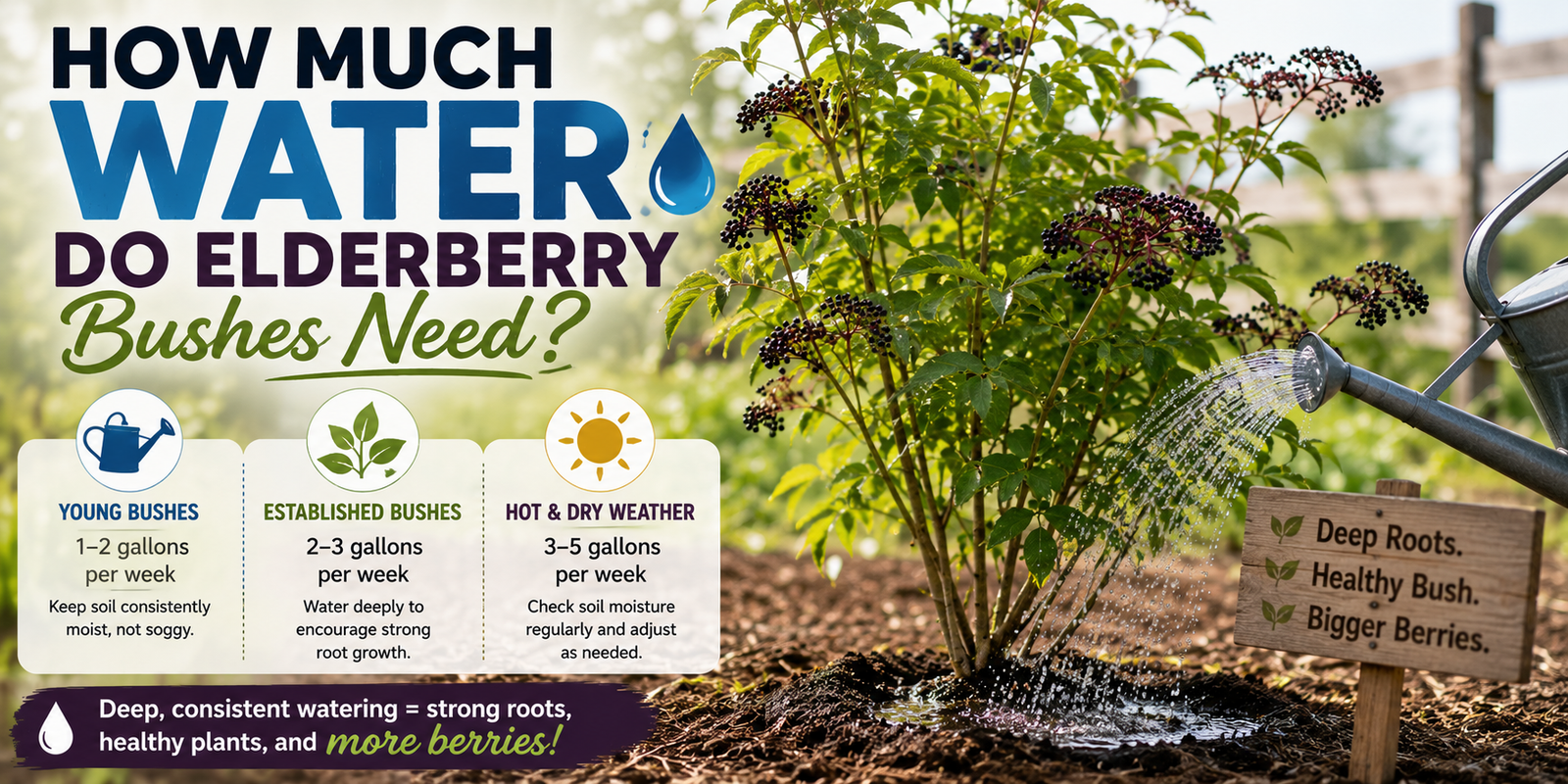
If you’re unsure how much water an elderberry actually needs throughout the growing season, How Much Water Do Elderberry Bushes Need? explains the watering routine that’s consistently worked best for me.



2. Too Much Water Can Look Surprisingly Similar
One mistake I made early on was assuming every wilted plant needed more water.
Sometimes the exact opposite is true.
When soil stays saturated for long periods, roots can’t access enough oxygen.
Instead of supplying water to the rest of the plant, stressed roots begin shutting down.
The leaves wilt even though the soil feels wet.
That’s why I always check the soil before reaching for the garden hose.
Wet soil combined with wilting usually points toward a drainage problem instead of drought.
Container-grown elderberries are especially vulnerable if the pot doesn’t drain well.
3. Transplant Shock
It’s very common for newly planted elderberries to wilt for a short time.
The plant is trying to establish new roots while simultaneously supporting leaves, stems, and sometimes flowers.
That temporary imbalance often results in drooping foliage.
Fortunately, transplant shock usually improves as the root system expands.
Keeping the soil evenly moist and avoiding unnecessary stress gives young bushes the best chance to settle into their new location.


4. Too Much Shade Can Weaken The Entire Plant
Shade usually doesn’t cause an elderberry bush to wilt overnight.
Instead, it gradually weakens the plant over time.
Bushes growing with limited sunlight often produce fewer leaves, smaller canes, and weaker root systems. That means they’re much less capable of handling hot weather, dry conditions, or other stresses that healthier plants tolerate without much trouble.
If your elderberry spends most of the day in heavy shade, moving it may not be practical. However, trimming nearby vegetation or choosing a sunnier location for future plantings can make a noticeable difference.

If you’re wondering how much sunlight elderberries actually need, Can Elderberries Grow in Shade? Here’s What I Learned explains what I’ve observed after growing them in different conditions.
5. Root Problems Can Prevent Water From Reaching The Leaves
Healthy roots are responsible for supplying every part of the bush with water.
If those roots become damaged, stressed, or diseased, the leaves may begin wilting even when plenty of moisture is available in the soil.
Root problems can develop for several reasons, including poor drainage, compacted soil, repeated overwatering, or physical damage during planting.
Unfortunately, you usually can’t see root problems without digging.
Instead, I look for clues above ground.
A bush that wilts repeatedly despite proper watering often deserves a closer look below the soil surface.



6. Nutrient Deficiencies Can Contribute To Weak Growth
Fertilizer isn’t usually the first thing I blame when an elderberry wilts.
However, bushes growing in nutrient-poor soil sometimes become weak enough that they’re less able to handle heat and drought.
Healthy plants are naturally more resilient.
Strong root systems, vigorous canes, and dark green leaves help elderberries recover from stressful conditions much more quickly than bushes already struggling from poor nutrition.
That’s why I prefer maintaining healthy growth throughout the year instead of waiting until the plant begins showing obvious problems.
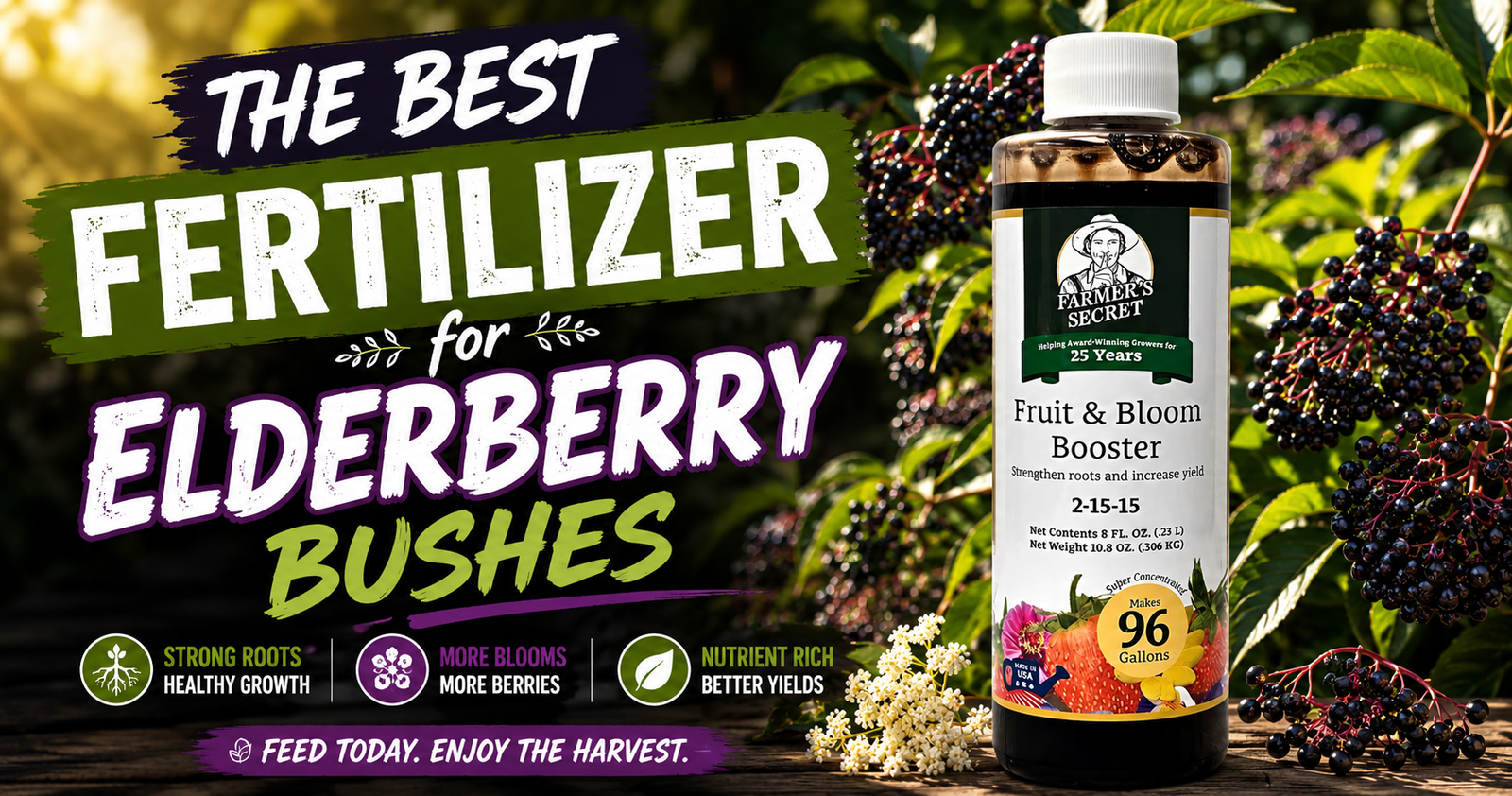
If you’re trying to improve overall plant health, Best Fertilizer for Elderberry Bushes That Actually Works explains the fertilizer I’ve had the best results with and how I use it.
7. Diseases And Stem Damage
Although they’re generally hardy shrubs, elderberries aren’t completely immune to disease or insect damage.
Sometimes a single branch suddenly wilts while the rest of the bush looks perfectly healthy.
When I see that pattern, I begin inspecting the stems much more closely.
Cracks, cankers, boring insects, or other physical damage can interrupt the flow of water through that branch, causing it to wilt even though the root system remains healthy.
Removing damaged wood and keeping the bush vigorous often prevents small problems from becoming much larger ones.


8. Heat Stress During Summer
Even healthy elderberries can temporarily wilt during extremely hot afternoons.
I’ve seen bushes droop noticeably during the hottest part of the day, only to look perfectly normal again by evening.
That’s because the leaves are losing moisture faster than the roots can replace it.
Temporary afternoon wilting isn’t always a reason to panic.
If the bush recovers overnight and the soil remains adequately moist, it may simply be responding to unusually high temperatures.
Extended wilting that continues into the following morning deserves a closer look.
Should You Water Immediately?
Not always.
Whenever I notice wilting, I resist the urge to grab the hose first.
Instead, I check the soil.
If it’s dry several inches below the surface, watering is probably the right move.
If it’s already saturated, adding even more water may actually make the problem worse.
That simple habit has saved me from creating additional stress for my elderberries more than once.

Can A Wilting Elderberry Bush Recover?
In many cases, yes.
I’ve seen elderberries bounce back from drought, transplant shock, temporary heat stress, and even fairly significant pruning mistakes.
The key is identifying the underlying problem before the bush becomes severely weakened.
The sooner you correct the issue, the better the odds of a full recovery.
I’ve learned not to judge an elderberry too quickly.
A bush that looks terrible today may be producing vigorous new growth a few weeks later once the growing conditions improve.
Patience and careful observation usually accomplish much more than rushing to apply multiple treatments at once.
How To Tell If Your Elderberry Is Dying Or Just Stressed
There’s a big difference between a stressed plant and a dead one.
A stressed elderberry often has:
- Green stems beneath the bark.
- Flexible branches.
- Healthy buds.
- New shoots beginning to develop.
- Only partial wilting.
A dead or dying bush is more likely to have brittle branches, dry stems that snap easily, and little or no green tissue beneath the bark.
When I’m unsure, I perform a simple scratch test by gently scraping a tiny section of bark with my fingernail.
If I find green tissue underneath, there’s usually still reason to be optimistic.
How To Prevent Wilting In The Future
I’ve found that prevention is much easier than recovery.
Over the years I’ve settled into a simple routine that keeps my elderberries growing vigorously while reducing many of the problems that lead to wilting.
That routine includes:
- Planting in full sun whenever possible.
- Watering deeply during dry periods instead of lightly every day.
- Using well-drained soil.
- Applying fertilizer as needed throughout the growing season.
- Pruning every year to encourage healthy new growth.
- Watching for early signs of stress before they become major problems.
None of those practices are complicated by themselves.
Together, though, they’ve made a noticeable difference in the health of my elderberry bushes.
Don’t Ignore Other Warning Signs
Wilting is rarely the only clue an elderberry gives you.
Pay attention to everything the plant is telling you.
Yellow leaves.
Premature fruit drop.
Poor flowering.
Slow growth.
Dead branch tips.
Each symptom provides another piece of the puzzle.
The more clues you gather before making changes, the more likely you are to solve the real problem instead of treating the wrong one.
Continue Troubleshooting Your Elderberries
A wilting elderberry bush can certainly be alarming, but it’s often the plant’s way of telling you something in its growing environment needs attention rather than signaling that it’s beyond saving.
If you’re noticing additional symptoms, Why Are My Elderberry Leaves Turning Yellow? can help you narrow down possible causes. You’ll also find The Ultimate Guide to Growing Elderberries Successfully useful if you’d like a complete overview of proper elderberry care, and Can You Grow Elderberries in Pots? The Complete Container Growing Guide if your struggling plant is growing in a container.
I’ve learned that elderberries are remarkably resilient shrubs.
Given the right growing conditions and a little patience, many wilted bushes recover surprisingly well and continue producing healthy growth and berry harvests for years to come.
About the Author
Avery Collins
Avery Collins is a backyard fruit grower and gardening writer who enjoys helping home gardeners solve real-world elderberry problems through practical, experience-based advice. Through Elderberry Pro, Avery shares growing guides, troubleshooting tips, and propagation techniques to help readers grow healthier, more productive elderberry bushes.