

If you’ve ever taken elderberry syrup yourself, there’s a good chance you’ve wondered whether it’s safe for your dog too.
After all, elderberry syrup has become one of the most popular herbal products in America. Many families keep a bottle in their refrigerator year-round, especially during cold and flu season. When something becomes part of your daily routine, it’s only natural to ask whether your furry family members can benefit from it as well.
As someone who has spent years researching elderberries, growing elderberry plants, and making homemade elderberry products, I’ve learned that pet safety is one area where a lot of confusing information exists online.
Some sources claim elderberry syrup is completely safe for dogs.
Others make it sound incredibly dangerous.
The truth is much more nuanced.
In this guide, I’ll explain what pet owners should know about elderberry syrup, when it may be a concern, and why the ingredients matter just as much as the elderberries themselves.
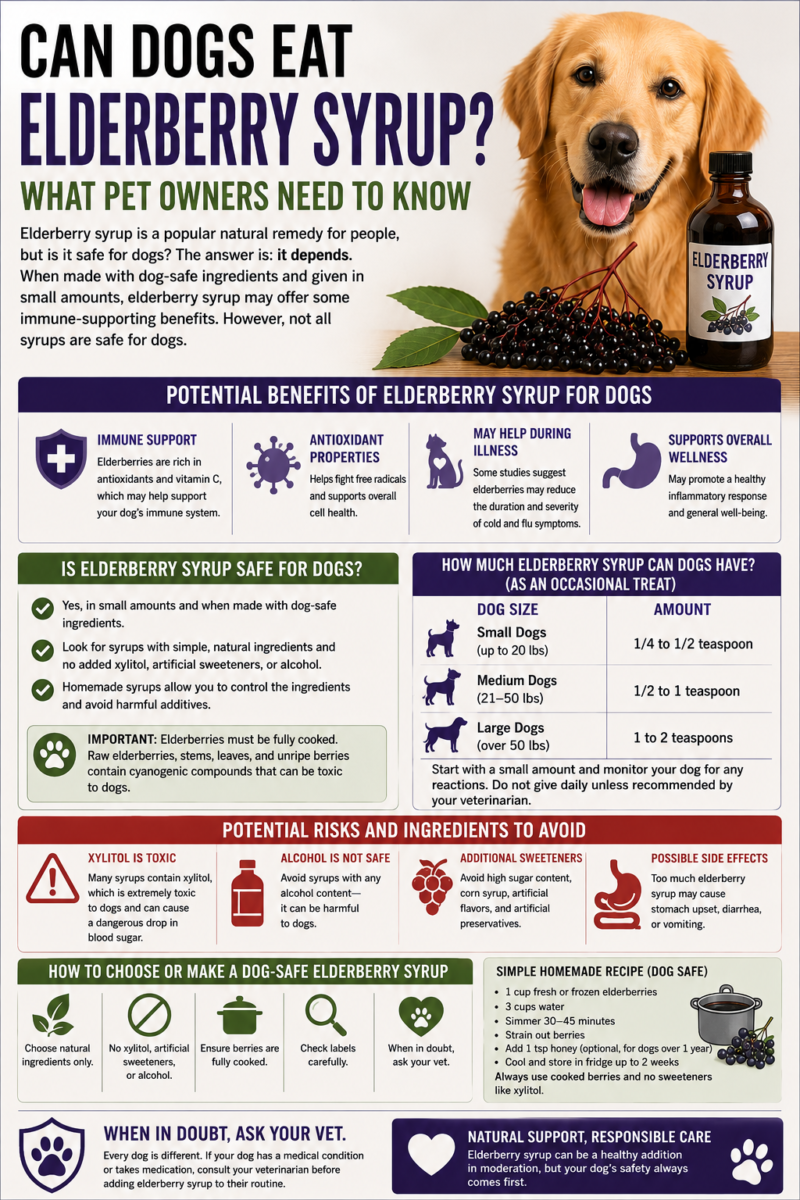
Understanding What Elderberry Syrup Actually Contains
Before we can determine whether elderberry syrup is safe for dogs, it’s important to understand what’s actually in the bottle.
Traditional elderberry syrup is usually made from:
- Cooked elderberries
- Water
- Honey
- Ginger
- Cinnamon
- Cloves
Some commercial products may also contain:
- Preservatives
- Natural flavorings
- Sweeteners
- Vitamin C
- Zinc
- Other herbal ingredients
Because formulas vary so widely, there is no single answer that applies to every elderberry syrup on the market.

If you’re new to elderberries, I recommend reading what elderberry is and why everyone is talking about it first. Understanding the plant itself makes it much easier to understand why certain products may be safer than others.


Why Raw Elderberries Are Different From Elderberry Syrup
One of the biggest misconceptions I encounter is people assuming elderberry syrup is the same thing as raw elderberries.
It isn’t.
Raw elderberries contain naturally occurring compounds called cyanogenic glycosides. The guide to raw elderberry preparation also explains why raw elderberries require careful preparation.
These compounds are found in:
- Raw berries
- Leaves
- Stems
- Bark
- Roots
- Unripe berries

This is why I always encourage people to read why you should never eat elderberries until you read this before harvesting or consuming elderberries.
The cooking process used to create syrup helps reduce many of these compounds.
That is one of the primary reasons elderberry syrup is generally considered much safer than eating raw berries directly from the plant.

If your dog ate raw berries directly from a bush rather than elderberry syrup, the situation can be very different. Be sure to read What Happens If My Dog Eats Raw Elderberries? to understand the specific risks associated with fresh berries and plant material.



Can Dogs Safely Eat Elderberry Syrup?
In small accidental amounts, many dogs may experience no problems after consuming properly prepared elderberry syrup.
However, that does not automatically mean dog owners should intentionally give elderberry syrup to their pets.
There are several reasons for this.
First, dogs process foods differently than humans.
Second, many syrups contain ingredients that may not be ideal for dogs.
Third, there is limited research specifically evaluating elderberry syrup as a dietary supplement for dogs.
While some pet owners report giving small amounts of elderberry syrup to their dogs, there is currently no widespread veterinary recommendation supporting routine use.
The Real Concern May Not Be The Elderberries
Ironically, the elderberries themselves are often not the biggest concern.
Instead, veterinarians tend to worry more about additional ingredients.
Some elderberry syrups contain:
- High amounts of sugar
- Artificial sweeteners
- Flavoring agents
- Preservatives
- Added supplements
Certain sweeteners can be especially dangerous to dogs.
That is why reading ingredient labels carefully is critical.
Whenever I evaluate any elderberry product, I always look beyond the elderberry itself and focus on the entire ingredient list.
Homemade Elderberry Syrup And Dogs
Many readers make their own elderberry syrup at home.

If that’s you, check out how to make elderberry syrup from fresh elderberries if you haven’t already.
Homemade syrup typically contains fewer mystery ingredients than commercial products.
However, homemade does not automatically mean dog-safe.
Common homemade ingredients include:
- Honey
- Ginger
- Cinnamon
- Cloves
While these ingredients are generally less concerning than artificial additives, every dog reacts differently.
Factors such as age, weight, health conditions, and existing medications can all influence how a dog responds.
What If My Dog Accidentally Licks Elderberry Syrup?
This is probably one of the most common situations.
A spoon gets left on the counter.
A bottle drips onto the floor.
Your dog finds a sticky spot while you’re cleaning up.
In many cases, a tiny lick of properly prepared elderberry syrup is unlikely to create a major emergency.
However, it’s always wise to monitor for symptoms such as:
- Vomiting
- Diarrhea
- Excessive drooling
- Loss of appetite
- Lethargy
- Behavioral changes
If symptoms develop, contacting your veterinarian is always the safest option.



Can Puppies Have Elderberry Syrup?
Puppies deserve extra caution.
Their smaller size means even tiny amounts of certain ingredients can have a greater impact.
Because puppies are still developing, I generally recommend avoiding unnecessary supplements unless specifically recommended by a veterinarian.
Puppies also tend to investigate everything with their mouths, making them more likely to consume leaves, stems, or other parts of the elderberry plant if one is growing nearby.
Elderberry Syrup Versus Cooked Elderberries
Many people assume these are identical.
They’re actually quite different.
Cooked elderberries are simply the fruit after being heated.
Elderberry syrup is a finished product containing multiple ingredients.

If you’d like to learn more about the berry itself, read can dogs eat cooked elderberries? what every dog owner should know.
Understanding this distinction helps explain why one product may present different risks than another.



Signs Your Dog May Be Having A Reaction
Although serious reactions appear uncommon, it’s important to know what symptoms may indicate a problem.
Potential warning signs include:
- Nausea
- Vomiting
- Diarrhea
- Weakness
- Fatigue
- Tremors
- Loss of appetite
- Unusual behavior
Symptoms can vary significantly depending on the dog and what ingredients were consumed.
What About Commercial Elderberry Syrups?
Commercial products vary tremendously.
Some products contain only a handful of ingredients.
Others contain long ingredient lists with vitamins, minerals, flavorings, sweeteners, and preservatives.

If you’re already using elderberry products yourself, you may also enjoy reading the best elderberry supplements and what actually works.
Many of the same factors that matter for humans also matter when evaluating potential safety around pets.
Growing Elderberries Around Dogs
Many people who discover elderberry syrup eventually decide to grow their own elderberry bushes.

If you’re considering that route, my guide on how to grow elderberries at home and what nobody tells you before you plant covers everything from planting to harvesting.
When dogs are involved, make sure they cannot regularly chew on:
- Leaves
- Branches
- Bark
- Roots
- Green berries
These plant parts create far more concern than properly prepared syrup.
Why Some Pet Owners Still Choose To Use Elderberry
Some dog owners are interested in elderberry because of its reputation among humans.
They see people using elderberry products regularly and wonder whether the same benefits apply to pets.
While anecdotal reports exist, there is currently far less evidence available for dogs than for humans.
That lack of research is one reason many veterinarians remain cautious.
Questions To Ask Before Calling Your Vet
If your dog consumes elderberry syrup, try gathering the following information:
- How much was consumed?
- Was it homemade or commercial?
- What ingredients are listed?
- How large is your dog?
- Is your dog showing symptoms?
- When did consumption occur?
Having these details ready can help your veterinarian evaluate the situation more efficiently.
What I Tell Friends And Family
Whenever friends ask me whether dogs can have elderberry syrup, I give a fairly simple answer.
A small accidental lick of properly prepared elderberry syrup is often very different from intentionally feeding it to a dog.
The bigger concerns are usually ingredient-related rather than the cooked elderberries themselves.
Because every formula is different and every dog is different, caution is always the safest approach.
What I Want Pet Owners To Remember
The most important thing to understand is that elderberry syrup is not the same as raw elderberries.
Properly prepared syrup is generally considered much safer because the berries have been cooked. However, many syrups contain additional ingredients that may not be ideal for dogs.
If your dog accidentally consumes a small amount, serious problems may be unlikely, but monitoring for symptoms is still wise.
When uncertainty exists, your veterinarian should always be your first source of guidance.
Author
Sarah Whitmore
Sarah Whitmore is an herbal enthusiast, backyard grower, and researcher who has spent years studying elderberries and traditional plant-based remedies. She enjoys growing elderberry plants, making homemade elderberry products, and helping readers understand the science, history, benefits, and safety considerations surrounding one of nature’s most fascinating berries.