

As someone who grows elderberries, makes elderberry syrup, and spends a lot of time researching this plant, I’ve been asked this question more times than I can count.
Can dogs eat cooked elderberries?
The answer is not as simple as many websites make it sound.
You’ll find some people claiming elderberries are perfectly safe for dogs, while others insist they are highly toxic and should never be anywhere near a pet. The truth falls somewhere in the middle.
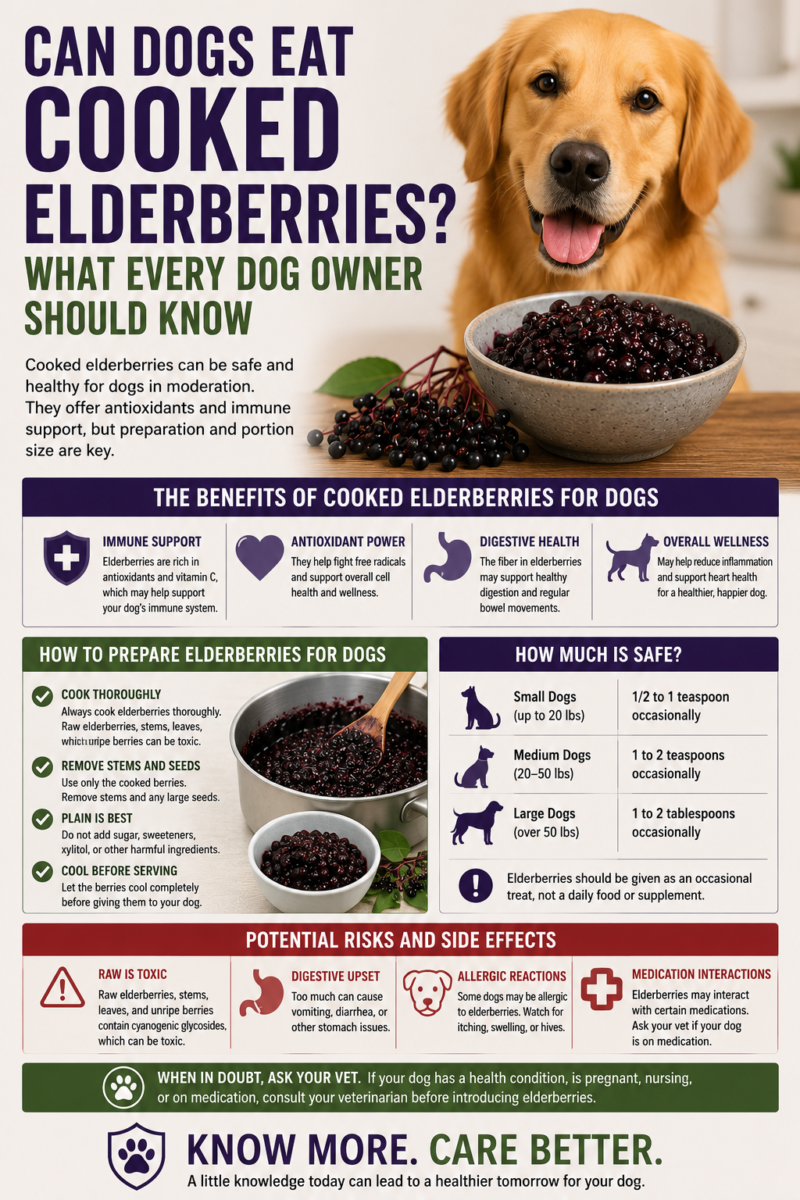
Properly cooked elderberries are generally considered much safer than raw elderberries because cooking helps reduce compounds that can cause toxicity concerns. However, that does not automatically mean elderberries should become a regular treat for your dog. The human food-safety explanation in One Handful of These Berries Can Send You to the Hospital — Here’s Why details the compounds involved and why cooking matters.
Understanding the difference between raw elderberries, cooked elderberries, elderberry syrup, elderberry gummies, and the elderberry plant itself is incredibly important.
If you’re still learning about elderberries in general, I recommend reading what elderberry is and why everyone is talking about it first. It provides a solid foundation for understanding how this plant is used and why it has become so popular.
Why People Even Ask About Dogs And Elderberries
The popularity of elderberry products has exploded over the past decade.
Today you can find:
- Elderberry syrup
- Elderberry gummies
- Elderberry capsules
- Elderberry tea
- Elderberry lozenges
- Elderberry powders
- Elderberry extracts
Many families keep elderberry products in their kitchen year-round.
When dog owners see themselves consuming elderberry syrup every day, it’s only natural to wonder whether their pets can benefit too.
Unfortunately, dogs process foods differently than humans. Something that is perfectly safe for a person may cause digestive issues or toxicity concerns in a dog.
That is why it’s always important to research pet safety separately from human safety.

Many dog owners become concerned after their pet gets into elderberries before they’ve been cooked. If that’s what happened to your dog, I recommend reading What Happens If My Dog Eats Raw Elderberries? where I cover the symptoms to watch for, when to call a veterinarian, and what steps to take next.



The Biggest Problem With Elderberries
The biggest misunderstanding surrounding elderberries is that people often assume every part of the plant is edible.
That simply isn’t true.
Various parts of the elderberry plant contain naturally occurring compounds known as cyanogenic glycosides.
These compounds are found in:
- Leaves
- Stems
- Bark
- Roots
- Unripe berries
These substances can break down into cyanide-like compounds during digestion.

This is one reason I’ve written extensively about elderberry safety over the years. If you haven’t read it yet, make sure to check out why you should never eat elderberries until you read this because it explains many of the common mistakes people make when harvesting or consuming elderberries.
The same concerns that apply to humans can also apply to dogs.

What Cooking Actually Does To Elderberries
Cooking changes everything.
When elderberries are properly heated, many of the problematic compounds are significantly reduced.
That is why traditional elderberry recipes almost always involve cooking.
Examples include:
- Elderberry syrup
- Elderberry jelly
- Elderberry wine
- Elderberry tea
- Elderberry gummies
This cooking process is one of the reasons elderberries have been used for centuries.

If you’ve ever made your own syrup using my guide on how to make elderberry syrup from fresh elderberries, you already know the berries are simmered thoroughly before being consumed.
That cooking process helps make the final product much safer than eating berries directly off the bush.
Are Cooked Elderberries Completely Safe For Dogs?
This is where things become less clear.
There is very little scientific research specifically examining cooked elderberries as a food source for dogs.

It’s also important to remember that berries aren’t the only concern. Leaves, stems, bark, and roots can create risks too. I explain those differences in Are Elderberry Plants Toxic To Dogs? What Owners Should Know.
Most veterinary concerns focus on raw elderberries and other parts of the plant.
While many experts agree that properly cooked elderberries appear to present far less risk than raw berries, there is still no major recommendation suggesting dog owners should actively feed elderberries to their pets.
In other words:
Safer does not necessarily mean recommended.



What If My Dog Accidentally Eats Cooked Elderberries?
This situation is actually pretty common.
Maybe your dog grabbed a spoonful of elderberry jam from the table.
Maybe they licked some homemade syrup off the floor.
Maybe they stole a muffin containing cooked elderberries.
In many cases, a small amount of properly cooked elderberries may not cause significant issues.
However, every dog is different.
Factors that matter include:
- Body weight
- Age
- Overall health
- Quantity consumed
- Other ingredients present
Even foods that are generally considered safe can cause digestive upset in some dogs.
Can Dogs Eat Elderberry Syrup?
This is probably the most common question I receive.
The answer depends largely on what else is in the syrup.
Many homemade elderberry syrups contain ingredients such as:
- Honey
- Ginger
- Cinnamon
- Cloves
- Lemon
Some commercial syrups may contain additional preservatives or sweeteners.
The sweeteners are where dog owners need to be especially careful.
Certain artificial sweeteners can be extremely dangerous for dogs.
That is why you should always read ingredient labels carefully.

You can learn more about common elderberry products in this guide to the best elderberry supplements.
Can Dogs Eat Elderberry Gummies?
Personally, I would avoid giving elderberry gummies to dogs.
The elderberry itself is not necessarily the main concern.
Instead, gummies often contain:
- Added sugar
- Artificial flavors
- Food dyes
- Preservatives
- Sugar substitutes
Many of these ingredients provide no benefit to dogs and can sometimes cause digestive issues.

If you’re curious about gummy products for people, you can also check out the best elderberry gummies for adults.
Symptoms To Watch For After Elderberry Exposure
If your dog consumes raw elderberries or other parts of the plant, symptoms may include:
- Vomiting
- Diarrhea
- Drooling
- Weakness
- Lethargy
- Loss of appetite
- Abdominal discomfort
In more serious situations, symptoms could become more severe.
Whenever symptoms appear after eating part of an elderberry plant, contacting your veterinarian is the safest choice.
Are Elderberry Bushes Safe Around Dogs?
Many readers grow elderberries in their own backyards.

If you’re considering planting some yourself after reading how to grow elderberries at home and what nobody tells you before you plant, you’ll want to take your pets into consideration.
Dogs should be discouraged from chewing on:
- Leaves
- Branches
- Bark
- Roots
- Green berries
While most dogs won’t actively seek out these plant parts, curious puppies may be more likely to investigate.
American Elderberry Versus European Elderberry
One question that occasionally comes up is whether American elderberries are safer than European elderberries for dogs.
Generally speaking, both varieties contain similar compounds that make raw plant parts problematic.
If you’re interested in the differences between the two plants, check out American elderberry versus European elderberry for a detailed comparison.


What Veterinarians Usually Recommend
Most veterinarians take a fairly straightforward approach.
If a dog consumes:
- Raw elderberries
- Leaves
- Stems
- Bark
- Roots
They recommend monitoring closely and contacting a veterinarian if symptoms develop.
If a dog consumes a very small amount of properly cooked elderberries, concern is generally lower, but monitoring is still wise.
Every situation is unique.
My Personal Approach
I’ve grown elderberries for years.
I’ve made syrup, jelly, tea, wine, and countless elderberry recipes.
Even so, I do not intentionally feed elderberries to my dogs.
Not because I think cooked elderberries are especially dangerous, but because there simply isn’t enough evidence showing they offer meaningful benefits for dogs.
There are plenty of treats specifically designed for canine nutrition.
For me, it’s easier to enjoy elderberries myself while letting my dogs stick to foods that are known to be safe for them.
The Bottom Line
Properly cooked elderberries are generally considered much safer than raw elderberries because cooking reduces many of the compounds responsible for toxicity concerns.
However, dogs should never be allowed to consume elderberry leaves, stems, bark, roots, or unripe berries.
If your dog accidentally eats a small amount of cooked elderberries, serious problems may be unlikely, but monitoring for symptoms is always a good idea.
When in doubt, your veterinarian is the best source of guidance for your specific pet.
Author
Dax Weaver

Dax Weaver is the founder of Elderberry Pro and has spent years researching elderberries, growing elderberry plants, making elderberry products, and studying their history, uses, and safety. Through Elderberry Pro, he helps readers make informed decisions about elderberries through practical experience and in-depth research. Daxon Weaver owns Weaver Family Farms Puppies as well as Weaver Family Farms Nursery.