
The first time I propagated an elderberry cutting, I almost reached for a glass of water.
It just seemed easier.
After all, that’s how I’d rooted pothos, mint, basil, and several houseplants over the years.
Why wouldn’t elderberries work the same way?
The answer is…
They usually do.
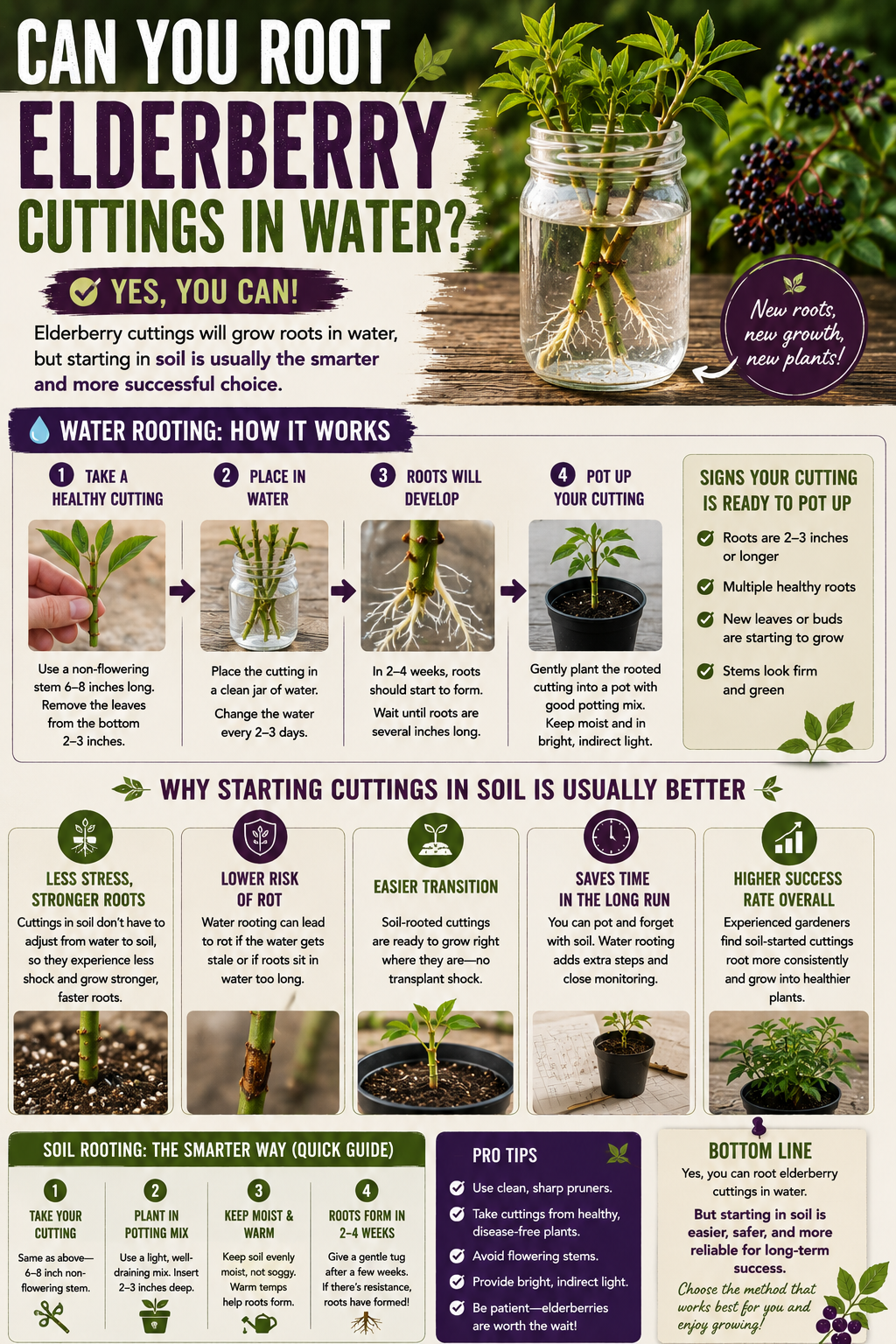
Elderberry cuttings can absolutely produce roots while sitting in water.
The bigger question isn’t whether they’ll root.
It’s whether that’s the best way to grow a healthy bush.
After trying both methods and researching how commercial growers propagate elderberries, I’ve found myself coming back to soil almost every time.
Here’s why.
Yes, Elderberry Cuttings Can Root In Water
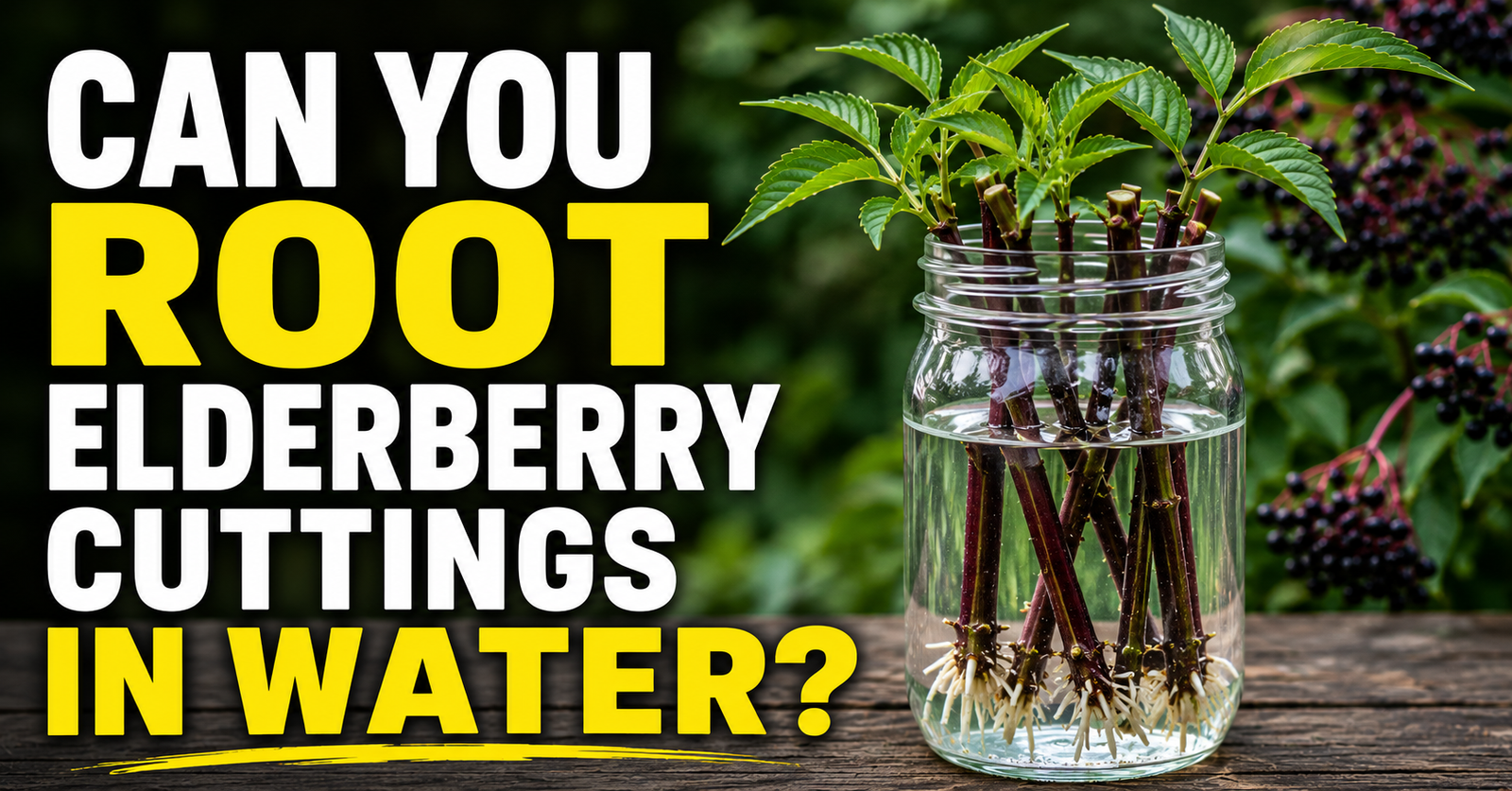
The short answer is yes.
If you place a healthy elderberry cutting in clean water, there’s a good chance you’ll eventually see small white roots begin to emerge.
That’s one reason water propagation has become so popular online.
It’s easy.
You can watch the roots develop.
And there’s something satisfying about seeing progress every few days.
For beginners, it’s also less intimidating because there’s no guessing whether roots have formed beneath the soil.


Why Water Rooting Is So Popular
I completely understand why people like this method.
You don’t need much equipment.
Usually all you need is:
- A healthy cutting.
- A clean jar or glass.
- Fresh water.
- A bright location away from harsh afternoon sun.
That’s about it.
Watching roots slowly appear through the side of the glass is one of the most enjoyable parts of propagation.



But Water Isn’t My First Choice
Even though water rooting works, it isn’t usually my preferred method.
Roots that develop underwater are different from roots that develop directly in soil.
When those delicate water roots are transplanted into potting mix, the cutting has to adjust to an entirely different growing environment.
Some make the transition without any problems.
Others struggle.
That’s one reason I usually root elderberry cuttings directly in a light, well-draining growing medium instead. For a lightweight alternative to ordinary potting soil, rooting cuttings in seed starting mix can provide the airy, evenly moist conditions new roots need.
The roots are already adapted to life in soil from the very beginning.
Soil Usually Produces Stronger Plants
Over time, I’ve found that soil-rooted cuttings often establish more quickly after transplanting.
Instead of spending time adapting from water to soil, they simply continue expanding the root system they’ve already started building.
That’s why most commercial nurseries rely on rooting media instead of jars of water when producing large numbers of elderberry plants.
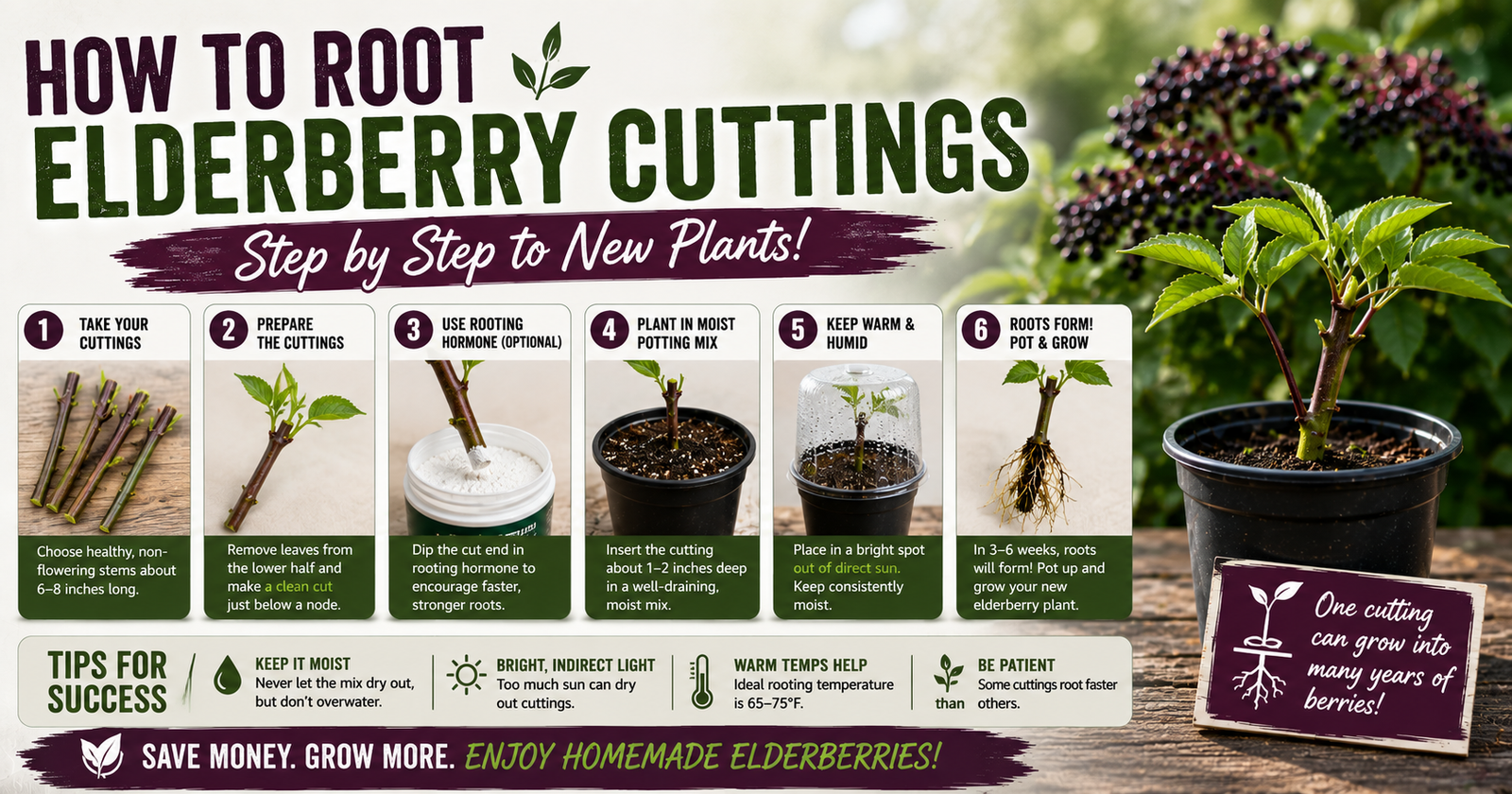
If you’re just getting started with propagation, How to Root Elderberry Cuttings Step by Step walks through the exact soil-rooting method that’s consistently given me the best results.
How To Root Elderberry Cuttings In Water
If you’d like to try the water method, here’s the process I recommend.
Start with a healthy cutting taken from a vigorous elderberry bush.
Place the bottom portion of the cutting into a clean glass or jar filled with fresh water, making sure at least one or two leaf nodes are below the water line.
Leave the upper buds and leaves above the water.
Set the container somewhere bright with indirect sunlight.
Avoid placing it in intense afternoon sun because the water can heat up quickly and stress the cutting.
I also like replacing the water every few days.
Fresh water helps keep oxygen levels higher and reduces the chance of unpleasant odors or bacterial growth.
Be Patient While Roots Develop
One mistake I made early on was assuming nothing was happening because I couldn’t immediately see roots.
Sometimes the cutting spends quite a while preparing to root before anything becomes visible.
Don’t throw it away too soon.
As long as the cutting stays green, firm, and healthy, it’s often worth giving it more time.
Patience is one of the most valuable tools you’ll ever have when propagating elderberries.



When Should You Move It Into Soil?
This is probably the biggest decision you’ll make when using the water method.
I don’t like leaving cuttings in water any longer than necessary.
Once several healthy roots have formed, I transplant the cutting into a quality potting mix so it can begin developing a stronger soil-based root system.
Waiting too long can make the transition more difficult because the longer the roots stay underwater, the more they adapt to that environment.
Moving them sooner usually results in a smoother adjustment.
Transplant Carefully
Water roots are surprisingly delicate.
Instead of forcing the cutting into compacted soil, I prepare a planting hole first.
Then I gently lower the roots into place before lightly filling around them.
After watering thoroughly, I keep the soil evenly moist while the plant adjusts to its new home.
The goal is helping the cutting transition gradually rather than shocking it.



Not Every Cutting Will Make It
Even when everything is done correctly, don’t expect every cutting to survive.
Professional growers don’t.
Neither do I.
That’s why I almost always root several cuttings at once.
If I hope to end up with three new bushes, I might start six or eight cuttings.
That way a few losses don’t become disappointing.
Propagation is a numbers game as much as it is a gardening skill.
Healthy Parent Plants Make The Biggest Difference
One thing I’ve learned is that success starts before you ever place a cutting in water.
Healthy, vigorous parent bushes consistently produce stronger cuttings.
Bushes receiving enough sunlight, water, and nutrients simply have more energy stored for developing new roots.

If your elderberries already seem stressed, Can Elderberries Grow in Shade? Here’s What I Learned and Best Fertilizer for Elderberry Bushes That Actually Works are two guides I’d recommend reading before taking propagation material.
The healthier the parent plant becomes, the better your chances of successfully rooting new elderberries.


Water Or Soil? Here’s What I’d Choose
People sometimes ask me which method I would recommend if they were only going to try one.
My answer is almost always the same.
If your goal is simply watching roots develop because you’re curious about propagation, water is a fun way to get started.
If your goal is growing a strong, healthy elderberry bush that will eventually produce fruit, I’d plant the cutting directly into a quality rooting medium instead.
The transition is easier.
The roots develop where they’ll continue growing.
And I’ve generally had better long-term success with that approach.
It’s Perfectly Fine To Experiment
One thing I enjoy about gardening is that there’s rarely only one right way to do something.
If you have several healthy cuttings, why not try both methods?
Root a few in water.
Plant a few directly into soil.
Compare the results yourself.
You may discover that one method works better in your climate or fits your gardening style more naturally.
That’s how many of my favorite growing techniques started.
Don’t Forget About The Next Step
Successfully rooting a cutting is exciting, but it’s only the beginning.
Young elderberry plants still need plenty of care after roots develop.
Proper spacing, consistent watering, annual pruning, and good sunlight all play a role in turning a small cutting into a productive berry bush.
One healthy cutting today can become a mature shrub producing pounds of elderberries a few years from now.
Water Propagation Is Great For Learning
One reason I still recommend trying water propagation at least once is because it teaches you a lot about how elderberries grow.
Watching roots slowly emerge from the stem helps you understand just how resilient these plants really are.
Even though I still prefer rooting directly in soil for long-term success, seeing the process happen inside a clear jar is fascinating.
It also gives beginners confidence before trying larger propagation projects later.
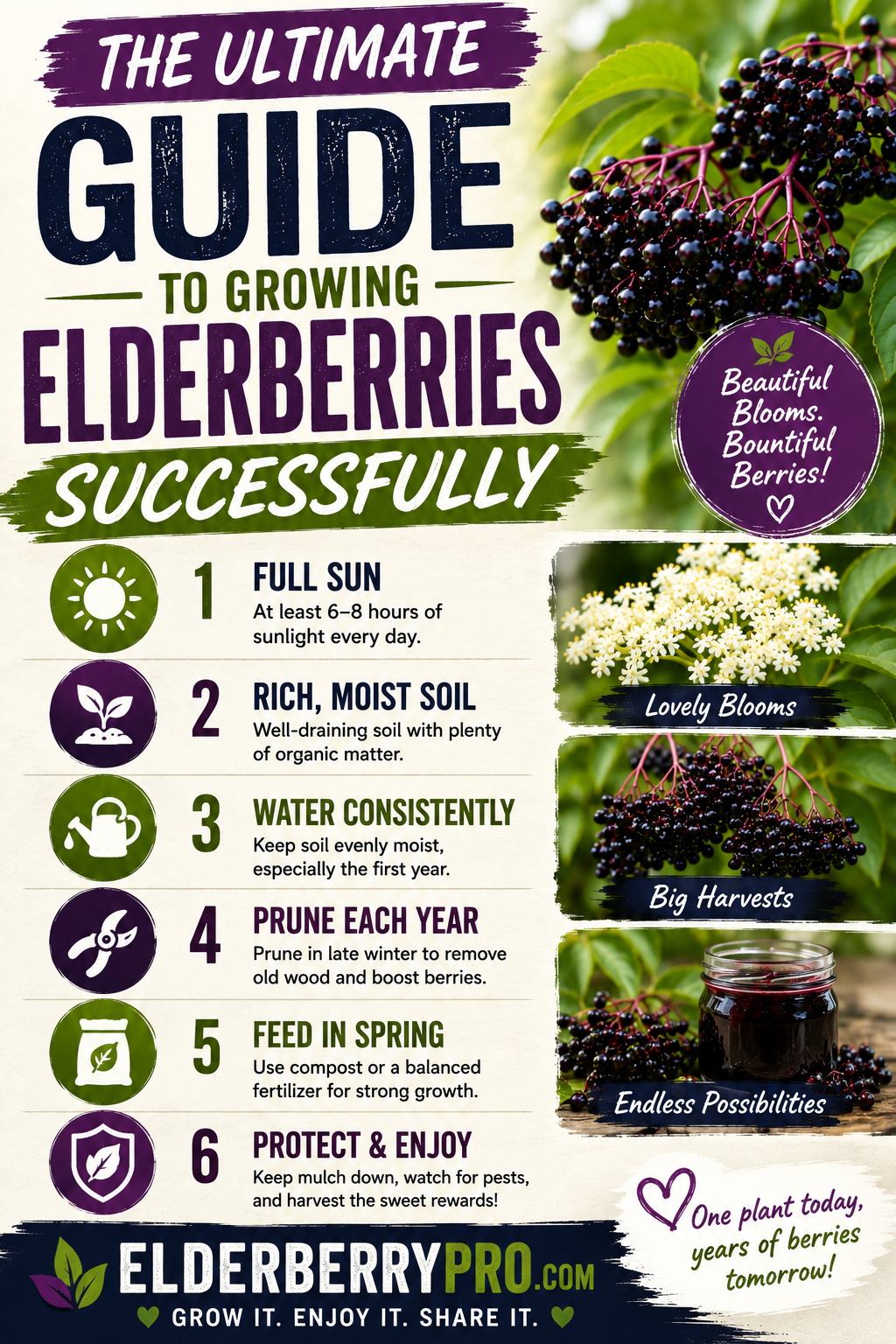
If your goal eventually becomes growing a productive berry patch instead of simply rooting one cutting, The Ultimate Guide to Growing Elderberries Successfully will help you continue from propagation all the way through harvesting healthy elderberries.
Continue Building Your Elderberry Patch
Water rooting is a fun way to watch the propagation process unfold, but whether you choose water or soil, the goal is the same: growing healthy new elderberry bushes that thrive for years.

If you’re just beginning, Can You Grow Elderberries From Cuttings? is the best place to start because it explains the overall propagation process. You’ll also want to read When Is the Best Time to Take Elderberry Cuttings? to improve your success rate, and How Long Does It Take an Elderberry Bush to Produce Fruit? if you’re wondering when those new plants will finally reward you with berries.
Growing elderberries from cuttings is one of the most rewarding parts of gardening.
Watching those first tiny roots appear is exciting.
Watching that same cutting become a mature bush covered in berries a few years later is even better.
About the Author
Avery Collins
Avery Collins is a backyard fruit grower and gardening writer who enjoys helping home gardeners grow healthier elderberries through practical, real-world advice. Through Elderberry Pro, Avery shares hands-on propagation tips, growing guides, and experience-based recommendations to help readers enjoy productive elderberry bushes for years to come.