
If you’re growing elderberries in your backyard or thinking about planting them, there’s a good chance you’ve asked yourself an important question:
Are elderberry plants toxic to dogs?

As a dog owner and someone who spends a lot of time researching elderberries, I completely understand the concern.
Elderberries have become incredibly popular for homemade syrups, teas, gummies, and other products. At the same time, more people are planting elderberry bushes in their gardens and around their homes.
While elderberries can be a fantastic plant for people, dogs are an entirely different story.
The truth is that certain parts of the elderberry plant can potentially be harmful to dogs, which is why every pet owner should understand the risks before planting elderberries where curious pets have access.
The Short Answer
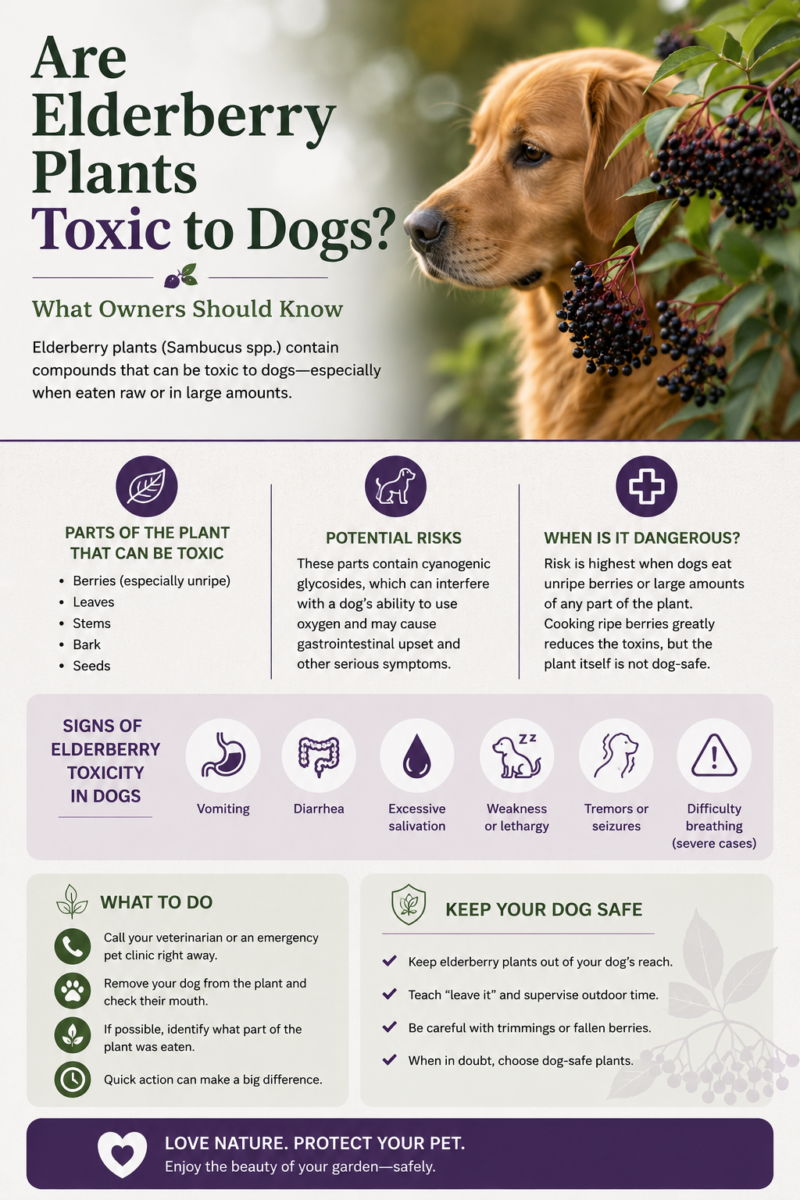
Yes, parts of the elderberry plant can be toxic to dogs.
The greatest concerns involve:
- Leaves
- Stems
- Bark
- Roots
- Unripe berries
These parts of the plant contain naturally occurring compounds called cyanogenic glycosides.
When consumed, these compounds can break down into cyanide-like substances that may cause symptoms ranging from mild digestive upset to more serious health concerns.
However, not every exposure results in poisoning, and the level of risk depends heavily on what was consumed and how much.
Why Elderberry Plants Contain Toxic Compounds
Many plants naturally produce compounds that help protect them from insects, animals, and disease.
Elderberry plants are no different.
The compounds found within elderberry plants are part of the plant’s natural defense system.
This is one reason I always encourage readers to learn more about elderberry safety before harvesting or consuming any part of the plant.

If you haven’t already, I highly recommend reading Never Eat Elderberries Until You Read This because it explains why raw elderberries and other parts of the plant deserve caution.
Which Parts Of An Elderberry Plant Are Dangerous To Dogs?
Not all parts of the plant carry the same level of concern.
Let’s break them down individually.
Elderberry Leaves
Leaves are among the most commonly chewed parts of a plant by curious dogs.
Unfortunately, elderberry leaves contain compounds that can create digestive problems and other symptoms.
If your dog regularly chews on plants, elderberry leaves should be considered off-limits.
Elderberry Stems
Stems often contain higher concentrations of problematic compounds than ripe berries.
This becomes especially important when harvesting berries because stems frequently remain attached.
Elderberry Bark
The bark of an elderberry plant should never be considered edible for dogs.
Dogs that enjoy chewing sticks may accidentally ingest bark while exploring the yard.
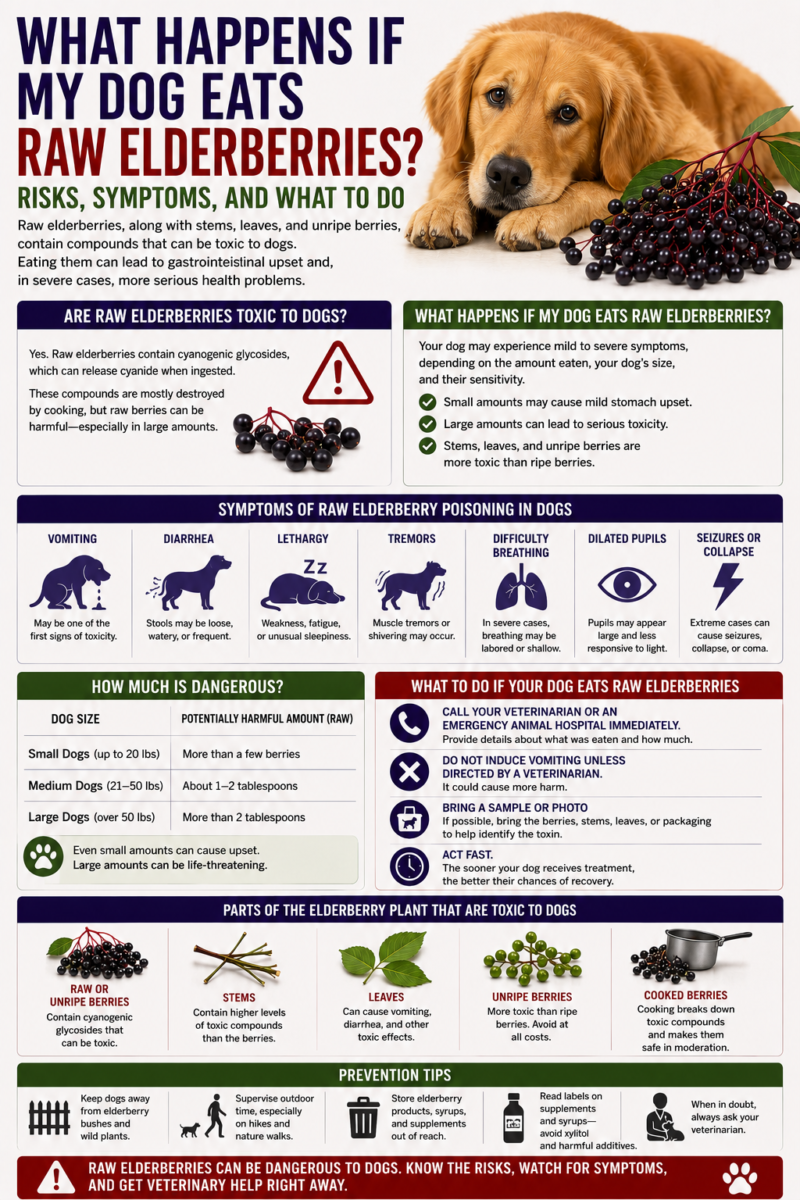
Many dog owners first discover the risks after seeing their pet chew on part of an elderberry bush. Depending on what was consumed, you may also find What Happens If My Dog Eats Raw Elderberries? helpful.

If you’re noticing unusual behavior, vomiting, or digestive upset, be sure to review Elderberry Poisoning Symptoms In Dogs: Signs Every Owner Should Know.

Owners with young dogs should also read Can Puppies Have Elderberry? What New Dog Owners Should Know since puppies tend to investigate plants far more aggressively than adult dogs.
Elderberry Roots
Roots are generally hidden underground, but digging dogs occasionally expose them.
Roots contain compounds that make them unsuitable for consumption.
Unripe Elderberries
Green elderberries create more concern than fully ripe berries.
If berries have not fully ripened, they should be considered potentially problematic.
Are Ripe Elderberries Toxic To Dogs?
This is where confusion often begins.
Many people hear that elderberries are used in syrups and supplements and assume ripe berries must be completely safe.
The reality is more complicated.
While ripe berries are generally considered less problematic than leaves, stems, bark, roots, and unripe berries, I still do not recommend intentionally feeding elderberries to dogs.
There simply isn’t enough evidence showing meaningful benefits for canine health.



Are Cooked Elderberries Different?
Absolutely.
Cooking helps reduce many of the compounds responsible for toxicity concerns.
That is why elderberries are traditionally cooked before being used in:
- Syrup
- Tea
- Jelly
- Wine
- Gummies

If you’re curious about the difference between raw and cooked berries, read Can Dogs Eat Cooked Elderberries? What Every Dog Owner Should Know.
Cooking changes the safety profile significantly.
What Happens If A Dog Eats Part Of An Elderberry Plant?
The outcome depends on several factors.
These include:
- Which part was eaten
- How much was consumed
- The dog’s size
- The dog’s age
- Overall health
Some dogs may experience no noticeable symptoms.
Others may develop digestive upset relatively quickly.

Symptoms Of Elderberry Plant Toxicity In Dogs
Symptoms can vary widely depending on the amount consumed.
Common signs include:
- Vomiting
- Diarrhea
- Excessive drooling
- Loss of appetite
- Lethargy
- Weakness
- Stomach discomfort
More significant exposures may cause additional symptoms.
If you want a detailed breakdown, read Elderberry Poisoning Symptoms in Dogs: Signs Every Owner Should Know.
What If My Dog Ate An Elderberry Plant?
This situation is more common than many people realize.
Young dogs and puppies often chew on plants simply out of curiosity.
If your dog consumed leaves, stems, bark, or berries, ask yourself:
- Which part was eaten?
- How much was consumed?
- When did it happen?
- Is your dog showing symptoms?
The answers can help determine whether veterinary attention is needed.

You should also read What Happens If My Dog Eats Raw Elderberries? for more guidance on accidental ingestion.
Are Puppies At Greater Risk?
In many cases, yes.
Puppies are:
- Smaller
- More curious
- More likely to chew plants
- More likely to swallow things they shouldn’t
Because of their smaller body size, even limited exposure can potentially have a greater impact than it would in a large adult dog.
Can Dogs Safely Live Around Elderberry Plants?
Yes, many dogs coexist with elderberry bushes without any problems.
The key is preventing access to plant parts that may be chewed or eaten.
Many mature dogs show little interest in elderberry bushes once they become familiar with them.
Problems tend to occur when:
- Puppies are involved
- Dogs are frequent plant chewers
- Fallen berries accumulate on the ground
- Stems or branches are left within reach


Should You Remove Elderberry Plants If You Have Dogs?
Not necessarily.
Many dog owners successfully grow elderberries without ever experiencing a problem.
Good management practices include:
- Monitoring curious dogs
- Cleaning up fallen berries
- Removing pruned branches
- Preventing chewing behavior
- Supervising puppies
For most households, these simple precautions are enough.
Growing Elderberries Safely Around Pets

If you’re planning to add elderberries to your property, check out How To Grow Elderberries At Home: What Nobody Tells You Before You Plant.
When selecting a planting location, think about:
- Dog traffic patterns
- Play areas
- Fence placement
- Harvest access
Strategic placement can reduce the likelihood of problems.
Are Elderberry Syrup And Elderberry Plants The Same Risk?
Not at all.
This distinction is extremely important.
A growing elderberry plant contains leaves, stems, bark, roots, and raw berries.
Elderberry syrup is typically made from cooked berries.

If your dog got into syrup rather than the plant itself, read Can Dogs Eat Elderberry Syrup? What Pet Owners Need To Know.
These are very different situations.
The Key Thing To Know
The biggest mistake pet owners make is treating all elderberry products and plant parts as if they are the same.
They aren’t.
Leaves, stems, bark, roots, and unripe berries create the greatest concern for dogs.
While many dogs may never experience problems around elderberry plants, understanding the risks allows you to take simple precautions that keep everyone safe.
A little awareness goes a long way when it comes to growing elderberries around curious pets.
Author
Sarah Whitmore
Sarah Whitmore is an herbal enthusiast, backyard grower, and independent researcher who has spent years studying elderberries, medicinal plants, traditional remedies, and home gardening. Through Elderberry Pro, she shares practical guides, safety information, recipes, and research-backed insights to help readers better understand one of nature’s most fascinating berries.