
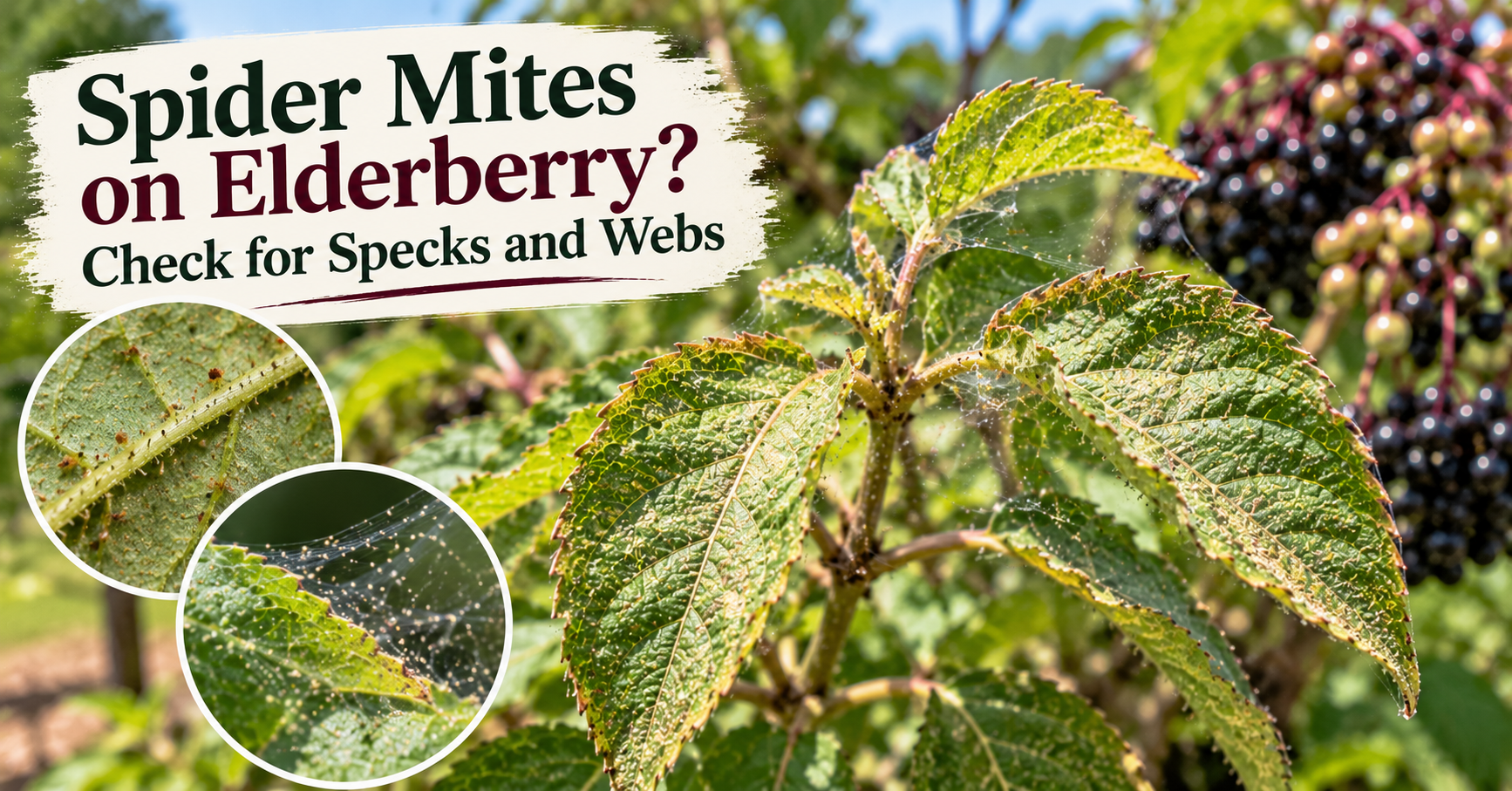
Spider mites are one elderberry pest I’d rather diagnose from the damage than by trying to spot the pest itself.
They’re tiny.
Really tiny.
You may stare at an elderberry leaf and think there isn’t a single bug on it while an entire mite population is feeding underneath.
That’s why I don’t start by asking:
Can I see a spider mite?
I start with:
Do the leaves have lots of tiny pale specks, and is there fine webbing around the damaged foliage?
Those clues are much easier to find.
Spider mites can damage elderberries, particularly during hot, dry weather. Heavy populations can become much more serious than the occasional mite feeding on a leaf.
But before spraying anything, make sure spider mites are actually the problem.
Because one of the worst things you can do with mites is wipe out the natural predators that were helping control them.
What Do Spider Mites Look Like on Elderberry?
Spider mites aren’t insects.
They’re arachnids, which puts them closer to spiders and ticks.
But don’t expect to find something resembling a normal garden spider walking across the leaf.
Spider mites are extremely small.
To the naked eye, they may look like tiny moving dots.
That’s why a magnifying glass can be genuinely useful.
I inspect the undersides of affected leaves because that’s where mites often feed and where fine webbing may be easier to notice.


Look for Stippling Before You Look for Mites
Stippling is one of the most useful spider-mite clues.
Instead of one big yellow patch, you may see lots of tiny pale or yellowish dots scattered across the leaf.
It can look like someone repeatedly poked the leaf with the tip of a pale pen.
Those little specks develop where mites have fed on plant cells.
As feeding becomes heavier, the stippled areas can begin running together and the entire leaf may look faded, bronzed, or unhealthy.
That’s much more informative than simply saying:
My elderberry leaf is yellow.



Fine Webbing Is Another Big Clue
Spider mites can produce extremely fine webbing.
This isn’t necessarily a big obvious spider web stretching between two branches.
Look closely around:
leaf undersides,
leaf stems,
growing tips,
and heavily infested foliage.
Fine threads can be easy to miss until you know to look for them.
An Extension expert responding to an elderberry spider-mite question specifically recommended checking for webbing as an important sign.
So if I have:
stippling + tiny moving dots + fine webbing
spider mites become a much stronger possibility.
Try the White-Paper Test
This is one of the easiest ways to find mites that are too small to see well on the plant.
Take a clean sheet of white paper.
Hold it underneath an affected elderberry leaf.
Tap or gently shake the foliage over the paper.
Then watch closely.
Tiny moving specks become much easier to notice against a white background.
A magnifying glass makes this even better.
I’m not identifying every speck from twenty feet away.
I’m trying to establish whether tiny mobile pests are actually present on the damaged foliage.


Spider Mites Love Hot, Dry Conditions
Weather gives us another clue.
Rutgers Cooperative Extension specifically associates spider-mite stippling on elderberry with warm, dry summers.
That makes sense with how spider-mite populations often behave.
Hot, dry weather can favor rapid population growth.
Meanwhile, natural fungal diseases that sometimes help suppress mite populations can be less effective under dry conditions.
So if your elderberry looked good and then develops stippled foliage during a stretch of hot, dry summer weather, spider mites deserve a closer look.
Drought and Spider Mites Can Happen at the Same Time
This can make diagnosis confusing.
An elderberry experiencing hot, dry conditions may already be dealing with water stress.
Those same conditions can favor spider mites.
Now you have two problems capable of making foliage look unhealthy.
That’s why I still inspect the leaves.
Don’t assume every summer leaf problem is drought.
And don’t assume every pale leaf is mites.
Check the soil and check the foliage.
The plant may be dealing with both.



Spider Mites vs Aphids on Elderberry
These pests are very different once you know what to look for.
Aphids are larger and much easier to see.
They often cluster on tender growth.
They can produce sticky honeydew.
Ants may become interested in aphid colonies.
Spider mites are far smaller.
Instead of sticky honeydew being my main clue, I’m looking for:
stippling
and
fine webbing.
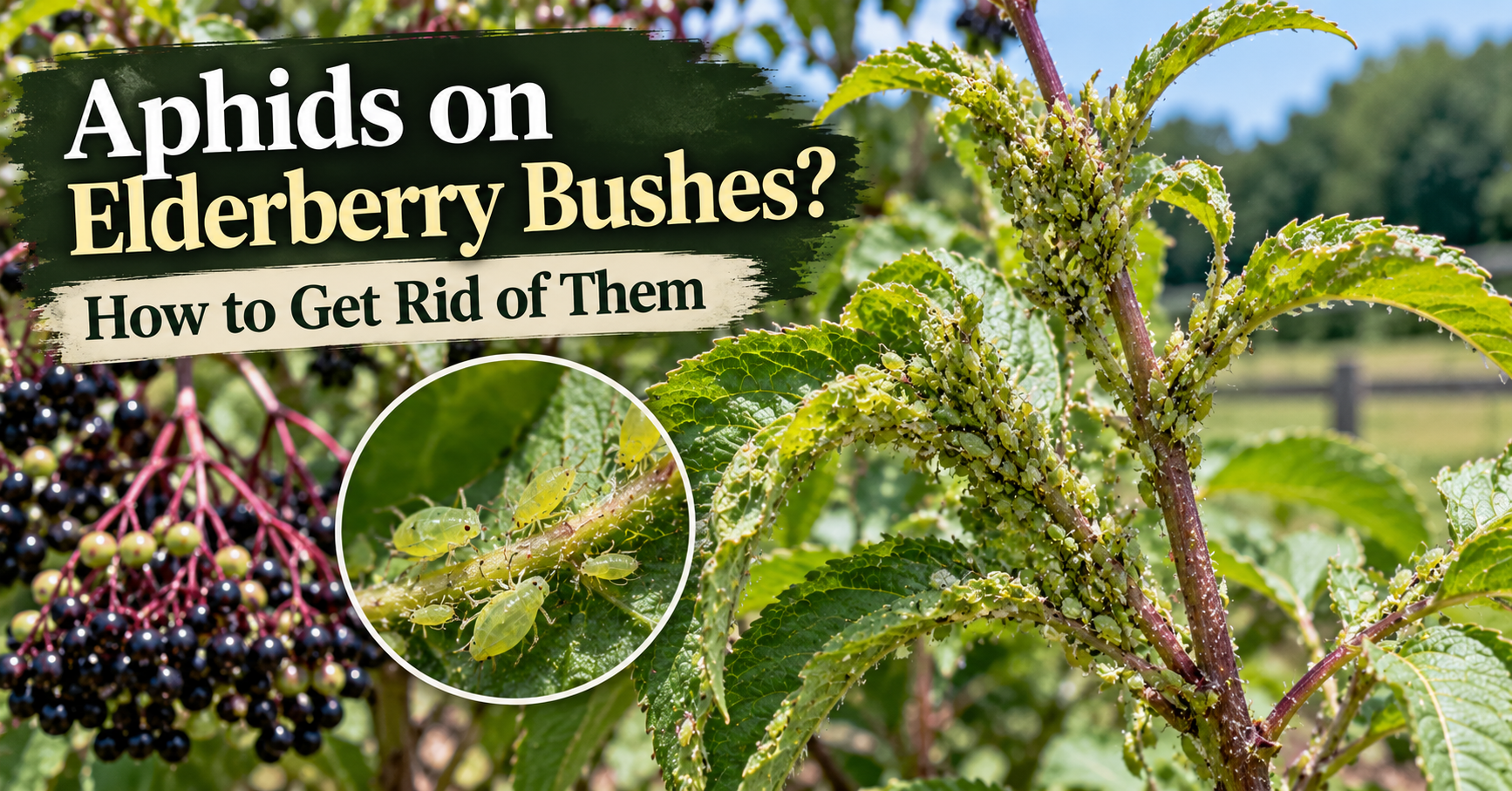
If you have obvious clusters of small soft-bodied insects plus sticky leaves, use my guide to aphids on elderberry bushes instead.
Different pest.
Different clues.
Different management considerations.
Spider Mites vs Eriophyid Mites
This distinction is especially important on elderberries.
Both are mites.
Both are tiny.
But their damage can look very different.
Eriophyid mites are associated with distorted new elderberry growth.
You may see:
curled leaves,
puckering,
folding,
or abnormal new foliage.
Spider mites are much more associated with stippling and, when populations become substantial, webbing.
That’s why leaf appearance matters.
If your biggest problem is severely puckered or curled new growth without the characteristic stippling and webbing, don’t automatically assume spider mites.



Spider Mites vs Ordinary Yellow Leaves
A yellow elderberry leaf doesn’t prove anything.
Older leaves can yellow naturally.
Water problems can cause yellowing.
Nutrition can contribute.
Root stress can contribute.
Disease can contribute.
Spider mites can contribute.
That’s why I look for the stippled pattern rather than color alone.
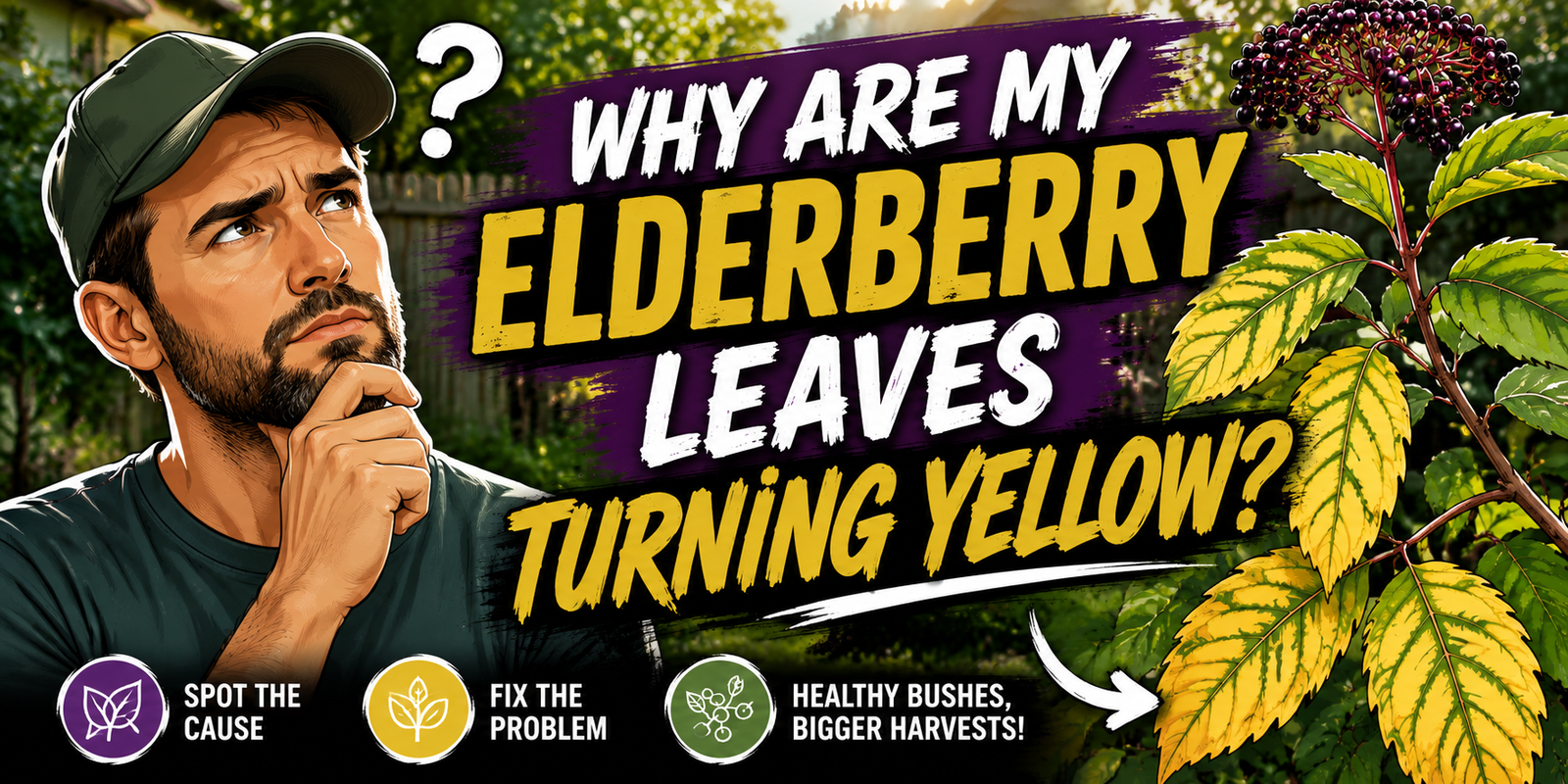
If the leaf is simply turning yellow without speckling, webbing, or evidence of mites, start with Why Are My Elderberry Leaves Turning Yellow? instead of treating a pest you haven’t found.
Can Spider Mites Make Elderberry Leaves Curl?
They can contribute to stressed or distorted foliage, but curling alone isn’t enough for me to diagnose spider mites.
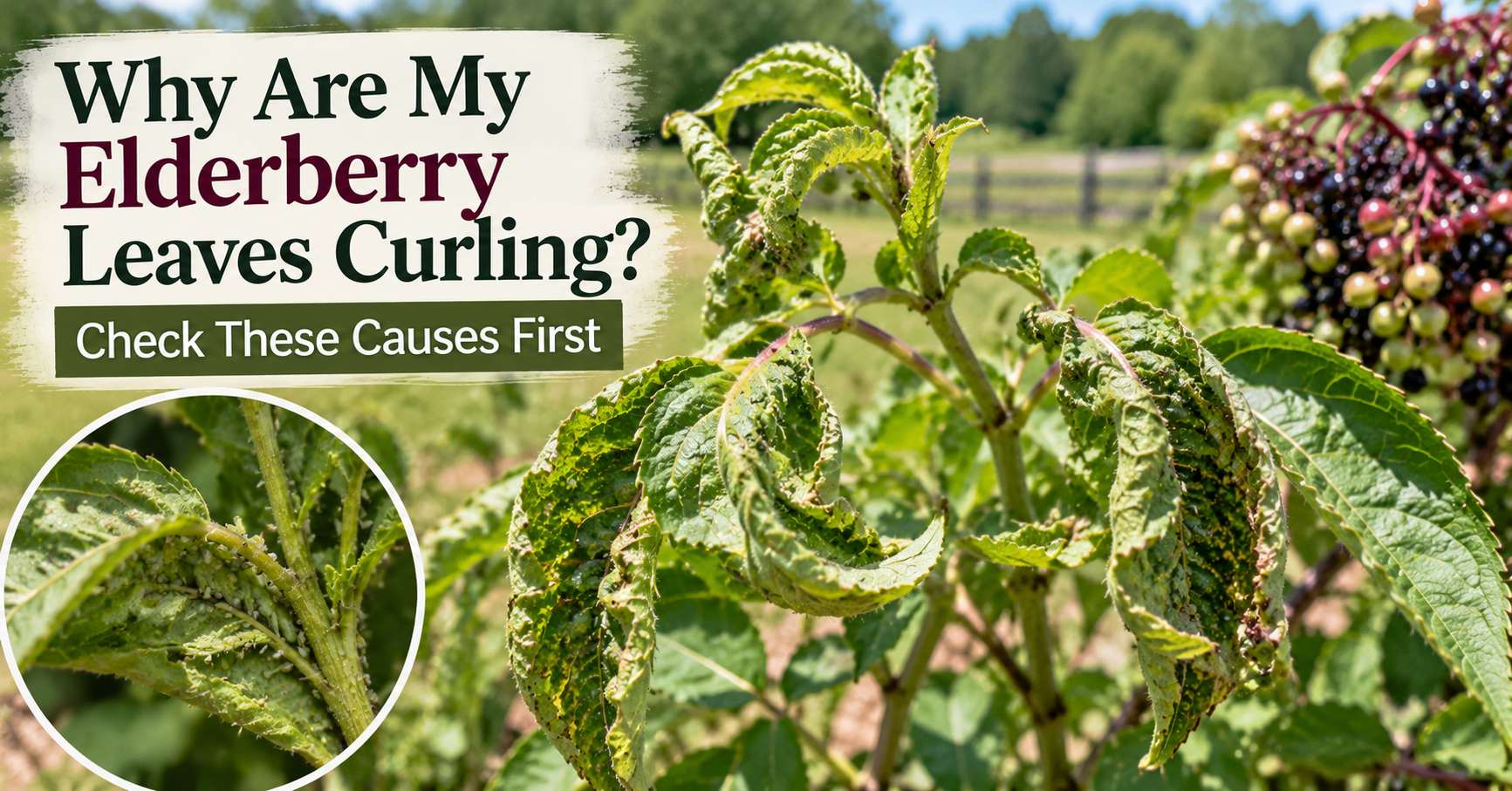
We already have a dedicated elderberry leaf curl guide because curling can come from mites, aphids, water stress, herbicide injury, and other causes.
For spider mites specifically, I want more.
Stippling.
Webbing.
Tiny moving specks.
A hot, dry weather pattern.
Put those clues together.

Can Spider Mites Hurt Elderberry Production?
Heavy infestations can matter.
Ontario’s agricultural guidance reports that two-spotted spider mites can reduce elderberry crops substantially when populations become high.
That’s a different situation from finding a few mites on an otherwise vigorous bush.
The severity matters.
How much foliage is affected?
How much of the bush?
Are leaves declining?
Is the plant already stressed?
Is the infestation increasing?
I don’t treat every mite as an emergency.
But I don’t ignore a heavy infestation simply because the pest is tiny either.
Start With a Hose
For a backyard planting, one of the first control methods I’d try is surprisingly simple.
Water.
A firm spray can physically knock mites from foliage.
Pay particular attention to leaf undersides.
An Extension expert responding to a spider-mite concern on young elderberries specifically suggested washing the plants with a hose rather than cutting the young plants back.
I like that as a first step because it’s targeted and doesn’t automatically kill every beneficial organism living on the elderberry.
Don’t Destroy the Leaves With Water Pressure
There’s a difference between:
Spray the foliage firmly.
and
Pressure wash the elderberry.
I don’t want shredded leaves and broken shoots.
Use enough pressure to dislodge pests.
Not enough to damage the plant.
Repeat treatment may be necessary.
Then inspect again.
The white-paper test can help you see whether mite numbers are actually declining.
Keep the Elderberry Properly Watered
This is particularly useful during the hot, dry conditions that favor spider mites.
A drought-stressed elderberry is already having a rough time.
I don’t want to add unnecessary stress.
That doesn’t mean flooding the root zone.
It means maintaining appropriate moisture for the plant.
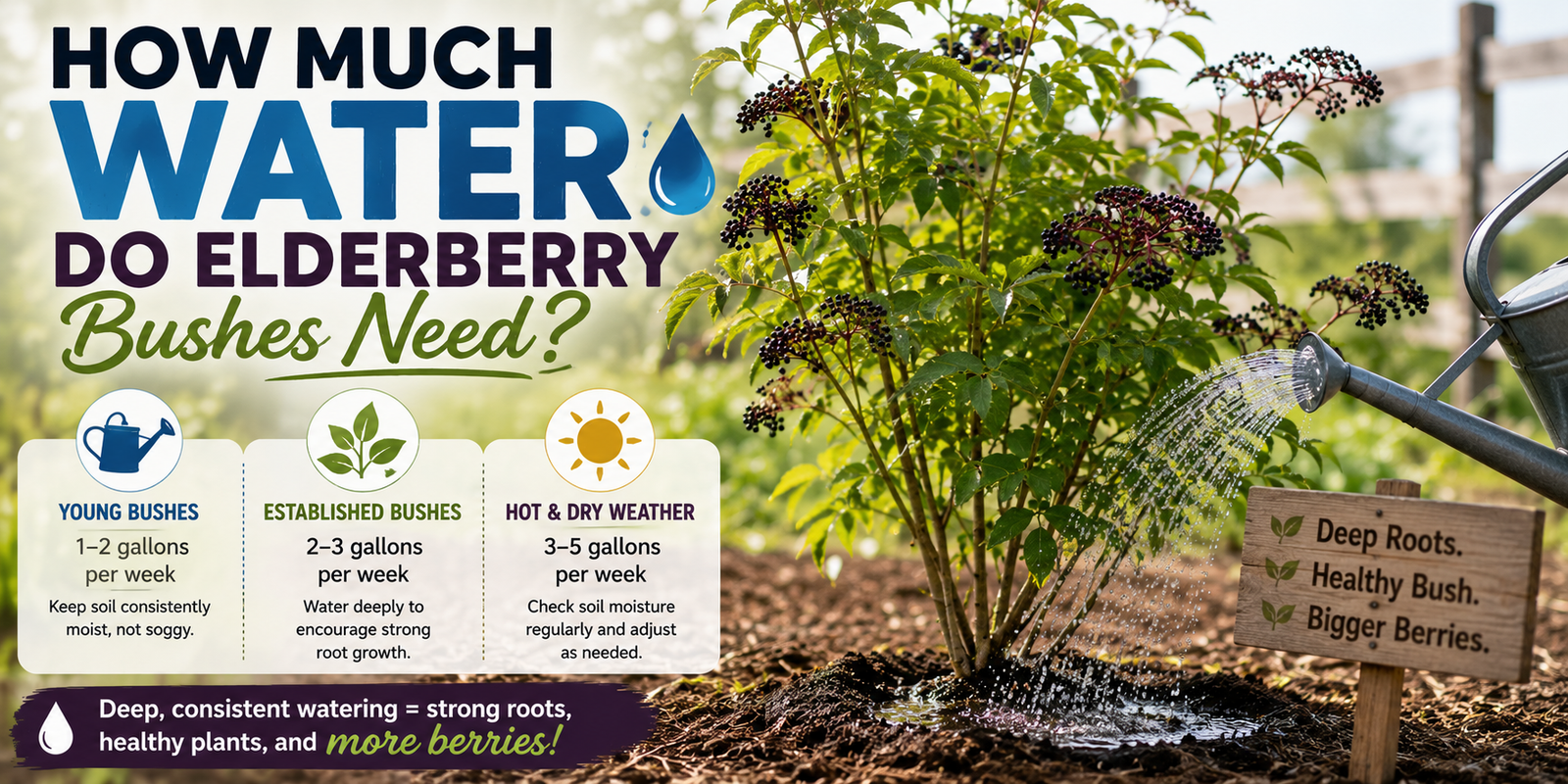
If you’re unsure what that actually looks like, use How Much Water Do Elderberry Bushes Need? rather than responding to mites by randomly soaking the plant every day.
Proper watering supports the elderberry.
It isn’t a substitute for controlling a severe mite infestation.
Predatory Mites Are Your Friends
This is where spider-mite management gets particularly interesting.
There are mites that eat other mites.
Predatory mites can help keep pest-mite populations under control naturally.
Rutgers specifically notes that native predatory mites often regulate elderberry mite populations well enough that pesticide applications aren’t necessary.
That’s an ecosystem service I don’t want to accidentally destroy.
And it explains why the strongest pesticide isn’t automatically the smartest treatment.
Broad-Spectrum Pesticides Can Make Spider Mites Worse
This sounds backward.
You spray an insecticide.
More spider mites appear.
But there’s a biological reason.
Broad-spectrum pesticides can kill the predators that were eating the mites.
Spider mites can then rebound without the same natural enemy pressure.
Rutgers specifically warns that broad-spectrum pesticide use can cause a severe resurgence of spider mites by reducing natural predatory-mite populations.
That’s a big deal.
It means overreacting can genuinely make the problem worse.
Don’t Spray Just Because You Found a Mite
A few mites on an elderberry don’t automatically justify pesticide treatment.
Ask:
Is the foliage actually being damaged?
Is stippling widespread?
Is webbing increasing?
Are mite numbers growing?
Are predators present?
Is the plant otherwise healthy?
A low population on a vigorous elderberry may never become a serious problem.
Monitoring is still pest management.
Sometimes the correct treatment today is simply:
Check again soon.
When Would I Actually Treat Spider Mites?
I become more interested in active treatment when the damage is clearly increasing rather than simply existing.
A few stippled leaves don’t concern me nearly as much as:
- Stippling spreading across large portions of the bush.
- Fine webbing becoming increasingly obvious.
- Leaves beginning to bronze or decline.
- Mites appearing in large numbers during the white-paper test.
- A young elderberry losing a substantial portion of its healthy foliage.
- Hot, dry weather continuing while mite populations increase.
At that point, simply checking the plant once a week may not be enough.
I’d still start with the least disruptive method likely to work.
Insecticidal Soap Can Be an Option
If repeated washing isn’t controlling a damaging infestation, an insecticidal soap labeled appropriately for the plant and pest may be worth considering.
These products work through contact.
That means coverage matters.
Spider mites spend a lot of time on leaf undersides, so spraying only the top surface of the elderberry isn’t particularly useful.
But I wouldn’t substitute random household dish detergent for a properly formulated insecticidal soap.
Dishwashing products weren’t designed or tested as plant pesticides, and homemade concentrations can injure foliage.
Use a product labeled for the job and follow its directions.
Horticultural Oils May Also Be Useful
Horticultural oils are another tool sometimes used against mites.
Again, direct coverage is important.
And again, the product label matters.
Temperature restrictions can be particularly important with oils because applying certain products during excessive heat can increase the risk of plant injury.
That’s relevant because spider mites often become troublesome during exactly the kind of hot weather when spraying oils carelessly may be a bad idea.
I don’t assume:
Mites are bad today, so today must be the perfect day to spray.
Check the weather.
Check the label.
Then decide.
What About Neem Oil?
Neem products are frequently recommended online for almost every garden pest imaginable.
Some neem-based products are labeled for mites.
That doesn’t make every bottle of neem identical or every homemade mixture appropriate for elderberries.
If I’m considering neem, I look at the actual product.
Is it labeled for the pest?
Is it appropriate for edible crops?
What temperatures should it be applied in?
Are there precautions around flowers and pollinators?
How long before harvest can it be used?
Those questions matter more than the word “neem” printed on the front.
Test a Small Area Before Treating the Whole Bush
This is especially useful when an elderberry is already stressed by heat.
Before covering a large plant with soap or oil, I’d consider treating a small section according to the label and watching for plant injury.
The goal is controlling mites.
Not replacing stippled leaves with chemically burned leaves.
If the plant reacts badly, I’m glad I didn’t cover the entire bush.
Don’t Spray Open Flowers Without Thinking About Pollinators
Elderberry flowers attract insects.
Lots of them.
That’s part of what makes flowering season so interesting.
So if spider mites become noticeable while elderflowers are open, I think about pollinator exposure before spraying anything.
Read the pesticide label.
Pay attention to warnings.
Avoid unnecessarily contacting bees and other beneficial insects.
And remember that mites often live underneath leaves.
Blanketing every flower cluster may accomplish very little against the pest while exposing insects I wasn’t trying to target.
Predatory Mites Need Protection Too
Pollinators aren’t the only beneficial organisms I care about.
Predatory mites may already be feeding on the pest mites.
They’re tiny enough that I may never notice them doing the work.
That’s exactly why broad-spectrum spraying can backfire.
I kill the pest mites.
I also kill their predators.
The surviving pest population rebounds.
Now there are fewer predators available to slow it down.
That’s the spider-mite resurgence problem Rutgers warns about.
Sometimes preserving biological control is more valuable than achieving a temporary population crash.
Should You Remove Spider-Mite-Damaged Leaves?
Not automatically.
Stippling doesn’t mean a leaf is completely useless.
If the leaf is still largely green and functioning, removing every imperfect leaf may unnecessarily reduce the plant’s photosynthetic area.
I’d consider removing foliage when it’s severely damaged, dying, or heavily webbed and contributing little to the plant.
But I’m not trying to make the elderberry cosmetically perfect.
I’m trying to keep it healthy.
Don’t Cut Back an Entire Young Elderberry Because of Mites
This is particularly important.
A young elderberry needs its foliage.
If mites are damaging some leaves, I wouldn’t automatically respond by cutting the entire plant back to the ground.
An Extension response to a spider-mite question involving young elderberries specifically cautioned against cutting them back and instead suggested washing the plants and encouraging biological control.
That makes much more sense to me.
Control the pest.
Support the plant.
Don’t create another major stress unless there’s a legitimate reason.
What About Leaves That Are Already Bronzed?
Heavily damaged foliage may not return to perfect green.
Just like curled leaves damaged during development, old mite damage can remain visible even after the pest population declines.
That’s why I watch the new growth.
Are fresh leaves developing normally?
Is new stippling slowing down?
Is webbing disappearing?
Are mite counts lower during the white-paper test?
Those signs tell me more than staring at a damaged leaf and waiting for every pale speck to disappear.
How Often Should You Check After Treatment?
I’d check again within several days rather than assuming the problem is solved.
Spider mites can reproduce quickly under favorable conditions.
That’s particularly true during hot, dry weather.
Look underneath leaves again.
Repeat the white-paper test.
Check new growth.
Look for webbing.
If you used a labeled pesticide, follow its directions regarding repeat applications rather than spraying whenever you feel like it.
Monitoring tells you whether the strategy is actually working.
What If the Spider Mites Keep Coming Back?
Recurring problems make me look beyond one treatment.
Is the elderberry repeatedly drought stressed?
Has the weather been exceptionally hot and dry?
Have broad-spectrum insecticides been used nearby?
Are natural predators absent?
Is the plant growing somewhere that makes adequate watering difficult?
Sometimes repeated spider-mite outbreaks are telling you something about the environment around the plant.
Fixing those conditions may make future outbreaks easier to manage.
Dust Can Contribute to Mite Problems
Dry, dusty conditions can favor spider mites on some plants.
If an elderberry is growing beside a dusty road, gravel drive, or another location where foliage is constantly coated, occasional rinsing may help both clean the foliage and make conditions less favorable for mites.
That’s another situation where a hose can accomplish more than people expect.
Just don’t keep the foliage constantly wet in an attempt to prevent every mite.
We’re trying to support a healthy plant, not trade one problem for another.
Don’t Overfertilize a Mite-Infested Elderberry
Seeing damaged foliage can make gardeners reach for fertilizer.
I wouldn’t.
Excessive fertilizer doesn’t kill mites.
And pushing lots of tender new growth isn’t necessarily what a stressed plant needs while you’re still dealing with the pest.
Keep normal plant care normal.
If the elderberry actually has a nutrient deficiency, address it appropriately.
But don’t fertilize simply because the leaves look bad.
Can Spider Mites Spread to Other Elderberry Bushes?
Yes, mites aren’t obligated to stay on one plant.
If I confirm spider mites on one elderberry, I inspect nearby elderberries too.
That doesn’t mean I automatically treat every plant.
I’m looking for evidence.
Stippling.
Webbing.
Mites during the paper test.
One infested plant gives me a reason to inspect its neighbors, not a reason to spray the entire yard.
Check Other Plants Nearby Too
Two-spotted spider mites have a broad host range.
So the elderberry may not be the only plant showing damage.
Look at neighboring garden plants.
If several species are developing stippling during hot, dry weather, that gives you additional context.
It may also help explain why mites keep returning even after you reduce them on one elderberry.
Spider Mites Can Become a Bigger Problem During Drought
This is where good elderberry care and pest management overlap.
A drought-stressed elderberry is already under pressure.
Hot, dry conditions can also favor spider-mite population growth.
So I don’t neglect watering while concentrating entirely on the pest.
Keep the elderberry appropriately hydrated.
Mulch can help conserve soil moisture.
And avoid unnecessary additional stress.
Healthy growing conditions won’t magically eliminate spider mites, but they help the plant tolerate damage and continue growing.
My Spider Mite Control Order
If I suspected spider mites on an elderberry tomorrow, here’s exactly how I’d approach it.
1. Look for stippling.
Lots of tiny pale specks are my first clue.
2. Check for fine webbing.
Especially underneath leaves and around heavily affected growth.
3. Do the white-paper test.
Confirm that tiny moving pests are actually present.
4. Check the weather and soil.
Hot? Dry? Is the elderberry drought stressed?
5. Look for predators.
Don’t wipe out the organisms already helping you.
6. Wash the foliage.
Concentrate on leaf undersides without damaging the plant.
7. Recheck.
See whether mite numbers and new damage decline.
8. Escalate only if necessary.
Consider a properly labeled insecticidal soap, horticultural oil, neem product, or other appropriate miticide when the infestation genuinely warrants it.
9. Protect pollinators.
Especially while elderflowers are open.
10. Keep monitoring new growth.
That’s where you’ll see whether the situation is actually improving.
When I’d Ask Extension for Help
If the plant is declining badly and I’m still not sure whether spider mites are responsible, I’d get help identifying the problem.
Take close photographs.
Include the undersides of leaves.
Photograph the stippling.
Photograph any webbing.
Try to capture the mites through magnification if possible.
And include pictures of the whole plant.
Your local Extension office may be able to help distinguish spider mites from eriophyid mites, disease, nutrient problems, and environmental stress.
That’s much better than spending money treating the wrong thing.
Tiny Pest, Big Difference in Diagnosis
Spider mites are a great example of why I don’t diagnose elderberry problems from leaf color alone.
The plant may look yellow.
But look closer and you see hundreds of tiny pale feeding marks.
Look underneath and you find webbing.
Tap the leaf over white paper and tiny specks begin moving.
Now you have evidence.
And once you have evidence, the response becomes much clearer.
Start simple.
Keep the plant appropriately watered.
Wash mites from the foliage.
Protect their natural predators.
Monitor.
Only escalate when the infestation actually justifies it.
The mites may be tiny, but the difference between identifying them correctly and blindly spraying an unhealthy elderberry can be enormous.
About the Author
Avery Collins writes about growing, troubleshooting, propagating, and harvesting elderberries for Elderberry Pro. Avery focuses on practical backyard-growing information that helps gardeners identify pests from the evidence on their plants before choosing a treatment.