
About The Author
I’m Dax Weaver, the founder of Elderberry Pro, an elderberry grower, and the owner of Weaver Family Farms Nursery in rural Missouri.
I’ve always found elderberries fascinating.
For a plant that’s been used for generations, it’s amazing how much attention elderberry has received again in recent years.
You see elderberry syrups, gummies, capsules, teas, and supplements everywhere now. People talk about elderberry for immune support, growing their own bushes, making homemade syrup, and all sorts of other uses.
But there’s so much more to this plant than what you see on a supplement bottle.
I grow elderberries myself, and through our family nursery, we also sell American elderberry plants to customers interested in growing their own.
That experience has given me a real appreciation for the plant itself, not just the products made from its berries.
I’ve learned about growing conditions, propagation, pruning, flowering, fruit production, harvesting, and why proper identification and preparation matter.
And the more I’ve learned about elderberries, the more I’ve realized there’s still plenty to discover.
That’s why I started Elderberry Pro.

I wanted to share my experiences as an actual grower, research the questions people have about this remarkable plant, and make the information easier to understand for anyone interested in elderberries.
Growing Elderberries on Our Family Farm in Missouri
My family and I live in rural Missouri, where we grow a variety of plants and operate a small family nursery.
I’ve spent a lot of time learning about fruiting plants, trees, shrubs, and the different conditions they need to thrive.
Elderberry has become one of the plants I especially enjoy working with.
Part of what makes it interesting is how much it offers.
It can produce attractive clusters of flowers, dark berries, and plenty of leafy growth during the growing season.
The flowers attract pollinators, and the berries can also become a food source for wildlife.
Then there’s the opportunity to harvest and properly prepare the fruit for food products.
But growing an elderberry bush successfully takes more than sticking it in the ground and hoping for the best.
Sunlight, soil moisture, spacing, pruning, plant health, and variety selection can all influence how well a shrub grows and produces berries.
Those are the kinds of practical details I enjoy learning about firsthand.
And they’re the details I want other growers to understand before planting their first elderberry bush.
Why Our Family Nursery Grows and Sells Elderberries
In addition to growing plants on our property, I own Weaver Family Farms Nursery, where we sell trees, shrubs, and other plants to customers.
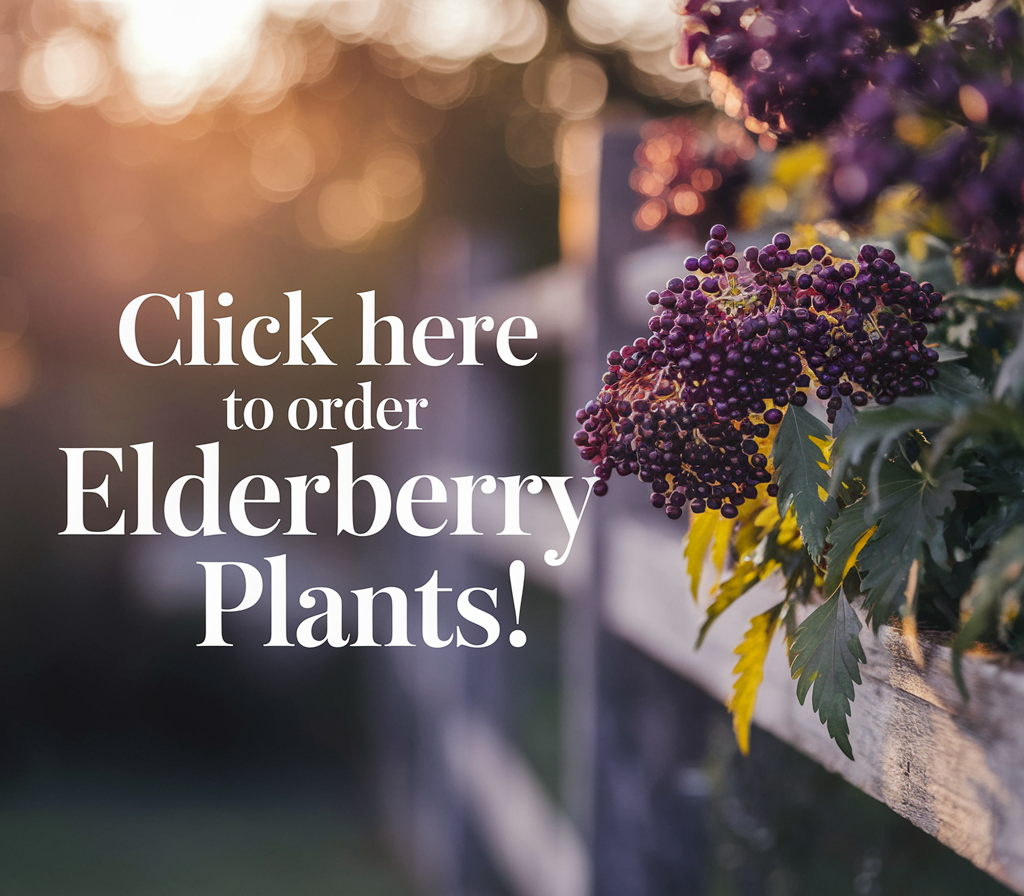
American elderberry is one of the plants we offer. Readers ready to grow their own can find the American elderberry nursery plants offered through Weaver Family Farms Nursery.
Our nursery’s American elderberry plants are part of that business, and I enjoy helping more people discover what this shrub has to offer.
One of the things I like about elderberries is that they can serve several purposes in a garden or landscape.
Some people grow them because they want to harvest berries.
Others appreciate the flowers, wildlife value, or the appearance of a mature shrub.
And some gardeners are simply interested in adding a different kind of fruiting plant to their property.
Through growing and selling plants, I’ve learned that people often have questions before they ever place an elderberry in the ground.
Will it survive their winters?
How big will it get?
Does it need another elderberry nearby?
How long will it take to produce fruit?
Can it grow in partial shade?
Those questions matter because an elderberry bush is a living plant that can remain part of someone’s landscape for years.
I want people to understand what they’re planting and how to give it a healthy start.
Elderberry Is More Than Just a Popular Health Supplement
A lot of people first hear about elderberry because of its reputation as a natural wellness ingredient.
That makes sense.
Elderberry has a long history of traditional use, particularly in preparations associated with colds and seasonal illnesses.
But the plant itself has a much broader story.
It has been grown and gathered for food, used in traditional preparations, valued for its flowers, and incorporated into gardens and landscapes.
Today, it’s also sold in countless commercial products.
I think it’s interesting how a plant with such an extensive history can suddenly feel like something new.
What I don’t want is for that popularity to overshadow the facts.
There’s a difference between a plant having a long history of use and scientific research proving a particular health benefit.
I enjoy learning about both sides.
The history is fascinating, and the modern research deserves careful attention.
That’s part of what makes elderberry such an interesting subject to write about.
What I’ve Learned About Growing Elderberries From Cuttings
One of my favorite things about growing plants is propagation.
There’s something satisfying about taking a healthy cutting and watching it develop roots and eventually become another plant.
Elderberry is particularly interesting because it can be propagated from stem cuttings.
Through operating our nursery and working with plants, I’ve gained hands-on experience with propagation, including the things that can help cuttings establish successfully and the mistakes that cause them to fail.
A healthy parent plant is important.
So is choosing suitable growth, understanding seasonal timing, and providing a growing environment that holds enough moisture without remaining waterlogged.
I’ve also learned that patience matters.
A cutting doesn’t become a healthy shrub overnight, and checking it constantly isn’t necessarily helpful.
In my guide to growing elderberry bushes from cuttings, I explain the propagation process and why paying attention to the parent plant and growing conditions is so important.
I enjoy sharing that kind of information because it helps gardeners understand the process rather than simply follow a set of instructions.
Why Elderberry Identification Matters
When someone tells me they’ve found what looks like an elderberry bush, I think proper identification is one of the most important things to consider.
Several plants can produce clusters of berries or have features that resemble elderberry.
And not every elderberry species is identical.
The flowers, leaves, stems, fruit clusters, and growth habits can all provide useful clues.
I believe people should learn to recognize multiple identifying characteristics rather than relying on the appearance of the berries alone.
That becomes particularly important when someone intends to harvest wild plants.
Mistaking an unfamiliar plant for an edible species can have serious consequences.
I explore the different identifying features in my elderberry plant identification guide.
I want the website to encourage careful identification, not guesswork.
If someone isn’t certain what plant they’re looking at, they shouldn’t consume it simply because an online photograph looks similar.
Elderberries Have Benefits, but They Also Have Risks
One of the biggest reasons I believe elderberry deserves its own educational website is that it isn’t a plant people should use carelessly.
It’s easy to find articles talking about elderberry’s potential benefits.
It’s also easy to find recipes and products that make it seem like every part of the plant is harmless.
But that isn’t the case.
Raw or unripe elderberries and certain other plant parts contain naturally occurring compounds that can release cyanide.
Improper preparation can cause illness.
That means identifying the plant correctly, harvesting appropriate fruit, removing unwanted plant material, and using reliable preparation methods are all important.
I don’t want people to become afraid of elderberries.
I want them to understand that natural doesn’t automatically mean safe in every form.
Many familiar foods require proper preparation, and elderberry is one of the plants where that distinction matters.
I believe it’s especially important for beginners to learn the safety information before experimenting with homemade elderberry products.
The Difference Between Traditional Uses and Proven Health Benefits
Elderberry has been associated with traditional remedies for a very long time.
Today, it’s often marketed for immune support, colds, flu, and general wellness.
That popularity makes it an interesting subject, but it also makes accuracy particularly important.
Some studies have investigated whether certain elderberry preparations may help with symptoms of respiratory illnesses.
However, the available research is limited, and findings don’t establish that elderberry can prevent or cure illnesses.
Different studies have also used different products and formulations.
That matters because a commercially prepared extract isn’t necessarily equivalent to homemade syrup, whole cooked berries, or a gummy supplement.
I want readers to understand what researchers have actually studied rather than assuming every elderberry product has the same effects.
Personal experiences can be interesting and worth discussing, but they aren’t the same thing as clinical evidence.
If I write about how I use a particular product or what I’ve noticed personally, I want readers to understand that distinction.
And when a health claim isn’t supported by good evidence, I don’t want to repeat it as though it’s established fact.
Why Elderberry Safety Is One of My Biggest Priorities
As someone who grows elderberries and operates a nursery, I believe it’s important to discuss both the rewards and the responsibilities that come with growing edible plants.
Elderberry is a good example.
Someone might grow a healthy bush, harvest the berries, and assume they can eat them straight from the plant.
But raw elderberries aren’t something I recommend consuming.
Proper processing matters, and the leaves, stems, bark, and unripe fruit present additional concerns.
Safety also becomes important when considering homemade syrups, teas, juices, and preserved products.
Not every recipe found online follows tested preparation or preservation methods.
Cooking berries to reduce naturally occurring toxins is one concern.
Using an appropriate, tested preservation method to prevent foodborne illness during storage is another.
Those are separate questions, and both deserve attention.
I want Elderberry Pro to help people understand those distinctions.
The goal is to enjoy elderberries responsibly, not overlook their risks because the plant has a positive reputation.
Growing Elderberries Has Taught Me to Appreciate the Whole Plant
Before someone grows an elderberry bush, they may think primarily about the fruit.
But once you’re caring for the plant, you start noticing everything else.
The new growth in spring.
The clusters of flowers.
How the shrub responds to its growing location.
The way insects visit the blooms.
How quickly the plant can develop during favorable conditions.
And eventually, the changing fruit clusters as the growing season progresses.
I enjoy learning about those details because they reveal how much is happening before a single berry is ready to harvest.
A healthy elderberry plant isn’t simply a source of ingredients for syrup.
It’s a living shrub with its own seasonal growth cycle and a role in the surrounding environment.
That’s something I want this website to capture.
What I’ve Learned About Harvesting Elderberries
Harvesting elderberries requires paying attention to the condition of the fruit.
The berries don’t necessarily all ripen at exactly the same moment.
A cluster can contain fruit at different stages of maturity.
And the timing can vary with the growing season, weather, plant variety, and location.
I believe that’s worth understanding before someone attempts their first harvest.
Another consideration is what happens after the berries are picked.
Fresh fruit needs appropriate handling, and anyone planning to prepare or preserve elderberries should understand the safety requirements before starting.
I discuss some of those practical concerns in my guide to washing elderberries before using them.
These may seem like small details, but they’re part of learning to use the fruit responsibly.
There Is Always Something New to Learn About Elderberries
One reason I enjoy researching elderberries is that the subject never seems to run out of interesting questions.
You can spend time learning about the differences between American and European elderberries.
Then you discover questions about flower production, pollination, pruning, plant spacing, or pests.
After that, there are entirely different subjects involving nutrition, traditional uses, food preparation, and scientific research.
Some of those topics overlap.
Others require very different sources of information.
For example, answering a gardening question may involve university Extension guidance and firsthand growing experience.
Answering a question about potential medication interactions requires reliable medical research and appropriately qualified healthcare guidance.
I don’t believe those questions should all be approached in the same way.
That’s another reason I wanted Elderberry Pro to focus specifically on this plant.
The subject is broad enough to deserve detailed explanations, but focused enough that I can continue developing useful knowledge over time.
How I Research the Information Published on Elderberry Pro
My experience growing elderberries and operating our nursery is an important part of what I share.
But firsthand growing experience doesn’t automatically answer every question about plant chemistry, nutrition, medicine, or food safety.
That’s why I use research alongside my own observations.
For growing questions, I look for information from university Extension programs, agricultural research, horticultural publications, and other appropriate sources.
For questions about preparation and preservation, reliable food-safety guidance is important.
And when discussing health benefits, risks, or potential interactions, I prioritize medical and scientific sources rather than relying solely on marketing claims.
For example, the National Institutes of Health provides information about elderberry research and its limitations.
Those distinctions matter to me.
I want to make it clear when something is based on my firsthand growing experience, when it’s based on traditional use, and when it comes from published research.
An explanation should be understandable without making the subject seem more certain than the evidence allows.
Why I Don’t Want to Exaggerate Elderberry’s Benefits
I genuinely enjoy elderberries.
I grow them, sell the plants through our nursery, and spend time writing about them.
But that doesn’t mean I believe every claim made about elderberry products.
The popularity of a plant can sometimes lead to exaggerated promises.
A product may be described as an immune booster, a natural treatment, or a solution for all sorts of health problems.
That kind of marketing can make it difficult for someone to separate the established facts from speculation.
I think readers deserve better.
Elderberries contain naturally occurring plant compounds, and researchers continue studying their potential effects.
But a promising laboratory result doesn’t necessarily establish a benefit in humans.
And a small study doesn’t prove that every commercial product will deliver the same outcome.
I want Elderberry Pro to be a place where people can learn about possible benefits while also understanding the limitations of the research.
I believe that approach makes the information more useful in the long run.
What You’ll Find on Elderberry Pro
Elderberry Pro is dedicated to helping people understand this plant from several different angles.
For gardeners, I cover subjects such as planting, growing conditions, pruning, propagation, harvesting, and troubleshooting common problems.
For people interested in using elderberries, I explore preparation, storage, food-safety concerns, and the differences between various products.
I also enjoy researching the plant’s history, traditional uses, and what scientific studies have found about its potential health-related properties.
Some articles are based heavily on my own growing experience.
Others focus on published research or questions that require specialized sources.
My goal is to be clear about the difference.
I want someone who is planting their first elderberry to find practical information, while someone researching a supplement can find an understandable explanation of what is known and what remains uncertain.
Being a Nursery Owner Shapes How I Approach Recommendations
Because I own a plant nursery, I have direct experience with the plants we grow and offer for sale.
I also recognize that recommending something sold by my own business creates a financial connection.
I believe readers should know about that relationship.
When I mention an elderberry plant available through Weaver Family Farms Nursery, it’s a business I own, not an unrelated seller.
That doesn’t change my interest in helping people grow healthy plants, but it is important context.
I want readers to be able to make informed choices about the information and recommendations they encounter.
I also believe the best plant for a gardener depends on their growing conditions, available space, location, and goals.
Not everyone needs to buy another shrub.
Sometimes the best advice is to improve the care of an existing plant or learn how to propagate it successfully.
My priority is helping people understand elderberries well enough to make those decisions for themselves.
Keeping Elderberry Information Accurate
The more I learn about elderberries, the more I appreciate the importance of accuracy.
Growing conditions vary by region.
Different elderberry species and varieties can have different characteristics.
Research findings evolve.
And recommendations involving food preparation or preservation need particular care.
I don’t want to treat a single personal experience as though it proves something will work for everyone.
Likewise, I don’t want to present an old study or traditional claim as established medical guidance without checking what the evidence supports.
When reliable information identifies an error or an important change, I want to review and improve the content.
I believe a useful educational website should keep learning along with its readers.
A Little More About Me
Outside of Elderberry Pro, I live in rural Missouri with my wife and our three kids.
Our family grows a variety of plants, operates Weaver Family Farms Nursery, and spends plenty of time working outdoors.
I enjoy experimenting with plant propagation, learning how different species grow, and discovering what makes a particular plant successful.
Elderberry has become one of my favorite subjects because there’s so much to appreciate.
It’s a beautiful shrub, an interesting fruit-producing plant, a valuable part of the landscape, and a species with a long history that continues to attract scientific interest.
But it’s also a plant people need to understand before consuming or preparing its fruit.
I want Elderberry Pro to reflect all those sides of the subject.
I want to help beginners grow their first bushes, help experienced gardeners solve problems, and give curious readers a clearer understanding of elderberry’s traditional uses, potential benefits, and genuine risks.
I certainly haven’t learned everything there is to know about elderberries.
And that’s part of what keeps me interested.
Every growing season brings another opportunity to observe, experiment, research, and learn something new.
Dax Weaver
Founder of Elderberry Pro
Elderberry Grower & Owner of Weaver Family Farms Nursery
Elderberry Pro provides gardening, food-preparation, and general educational information. Content discussing health-related uses is not a substitute for individualized medical advice. Consult a qualified healthcare professional about supplements, medication interactions, or personal health concerns.