
Most people discover elderberry through syrup and never go further. That’s a shame — because elderberry is one of the most versatile ingredients you can grow or forage, and what you can make with it goes well beyond a spoonful before bed.
Key Takeaways
- Elderberries must always be cooked before consuming — never use raw in any recipe
- Dried elderberries work in every recipe that calls for fresh — use roughly one third the weight
- Most elderberry recipes are simpler than they look and don’t require special equipment
- Beyond immune support, elderberry makes genuinely excellent food — jelly, wine, lemonade, oxymel
- Every recipe here works with either fresh, frozen, or dried elderberries
- The best elderberry recipes are the ones you’ll actually make repeatedly — start simple and build from there
Most people who discover elderberry start with syrup. They make one batch, it goes well, and then they keep making the same syrup every fall for years because they never got around to exploring what else elderberry can do.
That’s a missed opportunity. Elderberry is one of the most versatile ingredients in the natural pantry — rich enough in flavor to carry jelly, wine, and cocktails, gentle enough to work in tea and honey, and distinctive enough that everything you make with it tastes like nothing else.
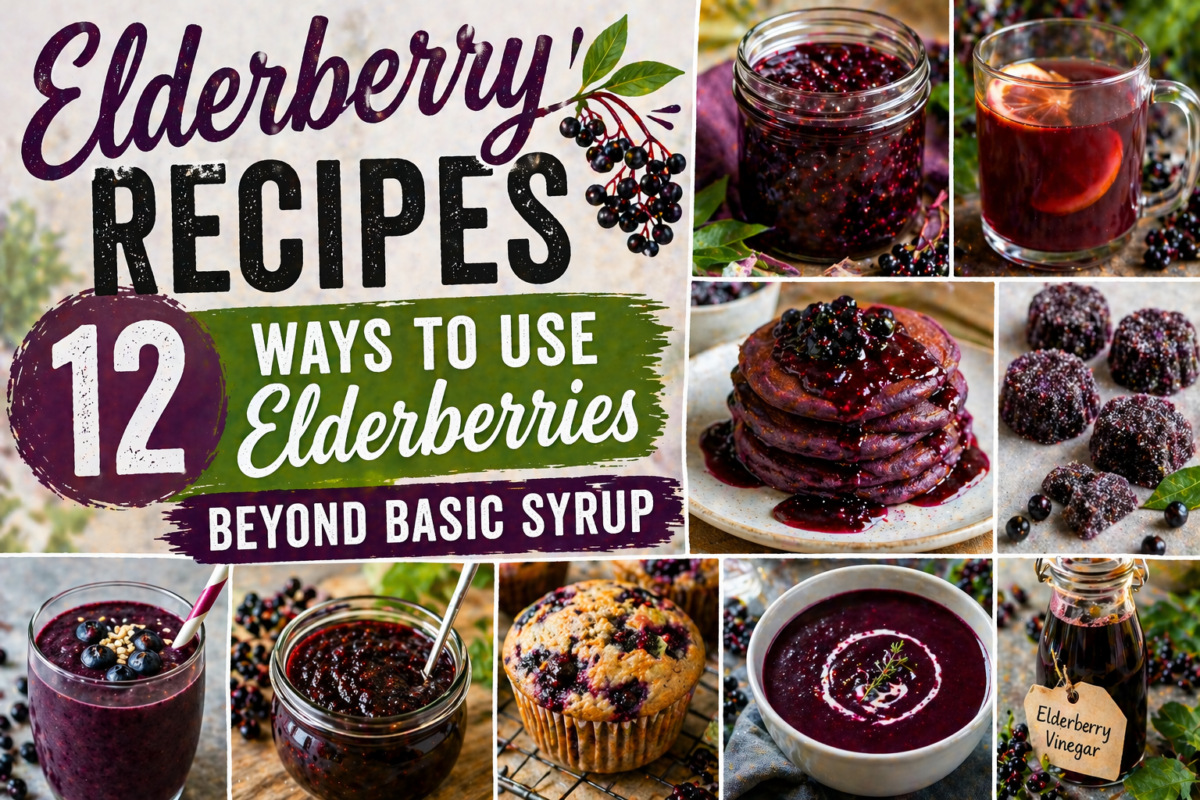
Here are twelve recipes worth adding to your rotation — from the familiar to things you probably haven’t considered yet.


Before Every Recipe — The Safety Reminder
Raw elderberries are toxic. All parts of the elderberry plant — including ripe berries — contain cyanogenic glycosides that cause nausea and vomiting when consumed uncooked. Every recipe below involves cooking. This isn’t optional and it isn’t modern overcaution — it’s been standard practice for as long as elderberries have been used. For a family-focused discussion of raw elderberry safety, review this safety guide before serving elderberry preparations to children.

Heat destroys the problematic compounds completely. Cook your elderberries. Every time. Full explanation: Never Eat Elderberries Until You Read This
1. Classic Elderberry Syrup
The foundation recipe — and the one to master first before everything else.
What you need:
- ⅔ cup dried elderberries (or 1.5 cups fresh/frozen)
- 3.5 cups water
- 1 cinnamon stick
- 5 whole cloves
- 1 tablespoon fresh grated ginger
- 1 cup raw honey (added after cooking)
Method:
Combine elderberries, water, cinnamon, cloves, and ginger in a saucepan. Bring to a boil then reduce to a low simmer. Simmer uncovered 45 minutes until liquid reduces by roughly half. Remove from heat, cool slightly, mash berries, strain through fine mesh or cheesecloth pressing well. When liquid has cooled to warm — not hot — stir in honey until dissolved. Bottle in glass jars, refrigerate, use within 2–3 weeks.

Dosing: 1 tablespoon daily for adults as maintenance. 1 tablespoon every 4–6 hours during active illness. Because serving sizes can vary by preparation, What Is the Ideal Elderberry Dosage for Adults? provides broader guidance for adults.

Full detailed guide: How to Make Elderberry Syrup From Fresh Elderberries
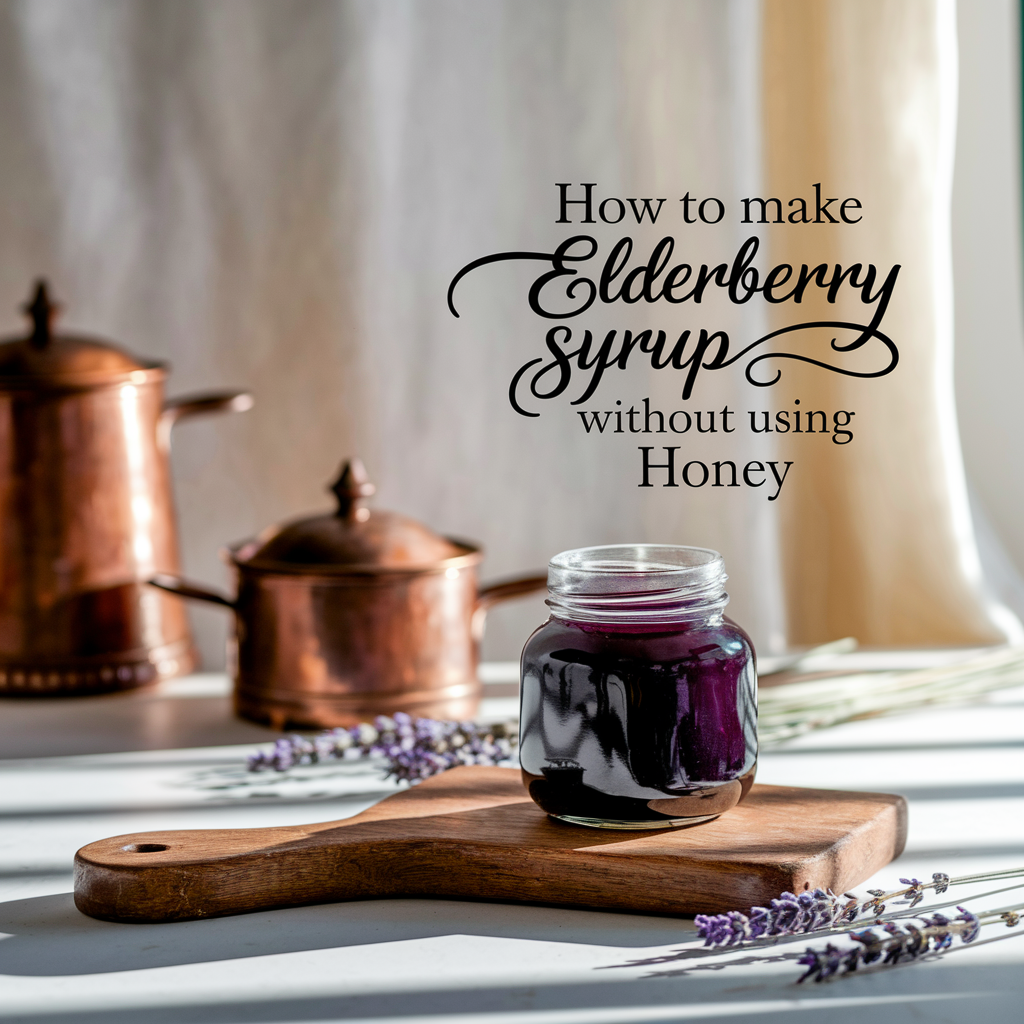
Honey-free version: How to Make Elderberry Syrup Without Honey
2. Elderberry Gummies
Turn your syrup into something kids will ask for every morning without a fight.
What you need:
- 1 cup elderberry syrup (from recipe above)
- 2.5 tablespoons unflavored gelatin powder
- 1 tablespoon raw honey (optional — if your syrup is already sweet)
- 1 tablespoon lemon juice
Method:
Pour cold elderberry syrup into a saucepan. Sprinkle gelatin evenly over the surface and let bloom for 2–3 minutes — do not heat yet. Place over low heat and whisk constantly until gelatin fully dissolves, about 3–5 minutes. Do not boil. Remove from heat, stir in honey and lemon juice. Working quickly, pour or dropper into silicone molds. Refrigerate at least 2 hours until fully set. Store in airtight glass container, refrigerated, up to 2 weeks.
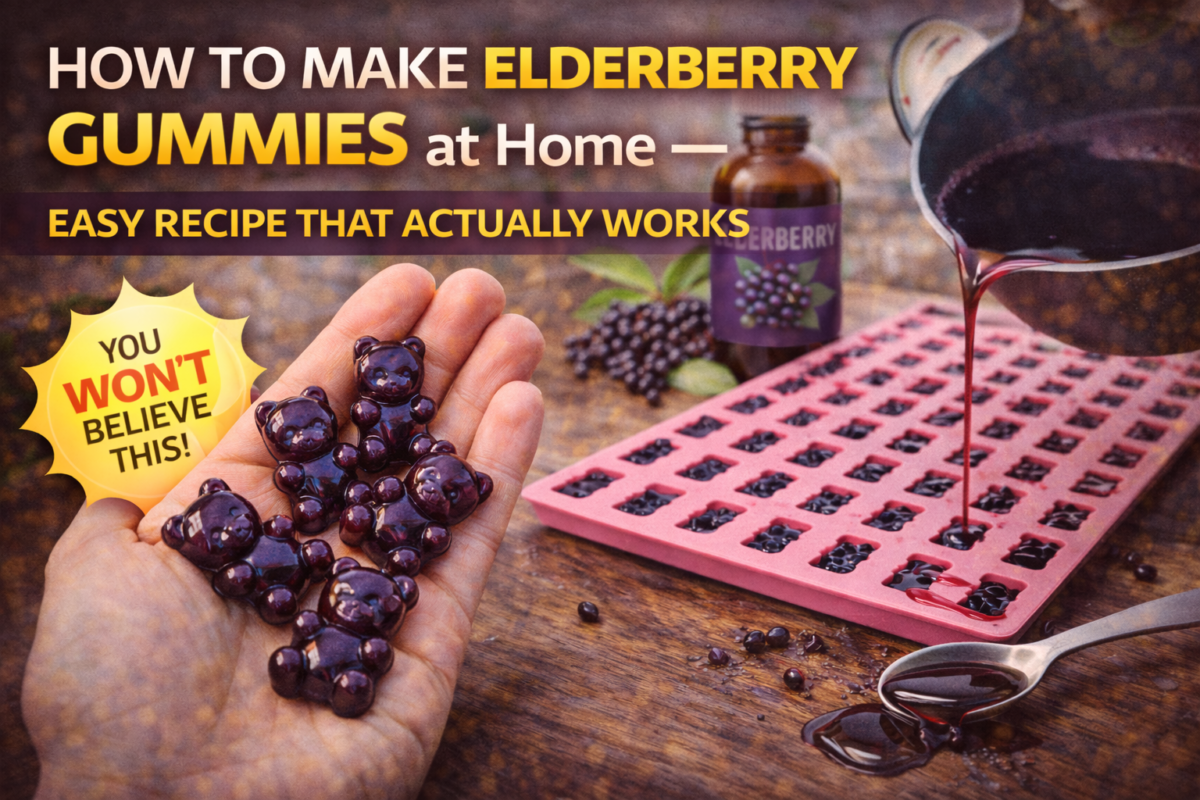
Full recipe with troubleshooting: How to Make Elderberry Gummies at Home
3. Apple and Elderberry Jelly
One of the best ways to use a large elderberry harvest. Deep, jammy, complex — nothing like what you get from a store.
What you need:
- 2 cups elderberry juice (made by simmering 2 cups elderberries in 3 cups water for 20 minutes, then straining)
- 2 cups apple juice (fresh pressed or store bought — no added sugar)
- 3 cups sugar
- 1 packet pectin (or 3 tablespoons liquid pectin)
- Juice of 1 lemon
Method:
Combine elderberry juice, apple juice, lemon juice, and pectin in a large saucepan. Bring to a full rolling boil. Add sugar all at once and stir vigorously. Return to a full rolling boil that can’t be stirred down. Boil exactly 1 minute. Remove from heat, skim foam, ladle into sterilized jars, seal, and process in a water bath for 10 minutes. Let set undisturbed for 24 hours.

Full recipe: How to Make Apple and Elderberry Jelly the Easy Way
4. Elderberry Wine
A serious homemade wine with real depth and aging potential — better than most fruit wines people make at home.
This is the most involved recipe on the list and requires basic home winemaking equipment. The result is worth it — a bold, tannic, complex wine that improves significantly with 6–12 months of aging.
What you need:
- 3 lbs fresh elderberries (or 1–1.5 lbs dried, rehydrated)
- 3 lbs sugar
- 1 packet wine yeast (Lalvin RC-212 recommended)
- 1 tsp acid blend
- ½ tsp yeast nutrient
- 1 Campden tablet
- Water to make 1 gallon

Full step-by-step guide including equipment, fermentation timeline, troubleshooting, and aging recommendations: How to Make Elderberry Wine at Home
5. Elderberry Tea
The simplest daily elderberry habit — gentle, pleasant, genuinely beneficial when done right.
What you need:
- 2 tablespoons dried elderberries
- 2 cups water
- Optional: 1 cinnamon stick, 1 slice fresh ginger, 1 teaspoon dried hibiscus
- Honey and lemon to taste
Method:
Combine elderberries, water, and any additions in a small saucepan. Bring to a full boil then reduce to a simmer. Simmer 15 minutes — do not just steep without boiling. Strain into a mug. Add honey after straining so it’s not degraded by heat. Squeeze of lemon brightens everything.
Important: do not simply steep dried elderberries in hot water without boiling. The full boil and simmer is both a safety measure and an extraction optimization for maximum flavor and compound yield.

The full guide to elderberry tea benefits and best practices: Health Benefits of Elderberry Tea
6. Elderberry Oxymel
An oxymel is a traditional preparation combining honey and apple cider vinegar — one of the oldest herbal medicine formats in existence. Elderberry oxymel is shelf-stable, genuinely delicious, and easy to take as a daily wellness tonic.
What you need:
- 1 cup dried elderberries
- 1 cup raw honey
- 1 cup raw apple cider vinegar (with the mother)
- Optional: 1 tablespoon dried ginger, 1 cinnamon stick
Method:
Combine all ingredients in a clean glass jar. Stir well to dissolve honey. Seal tightly and store at room temperature for 4 weeks, shaking or stirring daily. Strain through cheesecloth, pressing well. Bottle in a clean glass jar. Stores at room temperature for up to a year.
To use: 1 tablespoon daily as a wellness tonic. Dilute in water or take straight. The combination of honey and apple cider vinegar creates a sweet-tart-tangy preparation that most people find surprisingly good.
The oxymel format is particularly useful because it doesn’t require refrigeration — making it ideal for travel or for people who want a longer shelf-stable elderberry preparation than syrup provides.


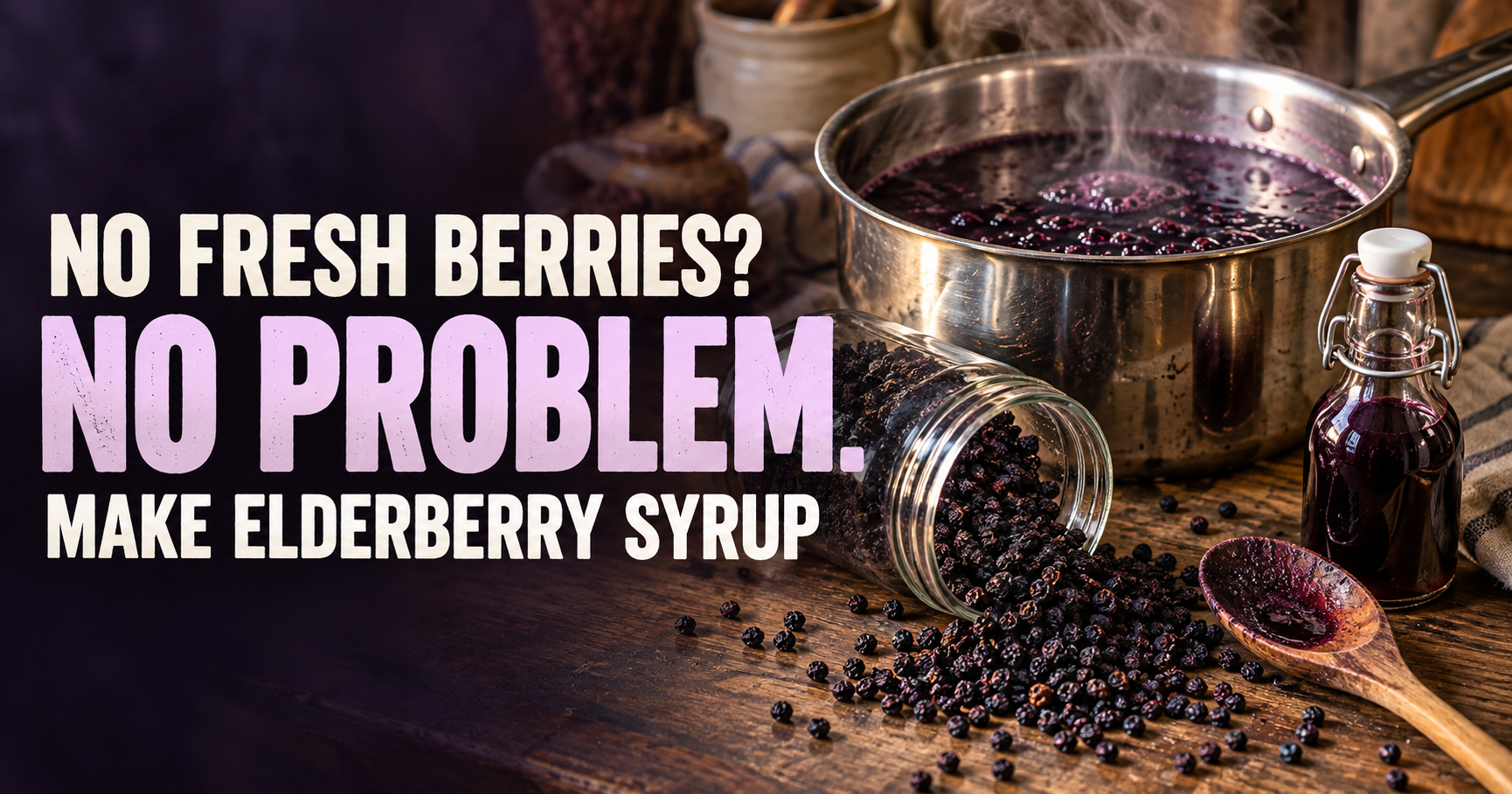
7. Elderberry Honey
Infused elderberry honey is one of the most useful things to keep in your kitchen through cold season. Spread on toast, stirred into tea, taken by the spoonful — it’s elderberry in its most food-integrated form.
What you need:
- 1 cup raw honey
- ½ cup dried elderberries
Method:
Gently warm honey in a saucepan over very low heat — you want it liquid but not hot enough to degrade the honey enzymes. Add elderberries. Stir to combine. Keep on the lowest possible heat for 20 minutes, stirring occasionally. The honey will take on deep purple color and elderberry flavor. Strain out berries, pressing well. Pour into a clean glass jar. Stores at room temperature for up to 6 months.
To use: stir into elderberry tea, drizzle over yogurt, use as a sweetener in elderberry syrup, or take a teaspoon directly during cold season. The honey carries the elderberry compounds in a shelf-stable, no-refrigeration-needed format.
8. Elderberry Lemonade
This is the recipe that surprises people most. Elderberry lemonade is genuinely beautiful — deep purple-pink in color, tart and refreshing, and something worth making for guests rather than just taking as medicine.
What you need:
- 1 cup elderberry juice (simmer 1 cup dried elderberries in 3 cups water for 20 minutes, strain)
- 1 cup fresh lemon juice (about 6–8 lemons)
- ½ cup honey or simple syrup
- 4 cups cold water
- Ice and lemon slices for serving
Method:
Combine cooled elderberry juice, lemon juice, and honey in a pitcher. Stir until honey dissolves. Add cold water and stir. Taste and adjust sweetness. Serve over ice with lemon slices.
Variation — Elderberry Sparkling Lemonade: substitute sparkling water for still water and add immediately before serving. The deep purple against the bubbles is visually striking and the flavor is excellent.
This is also a great way to use elderberry with children who resist syrup — the lemonade format is immediately approachable and the immune-supporting elderberry compounds travel with the flavor.



9. Elderberry Shrub (Drinking Vinegar)
A shrub is a vinegar-based fruit syrup used as a mixer or diluted into sparkling water. Elderberry shrub has a complex sweet-tart flavor that works beautifully as a non-alcoholic mixer or as a kombucha-style daily tonic.
What you need:
- 1 cup elderberry juice (made as above)
- 1 cup apple cider vinegar
- ¾ cup honey or sugar
Method:
Combine elderberry juice and honey in a saucepan. Warm over low heat until honey dissolves — do not boil. Remove from heat and let cool completely. Stir in apple cider vinegar. Bottle in a clean glass jar. Refrigerate for at least 3 days before using to let flavors meld. Keeps refrigerated for 3 months.
To use: 2 tablespoons in 8–10oz sparkling or still water. Add ice. Garnish with lemon if desired. Can also use as a mixer with gin or bourbon for adults.
10. Elderberry Fire Cider
Fire cider is a traditional immune tonic made with apple cider vinegar and a combination of immune-supportive roots and herbs. Adding elderberry creates a more complete immune preparation than either alone.
What you need:
- ½ cup dried elderberries
- ¼ cup fresh horseradish root, grated
- ¼ cup fresh ginger root, grated
- 1 whole head garlic, cloves roughly chopped
- 1 medium onion, roughly chopped
- 2 whole jalapeños, sliced (or to taste)
- 1 lemon, sliced
- 1 tablespoon black peppercorns
- 1 tablespoon turmeric (fresh grated or dried)
- Apple cider vinegar to cover (about 3–4 cups)
- Raw honey to taste (added after straining)
Method:
Combine all solid ingredients in a quart glass jar. Pour apple cider vinegar over to cover completely — press down solids if needed. Seal tightly. Store at room temperature for 4 weeks, shaking daily. Strain through cheesecloth, pressing well. Stir in honey to taste. Bottle and refrigerate. Keeps 6–12 months refrigerated.
To use: 1–2 tablespoons daily as an immune tonic. Not subtle — this is a potent, fiery preparation that’s an acquired taste for most people. Worth acquiring.
11. Elderberry Vinegar
Elderberry-infused vinegar is a versatile kitchen ingredient — use it in salad dressings, marinades, and sauces. It carries elderberry’s deep color and flavor beautifully and keeps for months.
What you need:
- 1 cup dried elderberries
- 2 cups raw apple cider vinegar
Method:
Simmer elderberries in vinegar over very low heat for 20 minutes — do not boil vigorously. Remove from heat and let steep for 24 hours. Strain and bottle. Refrigerate. Keeps up to 6 months.
To use: substitute for regular apple cider vinegar in any dressing or marinade. Particularly good in vinaigrettes with honey and mustard — the elderberry color makes a striking purple-pink dressing that tastes as good as it looks.
12. Elderberry Bone Broth
This one surprises people most — but it works. Adding dried elderberries to bone broth during the last 30 minutes of simmering infuses the broth with elderberry’s anthocyanins and gives it a subtle berry-earthy depth that complements the rich bone broth flavor unexpectedly well.
What you need:
- Your standard bone broth (chicken, beef, or mixed)
- ¼ cup dried elderberries added in the last 30 minutes of simmering
- Remove elderberries by straining before serving or storing
The result is a bone broth with subtle elderberry color and an interesting flavor dimension — plus the immune benefits of both preparations combined. Particularly good during illness when you want maximum immune support in a deeply nourishing format.
Serve as a warming drink during cold season or use as the base for soups and stews.
Working With Dried Elderberries in Any Recipe
Most of these recipes work equally well with fresh, frozen, or dried elderberries. When substituting dried for fresh:
- Use roughly ⅓ the weight — 1 cup dried replaces approximately 2.5–3 cups fresh
- Rehydrate dried elderberries in warm water for 20–30 minutes before using in recipes where texture matters
- For juice extraction, dried berries actually often produce more concentrated yield than fresh

For sourcing quality dried elderberries for any of these recipes: Dried Elderberries — The Mistake Almost Everyone Makes
Frequently Asked Questions
Can you use elderberries in baking?
Yes — cooked elderberry juice or syrup can be incorporated into baked goods. Elderberry muffins, cakes, and quick breads using elderberry syrup or juice as a liquid ingredient are delicious. The berries themselves are too small and seedy to use whole in most baked goods but the juice works beautifully.
Can you make elderberry jam instead of jelly?
Yes — jam uses the whole cooked fruit while jelly uses only the strained juice. Elderberry jam is less common than jelly because elderberry seeds are small and can be slightly gritty in texture. Passing the cooked berries through a food mill removes most seeds and produces a smooth jam. Many people prefer the completely smooth texture of jelly.
Can I make these recipes with store-bought elderberry syrup?
For the gummies, yes — commercial elderberry syrup works as a base. For the other recipes requiring elderberry juice, you’ll need to start with actual elderberries rather than syrup.
How do you store elderberry syrup long term?
Refrigerate up to 2–3 weeks. Freeze in ice cube trays for up to 6 months. Add 1 tablespoon of vegetable glycerin or brandy per batch to extend refrigerated shelf life to 4–6 weeks.

What is the best way to use elderberries for immune support?
For maximum therapeutic value during illness — syrup at therapeutic doses. For daily maintenance — syrup, gummies, or tea consistently throughout cold season. The complete dosing guide: Elderberry Dosage for Adults
Twelve Recipes, One Versatile Berry
Elderberry is not a one-trick ingredient. It’s a pantry workhorse with real culinary depth that earns its place beyond the medicine cabinet.
Start with the syrup if you haven’t already. Then make the jelly when you have more berries than you know what to do with. Try the oxymel when you want something shelf-stable for travel. Make the lemonade for guests who’ve never tried elderberry and watch their reaction when they see that color.
The recipes get better every year as you refine them to your taste. That’s the real reward of working with an ingredient this good.
About the Author
Lisa Monroe is a certified nutritional consultant and food writer who has spent fifteen years helping families build practical wellness habits that actually stick. She holds a certification in holistic nutrition from the Nutritional Therapy Association and contributes regularly to ElderberryPro.com. She has made every recipe on this list multiple times and has strong opinions about which ones are worth making again.