
Buying dried elderberries? Here’s what to look for, what to avoid, how to use them safely, and why quality varies more than most people realize.


Key Takeaways
- Dried elderberries are NOT safe to eat raw — they must be cooked just like fresh berries
- Quality varies enormously between brands — species, origin, and processing all matter
- Use roughly 1/3 the weight of dried vs. fresh in any recipe — they’re highly concentrated
- Properly stored dried elderberries last 12–18 months without significant loss of potency
- Organic certification matters more for elderberries than most dried fruits
- The best dried elderberries are Sambucus nigra — avoid anything that doesn’t specify the botanical name
Every fall without fail, someone in an elderberry Facebook group posts a photo of their smoothie and asks why they feel sick. They added dried elderberries straight from the bag. Didn’t cook them. Just tossed them in like raisins.
That’s the mistake. And it’s not a minor one.
Dried elderberries look harmless — they look like small dark raisins. They smell faintly of berry. Nothing about their appearance signals danger. But drying elderberries removes moisture. It does not remove the cyanogenic compounds that make raw elderberries toxic. Those compounds are still fully present in every uncooked dried berry, and they will make you sick.
That’s the most important thing in this article. Everything else — how to buy the best ones, how to store them, how to use them — comes after understanding that.



Why You Can’t Eat Dried Elderberries Raw
Raw and dried elderberries both contain cyanogenic glycosides — specifically a compound called sambunigrin. When this compound is digested, it releases hydrogen cyanide. The result is nausea, vomiting, stomach cramping, and diarrhea. In larger amounts consumed by smaller people, it can be more serious.
Cooking destroys these compounds completely. Bringing elderberries to a boil and simmering them for at least 15 minutes neutralizes sambunigrin and makes the berries safe. This is why every legitimate elderberry preparation — syrup, tea, jelly, wine — involves cooking the berries first.
What this rules out:
- Snacking on dried elderberries straight from the bag
- Adding them raw to smoothies or overnight oats
- Steeping them in cold or warm water without boiling
- Eating them mixed into granola or trail mix
The only elderberry products safe to consume without additional cooking are ones that have been properly processed by the manufacturer — commercial syrups, gummies, capsules, and teas that have been heat-treated in production.
When you buy a bag of dried elderberries, you are buying a raw ingredient that requires cooking. Full stop. The complete explanation of why: never eat elderberries until you read this.
Dried vs. Fresh Elderberries — Which Is Better?
The honest answer: dried is more practical, fresh is marginally better in flavor. For most people, dried wins by default.
Fresh elderberries are only available for a narrow window in late summer — roughly August through September depending on where you live. If you grow your own or have access to a local foraging spot, fresh berries are a treat worth using. If you don’t, you’re not finding them at the grocery store.
Dried elderberries are available year-round, store easily for over a year, and produce excellent syrup, tea, and wine. The flavor is slightly more concentrated and tannic than fresh — some people prefer it, some find it a bit more assertive. Either way the anthocyanin content is excellent because drying concentrates the compounds rather than depleting them. Dried Fresh Frozen Availability Year-round August–September only Year-round Flavor Concentrated, earthy, tannic Bright, fresh, slightly milder Close to fresh Potency High per ounce Lower per ounce Similar to fresh Conversion 1 lb = ~2.5 lbs fresh Standard Same as fresh Shelf life 12–18 months 1–2 days 6–12 months frozen Convenience Excellent Poor unless you grow your own Good
For most families making syrup through cold season, dried is the practical choice. Buy in bulk in September, store properly, and you have everything you need through March.



How to Buy Quality Dried Elderberries
This is where most people underinvest their attention. Dried elderberries look similar across brands but quality varies dramatically. Here’s what actually matters:
Species — Non-Negotiable
The label must specify the botanical species. You want one of two:
Sambucus nigra — European black elderberry. Gold standard for medicinal use. Used in virtually all clinical research. Highest anthocyanin content. This is what you want.
Sambucus canadensis — American black elderberry. Closely related, very similar profile, native to North America. Excellent choice, especially from American growers.
Any product that just says “elderberry” with no botanical name is a red flag. You don’t know what species you’re getting and the medicinal profile could be significantly different.
Organic Matters More Than You Think
Elderberries absorb pesticides readily. When you concentrate dried berries into syrup — cooking them down and reducing the liquid by half — you’re also concentrating whatever was sprayed on them.
Organic certification is worth the premium for elderberries specifically. If you can’t find certified organic, look for suppliers who are transparent about their growing practices. Vague “natural” claims without certification aren’t meaningful.
Color Is a Quality Signal
Open the bag and look. Quality dried elderberries should be deep purple-black, relatively uniform in color, and small — roughly the size of a small pea. They should smell faintly of dark berry.
Brownish, faded, or highly variable coloring signals old stock, improper drying, or lower quality fruit. The anthocyanins responsible for elderberry’s health benefits are also responsible for its deep color — faded color means faded potency.
Check for Stems
Some dried elderberry products contain significant stem material mixed in with the berries. Stems are more toxic than the berries themselves and contribute bitterness to your preparations. Quality products are mostly clean berries. Some stems are unavoidable but you shouldn’t be getting more stem than berry.
Origin
Eastern Europe — Bulgaria, Poland, Austria — produces a large proportion of commercial dried elderberries and the quality is generally excellent. American-grown is also available and typically high quality. What you want to avoid is products with zero sourcing transparency.
The best dried organic elderberries currently available and exactly what to look for: the best dried organic elderberries you can buy.


How Much to Buy
A practical guide based on what you’re making: Use Amount of Dried Elderberries One batch syrup (~16oz finished) ⅔ cup / ~3oz Monthly syrup supply (1 person) ~6oz Monthly syrup supply (family of 4) ~12oz Full cold season supply (family) 2–3 lbs One gallon elderberry wine 1–1.5 lbs One week of daily elderberry tea 2–3oz
Most bags sell in 1 lb quantities. Buy 2–3 lbs in September for a family that uses elderberry syrup regularly through winter. Running out in January and scrambling to reorder is a common and completely avoidable problem.
How to Use Dried Elderberries
Elderberry Syrup — The Main Event
This is what most people buy dried elderberries for and it produces excellent results.
Ratio: ⅔ cup dried elderberries to 3.5 cups water for a standard batch yielding roughly 16oz of finished syrup.
Method:
- Combine elderberries, water, and spices (1 cinnamon stick, 5 whole cloves, 1 tbsp grated ginger) in a saucepan
- Bring to a boil then reduce to a low simmer
- Simmer uncovered 45 minutes until liquid reduces by roughly half
- Remove from heat, cool slightly, mash berries against the pot
- Strain through fine mesh strainer or cheesecloth, pressing hard to extract every drop
- When cooled to warm — not hot — stir in 1 cup raw honey
- Bottle in glass jars, refrigerate, use within 2–3 weeks
The honey goes in after cooling because heat destroys the beneficial enzymes in raw honey. Don’t skip the cooling step. Full detailed guide: how to make elderberry syrup from fresh elderberries — the same method applies to dried with the ratio above.
Need a honey-free version? How to make elderberry syrup without honey.
Elderberry Tea
Mild, earthy, pleasant — and easy to make from dried berries.
Method: Add 1–2 tablespoons dried elderberries to 2 cups water. Bring to a boil and simmer 15 minutes — don’t just steep without boiling, as this doesn’t fully neutralize the cyanogenic compounds. Strain and sweeten with honey to taste. A cinnamon stick or slice of ginger simmered alongside improves the flavor significantly.
Everything about elderberry tea benefits and best uses: health benefits of elderberry tea.
Elderberry Wine
Dried elderberries are actually preferred by many home brewers for their consistent availability and concentrated tannin structure.
Ratio: 1–1.5 lbs dried elderberries per gallon of wine. Rehydrate in boiling water for 30 minutes before proceeding. Full winemaking guide: how to make elderberry wine at home.
Elderberry Jelly
Cook dried elderberries down with water to extract the juice, strain, then proceed with a standard jelly recipe using the extracted juice. Apple and elderberry jelly recipe here.
Elderberry Gummies
You’re not adding dried berries directly to gummies — you cook them into syrup first and use that syrup as your gummy base. Full homemade gummy guide.
How to Store Dried Elderberries
Storage matters more than most people realize. Anthocyanins — the compounds you’re paying for — degrade with heat, light, oxygen, and moisture.
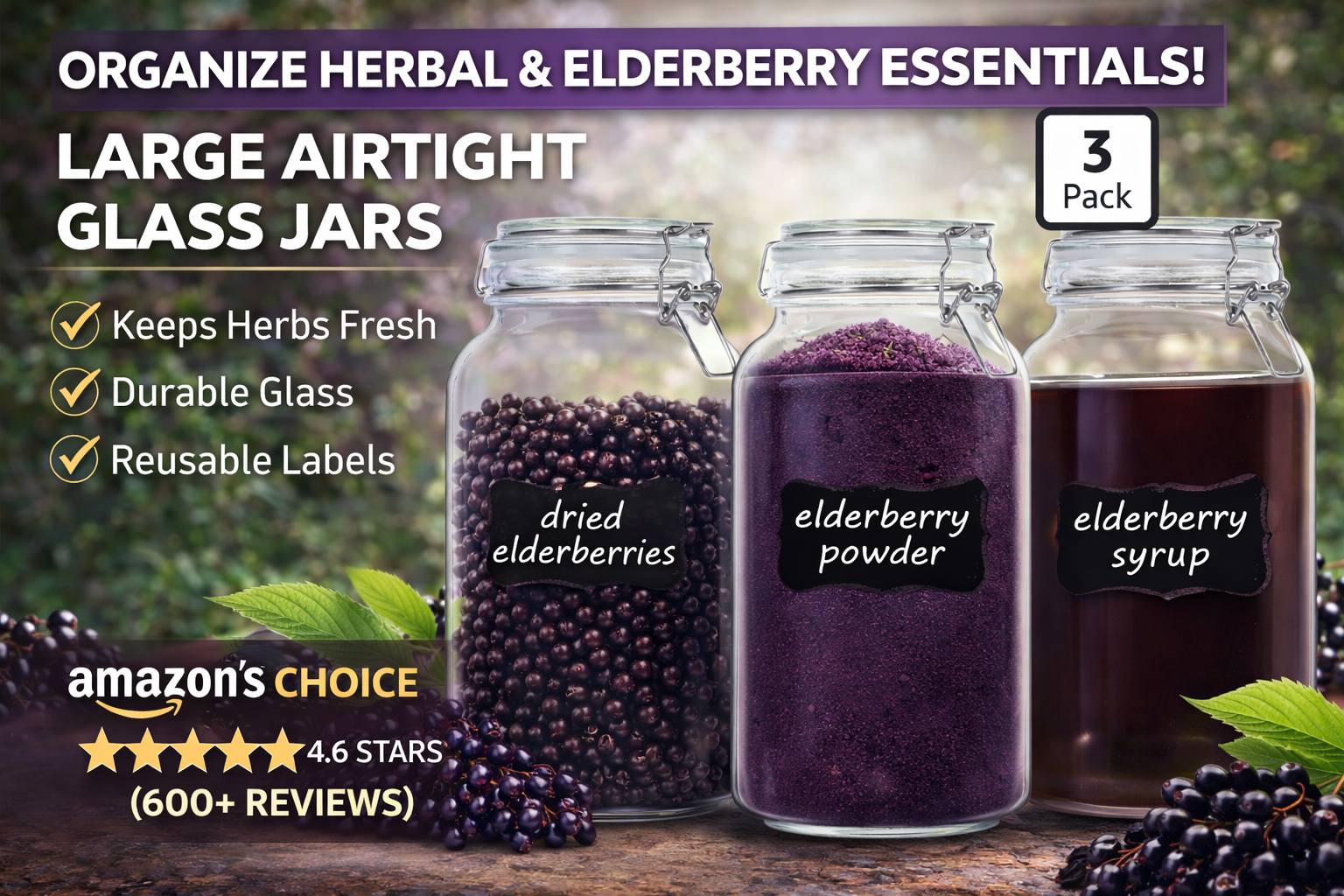
Container: airtight glass jar. Exposure to air causes oxidation that degrades potency faster than anything else. These airtight glass jars work perfectly and let you see how much you have left.
Location: cool, dark pantry or cabinet. Away from the stove, away from sunlight, away from appliances that generate heat.
Temperature: room temperature is fine. Refrigeration isn’t necessary and risks introducing moisture. Freezing extends shelf life to 2+ years if you’re buying in significant bulk.
Shelf life: 12–18 months stored properly. After that potency gradually declines though they remain safe. Signs of a bad batch: musty smell, visible mold, significant browning, clumping from moisture. When in doubt replace them — a bag costs less than one bottle of commercial syrup.



What You’re Actually Getting From Dried Elderberries
The reason dried elderberries are worth using isn’t tradition — it’s anthocyanin content. Elderberries rank among the highest anthocyanin-density foods ever tested. These pigment compounds are responsible for the documented antiviral and anti-inflammatory effects that make elderberry genuinely useful for immune support.
Drying concentrates these compounds rather than depleting them. Quality dried elderberries from Sambucus nigra cooked into syrup and taken consistently deliver a real, meaningful daily dose of the compounds that clinical research supports.
This is why homemade syrup from quality dried elderberries often outperforms commercial syrups — you’re working with concentrated, properly sourced raw material rather than a diluted commercial extract of unknown quality. The research behind what elderberry actually does in your immune system: elderberry for immune support — does it actually work.
Frequently Asked Questions
Can you eat dried elderberries like raisins?
No. Dried elderberries are toxic raw — the drying process removes moisture but does not destroy the cyanogenic compounds that cause nausea and vomiting. They must be cooked before consuming.
How many dried elderberries do I need for syrup?
⅔ cup (about 3oz) of dried elderberries per 3.5 cups water produces one standard batch of syrup yielding roughly 16oz finished product.
Are dried elderberries as potent as fresh?
Per ounce, dried elderberries are more potent than fresh because the compounds are concentrated when water is removed. Per batch you use less dried than fresh — roughly ⅓ the weight — to achieve the same result.
How long do dried elderberries last?
12–18 months stored in an airtight container in a cool dark location. Freeze them for up to 2 years if buying in bulk.
Where do you buy dried elderberries?
Health food stores, online retailers like Amazon, specialty herb suppliers, and directly from small farms. Online generally offers better selection and value than retail. Prioritize organic, species-specified (Sambucus nigra or Sambucus canadensis) products from transparent suppliers.
Can you make tea from dried elderberries without boiling them?
No — you must boil them. Simply steeping dried elderberries in hot water without bringing them to a full boil does not adequately neutralize the cyanogenic compounds. Always boil and simmer for at least 15 minutes.
What’s the difference between dried elderberries and elderberry powder?
Dried elderberries are the whole dried fruit. Elderberry powder is the whole dried berry ground up — essentially elderberry fruit powder. Both require cooking in whole-food preparations. Elderberry extract powder is different — it’s a concentrated extract, not whole fruit powder, and is what you’ll find in quality capsule supplements.
Can I use dried elderberries past their best-by date?
Generally yes if stored properly and they smell and look fine — no mold, no mustiness, normal dark color. Potency gradually declines after 18 months but they remain safe. For medicinal use, fresher is better.



About the Author
Tom Hargrove is a certified nutritionist and natural health researcher with twelve years of experience evaluating herbal products and supplements. He contributes to ElderberryPro.com with a focus on cutting through marketing noise to help people understand what they’re actually buying — and how to use it correctly. He has an opinion about dried elderberry quality that he will share with anyone who asks.
As an Amazon Associate we earn from qualifying purchases through some links in our articles.