
In 2016, a group of researchers published a randomized, double-blind, placebo-controlled trial in the journal Nutrients. It’s the kind of study design that pharmaceutical companies spend millions to run. The subject wasn’t a new drug. It was elderberry.
The study followed 312 economy class air travelers — one of the highest cold-exposure situations you can put a person in — randomized to receive either elderberry extract or placebo throughout their travel. The results were significant enough to be cited in dozens of subsequent papers.
Travelers taking elderberry who did get a cold had colds that were on average two days shorter and significantly less severe than the placebo group.
Two days shorter. From a berry.
The Comparison Worth Knowing About
Oseltamivir — sold as Tamiflu — is the most commonly prescribed antiviral for influenza. It costs $130 to $170 for a typical course without insurance. The clinical evidence for Tamiflu shows it reduces flu duration by approximately one day when started within 48 hours of symptoms.
The 2004 elderberry flu study — published in the Journal of International Medical Research — showed elderberry reduced flu duration by an average of four days compared to placebo.
Four days versus one day. A berry versus a $150 prescription.
To be precise: these were different studies, different populations, different designs. A direct head-to-head comparison isn’t scientifically valid without a trial testing both simultaneously. Researchers haven’t run that trial yet. What we have are separate studies showing separate effect sizes — and elderberry’s numbers are, to put it plainly, striking.

What the Research Actually Shows
The evidence base for elderberry is more consistent than most people realize:
The 2004 study in the Journal of International Medical Research: 60 flu patients randomized to elderberry extract or placebo. Elderberry group recovered four days faster. Symptom severity significantly lower throughout.
The 2016 travel study in Nutrients: 312 air travelers. Elderberry group had shorter, less severe colds. Statistically significant results.
The 2019 meta-analysis in Complementary Therapies in Medicine: pooled data from multiple controlled trials, concluded elderberry substantially reduced upper respiratory symptoms in both duration and severity.
Three independent lines of evidence pointing the same direction. That’s more consistency than you’ll find for most natural supplements.
What the Research Doesn’t Show
Intellectual honesty matters here. The studies are mostly small. Funding sources vary. We don’t have the large-scale multi-site independently funded trials that pharmaceutical antivirals have. Scientists appropriately describe the evidence as promising and consistent rather than conclusive.
Elderberry is not a replacement for the flu vaccine in high-risk individuals. It is not a treatment for serious influenza complications. It doesn’t work if you start it on day four of a full-blown flu.
What it is: a well-researched, safe, evidence-supported natural option that works best when started early — ideally at the very first sign of symptoms — and taken at therapeutic doses, not just a daily maintenance amount.


Why Timing Is Everything
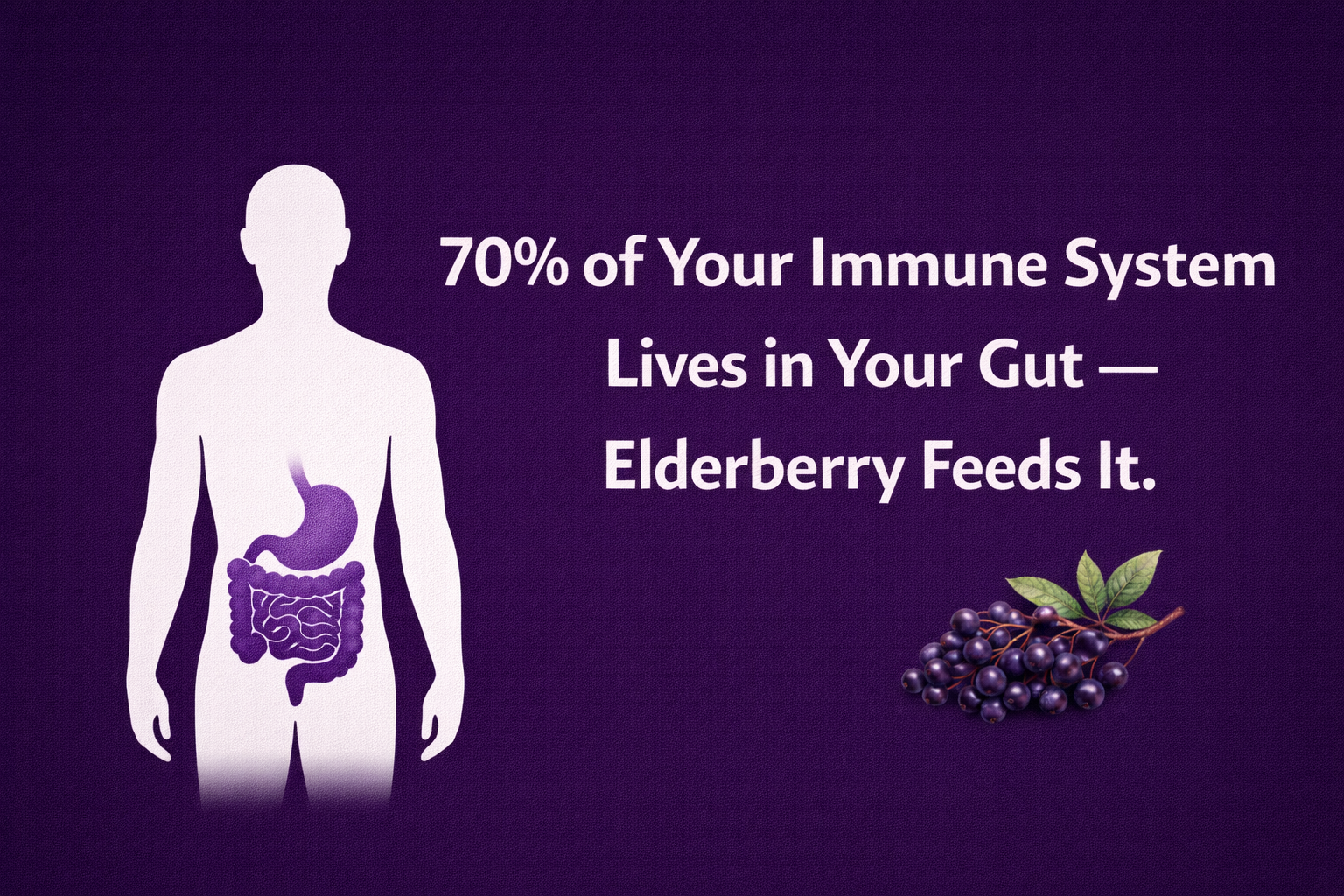
The mechanism explains the timing requirement. Elderberry’s anthocyanins appear to bind to viral particles and block them from entering your cells. This is most effective when viral load is still low — in the first 24 to 48 hours of infection when the virus is still trying to establish a foothold.
Wait until day three of full symptoms and you’ve missed the highest-leverage window. The virus is already well established and replicating aggressively. Elderberry can still help reduce severity and duration at that point, but the dramatic effects seen in the studies come from early intervention.
Keep it on hand. Start it immediately. That’s the protocol that matches what the research actually tested.
The full breakdown of elderberry’s effectiveness, mechanism, and how to use it right: does elderberry really work for colds and flu.
The Takeaway
A berry with 2,400 years of traditional use just happens to have clinical trial evidence showing it shortens flu duration by four days. That’s not a coincidence. That’s what happens when traditional medicine and modern research point at the same thing.
It’s not magic. It’s not a replacement for medical care when you need it. But for most healthy adults looking for a safe, evidence-informed way to get through cold and flu season faster — elderberry earns its place in the cabinet.
For everything about dosing correctly so you actually get these results: elderberry dosage for adults — how much, when, and what most people get wrong.
About the Author:
Dr. James Calloway is a functional medicine practitioner with over twenty years of clinical experience. He writes for ElderberryPro.com to help people understand what the research actually shows — not what supplement marketing claims. Nothing in his writing constitutes personal medical advice.
As an Amazon Associate we earn from qualifying purchases through some links in our articles.