
Most elderberry content focuses on one thing: the antiviral mechanism. Anthocyanins bind to flu virus particles. Cytokines get stimulated. Immune response speeds up. Cold gets shorter.
That’s real. That’s documented. That’s not what this article is about.
This is about the part of elderberry’s immune benefit that almost nobody talks about — the part that builds over weeks rather than days, that works whether or not you’re currently sick, and that connects to one of the most significant shifts in how modern medicine understands human health.
It starts in your gut.

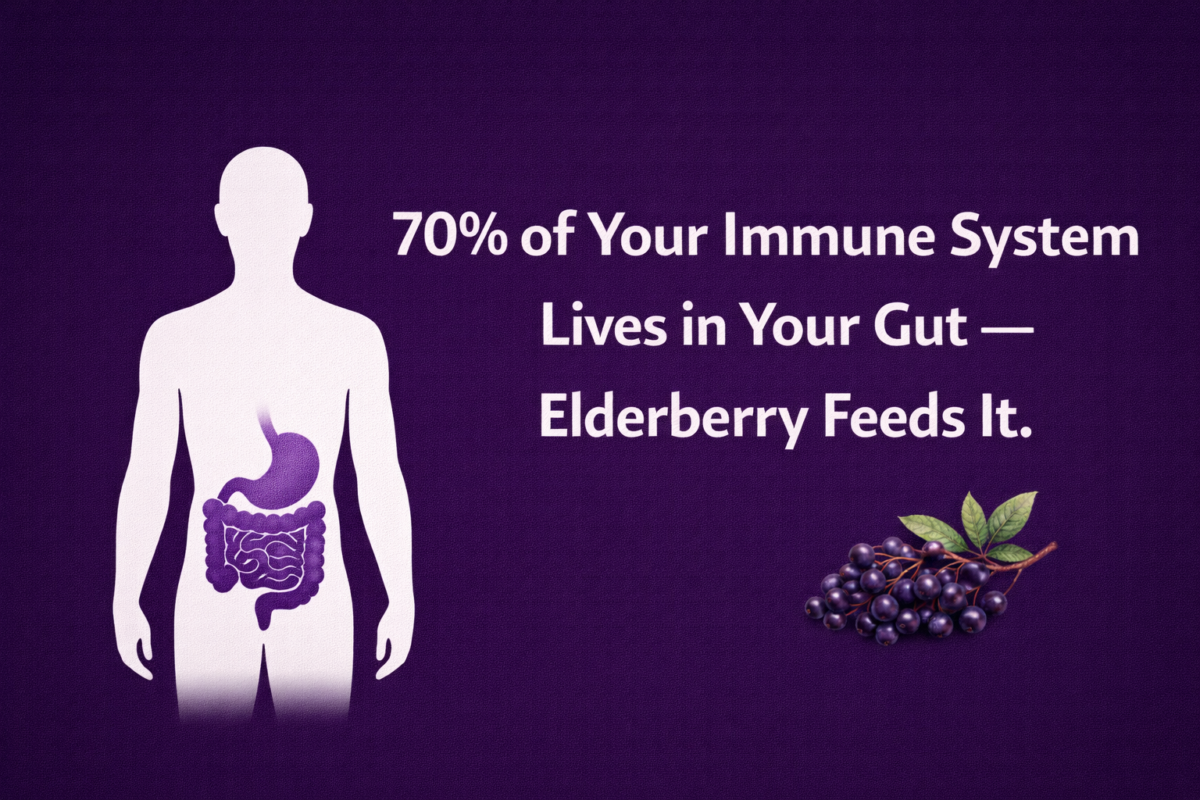
70% of Your Immune System Is in Your Digestive Tract
This is not a wellness blog statistic. This is established immunology.
The gut-associated lymphoid tissue — GALT — is the largest immune organ in the human body. It contains more immune cells than anywhere else. It produces more antibodies. It makes more immune signaling decisions. The gut microbiome — the trillions of bacteria, fungi, and other microorganisms living in your digestive tract — directly regulates immune function at every level.
When your gut microbiome is diverse and healthy, your immune system is better calibrated. It responds more appropriately to real threats. It overreacts less to harmless ones. It recovers faster from illness. It maintains lower baseline inflammation.
When your gut microbiome is disrupted — by antibiotics, poor diet, chronic stress, processed food — your immune function degrades in ways that no supplement can fully compensate for. You get sick more often. You stay sick longer. Your inflammatory baseline rises.
The connection between gut health and immune function is one of the most active areas of research in modern medicine. The science behind it: over 70% of your immune system lives in your gut.

Where Elderberry Fits In
Elderberry is rich in polyphenols — plant compounds that your digestive system doesn’t fully absorb but your gut bacteria absolutely love.
Polyphenols act as prebiotics — they selectively feed the beneficial bacteria in your gut microbiome, helping them grow, diversify, and outcompete less beneficial species. A more diverse, robust gut microbiome means better immune regulation across the board.
This is separate from elderberry’s antiviral mechanism. The antiviral effect is acute — it works in the short window around infection. The gut microbiome effect is chronic — it builds over weeks and months of consistent elderberry consumption, gradually improving the baseline environment your immune system operates from.
Think of it this way: the antiviral mechanism is the emergency response. The gut microbiome support is the infrastructure that makes the emergency response faster and more effective when it’s needed.
The Inflammation Connection
Here’s where it gets more interesting. Chronic low-grade inflammation — driven significantly by gut microbiome disruption — is one of the most underappreciated factors in immune dysfunction.
People who get sick constantly, stay sick longer than they should, or feel run down most of the time often have elevated baseline inflammation. This systemic inflammation impairs immune cell function, disrupts cytokine signaling, and creates a body that’s simultaneously overreacting (chronic inflammation) and underperforming (reduced ability to mount acute immune responses).
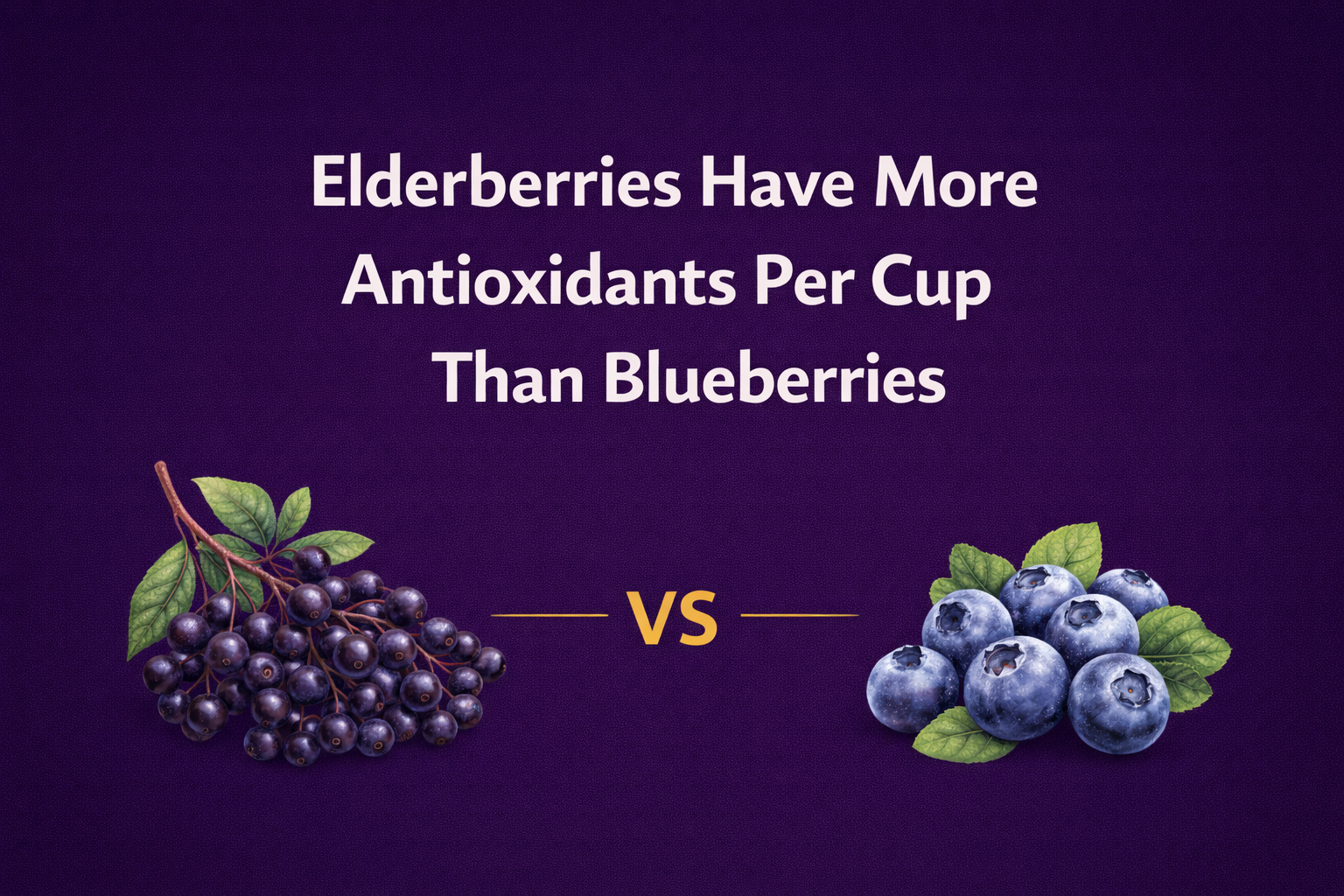
Elderberry’s anthocyanins are potent anti-inflammatory compounds independent of their antiviral properties. They inhibit inflammatory cytokines and reduce oxidative stress systemically. Regular elderberry consumption gradually reduces baseline inflammation — which directly improves immune function even when you’re not acutely fighting a virus.
This is why people who take elderberry consistently through a full cold season report getting sick less often — not just recovering faster. The baseline matters.


The Gut-Immune Axis in Practice
Understanding this connection changes how you think about elderberry supplementation. If you’re taking elderberry only when you’re sick, you’re missing the larger benefit.
The approach that captures both mechanisms:
Daily maintenance through cold season — builds gut microbiome support and baseline anti-inflammatory benefit over weeks and months. The compound effect over a full season is significantly greater than the sum of individual doses.
Therapeutic dosing at first symptoms — the acute antiviral mechanism that the clinical research demonstrates. Requires higher, more frequent dosing than maintenance.
Gut health as the foundation — elderberry’s polyphenol benefits are amplified when the rest of your diet supports a healthy microbiome. Fermented foods, diverse fiber intake, and reduced ultra-processed food consumption work synergistically with elderberry’s prebiotic effect. Fermented foods and gut health is worth understanding alongside elderberry.
Why This Matters More Than the Marketing
Most elderberry marketing focuses on the acute immune “boost” because it’s easy to explain and easy to sell. Take this when you’re sick and feel better faster. Simple. Compelling.
The deeper story — that consistent elderberry consumption supports gut microbiome diversity, reduces systemic inflammation, and builds the immune infrastructure that makes acute responses more effective — is harder to put on a label but more important to understand if you want to actually optimize your immune health rather than just treat individual colds reactively.
The people who get the most out of elderberry aren’t the ones who grab it off the shelf when they’re already sick. They’re the ones who take it consistently from September through March, support their gut health with diet and fermented foods, and reach for it immediately at the first sign of anything.
That’s the full picture. And the gut is at the center of it.
For everything about building a real elderberry routine that captures both the acute and long-term benefits: how I use elderberry to boost my immune system daily.
About the Author:
Dr. James Calloway is a functional medicine practitioner with over twenty years of clinical experience and certification in integrative medicine through the Academy of Integrative Health and Medicine. He writes for ElderberryPro.com to help people understand the mechanisms behind natural health interventions — not just the marketing claims. Nothing in his writing constitutes personal medical advice.
As an Amazon Associate we earn from qualifying purchases through some links in our articles.