
Most elderberry syrups marketed to kids are more sugar than elderberry. Here’s how to spot the difference — and the options worth actually giving your child this cold season.

Key Takeaways
- Never give honey-based elderberry syrup to children under 12 months — use honey-free only
- Most commercial kids elderberry syrups are heavily diluted with sugar — label reading is essential
- Elderberry extract should appear near the top of the ingredient list — not buried behind sweeteners
- Homemade elderberry syrup is the most potent and cost-effective option for families who’ll actually make it
- Dosage for kids is significantly lower than adults — start small and build up
- The best elderberry syrup for kids is the one they’ll actually take without a daily battle
Every cold season the same thing happens. A child comes home from school with something. You remember you meant to start elderberry in September. You drive to the health food store and stare at a shelf of options with no idea which one is actually worth buying.
Some cost $28. Some cost $14. Most of them have more sugar than elderberry. A few are genuinely good.
Here’s how to tell the difference — and which ones are worth your money.



What to Look For Before You Buy Anything
Before getting to specific products, you need to know how to read a label. Because elderberry syrup marketing is aggressive and the claims on the front of the bottle tell you almost nothing useful.
Check the ingredient list — not the front label.
Ingredients are listed by weight in descending order. The first ingredient is what the product is mostly made of. If water appears first and elderberry appears fourth — after sugar and citric acid — you’re buying flavored sugar water with a purple label.
What you want to see: elderberry extract, elderberry juice concentrate, or black elderberry extract appearing first or second on the ingredient list.
Extract vs. juice vs. fruit — they’re not equal.
Elderberry extract is concentrated. Elderberry juice is diluted. Elderberry fruit listed as an ingredient tells you almost nothing about how much active compound is in the product. Look for extract wherever possible.
Milligrams matter.
The best products tell you exactly how many milligrams of elderberry extract are in each serving. Anything above 400mg per serving is meaningful. No milligram listing at all is a yellow flag.
Honey vs. sugar vs. no sweetener.
Quality syrups use raw honey as the sweetener — it adds its own antimicrobial properties and a better flavor profile. Cheaper products use cane sugar, glucose syrup, or artificial sweeteners. For children under 12 months, honey is not an option — you need a honey-free formulation specifically.
Organic certification.
Elderberries absorb pesticides readily. For a product you’re giving children daily, organic matters more than it does for most supplements.
Age-Based Buying Guide
Before recommending anything, the age of your child determines what you can give them.
Under 12 months: Honey-free elderberry only. Full stop. Raw honey carries infant botulism risk. Any syrup with honey is off the table for this age group. Liquid elderberry drops formulated for infants are the appropriate form.
12 months to 2 years: Honey-free still preferred. Small doses. If giving honey-based syrup, confirm with your pediatrician first.
2 years and up: Standard children’s elderberry syrup at age-appropriate doses. Both honey and honey-free formulations are appropriate.
School age (6–12): Can handle full children’s dosing. Gummies become a practical daily habit alternative to syrup — but syrup remains the better option during active illness for therapeutic dosing flexibility.
Full dosing breakdown by age: Elderberry for Kids — The Complete Parent’s Guide



The Best Elderberry Syrup Options for Kids
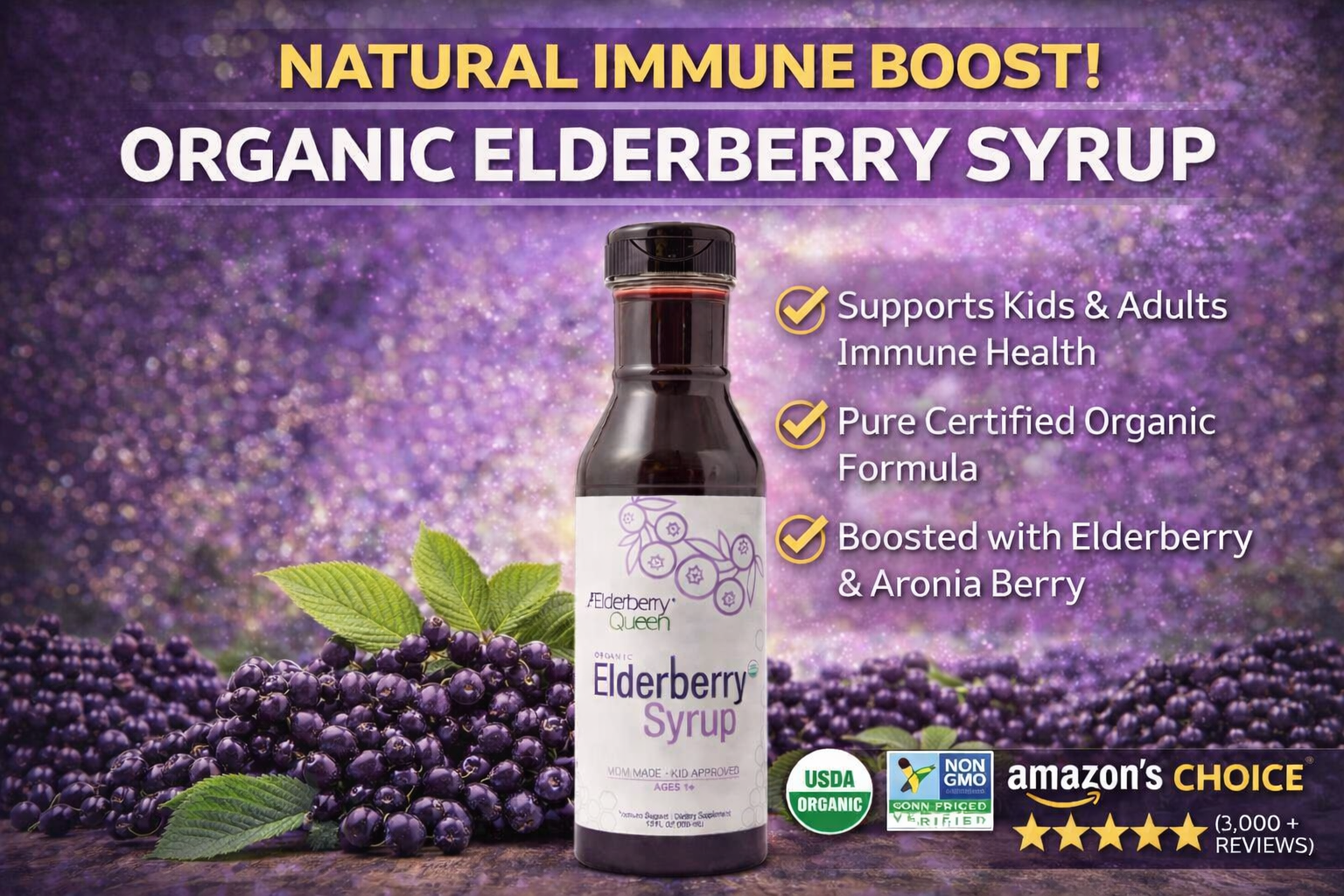
Best Overall — Elderberry Queen Organic Elderberry Syrup
This is the one I come back to when someone asks for a straightforward recommendation. Organic certified, elderberry extract listed prominently, raw honey as the sweetener, clean ingredient list without unnecessary additives.
The flavor is rich and genuinely berry-forward — not medicinal, not artificially sweet. Most kids take it off the spoon without complaint. The concentration is meaningfully higher than drugstore brands in the same price range.
It comes in a 12oz bottle which lasts a family of four roughly three to four weeks at maintenance dosing — longer if you’re only using it when symptoms appear.
Click here to buy elderberry Queen
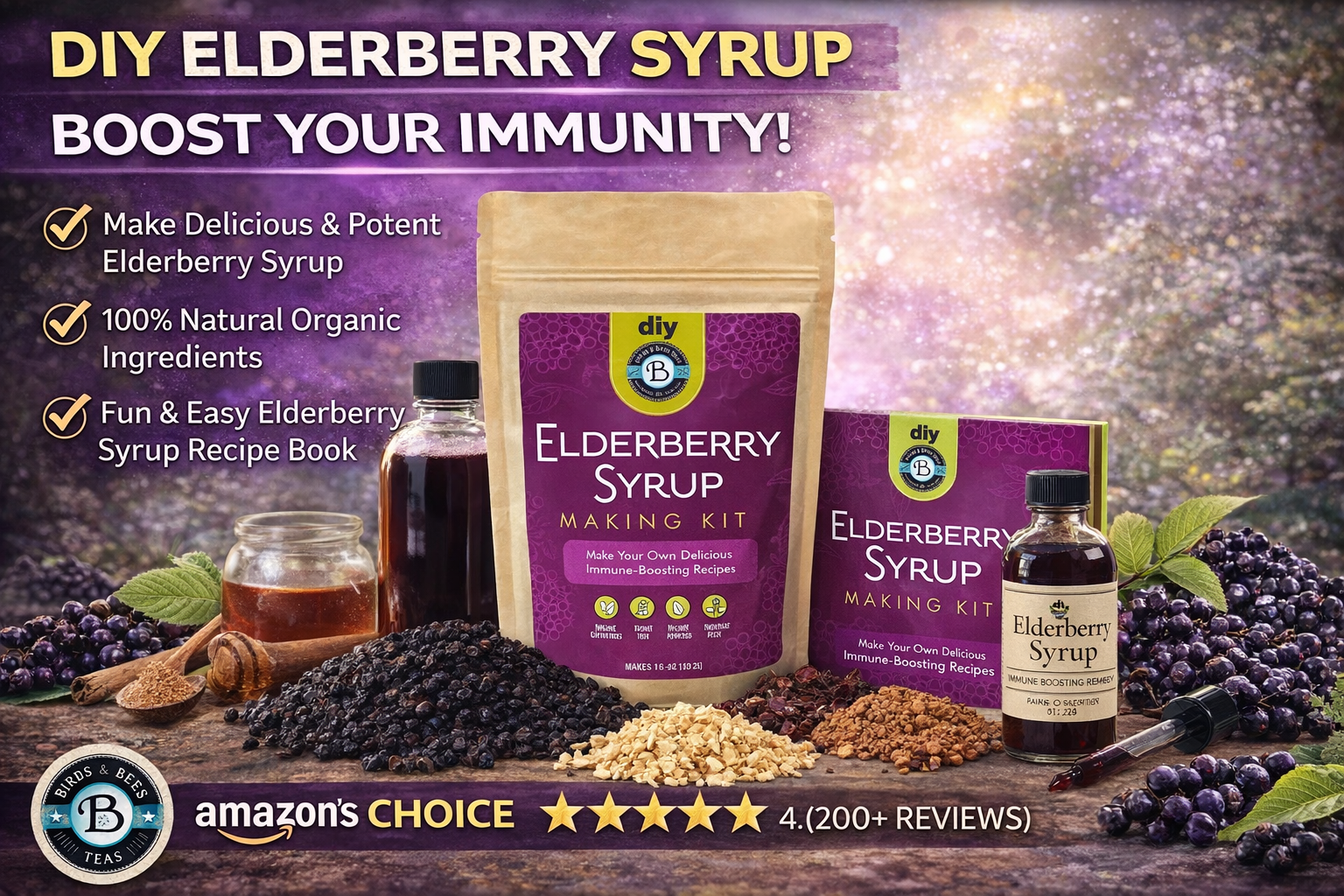
Best for DIY Families — Elderberry Syrup Kit by Birds and Bees Teas
If you’re willing to spend 45 minutes making your own — and you should be, because homemade is more potent and dramatically cheaper — this kit removes every decision. Pre-measured dried elderberries, spices, and instructions. You add water and honey. That’s it.
Makes 12–24oz of finished syrup depending on your reduction. You control the honey type, the sweetness level, and the concentration. The ingredient quality is excellent and the process is genuinely straightforward even for first-time syrup makers.
For families going through syrup regularly, two or three of these kits bought in September covers the season at a fraction of the cost of commercial bottles.
Click here to buy the syrup kit
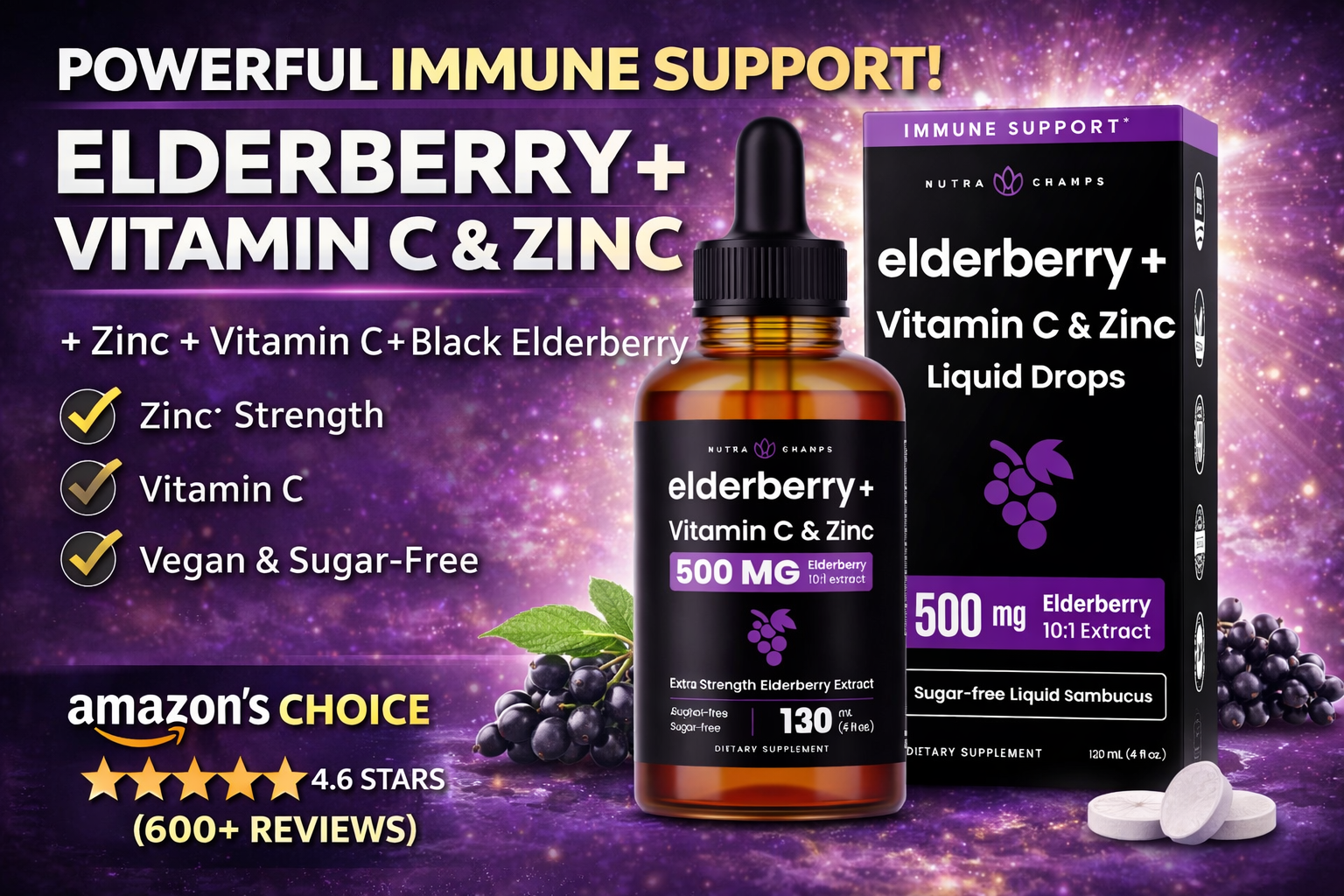
Best Sugar-Free Option — NutraChamps Organic Elderberry Syrup Drops
If your child has dietary restrictions, manages blood sugar, or you simply want to minimize added sugar in daily supplements — these concentrated drops are worth knowing about.
No added sugar. Organic elderberry extract. Concentrated enough that a small amount delivers a meaningful dose. The drops format means you can mix into juice or water invisibly — useful for kids who resist taking anything straight.
The trade-off: no honey means missing the complementary antimicrobial properties that quality raw honey adds to traditional elderberry syrup. For healthy children without sugar concerns, a honey-based syrup is still the better choice. For families where sugar is a genuine concern, these are the cleanest option available.
Buy on Amazon – NutraChamps Elderberry Drops
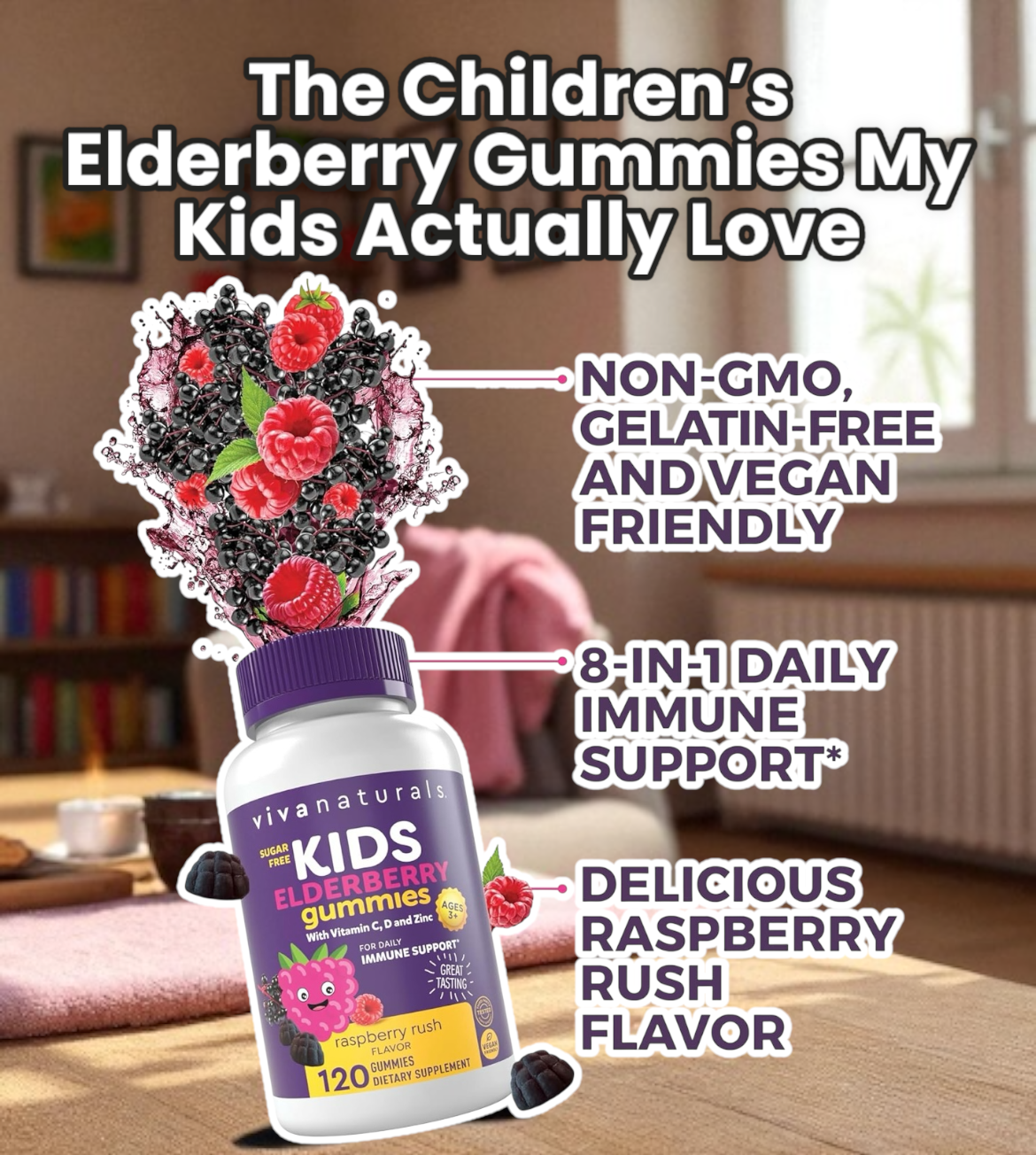
When Kids Won’t Take Syrup — NEW AGE Premium Elderberry Gummies
Some kids just won’t take syrup. They don’t like the texture, the tartness, the spice. If you’ve fought this battle and lost, gummies are not a compromise — they’re a legitimate alternative that most kids take enthusiastically every single morning.
The NEW AGE Premium Elderberry Gummies combine elderberry with vitamin C, zinc, and propolis — a complementary combination that covers multiple immune support angles in one gummy. The elderberry content is meaningful, the added vitamin C and zinc work through different mechanisms that complement elderberry’s antiviral properties, and the flavor is good enough that kids ask for them.
For the full breakdown on when gummies make more sense than syrup: Elderberry for Kids — Is It Safe, How Much, and What Form Actually Works
Order NEW AGE Elderberry Gummies here
Make Your Own — The Option Most Parents Overlook
The best elderberry syrup for your kids might be the one you make yourself. Not because it’s trendy — but because the math and the quality both point that way.
Cost: A batch costs $6–$8 and makes 16oz. A comparable commercial bottle costs $25–$35 for the same amount.
Potency: Homemade made from quality dried elderberries with proper reduction is typically more concentrated than midrange commercial products.
Ingredients: You choose everything. Raw local honey, organic dried elderberries, fresh ginger, cinnamon, cloves. Nothing your kid can’t have.
Time: 45 minutes. Mostly hands-off simmering while you do something else.
Full recipe with step-by-step instructions: How to Make Elderberry Syrup From Fresh Elderberries
Need a honey-free version for younger children: How to Make Elderberry Syrup Without Honey
Want to turn your homemade syrup into gummies your kids will love: How to Make Elderberry Gummies at Home
What to Skip
Anything with xylitol. Rare in syrups but watch for it in gummies. Toxic to pets and unnecessary in children’s products.
Syrups where sugar is the first ingredient. You’re buying a sweetener with elderberry flavoring.
Products with no milligram information. Reputable brands tell you what you’re getting. Vague labels hide weak products.
The cheapest option on the shelf. Elderberry syrup at $8 for 8oz is almost certainly diluted beyond meaningful use. You get what you pay for in this category more than most.
Anything claiming to cure or treat illness. No supplement can legally or accurately make that claim. Products that do are prioritizing marketing over accuracy.
How Much to Give Your Kids
Quick reference — for the detailed breakdown with full age chart: Elderberry Dosage for Kids — Complete Guide Age Daily Prevention During Illness 1–3 years ½ tsp once daily ½ tsp twice daily 3–6 years 1 tsp once daily 1 tsp twice daily 6–12 years 1–2 tsp once daily 1 tsp three times daily 12+ years 1 tbsp once daily 1 tbsp three times daily
Start at the low end when introducing elderberry for the first time. Give it two to three days at half dose before moving to full maintenance dosing.
Shift to therapeutic dosing immediately at the first sign of symptoms — scratchy throat, unusual tiredness, that glazed look experienced parents recognize. Don’t wait for a full cold to develop.

Frequently Asked Questions
Can I give my 1-year-old elderberry syrup?
Yes — but use honey-free formulations only until 2 years old to be safe, and start with a very small dose. For children 6–12 months, consult your pediatrician first.
How long does kids elderberry syrup last once opened?
Commercial syrups typically last 60–90 days refrigerated after opening. Homemade syrup lasts 2–3 weeks refrigerated. Write the open date on the bottle.
My child hates the taste — what do I do?
Mix a small amount into apple juice, a smoothie, or warm water with honey. The flavor blends well with other berry or fruit flavors. If resistance continues, switch to gummies — compliance matters more than form.
Should I give elderberry syrup every day or only when sick?
Both. Daily maintenance dose through cold season for prevention, immediate increase to therapeutic dosing at first symptoms. The preventive benefit is real — don’t wait until your child is already sick to start.
Is elderberry syrup safe to give kids long term?
Daily use through cold and flu season — roughly September through March — is well within what evidence supports for healthy children. A break in summer is a reasonable conservative approach.
The Bottom Line
The best elderberry syrup for your kids is the one with real elderberry content, clean ingredients, and that your child will actually take consistently. In that order.
If your budget allows and convenience matters, Elderberry Queen is the commercial pick. If you want maximum value and quality and you’ll realistically make it, the syrup kit and a Sunday afternoon is the answer. If your kid simply won’t take syrup, the gummies get the job done.
Just have something in the cabinet before October. That’s the move that matters most.


About the Author
Sarah Callahan is a certified herbalist and mother of three who has spent over a decade researching and writing about natural family health. She holds a certificate in herbal medicine from the American Herbalists Guild and contributes regularly to ElderberryPro.com. She has navigated the elderberry-for-kids question with her own children long enough to know which battles are worth fighting and which ones just need a better-tasting gummy.
As an Amazon Associate we earn from qualifying purchases through some links in our articles.