
Wondering how long elderberry takes to work? Here’s the honest timeline for colds, flu, daily prevention, and why most people give up right before it kicks in.



Key Takeaways
- For acute illness started within 48 hours of symptoms: meaningful effect within 2–4 days
- For daily prevention: the baseline immune benefit builds over 4–6 weeks of consistent use
- For gut health and anti-inflammatory benefits: allow 6–8 weeks of daily use to see the cumulative effect
- Single doses do not produce noticeable immune effects — elderberry is not an on-demand supplement
- The most common reason elderberry “doesn’t work” is starting too late, underdosing, or quitting after a few days
- Consistency over a full cold season tells you far more about elderberry’s effectiveness than one cold
Here’s the most common elderberry story: someone buys a bottle in November when they feel a cold coming on. They take it for three days. They still get the cold. They decide elderberry is overhyped and don’t buy it again.
That story has a flaw. And it explains why so many people dismiss elderberry based on an experience that was never set up to work in the first place.
Understanding how elderberry works in your body — and what timeline to actually expect — changes the whole picture. Here’s the honest breakdown.

The Two Completely Different Ways Elderberry Works
Before getting into timelines, you need to understand that elderberry does two distinct things that operate on completely different schedules.
The acute antiviral effect — elderberry’s anthocyanins bind to viral particles and block cell entry, while simultaneously stimulating cytokine production for faster immune coordination. This effect is most powerful in the first 24–48 hours of viral exposure. It’s the mechanism behind the clinical research showing elderberry shortens cold and flu duration. It’s fast-acting but requires elderberry to already be present in your system when the virus shows up.
The long-term immune support effect — elderberry’s polyphenols support gut microbiome diversity, reduce chronic systemic inflammation, and improve the baseline immune environment over weeks and months of consistent use. This is slower, cumulative, and the reason people who take elderberry daily through a full cold season get sick less often — not just recover faster.
Most people are only aware of the first mechanism. They take elderberry reactively during a cold and judge effectiveness based on that single data point. The second mechanism — the one that actually determines whether you get sick as often in the first place — is invisible unless you’re consistent over a full season.
Timeline for Acute Illness — When You’re Already Sick
This is the timeline people most want to know and where expectations most commonly go wrong.
Hour 0–24: The critical window
The moment you notice the first sign of illness — the scratchy throat, the particular fatigue, the slight pressure behind your eyes that experienced elderberry users learn to recognize — is when you start. Not tomorrow. Not when you’re sure you’re sick. Now.
Elderberry’s antiviral mechanism works upstream of established infection. The anthocyanins physically block viral particles from entering cells. This is most effective when viral load is still low and the virus is still trying to gain a foothold. In the first 24 hours elderberry is working against a relatively small number of viral particles. By day three it’s working against a viral population that has already replicated thousands of times over.
Day 1–2: Active antiviral work
At correct therapeutic dosing — one tablespoon of quality syrup every 4–6 hours, not just once daily — elderberry is actively interfering with viral replication and stimulating your immune system’s coordinated response. You’re unlikely to feel dramatically better on day one. The work happening is at a cellular level.
Day 2–4: When clinical research shows the difference
The landmark 2004 flu study showed elderberry users recovered an average of four days faster than the placebo group. The 2016 air traveler study showed two days shorter illness. These effects weren’t visible on day one — they showed up as a shorter overall illness arc.
What this means practically: if you start elderberry at the first sign of symptoms and dose correctly, you’re likely to notice your cold peaking sooner and clearing faster than previous colds. You might be back to feeling normal by day four or five instead of day seven or eight. That’s the effect.
What this doesn’t mean: you won’t get the cold. You won’t feel better by tomorrow morning. Elderberry shortens and reduces illness — it doesn’t eliminate it.
The most common mistake that kills results:
Starting elderberry on day three of a fully established cold and expecting the same effect. By day three viral replication has already done most of its damage. The cell-entry-blocking mechanism is less relevant when the virus is well established. Elderberry still has anti-inflammatory benefit at this point but the dramatic duration reduction seen in the studies comes from early intervention.


Timeline for Daily Prevention — Building Immune Baseline
This is the timeline most people never give elderberry a chance to demonstrate.
Week 1–2: Anthocyanins are present in your system after each dose. The acute antiviral mechanism is active — if you’re exposed to a virus during this window elderberry is doing its job. However, the deeper systemic benefits — gut microbiome support, chronic inflammation reduction, immune baseline improvement — have barely begun.
Week 3–4: Consistent polyphenol intake is starting to meaningfully support beneficial gut bacteria diversity. Your gut microbiome doesn’t change overnight — it’s a gradual process that requires sustained input. The anti-inflammatory effect is accumulating. You may not notice anything specific at this stage and that’s completely normal.
Week 5–8: This is where people who track their health notice something. Fewer minor infections. Quicker recovery from the ones that do land. Lower general sense of being run down. These aren’t dramatic moments — they’re absences of things that used to happen.
Full cold season (3–6 months): This is the only data point that really tells you whether elderberry is working for prevention. Not one cold. A whole season. People who take elderberry consistently from September through March and then compare that winter to previous winters — that’s the comparison that reveals the effect.
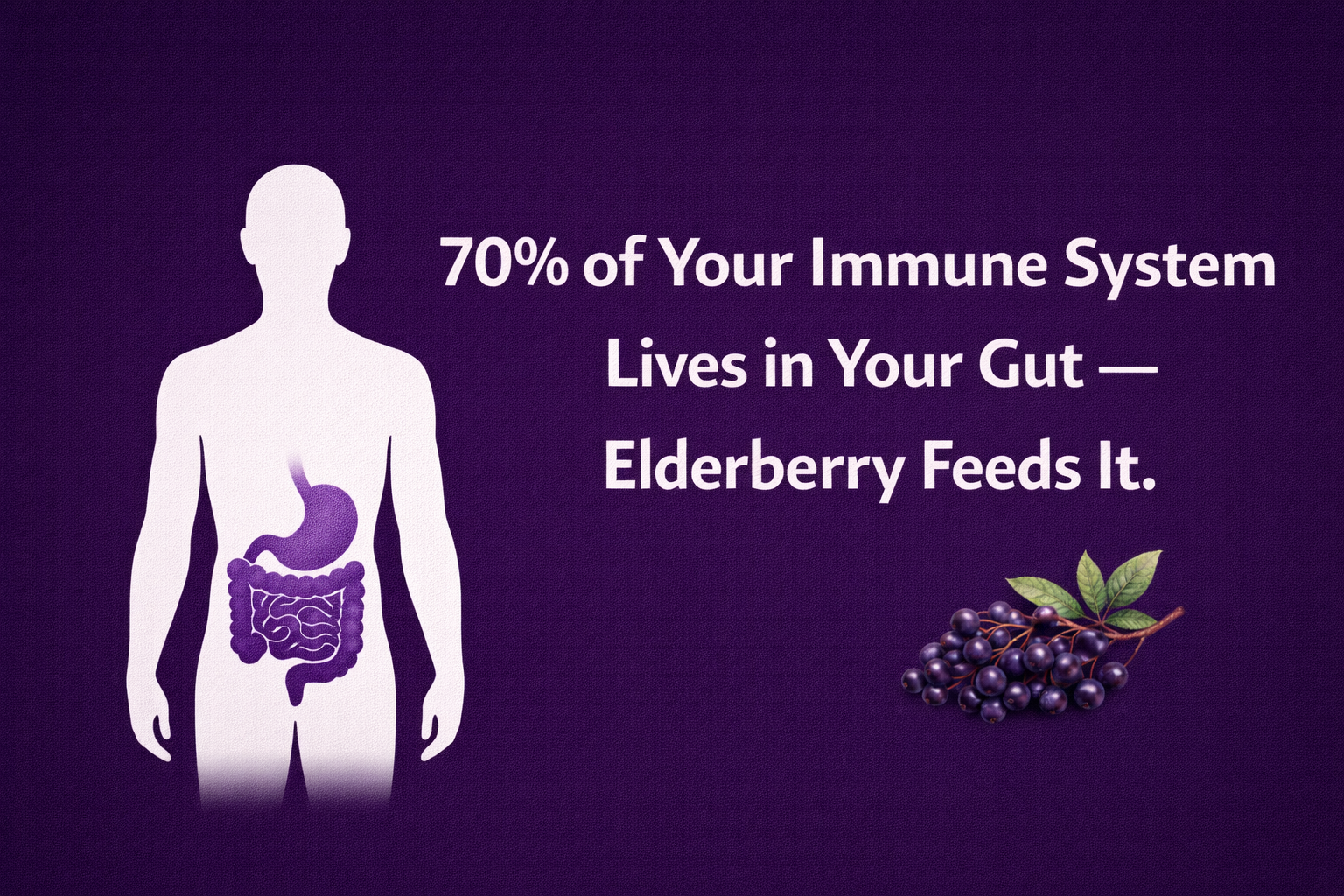
The gut-immune connection that drives this long-term benefit: Over 70% of Your Immune System Lives in Your Gut

Does Elderberry Work After Just One Dose?
No — not in any meaningful detectable way.
One dose of elderberry puts anthocyanins into your system. The antiviral mechanism is technically active in that moment. But the immune-coordinating, inflammation-reducing, gut-supporting effects that make elderberry genuinely impactful are not events that happen from a single dose. They’re cumulative processes.
This is why taking elderberry once when you feel sick and expecting dramatic results is setting up an unrealistic test. The people getting the most from elderberry are the ones who’ve been taking it daily for six weeks before that cold arrives.
Why Most People Think Elderberry Doesn’t Work
The most common reasons elderberry appears to fail — and what’s actually happening in each case:
Starting too late. Day three of a full cold is not the window elderberry is designed for. The antiviral mechanism is most powerful at the viral entry stage. If you only reach for elderberry when you’re already significantly sick, you’re missing the therapeutic window that the research studied.
Underdosing during illness. One tablespoon a day is a maintenance dose. During active illness the research uses three to four times that frequency. Taking maintenance doses when you need therapeutic doses produces maintenance-level results.
Using a low-quality product. Many commercial elderberry products contain more sugar than elderberry. If the elderberry content is minimal, the effect is minimal. Label quality matters enormously in this category. The full guide to what’s actually in different products: Best Elderberry Supplements — What Actually Works and What to Skip
Judging prevention based on one cold. Getting sick once while taking elderberry doesn’t mean it’s not working. Getting sick the same number of times as always over a full season would suggest that. Getting sick significantly less often, or recovering faster consistently, is what success looks like.
Not being consistent. Taking elderberry for two weeks then forgetting for three weeks then starting again doesn’t build the cumulative gut and immune baseline that daily use does. Inconsistent use produces inconsistent results.
Expecting elimination rather than reduction. Elderberry reduces the frequency and severity of illness. It doesn’t create an impenetrable immune barrier. If your expectation is zero colds per year regardless of exposure, no supplement delivers that.

How Long Does It Take for Different Forms?
The mechanism is the same across forms — what differs is concentration and therefore how much active compound you’re getting per dose.
Elderberry syrup: fastest delivery of meaningful anthocyanin dose. A tablespoon of quality syrup at correct therapeutic frequency is the closest to the clinical research protocol.
Elderberry gummies: slightly slower due to lower concentration in most products. Quality gummies with standardized extract work on the same timeline as syrup. Lower-quality gummies with minimal elderberry content work on a much longer timeline — or not at all.
Elderberry capsules: standardized extract capsules deliver consistent, predictable doses on the same timeline as quality syrup. The form with the least variability between products.
Elderberry tea: gentlest concentration. Daily elderberry tea contributes to the long-term anti-inflammatory and gut health benefits but doesn’t deliver the same acute antiviral concentration as syrup or capsules. For illness treatment, tea alone is insufficient.
The complete form comparison: Best Elderberry Supplements — What Actually Works and What to Skip



The Elderberry Timeline — Quick Reference
Goal When to Start How Long to See Effect Shorten an active cold First sign of symptoms 2–4 days shorter illness vs. no elderberry Reduce cold severity First sign of symptoms Milder symptoms within 2–3 days Prevent getting sick September — before exposure 4–6 weeks to build baseline benefit Gut microbiome support Any time 6–8 weeks of consistent daily use Inflammation reduction Any time 4–6 weeks of consistent daily use Full season immune benefit Start of cold season Assess after full 3–6 month season
How to Know If Elderberry Is Actually Working for You
The signals that elderberry is doing its job aren’t always obvious because they’re often the absence of something rather than the presence of something.
Signs it’s working for prevention:
- Fewer colds than previous winters
- Colds that are noticeably milder than they used to be
- Recovering faster than the people around you with the same illness
- Getting through a full winter without the two-week knockout cold you used to get every year
Signs it’s working during acute illness:
- Cold peaking sooner than usual
- Returning to normal faster than previous colds of similar initial severity
- Less overall misery per illness episode
Signs you need to reassess:
- Getting sick just as often and just as severely as before after a full season of consistent use
- Stomach upset every time you take it — may indicate a product quality or dose issue
- No noticeable difference after 8 weeks of consistent daily maintenance dosing
If you’ve been consistent for a full season and genuinely notice no difference, it’s worth reviewing product quality, dosing accuracy, and whether any other factors are overwhelming whatever benefit elderberry provides. For some people, gut health is compromised enough that elderberry’s prebiotic benefit is limited until gut health is addressed more broadly. The full side effects and what to watch for: Elderberry Side Effects — What’s Normal, What’s Not


Frequently Asked Questions
How long does elderberry take to work for a cold?
Started at the first sign of symptoms at correct therapeutic doses, clinical research shows meaningful effect within 2–4 days — specifically a shorter and less severe illness overall compared to not taking elderberry.
Does elderberry work immediately?
The antiviral mechanism activates immediately in the sense that anthocyanins are present and active after each dose. However, noticeable immune effects — feeling better, illness resolving — take 2–4 days of consistent therapeutic dosing.
How long does it take for elderberry gummies to work?
Same timeline as other forms for quality products with standardized extract. Lower-quality gummies with minimal elderberry content may take longer — or show minimal effect — simply because the dose of active compound is insufficient.
How many days should I take elderberry when sick?
Continue therapeutic dosing — every 4–6 hours — until you have been symptom-free for 24–48 hours. For most colds that’s 5–7 days total.
Can elderberry work overnight?
Not in a dramatic knock-it-out sense. One night of elderberry does not resolve a cold. The 2–4 day timeline requires consistent multiple-times-daily dosing, not one or two doses before bed.
I took elderberry and still got sick — does that mean it doesn’t work?
Not necessarily. Getting sick while taking elderberry as a preventive doesn’t mean elderberry failed — it means your exposure level exceeded what any supplement can fully prevent. The relevant question is whether your illness was shorter and milder than it would have been without elderberry. That’s harder to measure but more honest than expecting zero illness.
How long should I take elderberry before cold season to build up protection?
Start 4–6 weeks before your typical peak exposure period. For most people in the US that means starting in mid-September for protection through fall and winter.
Give It a Season, Not a Cold
One cold is the wrong unit of measurement for elderberry. A full cold season — September through March — is the right one.
That’s long enough for the gut microbiome and anti-inflammatory benefits to compound. Long enough to compare getting sick less often to previous years. Long enough to notice consistently faster recovery when you do get hit. Long enough for elderberry to actually demonstrate what consistent use looks like versus reactive occasional use.
Most people never give it that chance. They try it once during a cold, don’t feel like a completely different person in 24 hours, and move on. The people who keep showing up for elderberry — daily through cold season, therapeutic dosing at the first sign of anything — are the ones who stop thinking of it as something worth questioning and start thinking of it as something they don’t go into winter without.
That shift happens around week six. Mark your calendar.


About the Author
Marcus Webb is a health science writer with a background in nutritional biochemistry and over a decade of experience translating clinical research into plain-language content. He contributes regularly to ElderberryPro.com and has been taking elderberry every September for longer than he cares to admit.
As an Amazon Associate we earn from qualifying purchases through some links in our articles.