
Walk into any health food store or scroll through Amazon for five minutes and you’ll find dozens of elderberry supplements all claiming to be the best. Same berry, wildly different products, prices ranging from $8 to $45, and almost no useful guidance on how to tell them apart.
Most people grab whatever has the best packaging or the most reviews and hope for the best. That’s not a strategy.
After years of using elderberry personally, researching the clinical literature, and testing more products than I can count, here’s what I’ve learned about what actually separates a good elderberry supplement from an overpriced, underperforming one — and which forms and features are worth your money.
Why the Supplement You Choose Actually Matters
Not all elderberry supplements are created equal. The difference between a quality product and a mediocre one isn’t marketing — it’s concentration, standardization, and what else is in the bottle alongside the elderberry.
The active compounds in elderberry that drive its immune benefits are anthocyanins — the dark pigment flavonoids concentrated in the berry’s skin. A supplement with meaningful anthocyanin content delivers real benefit. A supplement with elderberry listed as a minor ingredient buried behind a list of fillers delivers very little.
The elderberry supplement market has a significant quality problem. Because elderberry has become so popular, manufacturers have flooded it with underdosed, poorly standardized products that ride the elderberry name without delivering the elderberry benefit. Knowing how to read a label is the only way to avoid wasting your money.
What to Look For on Any Elderberry Label
Before getting into specific forms, here are the non-negotiables to check on any elderberry supplement:
Elderberry extract vs. elderberry fruit powder — this distinction matters enormously and most people miss it. Elderberry fruit powder is the whole dried berry ground up. Elderberry extract is concentrated — the active compounds have been pulled from a larger amount of raw berry. A 500mg elderberry extract capsule and a 500mg elderberry fruit powder capsule are not remotely equivalent in potency. Extract wins every time.
Standardized anthocyanin content — the best products list the anthocyanin percentage per serving. This is the gold standard for knowing what you’re getting. “500mg elderberry extract standardized to 13% anthocyanins” tells you something real. “500mg elderberry extract” with no further detail is a guess.
Species — should say Sambucus nigra (European elderberry) or Sambucus canadensis (American elderberry). A label that just says “elderberry” without the botanical name is a minor red flag about manufacturer transparency.
Additives and fillers — shorter ingredient lists are generally better. In gummies specifically, watch for sugar alcohols, artificial colors, and high added sugar that can undermine the health rationale for taking it in the first place. If gummies are the format you prefer, compare the The Best Elderberry Gummies for Adults — Honest Reviews of What’s Actually Worth Buying for cleaner ingredient lists and meaningful elderberry content.
Third-party testing — NSF Certified, USP Verified, or Informed Sport certifications indicate independent testing for purity and label accuracy. Not every good product has these, but their presence is a strong quality signal.


The Best Form of Elderberry Supplement for You
There’s no single best form — the right choice depends on your lifestyle, goal, and how consistent you are. Here’s how each stacks up honestly.
Elderberry Capsules — Best for Serious Daily Use
Capsules are the most precise and consistent form of elderberry supplementation. No added sugar, no flavoring, no guessing — just standardized extract in a measured dose.
This is the form most closely aligned with what clinical research uses. If you’re taking elderberry for a specific health goal and want to know you’re getting a consistent therapeutic dose, capsules are the most reliable vehicle.
What to look for: 500mg+ of standardized elderberry extract per capsule, anthocyanin content listed, minimal fillers. Take with food to avoid any stomach sensitivity.
Best for: Adults who want no-nonsense daily supplementation without sweeteners or additives. Also the best option for people who’ve experienced digestive sensitivity with syrups or gummies — capsules are typically the gentlest on the stomach when taken with a meal.
The full breakdown on how much to take and when: elderberry dosage for adults — how much to take and when.
Elderberry Syrup — Best for Families and Acute Illness
Syrup is the most traditional and arguably most versatile elderberry form. It’s easy to dose for both adults and children, fast-acting, and the form used in the most influential clinical studies on elderberry’s effectiveness against flu.
Commercial syrups vary dramatically in quality. The best ones list concentrated elderberry extract as the primary ingredient and use minimal sweeteners. The worst are essentially flavored sugar water with trace elderberry.
What to look for: Elderberry extract or juice concentrate as the first ingredient, not water or sugar. Check the mg of elderberry extract per serving — anything under 400mg per tablespoon in a commercial syrup is on the weak side.

Making your own is genuinely the best option if you have the time. You control the concentration, the sweetness, and every ingredient. How to make elderberry syrup from fresh elderberries is the guide to start with — and if you need a honey-free version, this one covers that.
Best for: Families with kids, anyone who wants flexibility between maintenance and therapeutic dosing, people who prefer a food-like supplement over a pill. Parents considering daily use can read giving elderberry to children for practical safety guidance.
Elderberry Gummies — Best for Consistency and Kids
Gummies win on compliance. People actually take them every day because they taste good and feel like a treat rather than a supplement. For building a consistent daily habit — especially for kids — gummies are the practical winner.
The trade-off: most elderberry gummies are less potent than capsules or quality syrups, and many contain significant added sugar. You’re trading some potency for convenience and palatability.
What to look for: Elderberry extract (not fruit powder) as the primary active ingredient, anthocyanin content listed if possible, no xylitol (toxic to pets), and as little added sugar as reasonably possible. The best adult elderberry gummies use 150mg+ of standardized extract per serving.

For kids specifically, gummies are almost always the most practical form — no battles, no negotiating. My honest testing of children’s elderberry gummies is here: the children’s elderberry gummies my kids actually love.

For adults who want gummies without compromising too much on potency: why elderberry gummies for adults are my go-to immune booster.
Best for: Kids, adults who struggle to take supplements consistently, anyone who wants a daily habit that doesn’t feel like medicine.
Elderberry Tea — Best as a Daily Wellness Habit
Tea is the gentlest and lowest-concentration form of elderberry. It’s real — you’re getting anthocyanins and polyphenols from a properly brewed elderberry tea — but you’re not getting the therapeutic concentration of a capsule or quality syrup.

Think of elderberry tea as your daily baseline rather than your acute intervention. A cup every morning through cold season is a genuinely pleasant wellness habit that contributes to your overall antioxidant intake. When you actually get sick, reach for syrup or capsules. Readers who prefer that gentle daily routine can consider this an elderberry tea option.
What to look for: Pure elderberry tea or blends where elderberry is the lead ingredient, not a token addition to a blend of fifteen herbs. Whole dried elderberries steeped loose give you better extraction than most commercial tea bags.

The health benefits specific to elderberry tea — including some that go beyond just immune support — are worth knowing about: health benefits of elderberry tea — what it does and when to drink it.
Best for: Tea drinkers, people who want a gentle daily habit, anyone who finds capsules or syrup too strong.
Elderberry Lozenges — Best for Throat Symptoms
Lozenges sit in an interesting category — they combine elderberry with the benefit of dissolving slowly in the mouth and throat, which is exactly where many cold and flu viruses replicate. Some elderberry lozenges also combine zinc, which has its own documented antiviral effect through the same local mechanism.
Less studied than other forms, but the logic of direct mucous membrane contact is sound. A good option to have on hand specifically for sore throat and early upper respiratory symptoms.
The Most Common Elderberry Supplement Mistakes
Taking it only when already sick. Elderberry works best started at the very first sign of symptoms — the window that matters is the first 24 to 48 hours. Waiting until day three of a full cold significantly reduces its impact. Keep it on hand so you can start immediately.

Underdosing during illness. A maintenance dose (once daily) is not the same as a therapeutic dose (three to four times daily). Most people who say elderberry “didn’t work” for them were taking a maintenance dose during active illness. The research showing meaningful cold and flu reduction uses higher, more frequent dosing. Full details: does elderberry really work for colds and flu.
Buying elderberry fruit powder thinking it’s extract. Already covered above but worth repeating — these are not the same thing. The label matters.
Expecting instant results from daily prevention. The anti-inflammatory and gut health benefits of consistent elderberry use build over weeks, not days. Give it a full cold season before judging whether it’s working as a preventive.
Ignoring the rest of the label. The elderberry content matters but so does everything else in the product. A high-quality elderberry extract paired with a harmful additive or excessive sugar is still a bad product overall.


Elderberry Supplements vs. Making Your Own
This comes up constantly and the honest answer is: homemade wins on quality and cost, commercial wins on convenience.
A batch of homemade elderberry syrup costs $5 to $7 in ingredients and gives you 16 ounces of high-quality syrup where you control every variable. The best commercial syrups cost $20 to $30 for the same amount. The math is not subtle. For readers who want to make their own batch, this homemade elderberry syrup kit provides a convenient starting point.
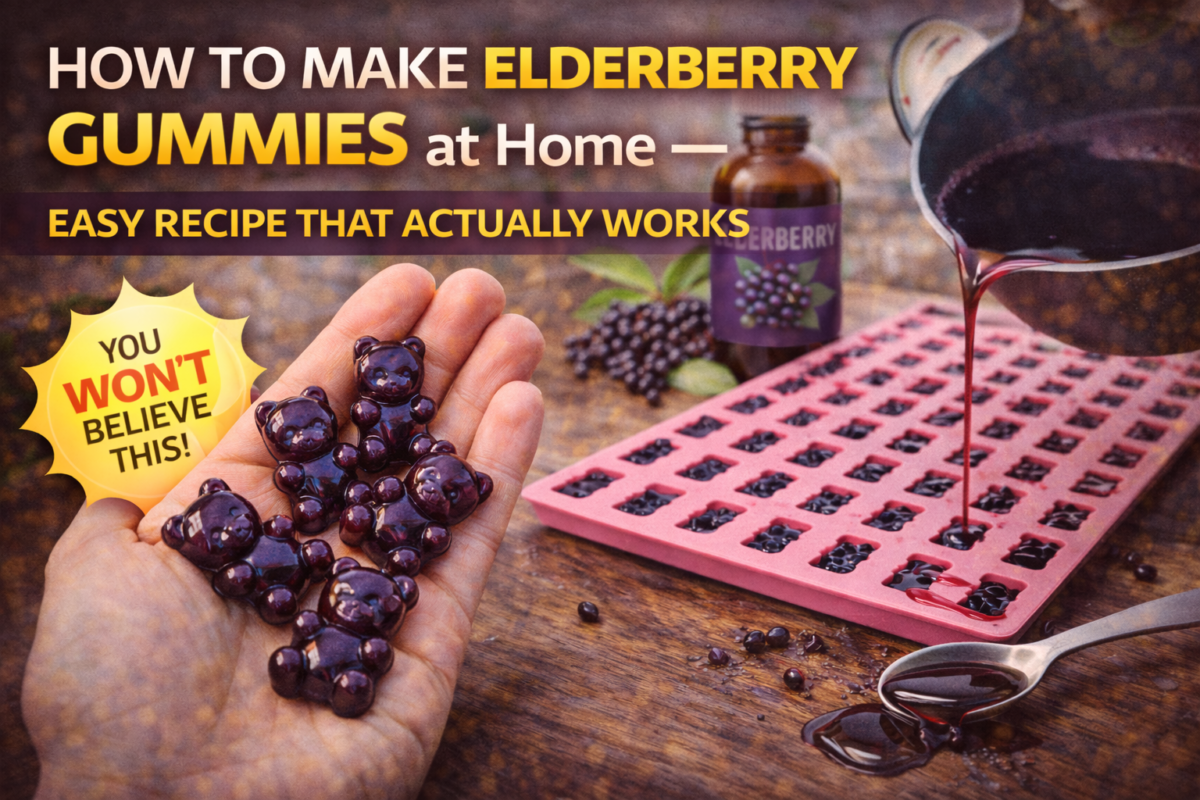
Homemade elderberry gummies are the same story — fraction of the cost, full control over ingredients. How to make elderberry gummies at home is easier than most people expect and worth trying at least once before defaulting to store-bought.
The case for commercial: convenience, shelf stability, and consistency for people who won’t realistically make their own. A good commercial product taken consistently beats homemade that you keep running out of and forgetting to make.
Elderberry Supplements for Specific Situations

For kids: Gummies or syrup in age-appropriate doses. Avoid anything with high sugar content or xylitol. Start with the lowest listed dose and observe how they respond. Full guide: elderberry for kids — is it safe, how much, and what form actually works.

During pregnancy: Approach with caution especially in the first trimester. Tea is the most conservative choice if you want to use elderberry at all. Full breakdown: elderberry and pregnancy — is it safe.
For people with autoimmune conditions: Consult your doctor before starting. Elderberry’s immune-stimulating properties are the concern here. More detail: elderberry side effects — what’s normal, what’s not.
For allergy sufferers: Start before your season begins, use maintenance dosing consistently, and combine with antihistamines for acute symptoms. Details: elderberry for allergies — does it actually help or make them worse.
For people with sensitive stomachs: Capsules with food, or elderberry tea. Avoid gummies with sugar alcohols. Context: stomach pain after elderberry — here’s what might be happening.
The Bottom Line
The best elderberry supplement is the one with meaningful extract concentration, minimal junk ingredients, that you’ll actually take consistently in the right dose at the right time.
Capsules for precision. Syrup for families and acute illness. Gummies for daily habit and kids. Tea for gentle daily baseline.
Whatever form you choose — read the label, look for extract over fruit powder, check for anthocyanin standardization if possible, and don’t judge elderberry’s effectiveness based on underdosed products taken inconsistently. Give it a real shot and it earns its place in your supplement cabinet.
About the Author
Tom Hargrove is a certified nutritionist and supplement industry researcher who has spent twelve years evaluating the quality and efficacy of natural health products. He contributes to ElderberryPro.com with a focus on cutting through supplement marketing to help consumers understand what they’re actually buying. His approach is simple: read the research, read the label, ignore the hype.