
Does elderberry actually work for colds and flu? Here’s an honest look at the research, what it does in your body, and how to use it right.

Does Elderberry Actually Work for Colds and Flu? Here’s What the Research Says
Let me be straight with you: I was skeptical too.
I’d been seeing elderberry everywhere — at the pharmacy, in the supplement aisle, in mom groups online — and my first reaction was that it was probably just another wellness trend with a good marketing budget. Purple packaging and vague claims about “immune support” don’t exactly scream science.
Then I got a nasty cold mid-January a few years back. My sister-in-law handed me a bottle of elderberry syrup and said just take it. I did. And I was back on my feet faster than any winter cold had ever let me go before.
Was it the elderberry? Maybe. Maybe not. One data point isn’t proof. But it got me curious enough to actually dig into the research — and what I found was more interesting than I expected.


What Elderberry Is (Quick Version)
Elderberry comes from the Sambucus nigra plant — a shrub that’s been used medicinally for centuries across Europe and North America. The berries are deep purple-black when ripe, and they’re packed with anthocyanins, which are the same antioxidant compounds that make blueberries and blackberries good for you.

Raw elderberries are actually toxic — you can’t just pop them off the bush and eat them. They contain compounds that cause nausea and vomiting until they’re cooked or properly processed. If you want the full story on that, I covered it here: never eat elderberries until you read this.
Once processed — into syrup, gummies, tea, or capsules — they’re safe and that’s when the interesting stuff starts.

If you’re totally new to elderberry and want more background before diving into the research, this is a good starting point: what is elderberry and why is everyone talking about it.


What the Research Actually Shows
Here’s where it gets real. I’m not going to cherry-pick one study and call it proof. There are legitimate findings here, and there are legitimate limitations. You deserve both.
The Studies That Support It
The most-cited study on elderberry and flu was published in the Journal of International Medical Research in 2004. Researchers gave either elderberry extract or a placebo to 60 flu patients. The elderberry group recovered an average of four days faster. Four days is not nothing when you’re flat on the couch.
A more recent 2016 study published in Nutrients looked at elderberry supplementation in air travelers — a group that gets hammered by colds due to recirculated cabin air and stress. Travelers who took elderberry had colds that were significantly shorter in duration and less severe than the placebo group. The design and results of that 2016 air-traveler trial are examined in A Berry Outperformed a 0 Prescription in a Clinical Trial — Here’s the Study.
A 2019 meta-analysis in Complementary Therapies in Medicine reviewed multiple studies and concluded that elderberry substantially reduced upper respiratory symptoms. The researchers flagged it as a safe, effective option worth considering before reaching for over-the-counter medications.
How It Actually Works in Your Body
Elderberry doesn’t just vaguely “boost your immune system” — that phrase gets thrown around a lot without meaning much. Here’s what’s actually happening:
The anthocyanins in elderberry appear to bind to flu virus particles and block them from entering and replicating inside your cells. Think of it like jamming the lock before the virus can get in. There’s also evidence that elderberry stimulates cytokine production — these are signaling proteins your immune system uses to coordinate a response.
Your gut is also part of this picture. Over 70% of your immune system actually lives in your gut, and supporting overall immune function starts there. The connection between gut health and immunity is worth understanding if you’re serious about not getting sick.
The Honest Limitations
Most of the studies are small. Funding sources vary. We don’t have large-scale, gold-standard clinical trials the way we do for pharmaceutical antivirals. Scientists will tell you the evidence is “promising but preliminary” — and that’s a fair characterization.
What I’d say is this: the research is consistent enough, and the safety profile is good enough, that using elderberry as part of your routine is a reasonable, evidence-informed choice. It’s not magic. It’s not going to replace a flu shot or antivirals for high-risk individuals. But dismissing it as pure hype isn’t accurate either.
Does It Help Once You’re Already Sick?
Yes — and this is actually where most of the research is focused.
Elderberry appears to work best in the early stages of illness. The window that matters is the first 24–48 hours of symptoms. If you wait until day four of a full-blown flu, you’re probably past the point where it makes a meaningful difference.
The practical takeaway: keep it on hand so you can start taking it the moment you feel that first scratchy throat or suspicious fatigue. That’s when it counts.


What About Taking It Every Day to Prevent Getting Sick?
This is where people split into camps. Some take it year-round. Some just use it seasonally. Some only reach for it when they feel something coming on.

The research on daily preventive use is thinner than the treatment research, but the 2016 travel study suggests there’s something to it. My personal approach — and the one I’ve settled into after years of experimenting — is daily during fall and winter, and on-demand if I’ve been exposed to something or feel run down. I wrote up my full daily routine here if you want the specifics.

If you’re going the daily route, timing matters more than most people realize. There’s a right and wrong window for taking it to maximize absorption and effectiveness — this guide on when to take elderberry for best results breaks it down.
What Form Should You Take It In?
This is honestly a personal preference question more than a science question. The research has been done mostly on liquid extracts and standardized supplements, but that doesn’t mean gummies or tea don’t work — it just means they’ve been studied less.
Here’s the quick rundown:

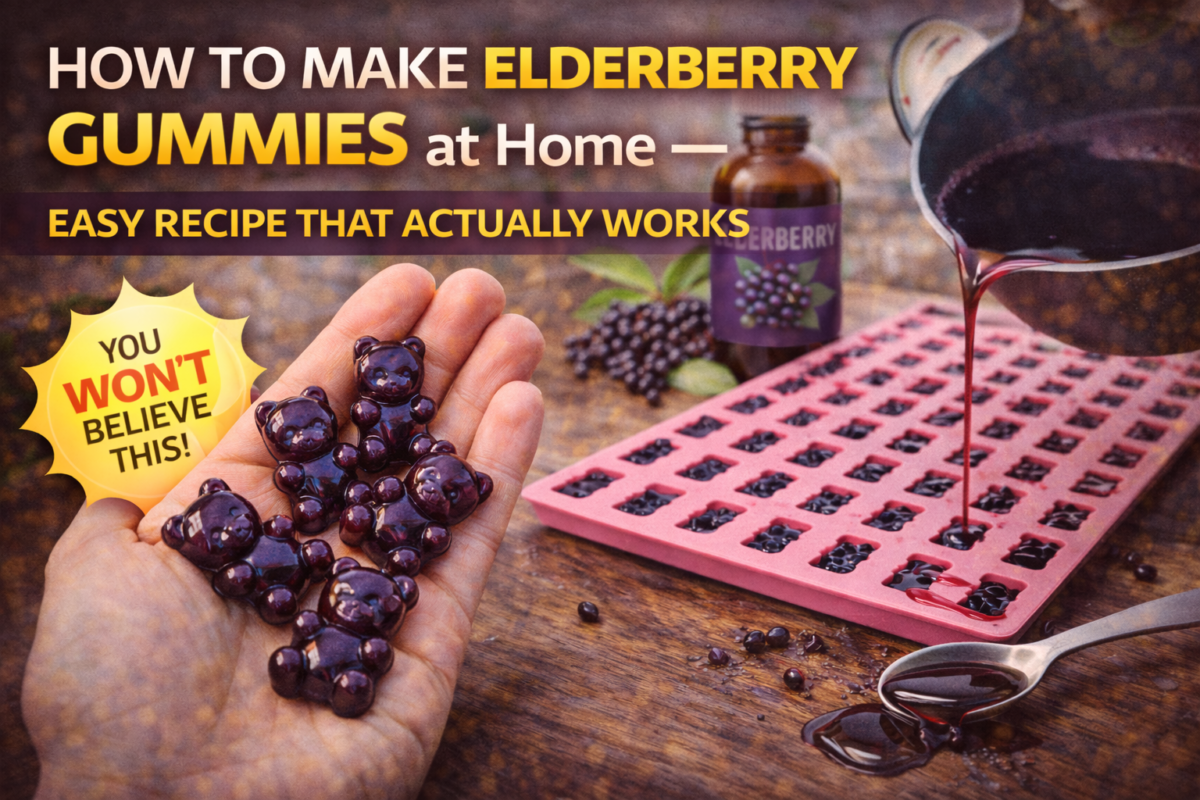
Syrup — the most traditional form, easy to dose, works for adults and kids. You can make it yourself or buy it. If you want to DIY, this guide on making elderberry syrup from fresh berries covers everything.

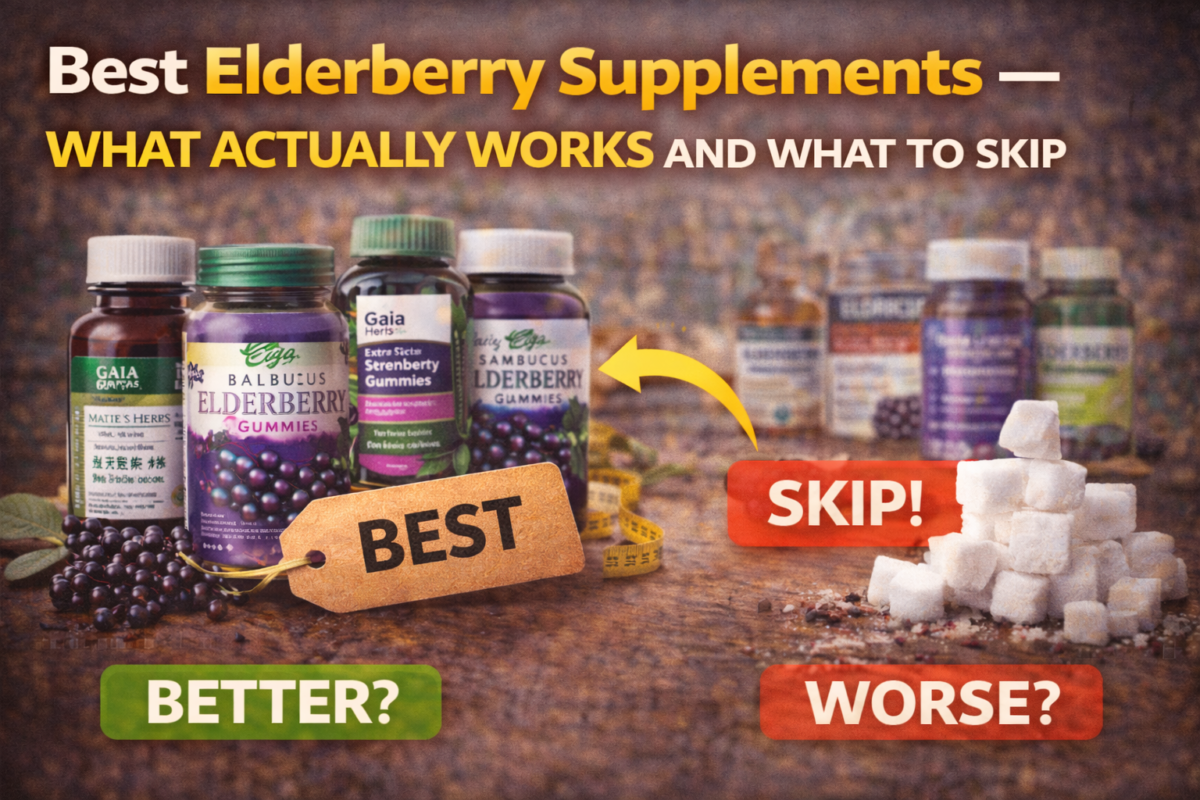
Gummies — convenient, palatable, great for people who hate taking syrup straight. I’ve tested a lot of them. My honest take on the best adult options is here.

Tea — lower concentration than syrup or capsules, but great as a daily habit, especially if you’re already a tea drinker. The health benefits of elderberry tea go beyond just immune support.
Capsules/Lozenges — convenient for travel or people who don’t love the taste. Standardized extracts give you the most consistency in dosing.


How Much Should You Take When You’re Sick?
Dosing during illness is higher than maintenance dosing. For most adults, the research-supported range is:
- Syrup: 1 tablespoon (15ml) four times daily while symptomatic
- Gummies: follow label — most are dosed for 2–3x daily during illness
- Capsules: varies by concentration, but 600–900mg standardized extract daily is common in studies

For the full breakdown including what to do if you experience stomach discomfort, I covered ideal elderberry dosage for adults in detail.

Speaking of stomach discomfort — some people do experience mild nausea, especially on an empty stomach or at high doses. It’s not dangerous, just unpleasant. Here’s what’s usually happening and how to avoid it.
Is It Safe for Everyone?
For most healthy adults and children, yes. The side effect profile is mild — occasional digestive upset if you take too much on an empty stomach, that’s about it.
A few groups should talk to a doctor first:
- People on immunosuppressant medications — elderberry stimulates immune response, which can theoretically work against immunosuppression
- People with autoimmune conditions — same reasoning
- Pregnant or breastfeeding women — not enough research to say definitively either way

For kids, elderberry is generally considered safe, but dosing is different and formulation matters. This article on kids and elderberry is worth reading before you start.
The Bottom Line
Does elderberry work? The honest answer is: it probably does, especially when used early and consistently during illness. The research isn’t conclusive enough to call it proven medicine, but it’s solid enough that I’d recommend it to anyone looking for a natural, evidence-informed addition to their cold and flu toolkit.
It’s not a replacement for sleep, hydration, and good nutrition — the boring basics still matter most. But as a layer on top of those fundamentals? Elderberry earns its place in the cabinet.
If you’re new to it and not sure where to start, grab some dried elderberries and make a batch of syrup. Or pick up a quality gummy and try it through one cold season. Your experience will tell you more than any study can.
Questions about elderberry or want to share what’s worked for you? Leave a comment below — I read every single one.
INTERNAL LINKS USED
Anchor Text URL never eat elderberries until you read this elderberrypro.com/never-eat-elderberries-until-you-read-this/ what is elderberry and why is everyone talking about it elderberrypro.com/what-is-elderberry-and-why-is-everyone-talking-about-it/ connection between gut health and immunity tummycure.com/over-70-of-your-immune-system-lives-in-your-gut/ how I use elderberry to boost my immune system daily elderberrypro.com/how-i-use-elderberry-to-boost-my-immune-system-daily/ when to take elderberry for best results elderberrypro.com/when-to-take-elderberry-for-best-results-my-proven-routine/ making elderberry syrup from fresh berries elderberrypro.com/how-to-make-elderberry-syrup-from-fresh-elderberries-diy-guide/ best elderberry gummies for adults elderberrypro.com/why-elderberry-gummies-for-adults-are-my-go-to-immune-booster/ health benefits of elderberry tea elderberrypro.com/health-benefits-of-elderberry-tea-what-it-does-when-to-drink-it-and-why-i-love-it/ ideal elderberry dosage for adults elderberrypro.com/what-is-the-ideal-elderberry-dosage-for-adults/ stomach pain after elderberry elderberrypro.com/stomach-pain-after-elderberry-heres-what-might-be-happening/ kids and elderberry elderberrypro.com/can-my-kids-use-elderberry-vitamins-everyday/