
Most elderberry teas have elderberry listed third or fourth on the ingredient list — behind hibiscus and rose hips. Here’s how to find one where elderberry is actually the star, and the options worth brewing this cold season.



Key Takeaways
- Most elderberry teas are mostly hibiscus and rosehip — elderberry is often a minor ingredient buried in the blend
- Look for elderberry listed first or second on the ingredient list for meaningful content
- Elderberry tea must be boiled or simmered — steeping in warm water alone does not neutralize cyanogenic compounds in whole dried berries
- Tea bags are convenient but whole dried elderberries steeped loose give you better extraction and more control
- Elderberry tea is best as a daily wellness habit — it’s not concentrated enough to be your primary therapeutic intervention during active illness
- The best elderberry tea is the one you’ll actually brew and drink consistently every day
Walk through the tea aisle of any health food store and you’ll find at least a dozen products with “elderberry” prominently displayed on the front of the box. Turn most of them over and read the ingredient list. Hibiscus. Rosehip. Lemon peel. Natural flavors. Elderberry — fifth on the list.
That’s not elderberry tea. That’s hibiscus tea with an elderberry label.
Finding an elderberry tea where elderberry is the actual star — where you’re getting a meaningful dose of anthocyanins with every cup rather than a purple-colored fruit blend — requires knowing what to look for. Here’s the complete guide.



What Makes a Good Elderberry Tea
The Ingredient List Is Everything
The front of the package tells you the marketing story. The back tells you the truth.
Ingredients are listed by weight in descending order. Whatever appears first is what the product is mostly made of. For a genuine elderberry tea, elderberry should appear first or at most second on the ingredient list.
If elderberry appears after hibiscus, rosehip, lemon myrtle, or any other ingredient — you’re buying a blend where elderberry is a supporting player, not the main event. This isn’t necessarily bad tea. It just isn’t meaningfully an elderberry tea in terms of active compound content.
Whole Dried Elderberries vs. Elderberry Extract vs. Elderberry Flavor
Whole dried elderberries in a tea bag or loose leaf blend give you the full spectrum of elderberry compounds — anthocyanins, polyphenols, quercetin, vitamin C. The extraction isn’t as efficient as making syrup but it’s real and meaningful.
Elderberry extract in a tea is more concentrated than whole dried berry. Some premium tea products use elderberry extract rather than whole berry material — this can actually deliver more active compound per cup despite appearing in smaller amounts on the ingredient list.
“Elderberry flavor” or “natural elderberry flavor” on an ingredient list means you’re getting the taste of elderberry with essentially none of the active compounds. Avoid.
Organic Certification
Elderberries absorb pesticides readily. For something you’re drinking daily, organic matters. Look for USDA Organic certification on the packaging.
Species
Sambucus nigra (European black elderberry) or Sambucus canadensis (American black elderberry) are what you want. If the label just says “elderberry” with no botanical name — minor red flag on transparency.
The Safety Question With Elderberry Tea
This deserves a clear answer because it comes up constantly and most tea content ignores it.
Raw elderberries contain cyanogenic glycosides that cause nausea and vomiting. Cooking destroys these compounds. This is why every legitimate elderberry preparation involves heat.
For tea bags using processed elderberry material: commercial tea bags use elderberry that has been dried and processed in ways that make standard steeping safe. The manufacturing process handles the preparation. This is the vast majority of commercial elderberry tea products.
For brewing with whole dried elderberries yourself: bring to a full boil and simmer for 15 minutes. Do not simply steep whole dried elderberries in hot water without boiling — this does not reach the temperature and duration needed to fully neutralize the compounds. The full explanation: Never Eat Elderberries Until You Read This
Practical summary: commercial tea bags — brew normally. Whole dried elderberries at home — boil and simmer, don’t just steep.


The Best Elderberry Tea Options
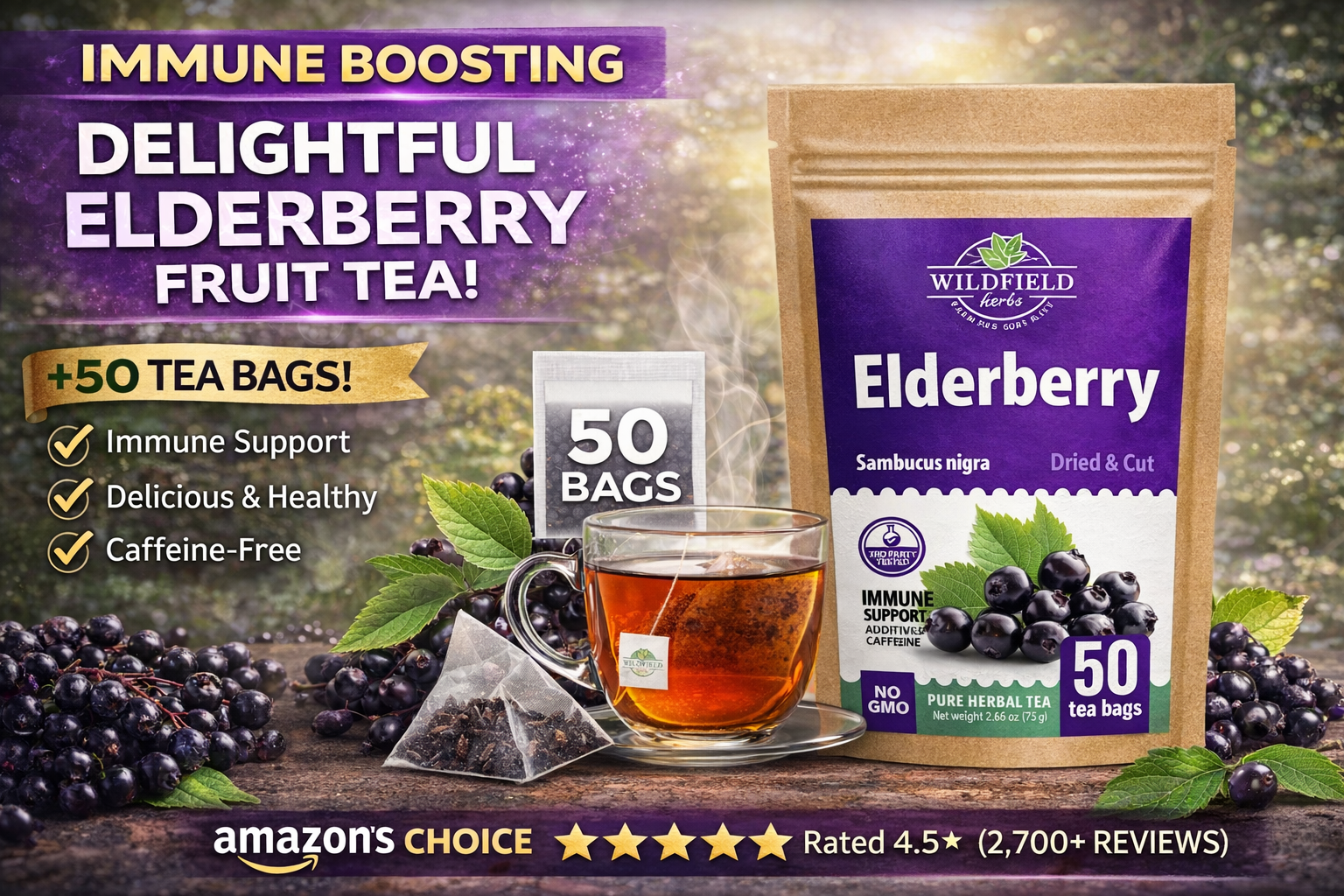
Best Overall — Elderberry Fruit Herbal Tea 50 Bags
This is the top recommendation for anyone who wants meaningful elderberry content in a convenient tea bag format. Fifty bags means you’re stocked for a full cold season of daily use — which is exactly how elderberry tea delivers its value, as a consistent daily habit rather than an occasional cup.
The elderberry content is front and center rather than buried behind hibiscus and rosehip. The flavor is genuinely pleasant — earthy, slightly tart, dark berry forward — without the artificial sweetness that some elderberry teas add to compensate for weak elderberry content.
At fifty bags this is also the most cost-effective option per cup of any quality elderberry tea on the market. For anyone building a daily elderberry tea habit through cold season, buying once in September and having enough to last through March is exactly the approach that works.
👉 Buy Elderberry Fruit Herbal Tea 50 Bags on Amazon
Best for DIY Brewing — Whole Dried Elderberries
For people who want maximum control and maximum elderberry content per cup, brewing with whole dried elderberries is the approach that delivers the most anthocyanins. You’re not getting the convenience of a tea bag but you’re getting better extraction and complete ingredient transparency.
Basic method: 1–2 tablespoons of dried elderberries per 2 cups of water. Bring to a boil, simmer 15 minutes, strain. Add honey and a squeeze of lemon. This produces a cup that is noticeably more flavorful and more potent than most commercial tea bags.
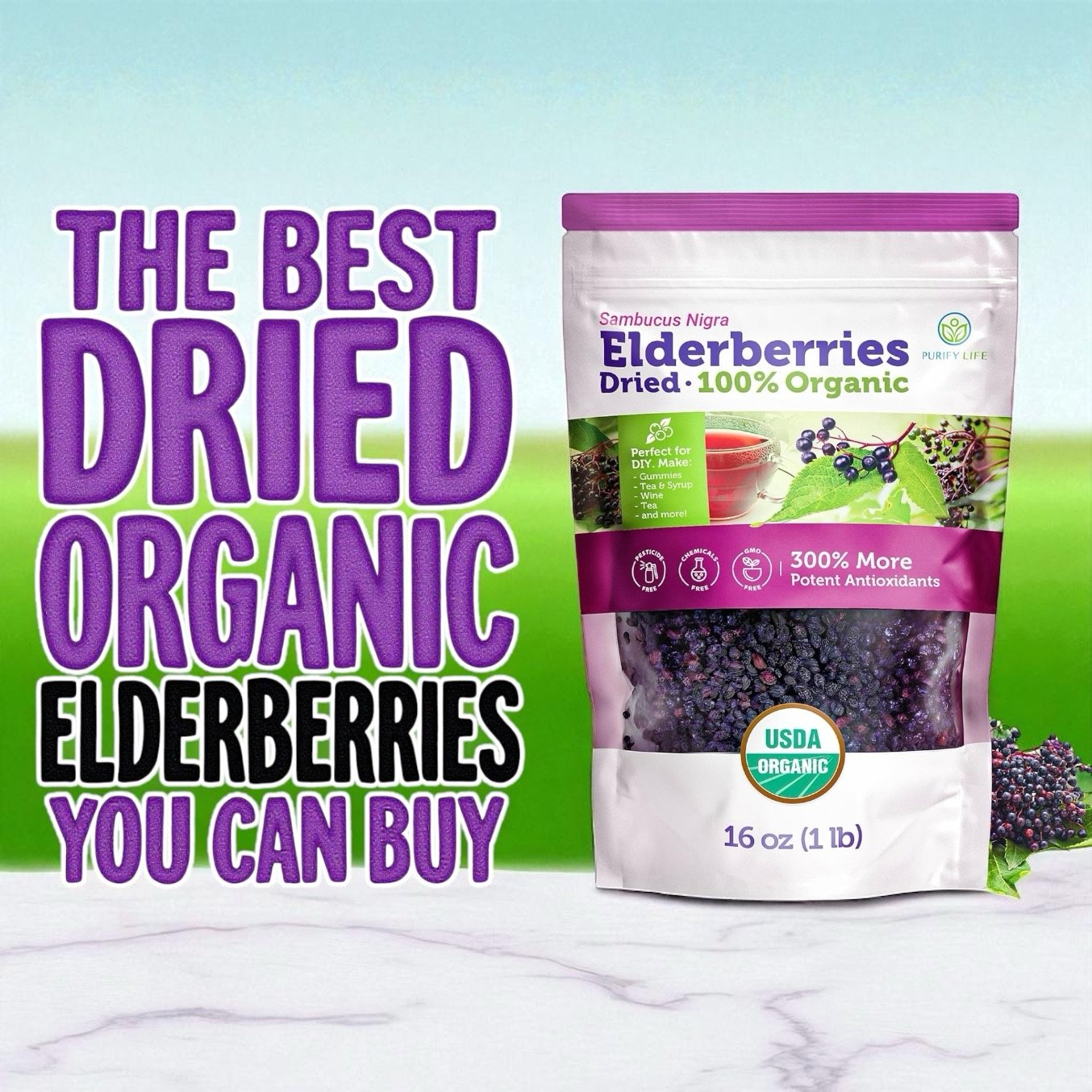
The best dried organic elderberries for this purpose — what to look for and which ones are worth buying: The Best Dried Organic Elderberries You Can Buy
Add-ins that complement elderberry tea beautifully and add their own benefits:
- Cinnamon stick — warming, anti-inflammatory, helps balance blood sugar
- Fresh ginger slice — anti-inflammatory, immune supporting, brightens the flavor
- Cloves — traditionally paired with elderberry, warming and antimicrobial
- Raw honey — added after brewing, not during, to preserve its beneficial properties
- Squeeze of lemon — vitamin C, brightens the whole cup


How to Get the Most Out of Your Elderberry Tea
Brew It Right
Whether you’re using tea bags or whole dried elderberries, water temperature and steeping time affect what you extract.
For commercial tea bags: bring water to a full boil (212°F). Steep for 5–7 minutes with the bag fully submerged and a lid on your mug to trap steam and heat. Longer steeping extracts more. Squeezing the bag before removing increases the yield.
For whole dried elderberries: boil and simmer as described above. Don’t rush this — the 15 minute simmer is both a safety measure and an extraction optimization.
Drink It Consistently
Elderberry tea’s benefits accumulate over consistent daily use rather than showing up dramatically after a single cup. The anti-inflammatory compounds, the prebiotic polyphenols feeding your gut bacteria, the antioxidant load reducing oxidative stress — these are cumulative effects that build over weeks.
A cup every morning with breakfast, or every evening as a wind-down ritual before bed — either habit captures the benefit. The evening option is particularly good during cold season: warm liquid before bed supports sleep, elderberry’s mild anti-inflammatory effect complements the overnight work your immune system does, and the ritual of slowing down has its own relaxation benefit.
For the full breakdown on elderberry tea before bed specifically: Elderberry for Sleep — Does It Actually Help
Don’t Rely on Tea Alone During Active Illness
This is the most important practical point about elderberry tea: it’s a wellness habit, not a therapeutic intervention.
The concentration of active compounds in a cup of elderberry tea is significantly lower than in a tablespoon of quality elderberry syrup or a standardized capsule. For daily prevention and the long-term anti-inflammatory and gut health benefits — tea is excellent. For when you’re actually sick and need therapeutic dosing — switch to syrup or capsules.
Think of it this way: elderberry tea is your everyday infrastructure. Elderberry syrup is your response when something is actually happening. Both matter, they just serve different functions.
For when you’re sick: How to Make Elderberry Syrup From Fresh Elderberries
Elderberry Tea Blends Worth Knowing About
Pure elderberry tea is excellent. But certain additions create blends that are more than the sum of their parts for specific goals.
Elderberry and Echinacea: both have documented immune-supporting properties through different mechanisms. Echinacea stimulates white blood cell activity and has direct antiviral properties. Combined with elderberry’s anthocyanin-based antiviral mechanism and cytokine stimulation, this blend offers complementary immune support. Good choice for cold season daily immune maintenance.
Elderberry and Ginger: ginger adds its own anti-inflammatory and antimicrobial properties alongside elderberry’s. The flavor combination is excellent — warming and slightly spicy against elderberry’s dark berry earthiness. Particularly good during cold and flu season or for anyone managing chronic inflammation.
Elderberry and Hibiscus: this is the most common commercial blend — and the one most likely to be mostly hibiscus. If you enjoy this combination, look for a product where elderberry genuinely leads the ingredient list rather than one where hibiscus is carrying the blend with elderberry as a flavor note.
Elderberry and Chamomile: the classic before-bed combination. Chamomile has genuine mild sedative properties through its apigenin content. Combined with elderberry’s anti-inflammatory evening benefit and the warm ritual effect, this is an excellent nighttime blend for cold season.
Elderberry and Rosehip: rosehip is high in vitamin C, which complements elderberry’s antioxidant profile. A genuinely good pairing — just make sure elderberry is still leading the ingredient list rather than rosehip.
Elderberry Tea for Kids
Most children take elderberry tea willingly — the berry flavor is familiar and with a small amount of honey it becomes something most kids actively enjoy. It’s one of the gentler daily elderberry habits for families.
Under 12 months: no honey in the tea. Not safe for infants under one year. At this age elderberry isn’t recommended without pediatric guidance anyway.
12 months and up: honey-sweetened elderberry tea is appropriate. Start with a small cup — 4oz — and observe. Most toddlers enjoy it.
School age: excellent daily habit for cold season. A small cup in the morning or evening builds consistent anthocyanin and anti-inflammatory benefit through the months when colds circulate through classrooms.
For everything about elderberry and kids: Elderberry for Kids — The Complete Parent’s Guide

Making Elderberry Tea Taste Better
Elderberry tea has a genuinely pleasant flavor when brewed well — earthy, slightly tart, dark berry with mild astringency. But it has a learning curve and some people need to find their version of it before they’ll drink it every day.
Too tart: add honey. Raw local honey is the best option — it adds floral complexity alongside sweetness and its own mild antimicrobial properties. Alternatively a splash of apple juice added to the cup rounds out the tartness without making it overly sweet.
Too weak and watery: steep longer, use more tea, or upgrade to a higher-quality elderberry product where elderberry genuinely leads the ingredient list.
Too earthy or medicinal: a squeeze of lemon brightens everything and cuts through the earthiness. Cinnamon adds warmth that most people find more approachable than straight elderberry flavor.
Kids won’t drink it: mix a small amount into apple juice or a berry juice blend. The elderberry flavor becomes essentially invisible and the benefits travel with it.
Frequently Asked Questions
Is elderberry tea as effective as elderberry syrup?
No — for immune support during illness, syrup delivers a significantly higher concentration of active compounds per dose. Tea is appropriate for daily prevention and wellness habits. For therapeutic use when you’re sick, syrup or capsules are the better tool.
Can I drink elderberry tea every day?
Yes — daily elderberry tea is exactly the habit that captures its long-term anti-inflammatory and gut health benefits. Once a day through cold season is the standard approach.
Does elderberry tea have caffeine?
No. Pure elderberry tea is naturally caffeine-free. Some commercial blends may include green or black tea — check the ingredient list if caffeine is a concern.
Can pregnant women drink elderberry tea?
The first trimester caution around elderberry supplements applies to tea as well — though tea’s lower concentration makes it generally considered lower risk than syrup or capsules. Full pregnancy breakdown: Elderberry and Pregnancy — Is It Safe
What does elderberry tea taste like?
Mildly tart, earthy, with a subtle dark berry quality. Less intense than elderberry syrup. Most people find it pleasant, especially with honey. Full flavor description: What Do Elderberries Taste Like
How many cups of elderberry tea should I drink per day?
One to two cups daily is the standard approach for wellness maintenance. More than that is fine but unlikely to dramatically increase benefit — the limiting factor is elderberry tea’s concentration, not frequency.


Your Mug Is Waiting
Elderberry tea isn’t going to replace your syrup during cold season and it isn’t going to produce overnight results. What it does is build something consistent — a daily anti-inflammatory habit, a prebiotic contribution to your gut bacteria, a ritual that signals your body to slow down — that compounds quietly over a full season.
The people who get the most from elderberry aren’t the ones who reach for it in a panic when they’re sick. They’re the ones who already have it in their system from weeks of quiet daily use. Elderberry tea is how you build that foundation without thinking about it too hard.
Brew a cup. Make it a habit. Let the season take care of itself.

About the Author
Lisa Monroe is a certified nutritional consultant and food writer who has spent fifteen years helping families build practical wellness habits that actually stick. She holds a certification in holistic nutrition from the Nutritional Therapy Association and contributes regularly to ElderberryPro.com. She drinks elderberry tea every morning from October through March without exception and has the stained mugs to prove it.
As an Amazon Associate we earn from qualifying purchases through some links in our articles.