
Blueberries are the undisputed celebrity of the antioxidant world. Grocery stores dedicate entire sections to them. Health magazines run cover stories about them. Nutritionists recommend them constantly.
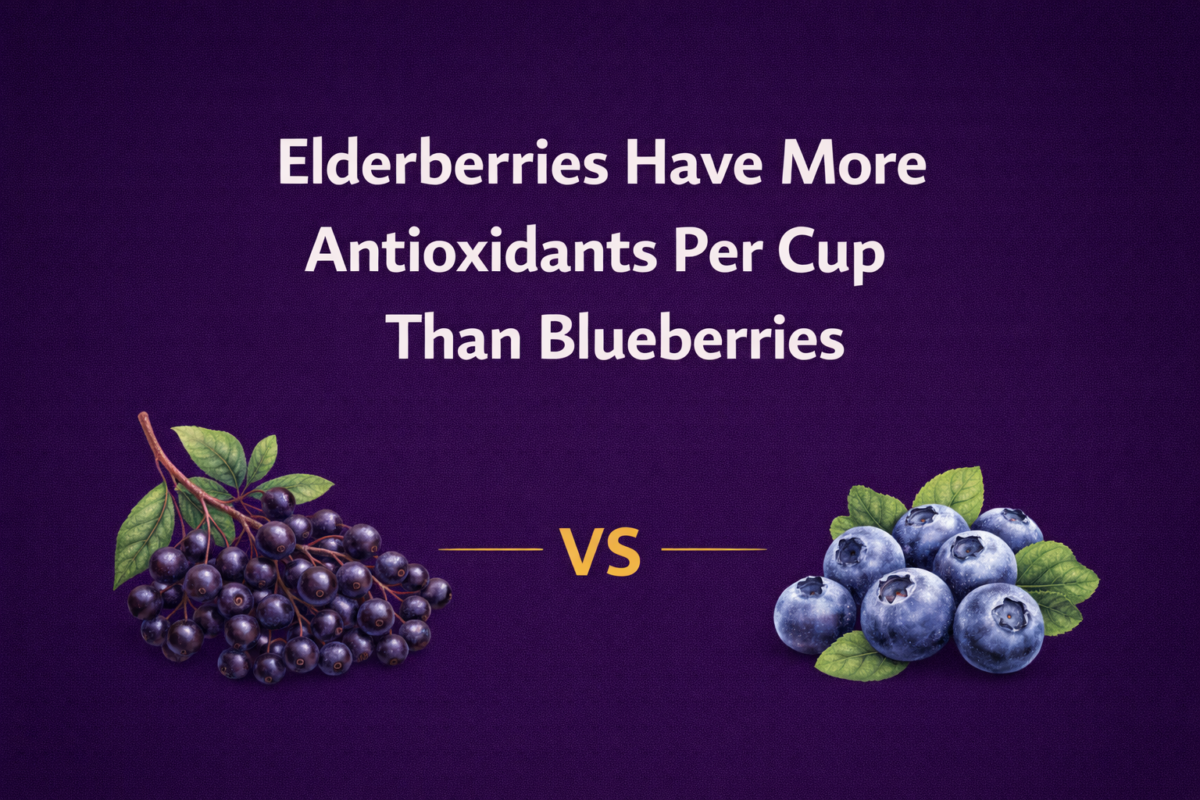
Meanwhile, elderberries — which grow wild across most of North America and Europe and have been used medicinally for over two thousand years — sit quietly in the background with a higher antioxidant profile and almost none of the mainstream attention.
That’s about to change. Because when you look at the actual numbers, the comparison is not close.
What Antioxidants Actually Do
Before getting into the comparison, it’s worth understanding what antioxidants are actually doing in your body — because “antioxidant” has become so overused in wellness marketing that it’s lost most of its meaning.
Free radicals are unstable molecules produced by normal cellular processes — and by external stressors like pollution, processed food, cigarette smoke, and UV radiation. These molecules damage cells, accelerate aging, drive chronic inflammation, and impair immune function over time.
Antioxidants neutralize free radicals by donating electrons and stabilizing them before they cause damage. A diet rich in antioxidants reduces oxidative stress, lowers systemic inflammation, and creates a better baseline environment for every system in your body — including your immune system.
The ORAC scale (Oxygen Radical Absorbance Capacity) measures antioxidant density in foods. Elderberries score significantly higher than blueberries on ORAC testing. Per 100 grams, elderberries contain roughly 10,775 ORAC units compared to approximately 4,669 for blueberries. More than double.



What Makes Elderberries So Antioxidant-Dense
The primary antioxidant compounds in elderberries are anthocyanins — the same dark purple pigment compounds that make blueberries blue and red wine red. Elderberries are among the most anthocyanin-rich foods ever tested. Their deep purple-black color is a direct visual indicator of that density.
Elderberries also contain:
Quercetin — a flavonoid with anti-inflammatory and antihistamine properties, present in meaningful amounts in elderberry
Rutin — a bioflavonoid that supports blood vessel health and has antioxidant properties
Vitamin C — significant amounts, particularly in fresh elderberries
Caffeic acid and chlorogenic acid — phenolic acids with antioxidant and anti-inflammatory effects
This combination of compounds works synergistically — they’re more effective together than any single compound would be in isolation. This is why whole elderberry preparations like syrup tend to outperform isolated elderberry extract in some studies.
The Immune Connection
Antioxidants aren’t just about aging and inflammation — they’re directly connected to immune function. Here’s how:
Immune cells are among the most metabolically active cells in your body. They generate significant oxidative stress during normal immune function — fighting infections, clearing cellular debris, mounting inflammatory responses. Without sufficient antioxidant support, this oxidative stress impairs the very immune cells trying to protect you.
Elderberry’s high anthocyanin content supports immune cell function at a fundamental level — not just through the specific antiviral and cytokine-stimulating mechanisms that elderberry research focuses on, but through basic cellular protection that keeps immune cells operating efficiently.
This is separate from and complementary to elderberry’s documented antiviral effects. The full picture of how elderberry supports immune function: elderberry for immune support — does it actually work.



Why Blueberries Get the Press and Elderberries Don’t
The honest answer is marketing and availability. Blueberries are a commercially cultivated crop with a massive agricultural industry behind them and decades of investment in research and promotion. Elderberries grow wild, are difficult to cultivate at commercial scale, and until recently had no major industry lobbying for their recognition.
The research imbalance is catching up. Elderberry has more peer-reviewed clinical studies behind its immune benefits than blueberries do — not because blueberries aren’t healthy, but because elderberry’s specific antiviral and immune-modulating properties have attracted scientific interest.
Getting Elderberry’s Antioxidants Into Your Daily Life
The good news: you don’t need to eat a bowl of elderberries at breakfast to get meaningful antioxidant benefit. A tablespoon of quality elderberry syrup delivers a concentrated dose of anthocyanins in a form that’s easy to take daily. Elderberry tea provides a gentler, lower-concentration daily habit. Capsules give you standardized extract without any preparation.
The key is consistency. Antioxidant benefits — particularly the inflammation-reducing effects that build over time — come from regular daily intake, not occasional large doses.
For the most practical daily elderberry routine that actually works: how I use elderberry to boost my immune system daily.
The Takeaway
Blueberries are genuinely healthy. Keep eating them. But if you’re choosing foods and supplements specifically for antioxidant density and immune support, elderberry is the overlooked option that outperforms the celebrity berry by a significant margin.
The superfood you’ve never heard of has been growing wild in your region since before the grocery store existed.
About the Author:
Rachel Simmons is a registered dietitian with twelve years of clinical experience in metabolic health. She holds an MS in nutritional sciences from Penn State and contributes to ElderberryPro.com with a focus on evidence-based nutrition information that cuts through wellness industry hype.
As an Amazon Associate we earn from qualifying purchases through some links in our articles.